Milan is so much more than Italy’s fashion capital. Beneath the designer storefronts and sleek skyscrapers lies a city steeped in 2,000 years of history, world-class art, and a food scene that rivals anywhere on the Italian peninsula. Whether you’re marveling at Leonardo da Vinci’s The Last Supper, sipping a Negroni Sbagliato along the Navigli canals, or getting lost among the gothic spires of the Duomo rooftop, Milan delivers experiences you simply won’t find elsewhere.
If your trip falls in mid-April, the city hands you a free city-wide exhibition — see our Milan Design Week guide for what is on and where.
Inter play at San Siro every other week and a league ticket can cost less than a museum entry — our Inter Milan tickets guide explains how to buy one that works at the turnstile.
A Serie A ticket can cost less than a cocktail here — our AC Milan tickets guide explains how to buy one that will actually get you through the turnstile.
San Siro is one of the great football grounds in Europe and it is on borrowed time — our football in Milan guide explains how to get to a match before it goes.
This guide covers more than 50 of the best things to do in Milan — from iconic landmarks and museums to hidden gems that most tourists miss entirely. We’ve included up-to-date ticket prices, opening hours, insider tips, and everything you need to plan a trip that goes far beyond the typical one-day stopover.
Iconic Landmarks You Can’t Miss
1. Milan Cathedral (Duomo di Milano)
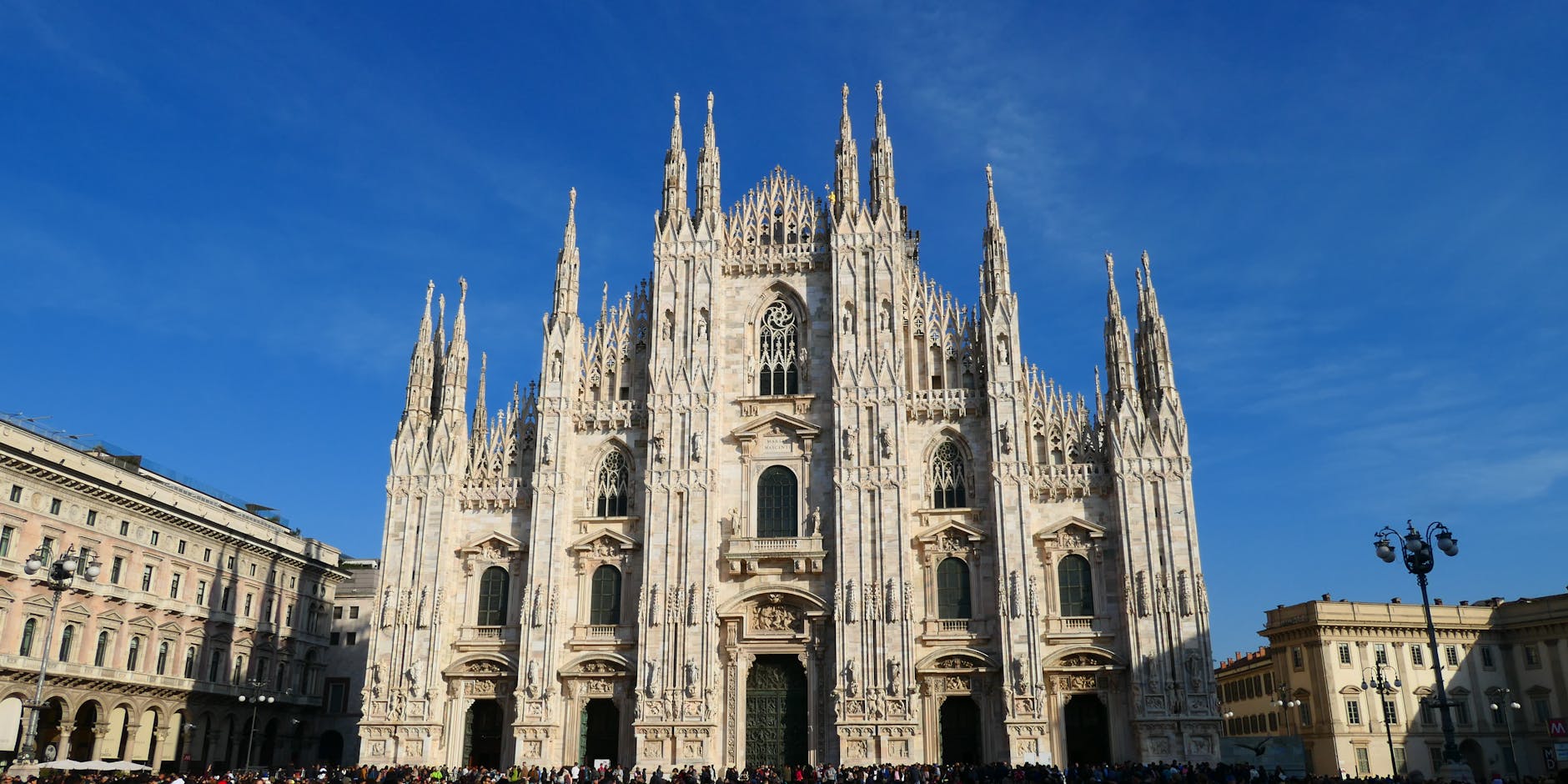
No visit to Milan begins — or ends — without the Duomo. Italy’s largest Gothic cathedral took nearly six centuries to complete, and the result is a breathtaking forest of 135 marble spires, 3,400 statues, and an interior that can hold 40,000 people. The real highlight, though, is the rooftop terrace. Walking among the flying buttresses with the Alps shimmering on the horizon is one of the most unforgettable experiences in all of Italy.
Practical details: The cathedral is open daily from 9:00 AM to 7:00 PM (last entry 6:10 PM). A basic cathedral-only ticket costs around €10, while the full-experience ticket — including the rooftop terraces, museum, archaeological area, and the church of San Gottardo — runs €22–25. Elevator access to the rooftop costs a few euros more than the stairs. Pro tip: arrive before 9:30 AM or after 4:00 PM to avoid the worst crowds, and book your rooftop tickets online at least a few days ahead during peak season (April–October).
2. Galleria Vittorio Emanuele II
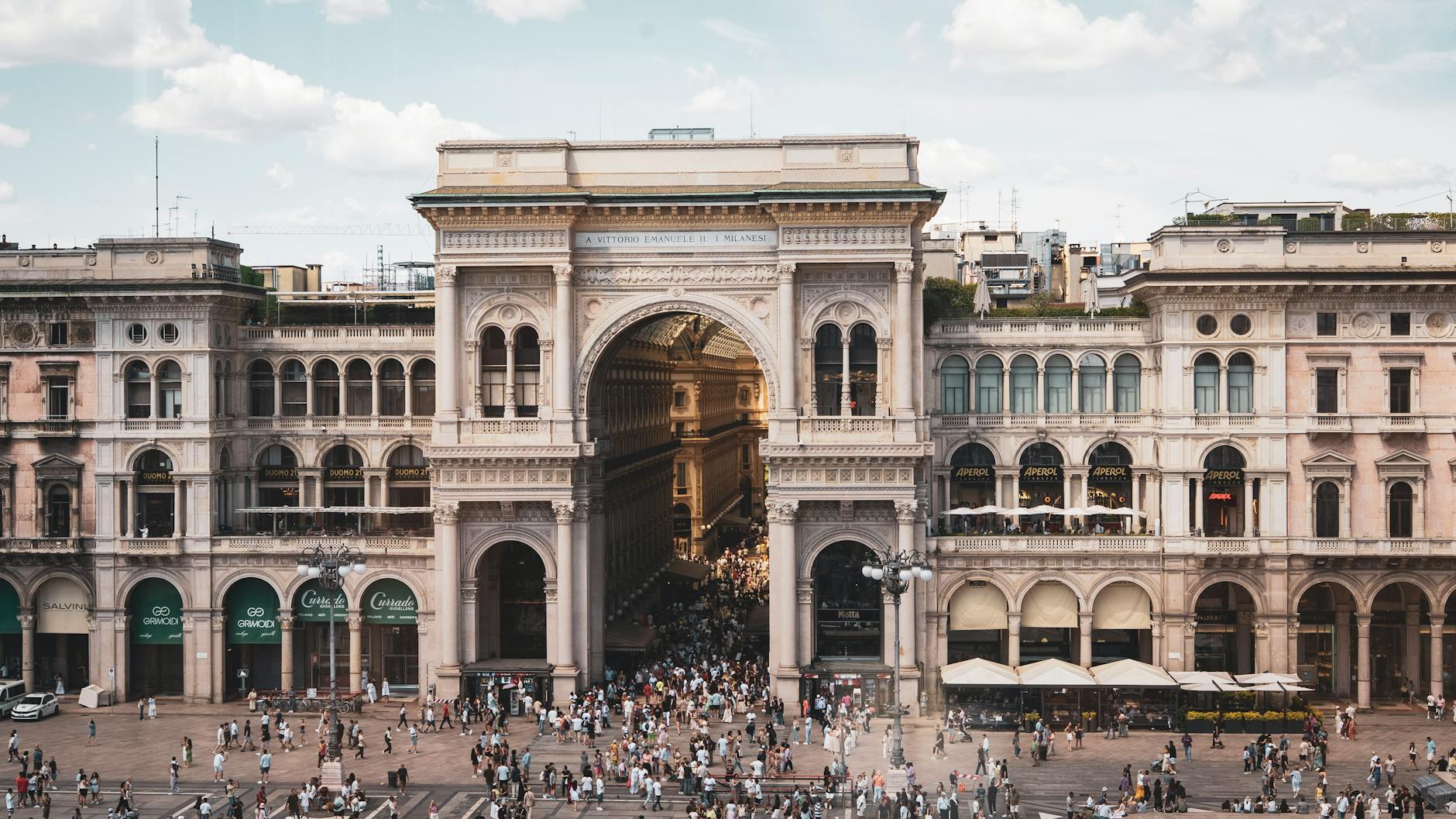
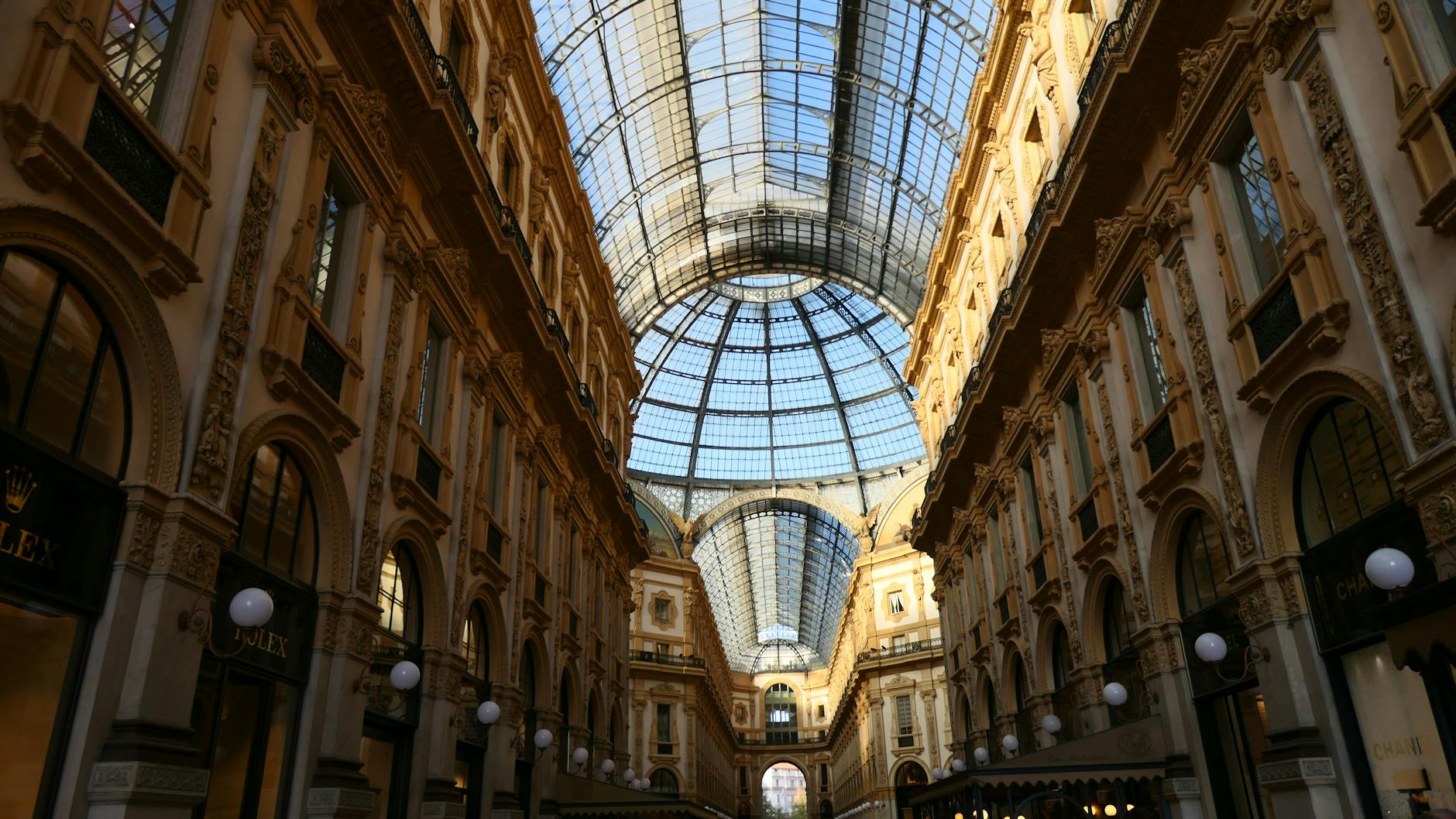
Steps from the Duomo, this magnificent glass-vaulted arcade is Italy’s oldest active shopping gallery — and arguably the most beautiful shopping center on the planet. Built between 1865 and 1877, the Galleria connects Piazza del Duomo to Piazza della Scala in an elegant cruciform design topped by a soaring iron-and-glass dome. Inside, you’ll find flagship boutiques from Prada (whose original store opened here in 1913), Louis Vuitton, and Gucci alongside historic cafés like Camparino in Galleria, where the Campari brand was born.
Don’t miss: The mosaic of the Savoy bull embedded in the floor beneath the central dome. Tradition says spinning three times on the bull’s, er, sensitive area with your right heel brings good luck. The gallery is open 24/7 (individual shops keep their own hours, generally 10:00 AM–9:00 PM). Entry is free.
3. Leonardo da Vinci’s The Last Supper
Leonardo’s monumental mural — painted between 1495 and 1498 on the refectory wall of the church of Santa Maria delle Grazie — is Milan’s single most sought-after attraction. Only 40 visitors are admitted every 15 minutes, creating an almost reverential viewing experience that’s worlds apart from the scrum at the Mona Lisa.
Booking is essential. Tickets (€15 adults, €2 reduced for EU citizens aged 18–25) are released on the official museum website roughly two months in advance, and they sell out within hours. If official tickets are gone, authorized tour operators bundle the visit with guided city tours for €40–70. The refectory is open Tuesday to Sunday, 8:15 AM to 7:00 PM (closed Mondays). Give yourself at least 15 minutes at the adjacent church to admire its Bramante-designed Renaissance cloister — it’s free.
4. Castello Sforzesco
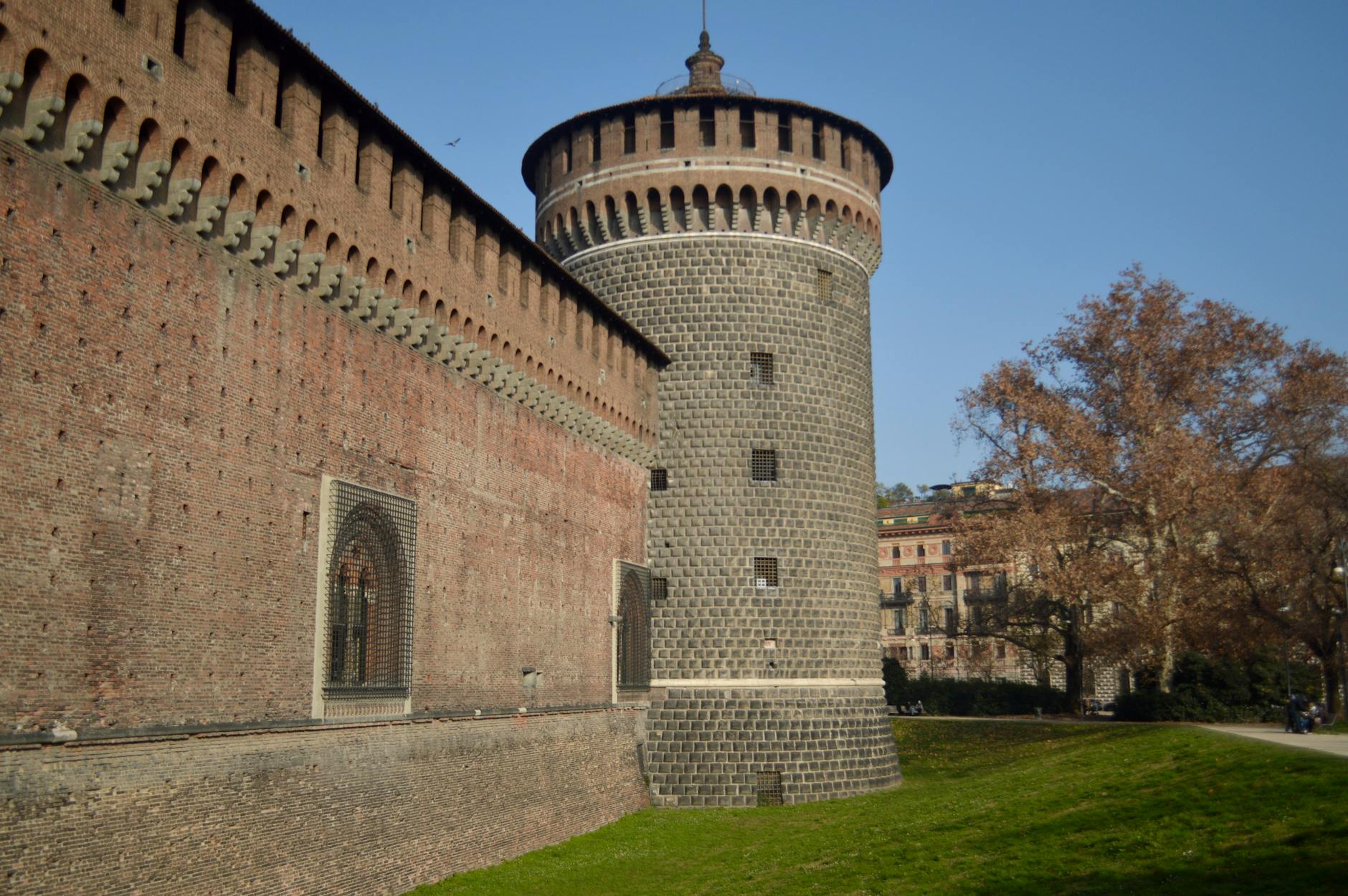
This imposing 15th-century fortress, built by the Sforza dynasty, sits at the head of Parco Sempione and houses some of Milan’s finest civic museums — all for a single €5 entry ticket (free on the first and third Tuesday of the month after 2 PM). Highlights include Michelangelo’s final, unfinished sculpture, the Rondanini Pietà, an Egyptian collection, a gallery of Renaissance furniture, and a superb collection of musical instruments.
The castle courtyard and grounds are free to explore and open daily 7:00 AM–7:30 PM (summer) or 7:00 AM–6:00 PM (winter). Museums are open Tuesday–Sunday, 10:00 AM–5:30 PM.
5. Teatro alla Scala
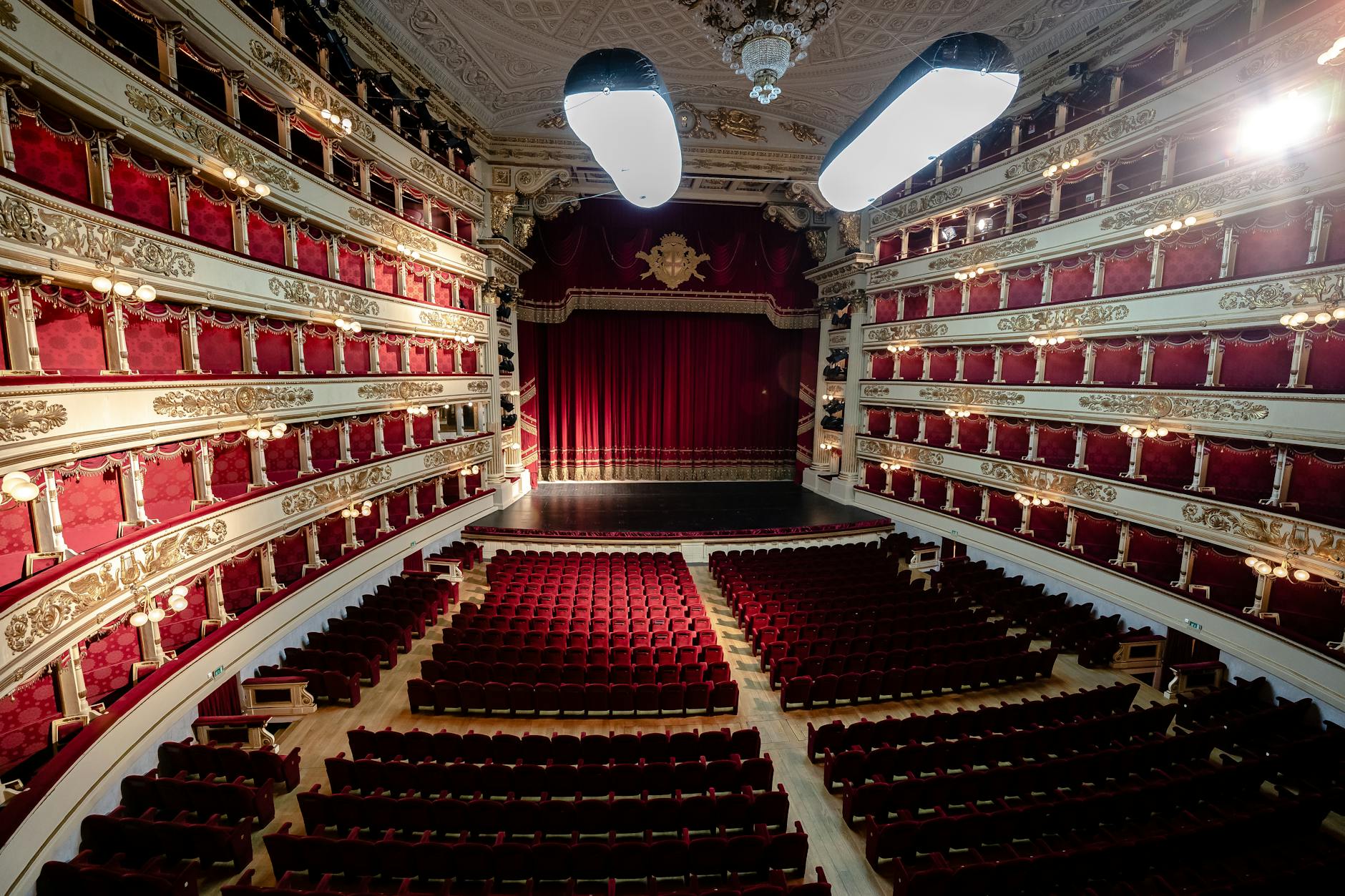
Milan’s legendary opera house has hosted premieres by Verdi, Puccini, and Rossini since 1778. Even if you can’t snag a ticket to a performance, the Teatro alla Scala Museum offers a peek into a gilded auditorium that seats 2,000 across six tiers of boxes. Museum tickets are €12, and the venue is open daily 9:30 AM–5:30 PM (closed on certain holidays and rehearsal days).
For a performance, the season runs December through July. Standing-room tickets (gallerione) go on sale the day of the performance from as little as €15 — arrive early and be prepared to queue.
World-Class Museums and Galleries
6. Pinacoteca di Brera
Housed in a 17th-century palazzo in the heart of the Brera district, this is one of Italy’s most important art collections. Masterpieces by Raphael (The Marriage of the Virgin), Mantegna (Dead Christ), Caravaggio, and Bellini hang in grand, high-ceilinged rooms. Tickets cost €15 (€2 reduced for EU citizens 18–25). Open Tuesday–Sunday, 8:30 AM–7:15 PM. Free admission on the first Sunday of each month.
7. Pinacoteca Ambrosiana
Cardinal Federico Borromeo founded this gallery in 1618, making it one of the oldest museums in Europe. The collection includes Caravaggio’s Basket of Fruit, Raphael’s cartoon for The School of Athens, and Leonardo da Vinci’s Codex Atlanticus — a massive compendium of his drawings and writings. Tickets cost €15 (€12 reduced). Open Tuesday–Sunday, 10:00 AM–6:00 PM.
8. Museo Nazionale della Scienza e della Tecnologia Leonardo da Vinci
Italy’s largest science and technology museum occupies a former Benedictine monastery and is an absolute must for families. The collection spans Leonardo’s machine models, vintage trains, a submarine you can walk through (the S-506 Enrico Toti), and interactive labs for kids. Tickets €10 (reduced €7.50). Open Tuesday–Friday 9:30 AM–5:00 PM, weekends and holidays 9:30 AM–6:30 PM.
9. Triennale Milano (Design Museum)
Located in the Palazzo dell’Arte at the edge of Parco Sempione, this is the temple of Italian design. Rotating exhibitions cover architecture, fashion, urban planning, and contemporary art. The permanent Italian Design Museum (€15) tells the story of how a small country became the global capital of design. Open Tuesday–Sunday, 10:30 AM–8:00 PM.
10. MUDEC – Museum of Cultures
Architect David Chipperfield transformed a former industrial space in the Tortona district into this striking 17,000-square-meter museum housing over 7,000 ethnographic objects from around the world. The permanent collection is free; temporary blockbuster exhibitions (past shows have featured Banksy and Frida Kahlo) cost €14–16. Open Tuesday–Sunday, 10:00 AM–7:30 PM (Thursdays until 10:30 PM).
11. Fondazione Prada
Converted from a 1910 distillery by architect Rem Koolhaas, the Fondazione Prada is a campus of galleries, a cinema, and a children’s space that pushes the boundaries of contemporary art. Don’t miss Bar Luce — the café designed by director Wes Anderson, with its pastel-colored Formica furniture straight out of a 1950s Italian film. Tickets €15 (€12 reduced). Open Wednesday–Monday, 10:00 AM–7:00 PM.
Milan’s Most Fascinating Neighborhoods
12. Navigli District
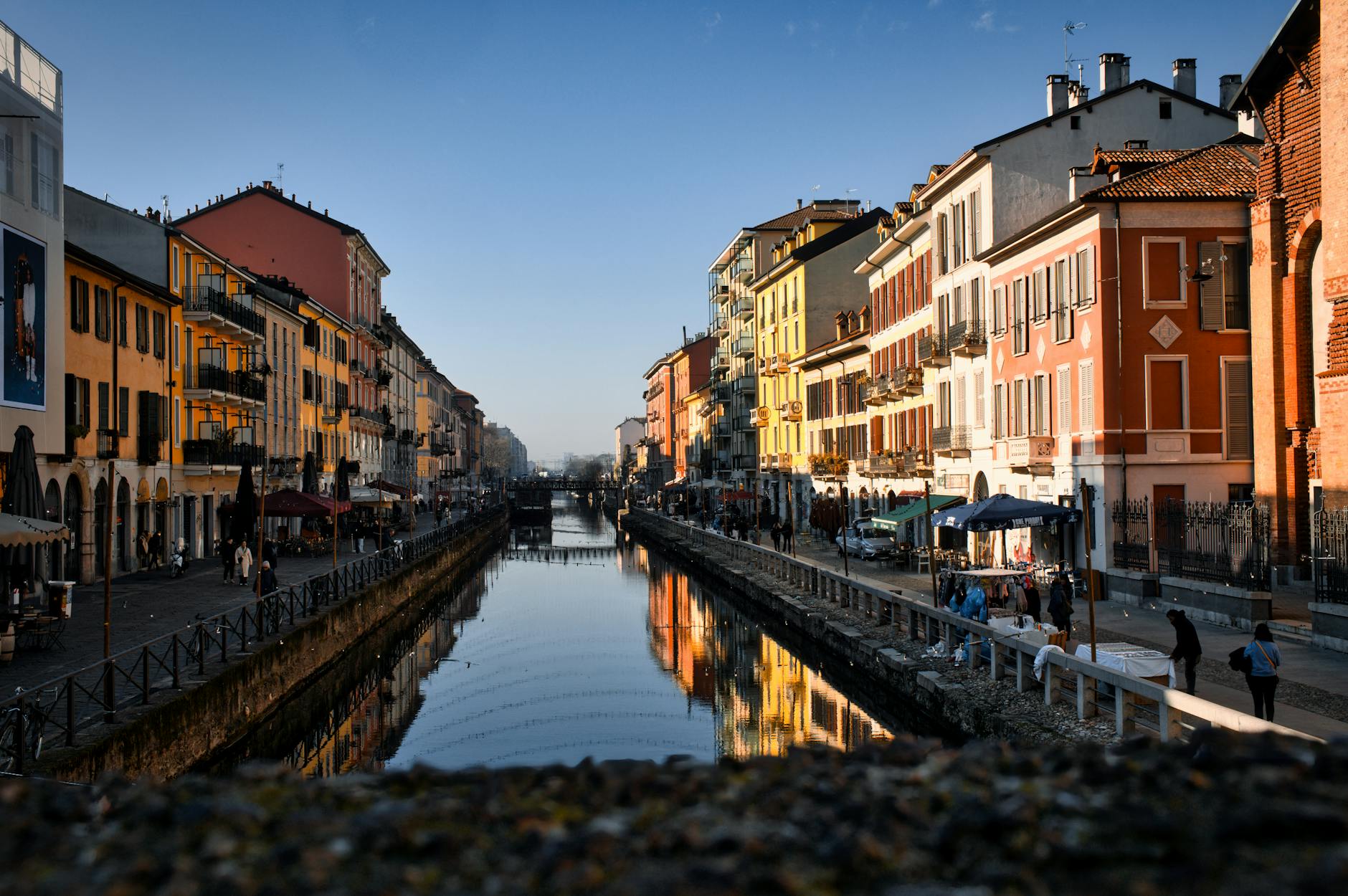
Milan’s canal district is where the city truly comes alive after dark. The Naviglio Grande and Naviglio Pavese — remnants of a canal system that once extended over 150 kilometers, partly designed by Leonardo da Vinci — are now lined with trattorias, craft cocktail bars, vintage shops, and art galleries. Come for the legendary aperitivo hour (roughly 6:30–9:00 PM), when most bars offer generous buffet spreads with your drink.
On the last Sunday of each month (except July), the Navigli hosts one of Milan’s best flea markets, the Mercatone dell’Antiquariato, stretching along both banks of the Naviglio Grande with antiques, vintage clothing, and bric-a-brac. For more on after-dark Milan, see our guide to things to do in Milan at night.
13. Brera District
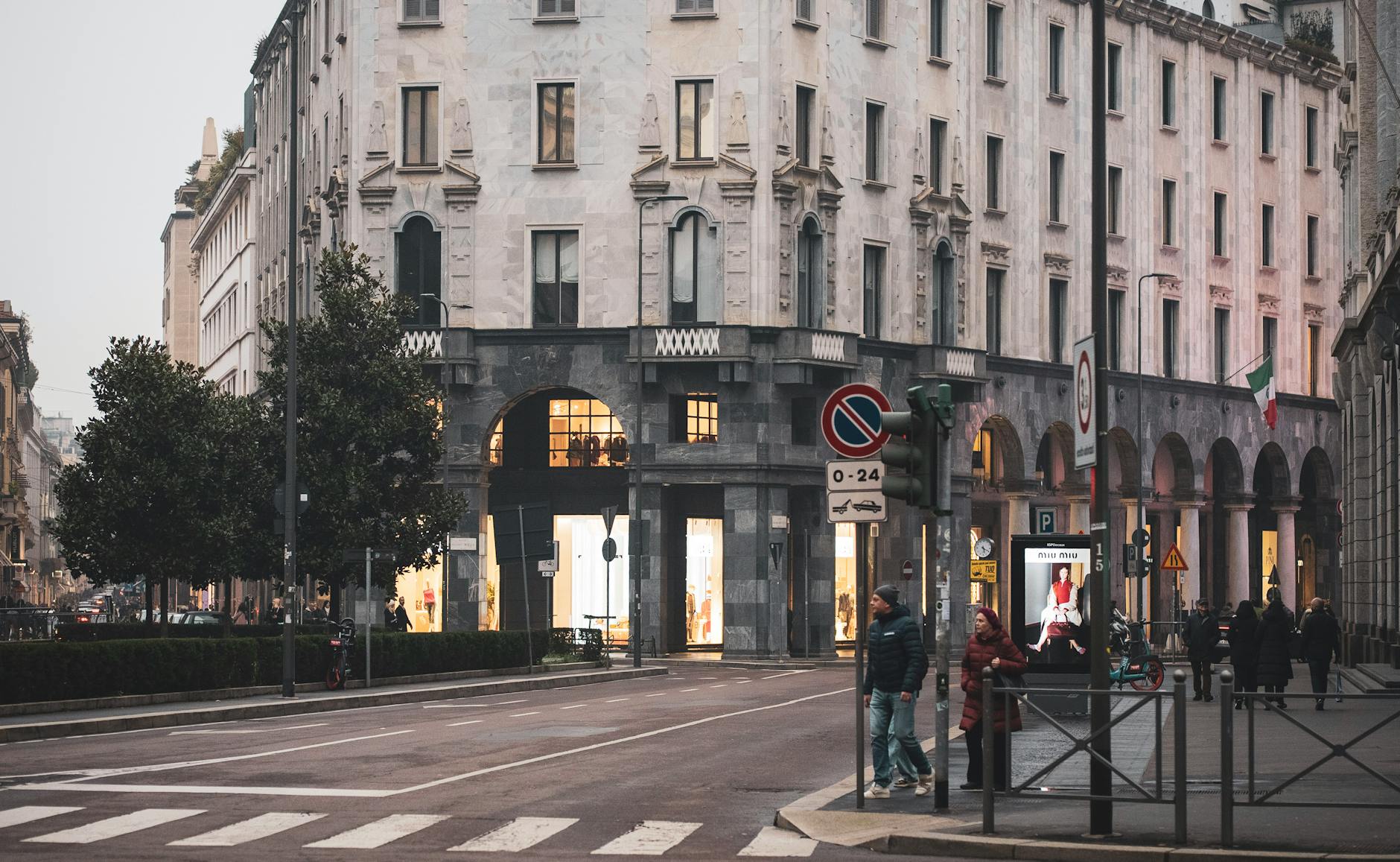
If Navigli is Milan’s party quarter, Brera is its artistic soul. Narrow cobblestone lanes are lined with independent art galleries, antique bookshops, and upscale restaurants. The neighborhood centers on Via Brera and the Accademia di Belle Arti, where art students still sketch in the courtyard just as they have for centuries. It’s the perfect area for a leisurely morning stroll followed by espresso and a sfogliatella at one of the many artisan bakeries.
14. Porta Nuova and Piazza Gae Aulenti
 Bosco Verticale” class=”wp-image-12 size-full” srcset=”https://www.milantourism.org/wp-content/uploads/2026/04/milan-modern-skyline.jpg 1880w, https://www.milantourism.org/wp-content/uploads/2026/04/milan-modern-skyline-300×200.jpg 300w, https://www.milantourism.org/wp-content/uploads/2026/04/milan-modern-skyline-1024×682.jpg 1024w, https://www.milantourism.org/wp-content/uploads/2026/04/milan-modern-skyline-768×512.jpg 768w, https://www.milantourism.org/wp-content/uploads/2026/04/milan-modern-skyline-1536×1024.jpg 1536w” sizes=”auto, (max-width: 1880px) 100vw, 1880px” />
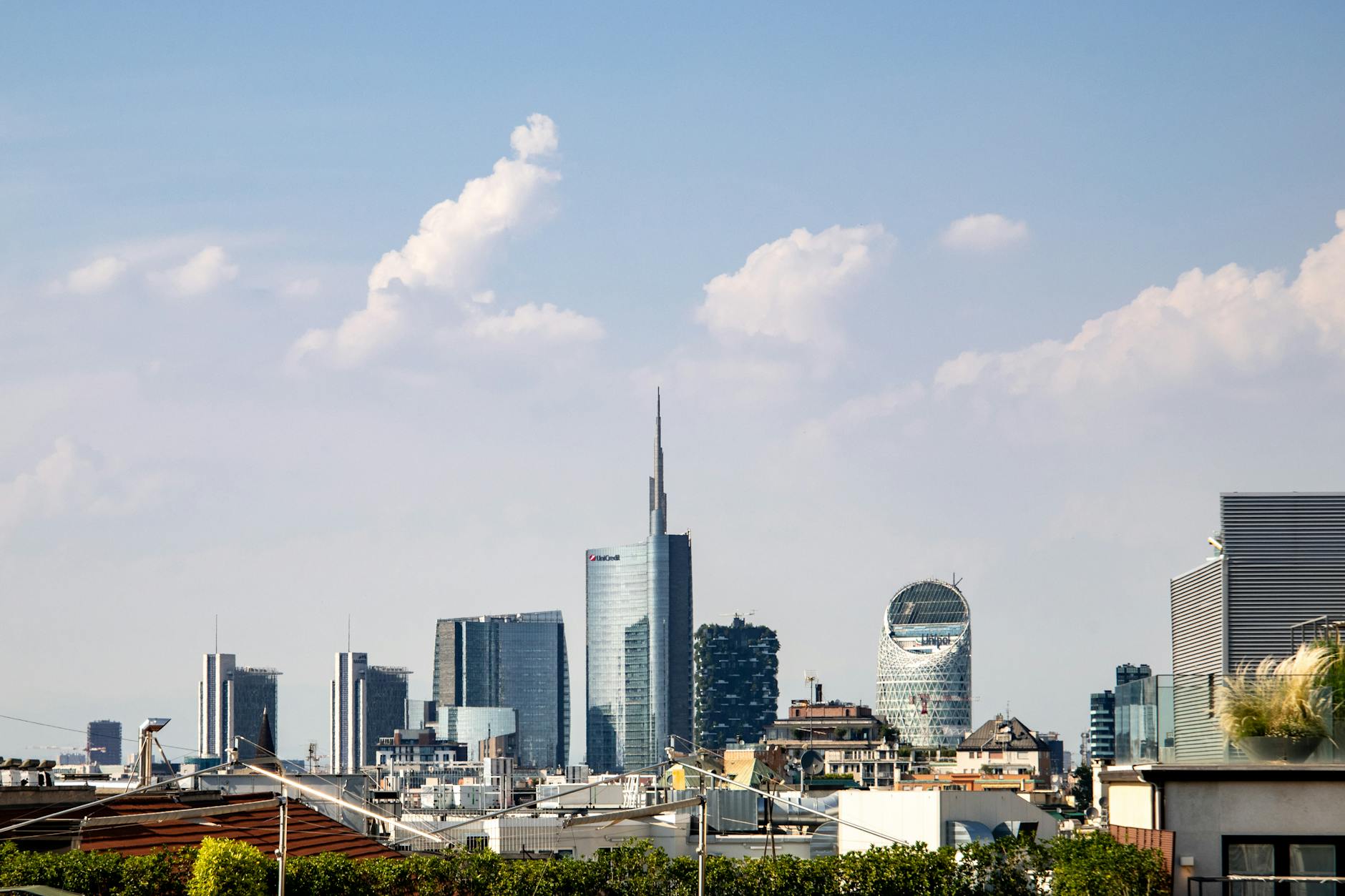
Milan’s futuristic financial district is an architectural spectacle in its own right. The star is the Bosco Verticale (Vertical Forest) — twin residential towers designed by Stefano Boeri, clad in over 900 trees and 20,000 plants that absorb CO₂ and produce oxygen. The elevated Piazza Gae Aulenti is a buzzing hub of restaurants and shops surrounded by glittering glass towers. It’s free to explore and makes for spectacular photos, especially at sunset.
15. Isola
Once a gritty working-class neighborhood separated from the city center by railroad tracks, Isola (“the Island”) has become Milan’s hippest quarter. Street art murals cover entire building facades, local boutiques sell emerging designers, and the restaurant scene spans everything from Peruvian fusion to Michelin-starred tasting menus. For the best experience, visit on a weekend evening and let the neighborhood’s creative energy pull you from bar to gallery to late-night eatery.
16. Chinatown (Via Paolo Sarpi)
Milan’s Chinatown — one of the oldest in Europe, established in the 1920s — centers on the pedestrianized Via Paolo Sarpi. It’s a sensory feast: dumpling houses, traditional Chinese bakeries, bubble tea shops, and wholesale markets jostle alongside Italian cafés and independent bookshops. The Chinese New Year parade (January/February) is one of Milan’s most colorful annual events.
17. Porta Venezia / Corso Buenos Aires
Porta Venezia is Milan’s most cosmopolitan and diverse neighborhood, with a thriving LGBTQ+ scene, Eritrean and Ethiopian restaurants, art nouveau architecture, and the lush Giardini Pubblici Indro Montanelli — Milan’s oldest public park. Running alongside it, Corso Buenos Aires is one of Europe’s longest shopping streets, with over 350 stores.
Food and Drink Experiences
18. Aperitivo Hour
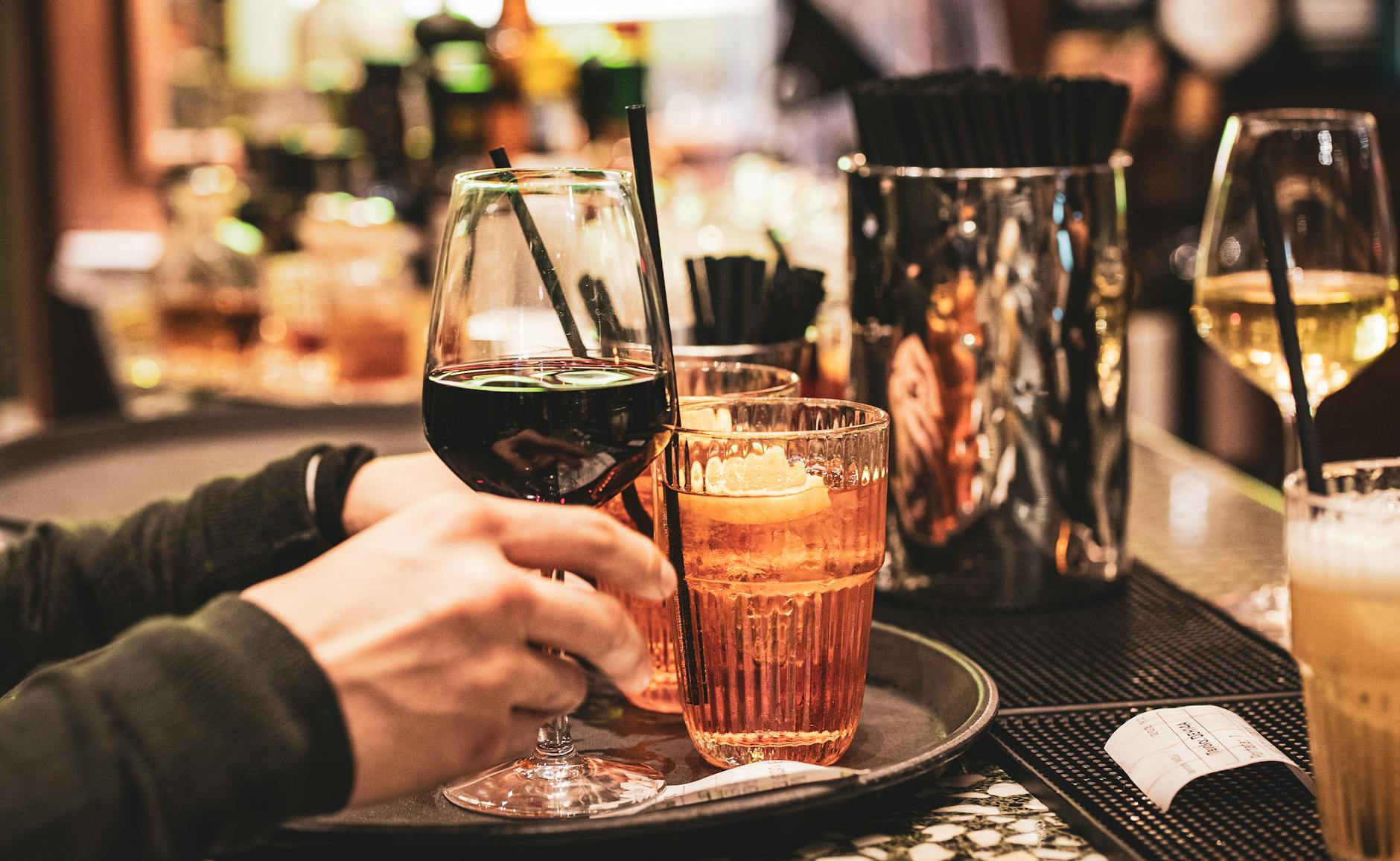
No Milanese tradition is more sacred than aperitivo — the pre-dinner ritual of ordering a cocktail (a Negroni Sbagliato, Aperol Spritz, or Campari Soda) and helping yourself to a lavish buffet of pasta salads, bruschetta, focaccia, cold cuts, and more, all included in the drink price (typically €8–15). The best areas for aperitivo are Navigli, Brera, the Colonne di San Lorenzo, and the bars around Corso Sempione. Peak time is 6:30–9:00 PM.
19. Try Milanese Culinary Classics
Don’t leave Milan without trying risotto alla Milanese (saffron-infused risotto that’s creamy gold), cotoletta alla Milanese (a bone-in breaded veal cutlet predating the Wiener schnitzel), and ossobuco (braised veal shanks). For dessert, hunt down a panettone from a pasticceria — Milan invented this iconic Christmas cake, and many bakeries sell it year-round. Marchesi 1824 (Galleria) and Pavé (near Porta Venezia) are excellent starting points.
20. Explore Mercato Centrale Milano
Located inside Milan’s Stazione Centrale, this bustling food hall brings together Italy’s finest artisan producers under one roof. Sample fresh pasta, Neapolitan pizza, hand-stretched mozzarella, Sicilian cannoli, and craft beer from the best names in Italian gastronomy. Open daily from 8:00 AM to midnight — it’s the perfect first or last stop if you’re arriving or departing by train.
21. Take a Food Tour
For deeper context, consider a guided food tour through Brera or Navigli. Tours typically last 3–4 hours, include 6–8 tastings (from fresh pasta to gelato), and cost €70–100 per person. They’re an efficient way to sample the city’s culinary highlights while learning the stories behind the dishes.
22. Gelato Crawl
Milan’s gelato scene is fiercely competitive. Top-rated artisan gelaterias include Il Massimo del Gelato (Porta Romana), Artico Gelateria Tradizionale (via Piero della Francesca), and La Gelateria della Musica (two locations), where flavors are named after songs. Expect to pay €2.50–4.50 for a small cup.
Parks, Gardens, and Outdoor Activities
23. Parco Sempione
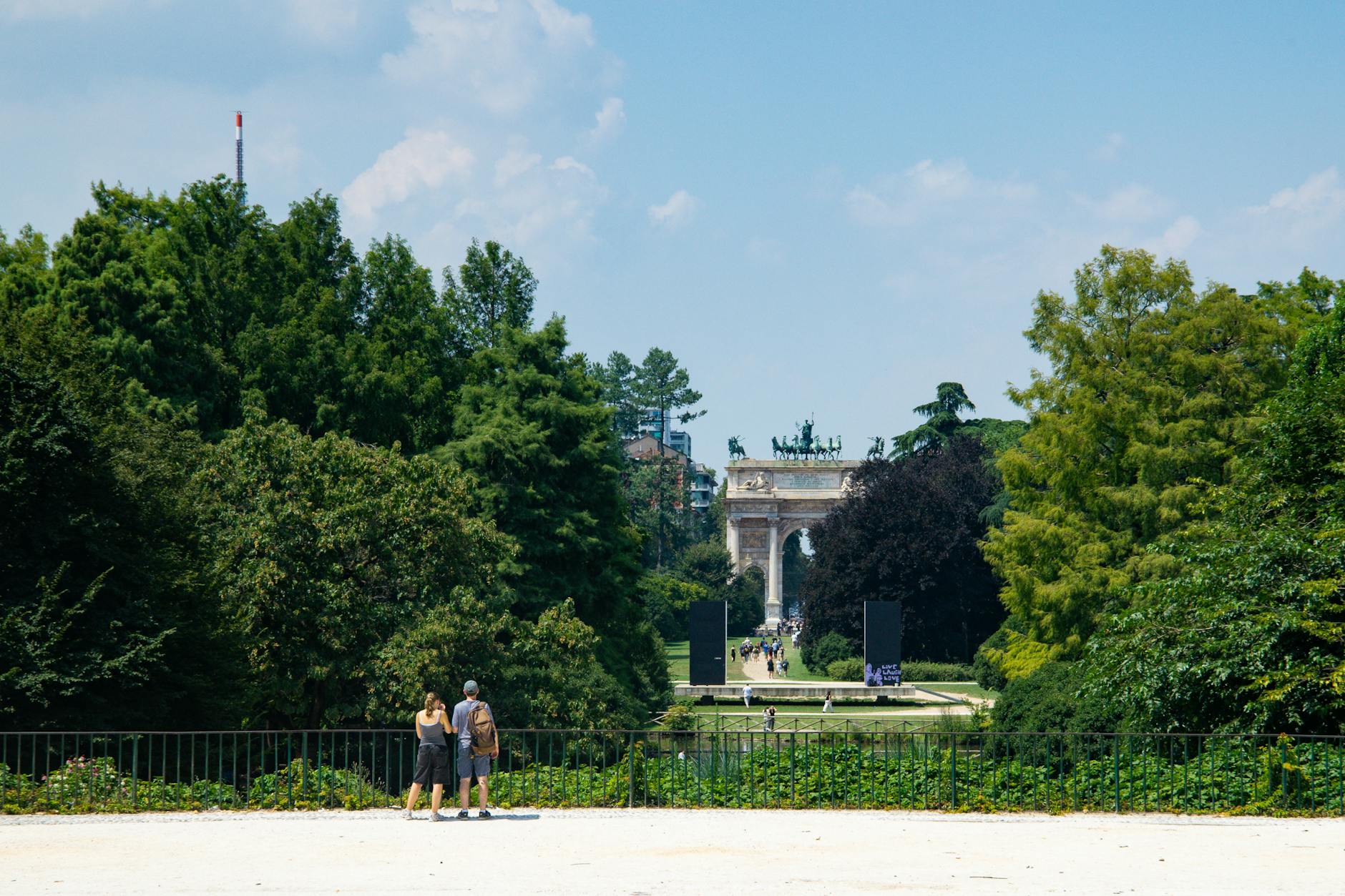
Milan’s most beloved park stretches behind the Castello Sforzesco, 47 hectares of lawns, tree-lined paths, a small lake, and the striking Arco della Pace (Arch of Peace) at its far end. Within the park, you’ll find the Torre Branca — a 108-meter steel observation tower designed by Gio Ponti that offers 360-degree views of the city and Alps (€6, open Wednesday–Sunday). Pack a picnic, bring a book, or just people-watch.
24. Giardini Pubblici Indro Montanelli
Milan’s oldest public park (1784) is a shady, peaceful retreat near Porta Venezia. It houses the Museo Civico di Storia Naturale (Natural History Museum, €5) and the recently renovated Planetario di Milano Ulrico Hoepli — Italy’s largest planetarium (€5). A great choice for visiting Milan with kids.
25. BAM – Biblioteca degli Alberi Milano
This contemporary botanical garden in the Porta Nuova district was designed by Dutch firm Inside Outside. Its 90,000 plants and winding pathways weave among the futuristic towers, creating a genuinely surreal landscape. Free to enter, open year-round.
26. Cycling the Navigli Trail
Rent a BikeMi (Milan’s bike-sharing system, from €4.50/day) and pedal along the Naviglio Grande towpath. The dedicated bike trail runs all the way to Abbiategrasso, 25 km southwest, through rice paddies and riverside villages. It’s flat, scenic, and virtually car-free — one of the best outdoor activities in Milan.
27. Day Trip to Lake Como
Como’s sparkling waters are just 40 minutes by train from Milano Centrale (from €4.80 one-way on Trenord). For a full guide to Milan’s best side trips, see our day trips from Milan page.
Shopping in Milan
28. Quadrilatero della Moda (Fashion District)
The four streets that form the world’s most prestigious fashion rectangle — Via Montenapoleone, Via della Spiga, Via Manzoni, and Corso Venezia — are where Armani, Versace, Dolce & Gabbana, and Valentino stage their window spectacles. Even if you’re not buying, the architecture and people-watching are worth the detour. Window-shopping is free, and most flagship stores are open Monday–Saturday, 10:00 AM–7:30 PM.
29. Corso Buenos Aires
At 1.6 km long with over 350 shops, this is one of Europe’s most concentrated shopping streets — and far more wallet-friendly than the Quadrilatero. You’ll find everything from international high-street chains (Zara, H&M, Uniqlo) to Italian mid-range brands and family-run shoe stores that have been here for decades.
30. Vintage and Thrift Shopping
Milan’s vintage scene is stellar. Cavalli e Nastri (Via Brera) specializes in museum-quality designer vintage, while Mercatino Penelope (Via Sarpi) is perfect for affordable secondhand finds. The Mercatone dell’Antiquariato along the Navigli (last Sunday of the month) and the East Market at Lambrate (first Sunday) are treasure troves for antiques, vinyl, and retro clothing.
31. Design Furniture and Homewares
Milan is the world capital of furniture design, and the annual Salone del Mobile every April draws 300,000+ visitors. Year-round, explore the Brera Design District’s showrooms, the Rossana Orlandi gallery (in a former tie factory), and Corso Garibaldi’s constellation of design boutiques.
Hidden Gems and Unique Experiences
32. San Bernardino alle Ossa
Tucked behind the Duomo, this small church houses an ossuary chapel whose walls and ceiling are entirely decorated with human skulls and bones — a hauntingly beautiful memento mori dating to the 13th century. Free to enter, open Monday–Friday 8:00 AM–6:00 PM, Saturday 9:30 AM–6:00 PM. Most tourists walk right past it. For more off-the-beaten-path spots, check our hidden gems in Milan guide.
33. Leonardo’s Vineyard (La Vigna di Leonardo)
Across the street from the Last Supper, behind the Casa degli Atellani, lies the vineyard that Ludovico Sforza gifted to Leonardo da Vinci in 1498. DNA analysis of the surviving root stock confirmed it’s the same Malvasia grape variety Leonardo cultivated. Guided visits cost €10 and include the vineyard, the house, and its beautiful Renaissance garden.
34. Cimitero Monumentale
Far from morbid, Milan’s monumental cemetery is an open-air museum of sculpture — from elaborate Art Nouveau tombs to stark modernist memorials. Among the notable figures buried here are Alessandro Manzoni and the Campari family. Free entry, open Tuesday–Sunday, 8:00 AM–6:00 PM.
35. Highline Galleria
Walk across the rooftop of the Galleria Vittorio Emanuele II on a glass-floored walkway that offers a bird’s-eye view of the arcade below and a panorama of the Duomo’s spires. Tickets €12 (book online). Open daily 10:00 AM – various closing times by season.
36. Villa Necchi Campiglio
This 1930s Art Deco villa, owned by a wealthy Milanese industrial family, was meticulously restored and opened as a house museum by the FAI (Italy’s National Trust). The interiors are a time capsule of interwar glamour — you might recognize it from the 2009 film I Am Love starring Tilda Swinton. Tickets €12. Open Wednesday–Sunday, 10:00 AM–6:00 PM.
37. Dialogo nel Buio (Dialogue in the Dark)
At the Istituto dei Ciechi di Milano, sighted visitors navigate a series of rooms in complete darkness, guided by visually impaired hosts. It’s an extraordinarily powerful sensory experience that reshapes how you perceive the world. Tickets €8, open by reservation.
38. The L.O.V.E. Statue (Il Dito)
Maurizio Cattelan’s enormous marble hand — with all fingers amputated except the middle one — faces the Milan Stock Exchange in Piazza degli Affari. Whether it’s a commentary on finance, fascism, or just Cattelan being Cattelan, it’s one of the most photographed (and Instagrammed) artworks in the city. Free, outdoor, and always accessible. Discover more at our Milan photography spots guide.
Free Things to Do in Milan
39. Wander the Castello Sforzesco Grounds
The castle courtyards, the surrounding moat garden, and the entire Parco Sempione are free to enter — a perfect morning stroll.
40. First-Sunday Museum Free Entry
On the first Sunday of each month, many state-owned museums — including the Pinacoteca di Brera, Cenacolo Vinciano (Last Supper), and the museums inside Castello Sforzesco — offer free admission. Arrive early, as queues form quickly.
41. Colonne di San Lorenzo
These 16 Roman columns from the 3rd century AD are among the oldest structures in Milan. On warm evenings, the piazza in front of them transforms into a massive outdoor gathering spot where locals sit on the steps, drink beer from the corner shops, and socialize — one of the most authentic Milanese experiences you can have, and it won’t cost you a cent.
42. Admire the Bosco Verticale
You can’t enter the residential towers, but admiring the Vertical Forest from Piazza Gae Aulenti or the BAM park is one of Milan’s iconic free experiences. Best photos are taken in the golden hour before sunset.
43. Street Art in Isola and Tortona
Milan’s street art scene is thriving. Isola’s Via Pepe and Via Carmagnola feature massive murals by international artists, while the Tortona district — home to design studios and converted warehouses — has its own gallery of outdoor art. For a comprehensive guide, see our free things to do in Milan page.
Nightlife and Entertainment
44. Aperitivo on the Navigli
As mentioned, the ritual of aperitivo effectively turns dinner into a free buffet if you order one or two drinks. The Navigli canal banks are the epicenter, with spots like Rita, Mag Café, and Ugo offering generous spreads in atmospheric settings.
45. Live Music and Clubs
Milan’s live music scene spans intimate jazz clubs (Blue Note Milano, with shows starting at €25) to mega-venues like the Mediolanum Forum. For electronic music, Amnesia Milano and Fabric are among the top clubs, with cover charges typically €10–20 including one drink.
46. Rooftop Bars
Terrazza Aperol (overlooking the Duomo), Ceresio 7 (a converted 1930s swimming pool turned cocktail bar), and Radio Rooftop at ME Milan Il Duca offer stunning skyline views with cocktails from €12–18. Dress smart; Milan’s rooftop bars enforce dress codes. For more, visit our Milan nightlife guide.
47. Opera at La Scala
If there’s one splurge worth making in Milan, it’s an evening at La Scala. The 2025–26 season features world-class opera, ballet, and orchestral performances. Premium seats can cost €250+, but last-minute gallery tickets often drop to €15–40.
Relaxation and Wellness
48. QC Terme Milano
Hidden behind the ancient Spanish walls near Porta Romana, QC Terme transforms a historic building into a luxury spa complex with outdoor thermal pools, saunas, steam rooms, waterfalls, and hydrotherapy circuits. Day access starts around €65 (midweek) to €75 (weekends). Open daily 10:00 AM–11:00 PM. It’s a heavenly way to recover from a day of sightseeing.
49. De Montel – Terme Milano
Opened in 2025 near the San Siro stadium, this is Italy’s largest urban thermal complex — 16,000 square meters with ten thermal pools, balneotherapy, and extensive wellness facilities. It’s newer and less crowded than QC Terme, making it an excellent alternative.
Practical Tips for Visiting Milan
50. Getting Around
Milan has an excellent public transport network (metro, trams, buses). A single ticket costs €2.20 and is valid for 90 minutes across all modes. A 24-hour pass is €7.00, and a 3-day pass is €12.00. The historic trams (some dating to the 1920s) are an attraction in themselves. For detailed transport advice, see our Milan transport guide.
51. Best Time to Visit
Spring (April–May) and early autumn (September–October) offer the best weather — pleasant temperatures of 15–25°C, fewer tourists than summer, and lower hotel prices. Summer (July–August) can be hot and humid (30°C+), and many locals flee to the coast. Winter is cold (0–8°C) but has its charm: Christmas markets, fewer crowds, and lower prices. For a month-by-month breakdown, check our best time to visit Milan guide.
52. Where to Stay
The Centro Storico (Duomo area) puts you in the heart of the action but at premium prices. Navigli and Brera offer boutique character and neighborhood charm at moderate rates. Porta Nuova and Stazione Centrale are convenient and more affordable. Budget travelers should look at Isola or Città Studi, where B&Bs start around €60–80/night. Our where to stay in Milan guide breaks down every neighborhood in detail.
53. Money-Saving Tips
Take advantage of free museum Sundays, happy-hour aperitivo buffets (a meal in disguise), and the excellent street food scene. The Milano Card (€11–15 for 1–3 days) offers public transport, museum discounts, and restaurant deals. For a full guide to stretching your budget, see our Milan budget travel article.
54. Safety
Milan is generally very safe for tourists. The main concern is pickpocketing, particularly on crowded metro lines (M1 and M3), around the Duomo, and at Stazione Centrale. Keep valuables in front pockets or a crossbody bag, and be wary of distraction scams (the “friendship bracelet” trick is common at the Duomo).
55. The Milan Pass and Tourist Cards
The Milano Card and various city passes bundle transport and attraction entries at a discount. Evaluate whether you’ll visit enough paid attractions to break even — for short stays focused on free sights and food, the passes may not be worth it.
Make Milan Yours
Milan rewards curiosity. The tourist who only visits the Duomo and the Last Supper leaves with a postcard impression. The one who gets lost in Brera’s back streets, sips a Sbagliato at a canalside bar as the sun sets over the Navigli, and stumbles upon a bone-covered chapel they’d never heard of — that’s the traveler who falls in love with this city.
Use this guide as your starting point, then dig deeper into the specific experiences that call to you. We’ve built dedicated guides for free things to do, hidden gems, nightlife, family activities, romantic experiences, rainy day ideas, and unique experiences — each one packed with the kind of insider detail that transforms a good trip into an extraordinary one.
Buon viaggio!
Explore our complete things to do in Milan
Use these in-depth guides to plan every part of your trip:
