The first time I crossed the footbridge over the railway tracks behind Porta Garibaldi station, I stopped halfway and laughed. Behind me: the glass blade of the UniCredit Tower and the curved LED screens of Piazza Gae Aulenti, the most photographed corporate skyline in Italy. Ahead of me: low cream-and-ochre tenements, a guy unloading crates of tomatoes from a Fiat Doblò, and a nonna leaning out of a third-floor window to shout something at a dog. Two hundred metres apart. That contrast is the entire pitch of any honest Isola Milan guide — you come for the skyscraper photos, and you stay because the village behind them is the most quietly alive neighbourhood in the city centre.
Isola’s design festival is the most enjoyable district of the whole Fuorisalone — our Fuorisalone districts guide explains why.
Isola’s independent design scene surfaces properly once a year, in April — our Milan Design Week guide covers the district programmes and how they fit together.
I’ve been walking Isola — the name means “island,” and you’ll understand why within ten minutes — on weekday mornings for the better part of two years. This is the version I send to friends.
Why Isola is worth a half-day visit
Most travellers do Milan in three days and burn the entire second day on the Duomo, the Galleria, and a Last Supper booking they made four months ago. Isola gets treated as a thirty-minute stop for a Bosco Verticale selfie. That’s a mistake. The neighbourhood rewards a slow half-day — call it 9 a.m. to 2 p.m. — because everything good here happens at street level: the artisan workshops on Via Thaon di Revel, the morning produce market on Via Garigliano, the espresso bars where the regulars still get their coffee in actual cups instead of takeaway cardboard.
What makes the Isola district Milan distinct from Brera or Navigli is that it hasn’t been fully sanded down for tourists yet. There are still mechanics’ garages next to natural-wine bars. The street art on Via Pastrengo is genuinely good and not municipally commissioned. And the contrast with Porta Nuova across the tracks gives you, in a single ten-minute walk, the clearest picture of what’s happened to Milan in the last fifteen years.
How to get to Isola
The easiest option is metro line M5 (the lilac line) to Isola station. Exit at the Via Borsieri end and you’re standing on the neighbourhood’s main spine. From the Duomo it’s about 12 minutes door-to-door with one change at Garibaldi.
If you’re already in central Milan, I’d actually walk it. From Porta Garibaldi station — which is itself an M2/M5 hub plus a major regional rail station — Isola is roughly a 5-minute walk: cross the elevated pedestrian deck over the tracks (the one that passes Piazza Gae Aulenti), keep going north past the Bosco Verticale towers, and you’re in. From the Duomo on foot it’s about 25 minutes through the Brera fringe. From Chinatown around Via Paolo Sarpi it’s a flat 15-minute walk east. The Milan transport network makes Isola one of the easier neighbourhoods to reach: three metro lines, regional trains, and the airport bus from Malpensa all converge at Garibaldi.
Driving is pointless. The whole zone is ZTL-heavy and parking is brutal.
Isola vs Porta Nuova: which side is which
This confuses everyone, so here’s the simple version. The railway viaduct running north out of Porta Garibaldi station is the dividing line. Porta Nuova is south and east of the tracks: it’s the post-2005 redevelopment zone — Piazza Gae Aulenti, the UniCredit Tower, the Diamante tower, the BAM park, the IBM and Microsoft offices. Glass, steel, water features, expense-account lunches.
Isola is the older neighbourhood north and west of the tracks: four-to-six-storey residential buildings from the 1900s–1930s, the parish church of Santa Maria alla Fontana, artisan workshops, family-run trattorie. The two Bosco Verticale towers sit awkwardly on the seam — technically Porta Nuova on the cadastral map, but they front directly onto Via de Castillia and Via Confalonieri, which most locals consider the southern edge of Isola.
So when people say “Isola” they usually mean both: the village + the skyline that frames it. The fun is in walking back and forth between the two registers.
A perfect Isola morning + lunch, hour by hour
This is the route I run when a friend visits.
- 9:00 — Coffee and a brioche standing up at one of the bars on Via Borsieri. €1.40 for the espresso, €1.60 for the pastry. Don’t sit down; the table service surcharge is real.
- 9:30 — Walk south on Via Borsieri to the Bosco Verticale. From the metro exit it’s a 4-minute, 350-metre stroll. Best photo angle is from the small plaza on Via Gaetano de Castillia looking up at the south façade.
- 10:00 — Cross into the BAM (Biblioteca degli Alberi) park. Ten hectares, 135,000 plants, no fences, free. Walk diagonally across it to Piazza Gae Aulenti for the skyline view.
- 11:00 — Loop back into Isola via the footbridge. Head up Via Pastrengo to see the street art and poke into a few of the independent shops.
- 12:00 — Stecca degli Artigiani and the surrounding artisan blocks.
- 13:00 — Lunch. Berberè for pizza, Ratanà if you want a proper sit-down Milanese meal, Frida for the garden.
- 14:30 — Espresso, then either continue to other Milan sights or grab the M5 back into town.
Things to do in Isola
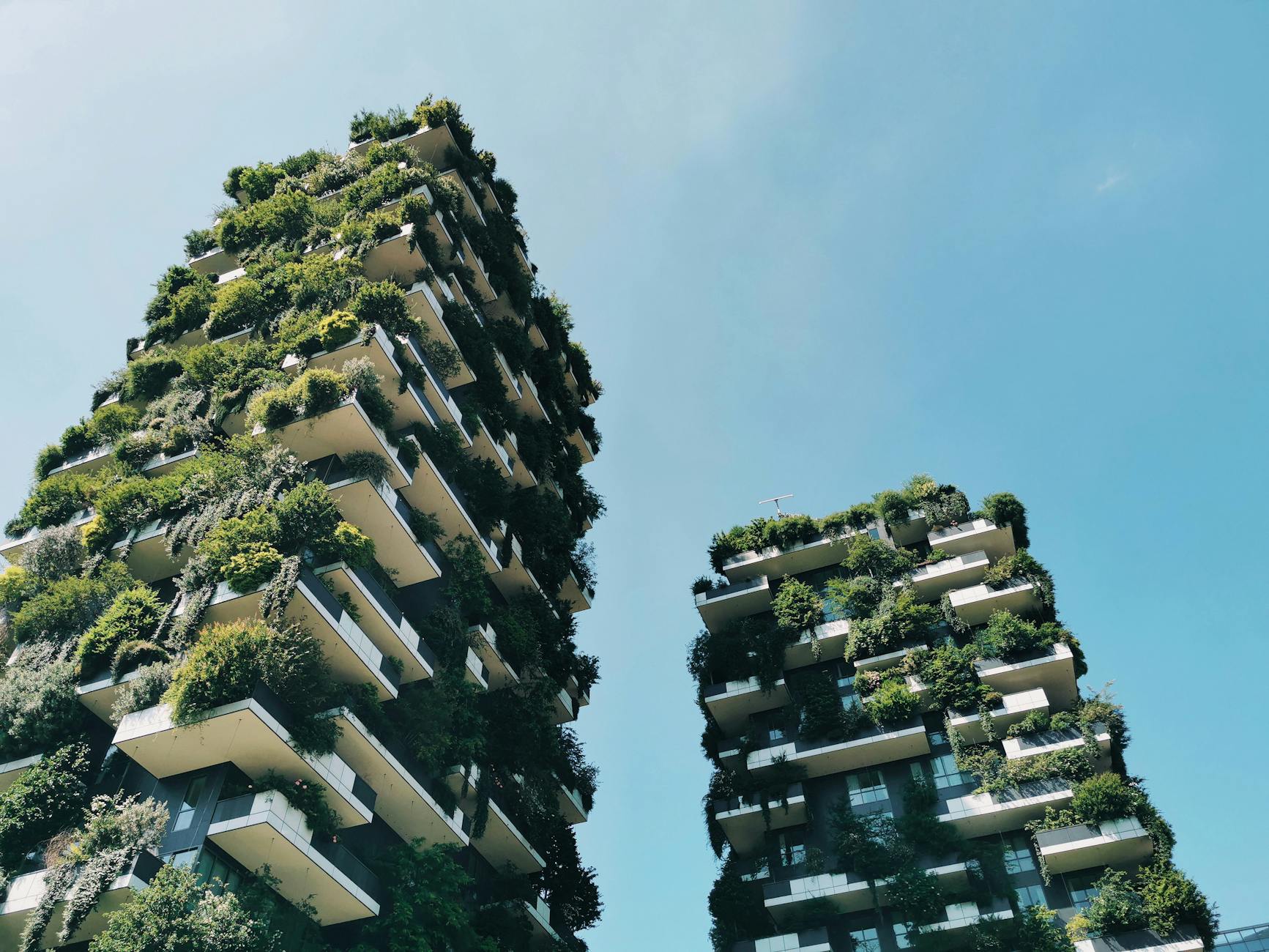
- Bosco Verticale up close. The two residential towers by Stefano Boeri (designed 2007, inaugurated October 2014) hold roughly 800 trees and 20,000 plants and shrubs across their façades. From the metro station it’s a 350-metre walk south. Go in the morning if you want the light on the east face; afternoon for the west. You can’t go inside (it’s private housing — apartments resell for €13,000+/m²) but the ground-level planters and the framed view from Via de Castillia are the shot.
- Piazza Gae Aulenti. The elevated circular plaza ringed by the UniCredit Tower (231 m, tallest in Italy if you count the spire), the Diamante tower, and the curved digital screens. Free water feature in the middle, dozens of cafés around the perimeter. A coffee here costs €2.50–€3.50 sitting down — pay it once for the view.
- BAM — Biblioteca degli Alberi. Opened October 2018. The “library of trees” was designed by Dutch studio Inside Outside and connects Isola to Porta Nuova as a single pedestrian zone. There’s free Wi-Fi, year-round free programming (yoga, concerts, kids’ workshops), and the bookable Riccardo Catella Foundation building hosts exhibitions.
- Stecca degli Artigiani 3.0. A long, low building on Via De Castillia housing artisan studios, a co-working space, and rotating exhibitions. The original Stecca was a squat that became a symbol of resistance to the Porta Nuova development; the current building, designed by Boeri, is the negotiated replacement.
- Street art on Via Pastrengo and Piazzale Archinto. Look for Pao’s penguins, Ozmo’s larger figurative pieces, and Zibe’s tags. Sunday mornings are best because the shop shutters are down and you can see the murals painted on them — including a few hidden under shutters that only show when businesses are closed.
- BAM library garden. Inside the same park complex, this is the quiet end most tourists miss — circular forests of birch and pine, benches, and the best free reading spot in central Milan.
- Mercato di Via Garigliano. Tuesday 7:30–14:00 and Saturday 7:30–18:00. Produce, fish, second-hand bric-a-brac. The pre-gentrification Isola survives here.
- Santa Maria alla Fontana. A 1507 sanctuary attributed (disputed) to Bramante, on Piazza Santa Maria alla Fontana. The lower church is built around a spring believed to have healing properties. Free, usually empty, worth ten minutes.
- Monumental Cemetery (Cimitero Monumentale). Technically just west of Isola but a five-minute walk from the metro. Open-air sculpture museum, free entry, Tuesday–Sunday 8:00–18:00. Famille tombs by Italy’s best 19th- and 20th-century sculptors.
- Blue Note Milano. Via Pietro Borsieri 37. The Italian outpost of the New York jazz club. Two shows most nights Tuesday–Sunday, dinner-and-show packages from around €55.
Where to eat in Isola
The Milan Isola food scene punches above its weight because it serves a residential population, not a tourist one. Prices are roughly 15–25% below central Milan equivalents.
- Ratanà — Via Gaetano de Castillia 28. Chef Cesare Battisti’s modernised Milanese cuisine inside the early-1900s Riccardo Catella Foundation building. Get the risotto giallo con ossobuco — about €28 for the risotto, €34 for the meat. Tasting menus from €75. The Michelin guide has it as a “Bib” alternative — book a week ahead for dinner, a day ahead for lunch.
- Berberè — Via Sebenico 21. The Bologna-born Aloe brothers’ sourdough pizza chain. Pizzas €8–€14, cut into six slices, designed for sharing. The Bufala & Friarielli is the move. Walk-ins generally fine on weekday lunches; reserve for Friday and Saturday nights.
- Frida — Via Antonio Pollaiuolo 3. The plant-filled garden bar that defined Isola’s nightlife in the 2010s and still holds up. Lunch around €15 for a daily-changing plate, dinner is platters and sandwiches €10–€18, cocktails €9. About 80 cocktails on the list and a serious craft beer selection.
- Deus Cafè — Via Thaon di Revel 3. The Australian motorcycle brand’s Milan flagship doubles as a café-restaurant and concept store. Brunch on weekends (€18–€25) is the draw — eggs, smashed avocado, decent flat white — and yes, there are vintage motorbikes parked between the tables.
- Pasticceria Gattullo alternative — Pasticceria Martesana — Via Cagliero 14, just north of Isola proper. Skip the tourist-clogged central pasticcerie. Martesana opened in 1966 and the panettone here (in season, from late October) is genuinely among Milan’s top five. Maritozzo con la panna €2.80, espresso €1.30.
For a broader take, the Milan food guide covers neighbourhood-by-neighbourhood eating across the city.
Practical tips for Isola
- Cash vs card: Every restaurant takes card. A few of the older bars on Via Borsieri are cash-only for amounts under €5.
- Aperitivo timing: 18:30–20:30 is standard. Frida, Deus, and the bars around Piazza Minniti get crowded around 19:00.
- Bathrooms: BAM park has clean public toilets near the southern entrance. Otherwise, buy a coffee.
- Photo angles for Bosco Verticale: The framed shot most photographers want — towers + Piazza Gae Aulenti skyline in the background — is from the small triangular plaza at the corner of Via de Castillia and Via Confalonieri. Morning light is sharper.
- Don’t bother with: the rooftop bar of the Excelsior Hotel Gallia (overpriced, view is actually better and free from the Garibaldi station rooftop terrace).
- Sundays: The neighbourhood market is closed, but the street-art shutters along Via Pastrengo become visible. Trade-off.
Best time to visit Isola
Weekday mornings — Tuesday through Thursday, 9:00 to 13:00 — are when the Isola neighbourhood feels most itself. Locals doing errands, artisan workshops open, no queues at any café, photographers and tourists thin enough that you can walk Via Pastrengo end to end without dodging tripods.
Saturday brunch (11:00–14:00) is the opposite: every café on Via Borsieri is full, Deus has a 40-minute wait, and Frida’s garden is wall-to-wall. Fun energy if you’re up for it; miserable if you wanted a quiet morning.
Sunday is the wild card. The morning market is closed, but the shop shutters come down and the street art doubles. Most restaurants stay open for lunch (Ratanà closes Sunday; Berberè and Frida open). It’s also the best day to walk through BAM park, which fills with families and the Bosco Verticale photo crowd thins after 16:00.
Season-wise: April–June and September–October are peak. July and August empty out as Milanese leave for the coast — half the trattorie close for two weeks in mid-August, but BAM and the metro work fine and the Bosco Verticale is in full leaf.
Where to stay near Isola
Isola itself has limited hotel stock — it’s a residential neighbourhood — but the area immediately around Porta Garibaldi gives you walking access plus the metro. Hotel ME Milan Il Duca on Piazza della Repubblica is the design-hotel pick (rooms typically €280–€420). NH Collection Milano Porta Nuova sits literally next to the Bosco Verticale at €220–€350. For budget, BB Hotels has a clean Garibaldi outpost from €130.
Airbnb-style apartments in Isola proper run €120–€220 for a one-bedroom, and you’ll genuinely live in the neighbourhood — bakery downstairs, market two blocks over. For the full city overview see the where to stay in Milan rundown.
If Isola is full or too pricey, the next-best alternatives are Porta Venezia (similarly walkable, more nightlife) or Porta Romana (quieter, better restaurants). University-area travellers sometimes prefer Città Studi for cheaper stays.
Isola FAQ
Is Isola Milan safe at night?
Yes. It’s a dense residential neighbourhood with constant foot traffic until at least midnight, especially around Via Borsieri, Via Pastrengo, and Piazza Minniti. Standard Milan precautions apply — watch your phone on the metro — but Isola has lower property crime than the Duomo area.
Can you visit the Bosco Verticale inside?
No. The towers are private apartments. The only way “in” is to book a flat on Airbnb (a few owners rent), eat at the ground-floor restaurants, or attend an architecture-tour event that occasionally includes lobby access. The exterior is the experience.
How long do I need in Isola?
Half a day (4–5 hours) covers the highlights at a relaxed pace with a sit-down lunch. A full day works if you add the Monumental Cemetery and the Blue Note evening jazz set.
Is Isola or Brera better for first-time visitors?
Different missions. Brera is historic-centre charm — cobblestones, art academy, postcard piazzas. Isola is contemporary Milan — design, food, the skyscraper-vs-village contrast. If you’ve only got one afternoon, do Brera. If you’ve got two, Isola is the second one.
Where’s the best Bosco Verticale photo spot?
The triangular plaza at Via Gaetano de Castillia / Via Federico Confalonieri, looking up the south façade. Secondary angle: from BAM park looking back at the towers with the UniCredit spire behind them.
What’s the closest metro to Isola?
M5 Isola (the lilac line) drops you on Via Borsieri at the heart of the neighbourhood. M2/M5 Garibaldi FS is a 5-minute walk south. M3 Zara is a 7-minute walk east.
Final thoughts
I keep returning to this Isola Milan guide route because the neighbourhood pulls off something most “trendy” districts fail at — it stayed liveable while it got fashionable. There’s still a barber on Via Borsieri who’s been there since 1974. The Tuesday market still sells fish at honest prices. The street art still gets repainted by the artists, not by a city PR contract. And the Bosco Verticale, ten years after it opened, somehow still feels like a strange and slightly miraculous thing to walk under on a Wednesday morning when there’s no one else around.
If you’re piecing together a longer trip, the Milan neighbourhoods overview sorts the rest of the city into a logical route. Isola earns its half-day. Give it the time.
Related Milan guides
Keep planning with our other Milan neighborhoods guide resources: