The best Milan Christmas market isn’t a single sprawling village that takes over a central square for six weeks — it’s a constellation of smaller markets, with one historic blockbuster (Oh Bej! Oh Bej!) that lights up the streets around Sant’Ambrogio basilica for four days every December. If you arrive in Milan expecting Vienna’s Christkindlmarkt or Strasbourg’s Christkindelsmärik or Nuremberg’s mulled wine fog, you’ll be confused for an afternoon and then, hopefully, charmed. Milan does Christmas its own way, and once you understand the rhythm of it — December 7 is the night, panettone is the food, La Scala is the social event, the Duomo tree is the photo — the city becomes one of the most rewarding holiday destinations in Italy.
I’ve spent six winters here now, and I’ll tell you up front: skip the influencer videos promising a “magical Milan Christmas market” with wooden chalets and snow. Those are mostly filmed in Bolzano or Verona. What Milan offers instead is a more grown-up version of the holidays — opera, panettone wars between rival pasticcerie, gift shopping in the Quadrilatero, midnight mass under one of Europe’s most spectacular Gothic ceilings, and the strange, specific magic of Capodanno in Piazza Duomo. This guide covers everything for the 2026/27 holiday season, with one extra wrinkle: the 2026 Milan-Cortina Winter Olympics have reshaped some of the usual programming, so the practical details this year are different from any past December.
Milan vs. other European Christmas city breaks
Let’s get the comparison out of the way, because it’s the single most useful thing to know before booking. Munich, Vienna, Strasbourg, Prague, Budapest, Cologne — these cities run dense, traditional Weihnachtsmärkte that operate from late November through Christmas Eve. You walk between dozens of chalets, the Glühwein is mulled to industrial scale, and the entire city centre is given over to Christmas for a month. That is the Germanic-Austrian model.
Milan is not that. Milan is an Italian commercial capital that happens to celebrate Christmas with the seriousness Italians bring to food and family. The markets here are smaller, more scattered, and frankly less impressive as pure markets. What Milan gives you that the German cities don’t:
- A Gothic cathedral lit up at night — there’s nothing in Munich or Vienna that compares to the Duomo at Christmas
- The world’s premier opera house opening its season on December 7
- Panettone at its source, from the bakeries that invented it
- Italian Christmas food culture: cenone on Christmas Eve, lavish lunches on the 25th, cotechino e lenticchie on New Year’s Day
- Shopping that’s actually worth the trip — the post-Christmas saldi begin in early January and the Quadrilatero della Moda goes into full holiday display mode
If your only goal is “European Christmas market,” go to Bolzano, Trento, or fly to Strasbourg. If you want a serious city break with culture, food, shopping, and one extraordinary night (December 7), Milan delivers something Vienna can’t. For a fuller breakdown of seasonal trade-offs across the year, see our guide to the best time to visit Milan and our overview of Milan in winter.
The Christmas markets — full guide
Milan runs a half-dozen seasonal markets, none of them as large as the famous European ones, but together they create plenty of atmosphere. Here’s the honest ranking, with the historic one first.
Oh Bej! Oh Bej! — the Sant’Ambrogio market (Dec 5–8, 2026)
This is the one. Oh Bej! Oh Bej! — pronounced roughly “oh bay, oh bay,” and meaning “oh beautiful, oh beautiful” in old Milanese — is the only Christmas market in Milan with deep historical roots. It dates to 1510, when Pope Pius IV’s emissary, the Milanese nobleman Giannetto Castiglione, came to the city for the feast of Sant’Ambrogio and distributed sweets and toys to children, who reportedly shouted “oh bei, oh bei!” at the gifts. The market has run, in some form, every December since.
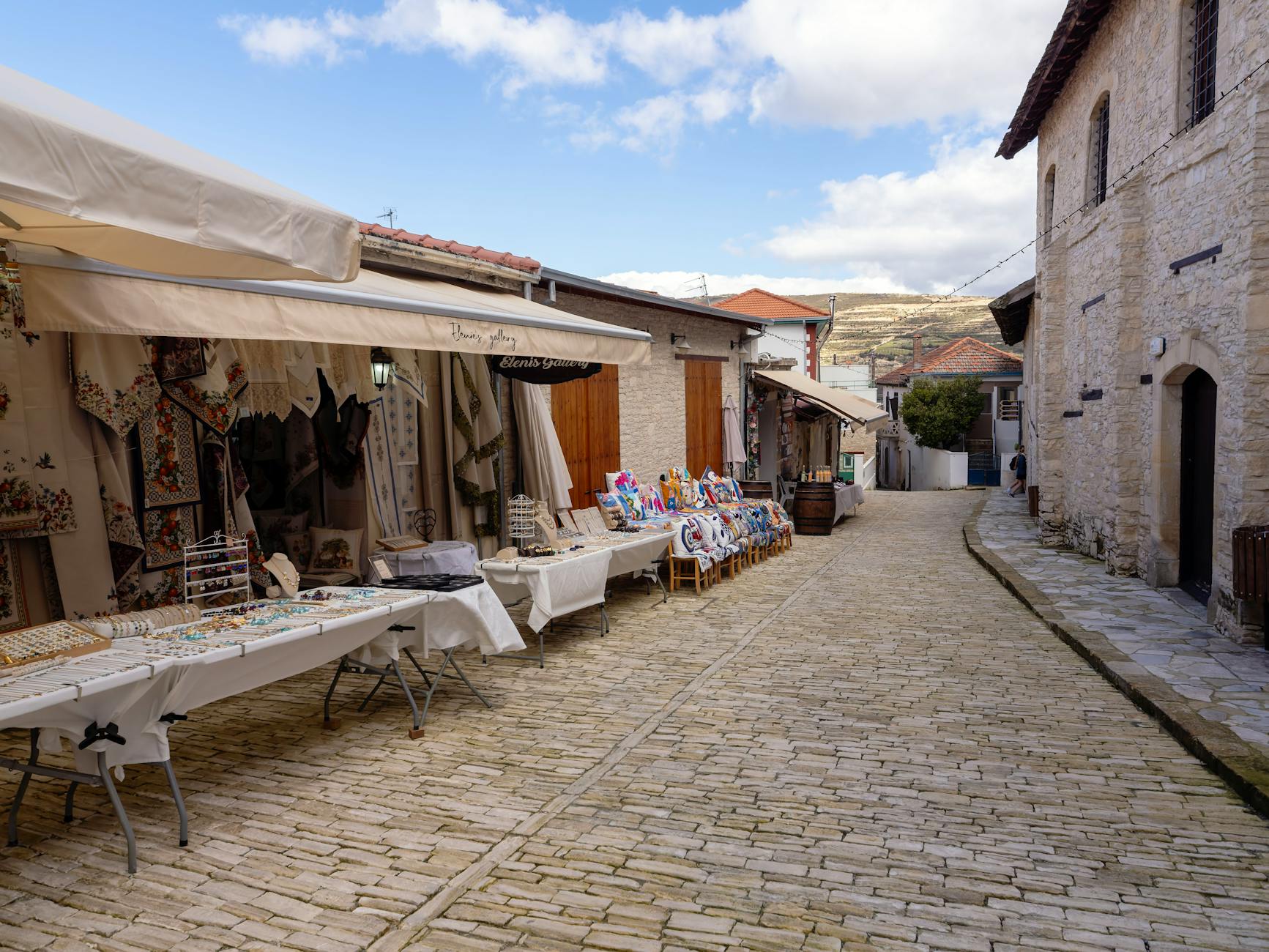
For 2026, it wraps around Castello Sforzesco from approximately December 5 to December 8 (the feast of Sant’Ambrogio falls on Monday, December 7, so the market typically runs the Friday before through the holiday Monday — confirm exact dates closer to the time, as the city sometimes shifts by a day). Around 300 stalls fill Via Beltrami, Foro Buonaparte, and the streets immediately surrounding the castle. You’ll find:
- Artisan crafts, vintage prints, antique books, and brocante
- Firunatt — strings of roasted chestnuts hung like garlands, a Milanese tradition
- Hot wine, caldarroste (roasted chestnuts), frittelle
- Religious art and nativity figurines (presepi)
- Toys, woollens, and Christmas decorations
My advice: come on the evening of December 7 itself. The market is heaving, the basilica of Sant’Ambrogio is celebrating its patron’s feast just south, and the whole city is out. Bring cash — many stalls don’t take cards. Wear waterproof shoes; Milan in early December is often cold and wet. Plan to spend two hours minimum, more if you eat your way through it.
Mercatino di Natale at the Duomo
The most photographed market is the row of about 50 wooden chalets that line Via Mengoni and the edges of Piazza Duomo / Piazza Diaz, typically open from late November through early January. This is the postcard one — chalets, fairy lights, the cathedral as backdrop. It’s also the most touristy and least authentic; the goods range from mass-produced ornaments to decent regional foods (torrone from Cremona, cheese and salumi from the Alps, hot wine). Worth a walk-through for the atmosphere and a vin brulé, but don’t expect serious shopping.
Villaggio delle Meraviglie — Giardini Indro Montanelli
The closest thing Milan has to a proper Christmas village. Set inside the public gardens at Porta Venezia, the Villaggio delle Meraviglie runs from mid-November through January 6 (Epiphany) and offers a large ice skating rink (about 1,000 m², part covered and heated, part outdoor), a smaller children’s rink, fairground rides, food stalls, and a Christmas market. Free entry to the park; pay for rides and skating. This is where you bring kids. Skate rental costs around €5–7 on top of the rink ticket; bring your own and there’s no time limit. The rink runs daily until January 6.
Mercatini in Brera and Navigli
Two of Milan’s most atmospheric neighbourhoods run small artisan markets on the December weekends. Brera hosts an Artigianato Vivo market — design objects, handmade jewellery, prints — in the streets around Pinacoteca di Brera and Via Fiori Chiari. The Navigli antique market, which runs on the last Sunday of every month all year, becomes a quasi-Christmas market in late November and December, with the canals lit up and street food vendors. Both are pleasant strolls rather than destinations, but pair well with dinner.
Castello Sforzesco markets
Beyond Oh Bej! Oh Bej!, the area around Castello Sforzesco hosts smaller pop-up markets throughout December — food markets, design markets, and the Mercatino dei Bambini for children’s gifts. Check the city’s events page when you arrive; programming shifts year to year. The Castello itself, by the way, is worth visiting in winter for the museums (free first Sunday of the month, closed December 25 and January 1).
December 7 — Milan’s biggest day
If you only come for one day in December, make it December 7. The feast of Sant’Ambrogio — patron saint of Milan — is the city’s single most important holiday after Christmas itself, and three things happen simultaneously that you can’t experience anywhere else.
First, the basilica. Sant’Ambrogio, the 4th-century basilica founded by the saint himself, holds solemn masses throughout the day on December 7. The Archbishop of Milan presides over the main morning service, and the basilica is open into the evening for veneration. The basilica is one of the most important Romanesque buildings in Italy, and seeing it on its patron’s feast day is a privilege.
Second, Oh Bej! Oh Bej! hits its peak. The market reaches saturation by mid-afternoon and stays packed until late evening. The streets around the basilica and Castello Sforzesco close to traffic. Caldarroste, hot wine, lights, music — this is when the market is at its absolute best.
Third, La Scala opens its opera season. The Prima della Scala — Opening Night — is one of the most exclusive events on the European cultural calendar. The 2026/27 season opens on Monday, December 7, 2026, and while tickets for the actual opening night are not sold to the public (they’re reserved for state dignitaries, patrons, and members of La Scala’s circles, with the President of the Republic in the royal box), you can still participate. Maxi-screens in Piazza Duomo and Piazza Scala broadcast the performance live, and bars and restaurants across the city set up viewing parties. The dress code for the theatre itself is black tie / floor-length evening gown — mandatory, not aspirational. For the full picture of how the opera house works year-round, see our La Scala Milan guide.
My honest recommendation for December 7: morning at the basilica, lunch somewhere warm (book ahead — every restaurant in centro is full), afternoon at Oh Bej! Oh Bej!, dinner at 7pm, then either watch the Prima on a screen in Piazza Duomo or in a bar (try Bar Magenta in zona Sant’Ambrogio for atmosphere). The opera typically begins at 6pm and runs until around 10:30pm.
The Duomo at Christmas
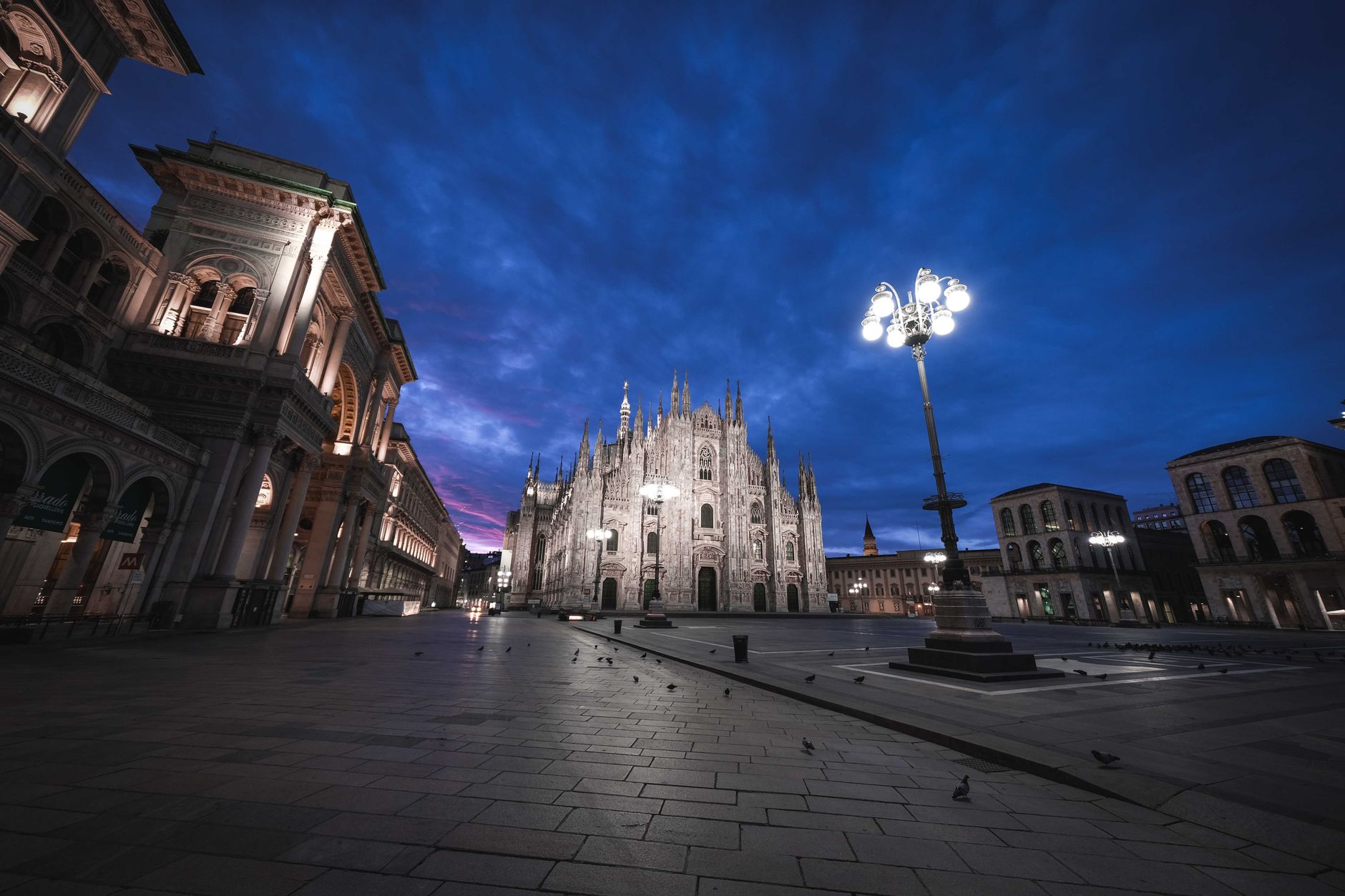
The Duomo is the centre of Milanese Christmas, both literally and emotionally. From late November through January 6, a massive Christmas tree — often billed as one of the largest in Europe, regularly between 25 and 30 metres — stands in front of the cathedral. The sponsor changes year to year (it’s been Swarovski, Esselunga, Eni; in 2026 the tree is part of the Olympic city programming). The tree-lighting ceremony in early December draws crowds and live music. Come back at night to photograph it — it’s most striking after dark, framed against the cathedral’s spires.
Inside the Duomo, you’ll find:
- The annual presepe (nativity scene), traditionally placed near the right transept
- Christmas concerts in the cathedral throughout Advent (free, but arrive early for seats)
- Midnight Mass on December 24 — the Archbishop of Milan celebrates, the cathedral is packed by 10:30pm. Doors open earlier; arrive by 10pm at the latest if you want any chance of a view
- Christmas Day mass at 11am and a vespers service at 5:30pm
Dress respectfully for any mass — covered shoulders and knees are required, this is enforced. The cathedral terraces are closed on December 25 but open Dec 24, 26, and most other days with limited hours.
Christmas food in Milan — panettone is the point
Panettone was invented here. The legend involves a 15th-century duke’s kitchen and a scullery boy named Toni who saved a burnt dessert with raisins and candied citrus — hence pan de Toni, “Toni’s bread.” The history is fuzzier than that, but the point stands: Milan is the world capital of panettone, and December is when the city’s pasticcerie compete to produce the most ethereal version.
A few things to know before buying. Real panettone is artisanal, made with a wild yeast starter (lievito madre), takes 30+ hours to rise, and costs €30–50 for a 1kg loaf. Supermarket panettone (Bauli, Motta, Tre Marie) is fine — most Italians eat it without complaint — but if you’ve come all this way, get the artisan version. Look for the words artigianale and lievito madre.
The bakeries I’d queue at:
- Pasticceria Marchesi 1824 (Via Santa Maria alla Porta, Via Monte Napoleone, Galleria Vittorio Emanuele) — Prada-owned now, deeply elegant, three locations including one inside the Galleria. The classic panettone is balanced and floral; their chestnut version is a winter speciality
- Pasticceria Cova (Via Monte Napoleone, since 1817) — the oldest in this list, in the heart of the Quadrilatero. Light, delicate panettone with a slight citrus dominance. Also famous for their hot chocolate
- Pasticceria Cucchi (Corso Genova, since 1936) — my personal favourite for the classic. Cucchi makes a panettone milanese classico with no glaze, no sugar topping, no inflated height — just the original recipe. This is what panettone tasted like before the supermarket version standardised it
- Sant Ambroeus (Corso Matteotti) — yes, the famous one with branches in New York. The Milan original is still wonderful; their panettone is creamy and well-yeasted
- Pasticceria Martesana (Via Cagliero) — outside the centre but worth the trip; their panettone has won national awards repeatedly
One note for visitors who’ve spent time in Naples: struffoli (those honey-glazed dough balls) are Neapolitan, not Milanese. You won’t find them in proper Milanese pasticcerie. What you will find: panettone, pandoro (Veronese cousin, no fruit, dusted with vanilla sugar), torrone (nougat, especially from Cremona), and mostarda (mustard-fruit preserve, served with boiled meats).
For Christmas Eve, Milanese families traditionally eat a lighter fish-based dinner (the old vigilia tradition). Christmas lunch on the 25th is the big one: tortellini in brodo or cappelletti, cotechino or bollito misto with mostarda, and panettone with mascarpone cream. For where to eat the rest of the year, see our Milan food guide.
Before you leave, buy the cake properly — our guide to the best panettone in Milan covers Martesana, Pavé, Marchesi and Cova, and what to pay for each.
New Year’s Eve in Milan — Capodanno 2026/27
An important update for this year. The traditional free concert in Piazza Duomo on New Year’s Eve will not take place in 2026/27. The square is largely occupied by Milan-Cortina Winter Olympic infrastructure — the giant Christmas tree, the official Olympic store, and the new media tower that will host international broadcasters during the Games (which begin in February 2027). This is a meaningful change from past years, when artists like Mahmood, Marracash, and Elodie have headlined free open-air concerts that drew tens of thousands.
What’s happening instead:
- Piazza Duomo remains the gathering point for the countdown — the square will be open and lit, with informal celebrations, but no main stage concert
- The Milan Symphony Orchestra performs Beethoven’s Ninth across four nights at the Auditorium di Milano (December 29, 30, 31, and January 1) — a traditional New Year’s programme
- Harlem Gospel Choir at Blue Note Milano for the New Year’s set
- Teatro Civico Roberto de Silva in Rho hosts Paolo Rossi for a New Year’s cabaret
- Hotels, clubs, and restaurants run their own cenone dinners — fixed-price multi-course New Year’s Eve menus, typically €150–400 per person, often with party afterwards
The traditional Milanese way to spend New Year’s Eve is cenone di San Silvestro — a long, late, expensive dinner with friends or family, usually featuring cotechino con lenticchie (a pork sausage with lentils, the lentils symbolising coins for the year ahead). Reservations for serious restaurants need to be made two to three months in advance; by mid-November almost everywhere good is full. If you haven’t booked by the time you’re reading this, focus on hotel restaurants (Park Hyatt, Mandarin Oriental, Bulgari all run excellent cenoni with availability later than independents), or look at the aperitivo-style hotel rooftops in Porta Nuova.
Fireworks: legally restricted in central Milan, but the city tolerates limited displays on December 31. Expect informal fireworks from balconies and parks around the centre at midnight, and an organised display in some peripheral squares (programming varies year to year). Don’t expect a Sydney-Harbour-style show.
One practical warning: Italians traditionally throw old crockery, fruit, and the occasional small firework out of windows at midnight on December 31. This is less common in central Milan than in southern Italy, but stay alert under balconies on side streets.
January 6 — Epiphany / La Befana
The 12 days of Christmas in Italy run from December 25 through January 6 — Epiphany, called la Befana here. La Befana is the kind, broom-riding old woman who brings sweets to good children and coal (now sugar coal — carbone dolce) to bad ones, the night of January 5. She’s older than Santa Claus in Italian tradition and still beloved.
On January 6, you’ll find:
- Stalls in Piazza Duomo selling Befana stockings stuffed with sweets and chocolate coal
- A final day of operation for most Christmas markets (they close after January 6)
- A traditional Befana parade — informal, organised by neighbourhood associations, usually in the morning
- Most shops closed (it’s a public holiday); museums on holiday-Sunday hours
By January 7, Milan returns to normal weekday rhythm and Christmas decorations come down quickly.
Christmas shopping in Milan
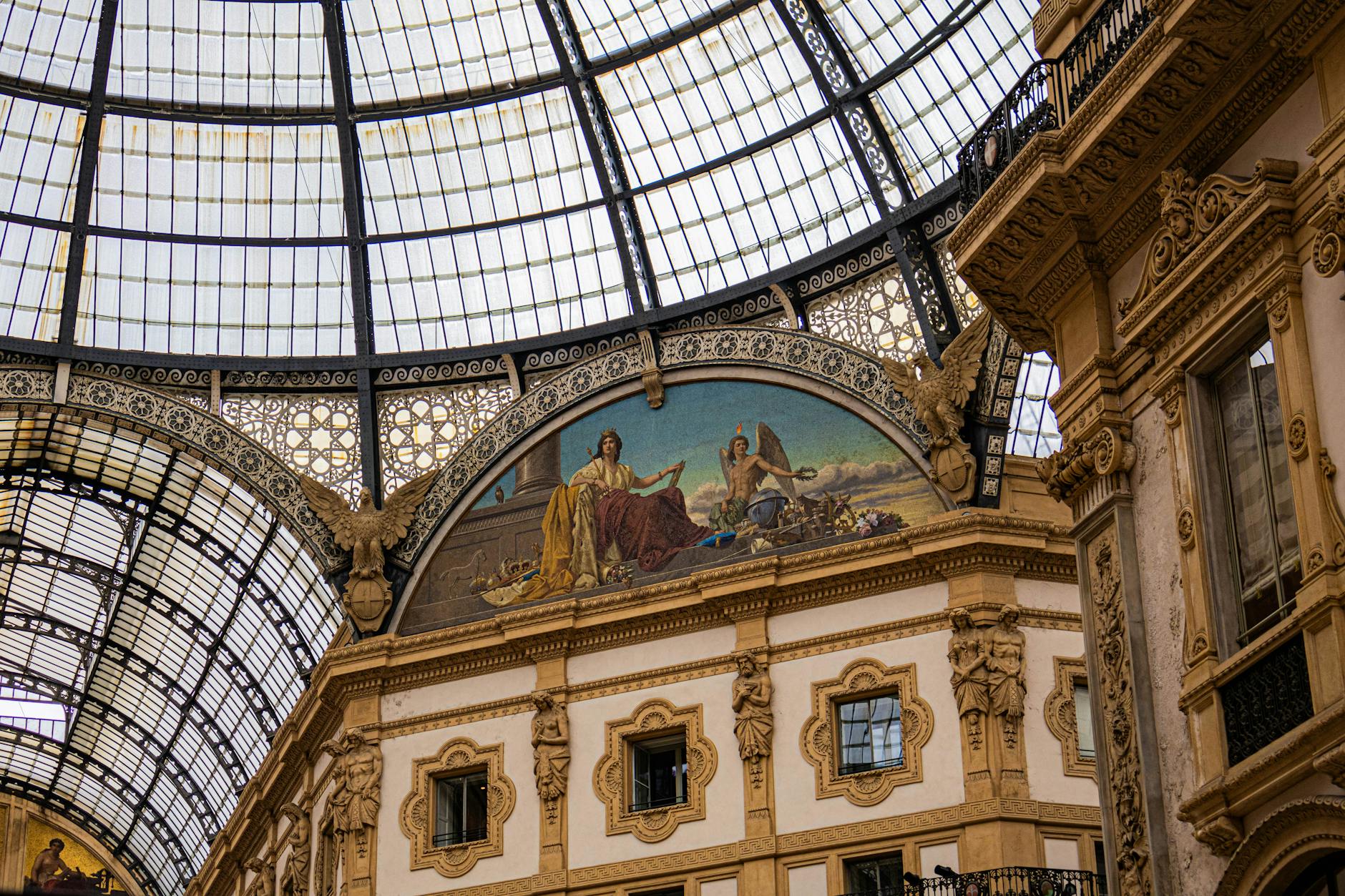
Milan is one of the world’s great shopping cities, and December is when it shows off. The Galleria Vittorio Emanuele II — the iron-and-glass arcade that connects Duomo and Scala — wears its best lights, the Prada and Louis Vuitton windows go all in, and the Quadrilatero della Moda (Via Monte Napoleone, Via della Spiga, Via Sant’Andrea, Via Manzoni) becomes the most expensive few blocks in Italy. Even if you’re not buying, the windows are worth a walk.
Practical shopping notes for the holiday season:
- Italian winter saldi begin January 3, 2027 — confirmed regional date for Lombardy. Discounts start at 30% and creep to 50% and 70% through January. Christmas itself is full-price; if you want a bargain, come the first week of January
- Most shops close from December 25 morning through December 26 evening. December 24 they close around 1–2pm. Reopen normally on December 27
- Triennale Design Museum gift shop (Viale Alemagna, Parco Sempione) — the best place in Milan for design-object gifts, books, ceramics, and lighting. Open all of December except the 25th and January 1
- 10 Corso Como remains the iconic concept store — books, fashion, design — and runs special holiday programming
- Rinascente department store (next to the Duomo) does the full Christmas window treatment and stays open extended evening hours through December 23. The rooftop bar is a good warming station
For a full neighbourhood-by-neighbourhood walkthrough, see our Milan shopping guide.
What’s open and closed: December 25, 26, and January 1
This is the practical part. Italy takes its Christmas closures seriously. Plan accordingly.
December 25 (Natale) — most things closed:
- Closed: The Last Supper (Cenacolo Vinciano), Castello Sforzesco museums, Pinacoteca di Brera, Triennale, most independent restaurants, all supermarkets, almost all shops, Duomo terraces
- Open: Duomo cathedral itself (for mass), most churches for mass, Museo del Novecento, Palazzo Reale (afternoon only, typically 2:30–7:30pm), hotel restaurants, a few touristy restaurants near Duomo, transit (reduced)
December 26 (Santo Stefano) — partial closure:
- Closed: Most independent shops, most independent restaurants, Pinacoteca di Brera, some smaller museums
- Open: Major museums including Duomo terraces, Castello Sforzesco, Triennale, Last Supper (book in advance), department stores like Rinascente, hotel restaurants, transit (Sunday timetable)
January 1 (Capodanno) — similar to December 25:
- Almost everything closed in the morning
- Many museums open from 2pm onwards (check individually)
- Last Supper closed entire day
- Public transit on holiday schedule — Metro starts later, runs less frequently
The Last Supper specifically: book your tickets the moment they go on sale (about three months ahead). December slots fill out before October. If you’re determined to see it, plan around the closures: December 27, 28, 29, 30 are good options.
For everything in December that is not about markets, the Prima or New Year’s Eve — the weather, the opening-hours calendar and how prices move week by week — see our guide to Milan in December.
Best places to stay during Christmas in Milan
For a Christmas trip, location matters more than usual — you want to be able to walk to the Duomo, Sant’Ambrogio, and the central markets without depending on a tram that may be running a reduced schedule. My ranking by neighbourhood:
- Duomo / Centro — best for first-time Christmas visitors. Park Hyatt, Mandarin Oriental, Senato Hotel are all within walking distance of every market. Splurge zone
- Brera — slightly quieter, full of restaurants and the Brera artisan markets. Good mid-range options including Antica Locanda Solferino
- Porta Nuova / Garibaldi — modern, glass towers, the Bosco Verticale, the Christmas tree at Piazza Gae Aulenti. Hotel Viu Milan and ME Milan Il Duca are walkable to everything
- Porta Venezia — best for families. Villaggio delle Meraviglie is in the gardens. Tram and metro into centro
- Navigli — atmospheric for dinners, but a longer walk to the Sant’Ambrogio area. Quieter and cheaper
Avoid: anywhere near Stazione Centrale (functional but joyless), or out in the suburbs. Christmas-week prices climb 30–60% over off-season; book by October if possible.
Practical tips for a Milan Christmas trip
- Book restaurants 2–3 months ahead for Christmas Eve, Christmas Day, December 26, and New Year’s Eve. By mid-November the good places are full
- Weather: Milan in December averages 1–7°C, often grey, occasionally foggy (the city’s famous nebbia isn’t as thick as it used to be but still appears). Rain is more common than snow. Pack warm layers, waterproof shoes, a heavy coat. Real snow is rare but possible — January is colder than December
- Midnight Mass dress code: covered shoulders, no shorts, no bare midriffs. This applies year-round in churches but is enforced more strictly at Christmas. Smart-casual at minimum for the Duomo midnight mass
- Transit: Metro and trams run on reduced schedules on December 25, 26, and January 1. The Metro typically starts later (7am instead of 6am) and runs every 8–12 minutes instead of 4–5. Plan ahead
- Cash: Many market stalls and small pasticcerie are cash-preferred. Carry €100 in small bills
- Tipping at the cenone: 5–10% is appropriate for a special-occasion meal, even though tipping isn’t a strong Italian tradition. The staff worked Christmas Eve or New Year’s Eve
- The Olympics factor: Milan-Cortina 2026 runs February 6–22, 2027. December and January will be increasingly busy with pre-Olympic visitors, media setup, and some venue closures. Hotel prices in late January will be higher than a normal post-Christmas dip
Day trips with Christmas atmosphere
Milan sits inside one of Italy’s best regions for day trips, and several nearby cities do Christmas better than Milan itself.
Bergamo — 45 minutes by train. The Città Alta (upper town), walled and medieval, runs one of the most atmospheric Christmas markets in Lombardy on weekends in December. Mulled wine, raclette, small artisan stalls, all set against medieval architecture and views over the plain. See our Bergamo day trip from Milan guide.
Como — 40 minutes by train. The lake in winter is hauntingly beautiful, often misty in the mornings. The town hosts a Christmas village called Città dei Balocchi with light projections on the cathedral facade, a market, and ice skating. The ferry across the lake is reduced in winter but still runs.
Verona — 1h15m by Frecciarossa. This is where to go if you want a “proper” Italian Christmas market — Piazza Bra and Piazza dei Signori fill with Nuremberg-style wooden chalets (Verona partners with Nuremberg formally), with mulled wine and Bavarian sausages. Day trip easy, even returns in time for dinner in Milan.
Bolzano — 3 hours by train. The most authentic German-style Christmas market in Italy, in South Tyrol. Worth an overnight rather than a day trip, but possible as a long day if you take an early train.
Cremona — 1 hour by train. Home of torrone (Italian nougat) and Stradivari violins. The annual Festa del Torrone runs in November, but December still has the market in Piazza del Comune and the cathedral lit up beautifully.
FAQ — Milan Christmas market questions
When is the Oh Bej Oh Bej market in 2026?
December 5–8, 2026, surrounding Castello Sforzesco. The feast of Sant’Ambrogio falls on Monday, December 7. The market traditionally runs from the Friday before through the feast day itself.
Is the New Year’s Eve concert in Piazza Duomo happening in 2026/27?
No. The traditional free concert is cancelled this year because the square is occupied by Milan-Cortina Winter Olympic infrastructure (Christmas tree, official store, media tower for the February 2027 Games). The square is still the main gathering point for the countdown but without a main stage.
What’s the best Christmas market for shopping vs atmosphere?
For shopping with real artisan goods: Oh Bej! Oh Bej! at Castello Sforzesco. For atmosphere and photos: the wooden chalets at Piazza Duomo and the lit-up Galleria. For families: Villaggio delle Meraviglie at Giardini Indro Montanelli with ice skating.
Can I see La Scala’s opening night without a ticket?
Tickets for the actual December 7 Prima are not sold to the public. However, the performance is broadcast on maxi-screens in Piazza Duomo and Piazza Scala, and many bars host viewing parties. You can also try for tickets to the second performance later in the run.
Is Milan worth visiting at Christmas if I’ve already been to Vienna or Munich?
Yes, but for different reasons. Milan is not a market-focused Christmas destination; it’s a city break with Christmas atmosphere added. Come for La Scala, the Duomo, panettone, shopping, and the food culture — not for an immersive German-style market.
What should I eat in Milan at Christmas?
Panettone (from Marchesi, Cova, Cucchi, or Martesana), cotechino con lenticchie on New Year’s Day, bollito misto con mostarda, tortellini in brodo for Christmas lunch, hot chocolate denso (the thick Italian version), and roasted chestnuts (caldarroste) from any street vendor.
How crowded is Milan during Christmas week?
Less than you’d think. Italian families travel out of Milan for the holidays (to family in the south or to the mountains), so the city actually empties slightly between December 24–26. The crowds return for New Year’s Eve and stay through January 6. Compared to Florence or Venice at the same time, Milan feels positively spacious.
Final thoughts
Milan’s Christmas is a quieter pleasure than the big German-Austrian markets, and that’s exactly what makes it good. You won’t spend four days drinking Glühwein in a wooden chalet, but you will spend an evening watching the world’s most beautiful Gothic cathedral light up against a December sky, you will eat panettone better than anything you’ve ever tasted in a supermarket, you will see Italians dressed to the teeth for opening night at La Scala, and — if you plan around December 7 — you’ll get one extraordinary night in the streets of Sant’Ambrogio that justifies the whole trip.
Plan around the holidays’ rhythm rather than against it. Book restaurants in October and November. Accept that December 25 and January 1 are quiet days and use them for the museums that stay open or a long lunch at a hotel. Walk between markets instead of trying to do all of them in one day. Eat panettone every morning. Skip struffoli — wrong city. Come for December 7 if you can, otherwise aim for the long weekend of December 5–8.
The Milan Christmas market won’t be the centrepiece of your trip the way Vienna’s is. La Scala, the Duomo, panettone, and one perfect night around Sant’Ambrogio will be. That’s a better trade than it sounds.