Milan in winter is the version locals secretly prefer. December has Christmas markets at the Duomo and Castello, the Scala opens its season on December 7 — the city’s biggest social night of the year — and the saldi (winter sales) start the first weekend in January, slicing 30-50% off the same boutiques you couldn’t afford in October. The weather honest answer: 1-7°C most of December, the occasional dip below zero in January, and the fog Milanese call la nebbia, which rolls in on still mornings and sits in the city like a wet sheet. It’s not snow. It’s gray. The trade-off is hotels that cost half what they do in spring, restaurants that take walk-ins, and a city that finally has time for you.
I’ve spent every kind of winter here — the bone-dry cold of January 2024, the wet gray slog of February 2025, one freak snow morning in December that turned the Galleria into a postcard. None of them were bad. All of them were cheaper, quieter, and in their own way more honest than the polished spring version of Milan everyone else gets. This guide is the case for going in the months no one tells you to.
For a season-by-season comparison, see our best time to visit Milan overview, or compare with Milan in autumn and Milan in spring.
Is winter a good time to visit Milan?
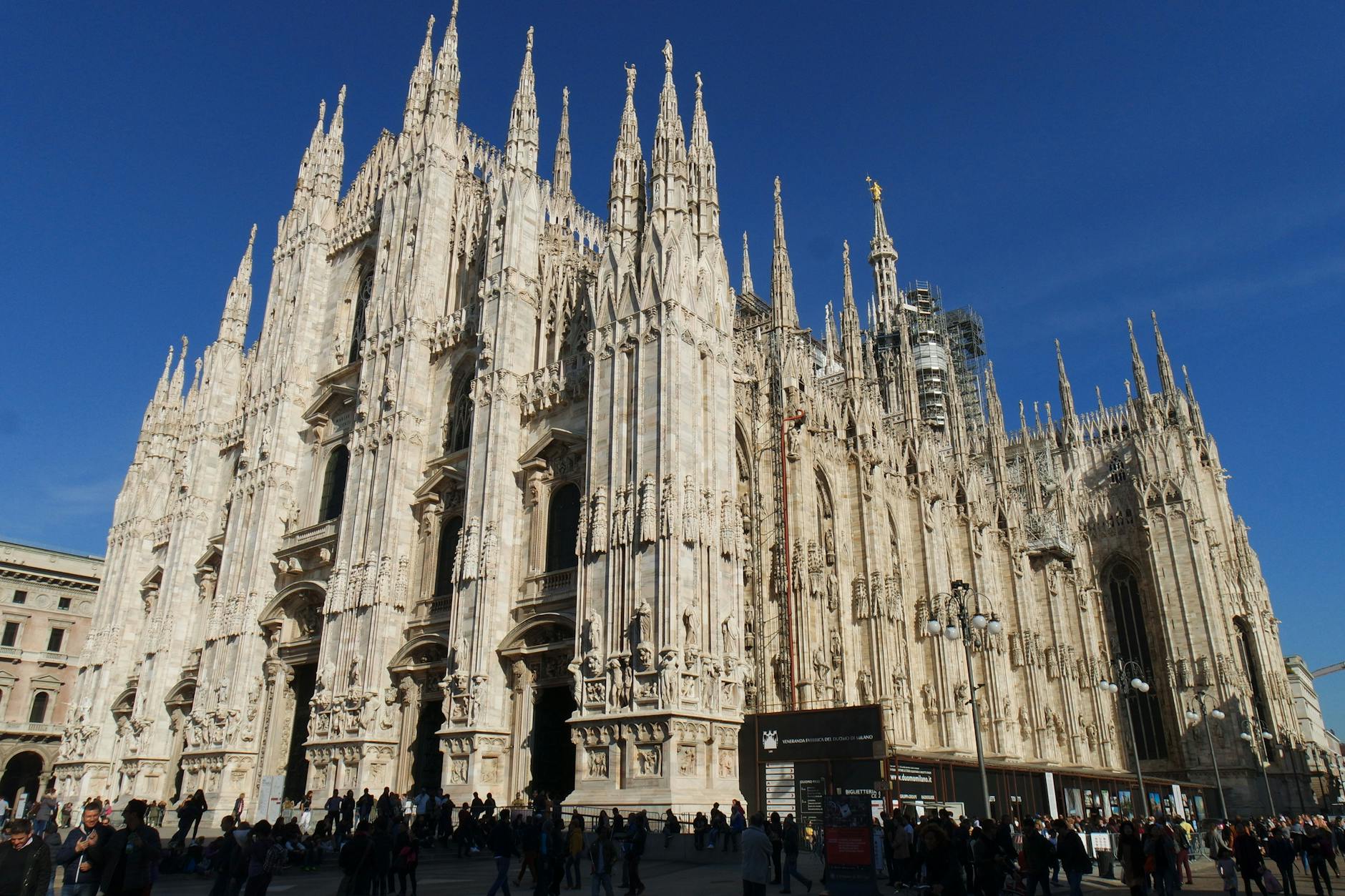
Short answer: yes, if you’re honest with yourself about what Milan is. Milan is not Florence or Rome — it doesn’t sell itself on weather. It sells itself on culture, food, fashion, and a peculiar industrial elegance that actually looks better under a flat winter sky than under harsh August sun. The Duomo’s spires read sharper against gray. The Galleria’s gold mosaic glows warmer when it’s cold outside. The trams steam past with their windows fogged. Winter in Milan has a mood.
The case in numbers: a four-star hotel in the Quadrilatero that runs €380 in May drops to €170-220 in January. Restaurants that need reservations three weeks out in October take walk-ins on a Tuesday in February. The Last Supper, normally booked out months ahead, has same-week slots in January. Lines at the Duomo terrace move in minutes, not hours. And the museums — the Pinacoteca di Brera, the Museo del Novecento, the Gallerie d’Italia — are made for a gray day. You were going to spend time indoors anyway. Winter just makes that the obvious choice.
What you give up: outdoor aperitivo on a Navigli terrace, long walks without a coat, the rooftop pools, the easy day trips to Lake Como when the boats run on a full schedule. What you gain: the city as a working city, not a stage. That’s the trade.
Milan winter weather: what to actually expect
Milan sits in the Po Valley, which is a flat basin ringed by the Alps to the north and the Apennines to the south. This geography traps cold air and moisture in winter — the result is a damp, still cold that feels colder than the thermometer says, and the famous fog. Here’s the month-by-month reality.
December: daytime highs 6-8°C, nighttime lows 0-2°C. Rain on roughly 7-9 days. Occasional dense fog, especially early mornings. Snow possible but uncommon in the city itself — maybe one or two dustings per season, sometimes none at all. Daylight is short: sunrise around 7:50, sunset around 16:40 by the solstice.
January: the coldest month. Daytime highs 5-7°C, nighttime lows -1 to 1°C. Cold snaps can pull the daytime high below freezing for a few days. Less rain than December but more fog — the still, clear cold nights produce the densest morning nebbia. Daylight starts to lengthen by mid-month.
February: still cold, but the light shifts. Daytime highs 8-10°C, nighttime lows 1-3°C. Occasional snow showers, occasional bright sun, occasional weeks of gray. February is the most variable month — pack as if for either January or early March. By the end of February you can feel spring threatening.
For a full month-by-month breakdown including rainfall and humidity, see our Milan weather by month guide.
The fog deserves its own paragraph. La nebbia is not London drizzle and it’s not San Francisco rolling mist — it’s a thick, low cloud that settles into the streets at ground level. On the worst mornings you can see maybe fifty meters. By noon it usually burns off. It’s atmospheric, slightly disorienting, and very Milanese. Carlo Emilio Gadda wrote about it. Take photos. Wear something waterproof anyway because it makes everything damp.
Winter arrives early here in everything but the calendar. For the month that sets it up — grey, cheap and empty — see Milan in November.
December in Milan
December is the month Milan dresses up. Lights go up along Via Dante and Corso Vittorio Emanuele in late November, the Galleria gets its enormous tree, and the city’s three main Christmas markets settle in for the season.
Christmas markets: the biggest is the Mercatino di Natale degli Oh Bej! Oh Bej!, which runs the four days around the Sant’Ambrogio festival (December 5-8) at Castello Sforzesco. It’s the historic one — going since the 16th century, originally honoring Milan’s patron saint. Hot wine, roasted chestnuts, antiques, handmade gifts. Crowded but worth it. There’s also the market in Piazza Duomo running through most of December and a smaller, more curated artisan market at the Villaggio delle Meraviglie in Giardini Indro Montanelli, which has an ice rink as well.
Sant’Ambrogio (December 7): Milan’s patron saint day and the start of the city’s Christmas season proper. Most Milanesi treat the 7th and 8th (the Immaculate Conception, a national holiday) as a single long weekend. Many shops have reduced hours or close for at least the 8th. The 7th is also the night of:
La Scala’s opening night (Prima della Scala): the single most important date on Milan’s social calendar. The new opera season opens on December 7 every year with a gala performance attended by politicians, fashion designers, actors, and the kind of old Milanese families who have had a box since the 19th century. You will not get a ticket unless you booked months ago and have a budget that starts at a thousand euros. But you can stand outside on Via Filodrammatici and watch the arrivals, and you can watch the live broadcast (it’s screened on RAI and in several public squares around the city). For year-round opera planning, see our La Scala Milan guide.
Christmas Day and the 26th: Italy treats Natale and Santo Stefano (December 26) as a back-to-back two-day holiday. Most restaurants and almost all shops close on the 25th. Many reopen on the 26th but with reduced hours. Plan accordingly — book your Christmas Day dinner well in advance if you want one, or stock up the day before. For a full breakdown of holiday logistics, see our Milan Christmas and New Year guide.
Capodanno (New Year’s Eve): Milan’s main NYE celebration is in Piazza del Duomo, with a free concert and fireworks at midnight. It’s crowded, loud, and surprisingly cold by midnight — dress for standing outside for three hours. If a stadium concert isn’t your thing, most restaurants offer a cenone (big dinner) menu, usually around €100-180 per person, often including wine. Book by mid-December.
The month that carries the whole season is also the trickiest to plan: Milan in December covers the nine hours of daylight, the Sant’Ambrogio and Immacolata closures, and the fortnight when prices drop back.

January in Milan
January has two halves. The first week is dead quiet — locals are still on holiday, many restaurants close from December 26 through January 7 or so, and the city feels strangely empty. Then everything snaps back at once.
Epiphany (January 6, La Befana): the official end of the Italian Christmas season and a national holiday. Italian children get presents from the Befana, a kind witch who flies on a broomstick. There’s usually a costume parade through the center, ending at the Duomo, in the morning. Most shops are closed. Many Milanesi consider this the actual end of Christmas — decorations come down on the 7th.
The saldi (winter sales): this is the big one. By Italian law, the official winter sales period starts on the first Saturday after January 6 and runs for about 60 days. Discounts begin at 20-30%, drop to 40-50% by the second week, and reach 60-70% by mid-February on remaining stock. Everything participates — designer boutiques in the Quadrilatero, mid-range stores on Corso Buenos Aires, department stores like La Rinascente. If you came to Milan to shop, this is the trip to plan. Go early in the sales for best selection, later for best prices.
Milan Men’s Fashion Week: usually runs four or five days in mid-January (typically the third week). The shows themselves are invitation-only but the city visibly changes — front-row faces in the cafes, paparazzi outside hotels, the bars in Brera and Porta Nuova get noisy. Hotels in the center spike for those four nights. If you’re not in fashion, just book around it or treat it as ambient theater. Check our Milan events and festivals calendar for exact dates each year.
The weather in January is the coldest of the year. This is the month for an honest winter coat — not a windbreaker. The good news: the cold is dry and clear more often than not, which makes for the most beautiful low-angle winter light, especially on the Duomo’s marble around 3pm.
For the month in detail rather than the season, Milan in January has the exact averages, the sales dates and an honest list of what is closed until spring.
February in Milan
February is the in-between month — still cold, often gray, occasionally surprising. It’s also the cheapest month to visit Milan if you avoid Valentine’s Day weekend and the Carnevale finale.
Carnevale Ambrosiano: here’s a quirk worth knowing. Milan follows the Ambrosian rite, a liturgical calendar slightly different from the rest of Catholic Italy, and as a result the city’s Carnevale runs a week later than everywhere else. While Venice and Rome are wrapping up on Fat Tuesday (Martedì Grasso), Milan keeps going until the Saturday after — Sabato Grasso. Children dress up, there’s a parade through the center on the final Saturday, and bakeries fill with chiacchiere (sugar-dusted fried dough strips) and tortelli (fried, cream-filled doughnuts). It’s lower-key than the Venetian version but charming, and it means you can see two Carnevali in one trip if you want.
Milan Fashion Week (Womenswear): the autumn/winter collections show in late February — usually the last week of the month. Same dynamic as January Men’s Week, just bigger and noisier. Hotel rates spike, the bars get loud, the central streets are full of black town cars. Worth knowing before you book.
February is also the month most likely to surprise you with actual snow. It doesn’t happen every year, but when it does it’s usually a light dusting that turns the rooftops white for half a day and sends every Milanese onto social media at once. If it happens, get to the Castello or the Cimitero Monumentale before noon for the photos.
For the month rather than the season, Milan in February has the carnival dates, the fashion week warning and the exact point at which the light starts coming back.
What to wear and pack for Milan in winter
Milan is a fashion city, and even in winter people dress carefully — but functionally. You’ll see real wool coats, leather boots, cashmere scarves wrapped twice. You will not see ski jackets unless someone is genuinely on their way to the Alps. The dress code is closer to “expensive Berlin” than “casual New York.”
What I actually pack for a December-February trip:
- A proper wool or wool-blend coat, knee-length. A windbreaker will leave you cold by the second day.
- Two or three thin merino base layers — easier to layer than thick sweaters.
- One real sweater for the cold days.
- A scarf, gloves, and a hat. The hat is optional if you have hair; the scarf is not.
- Waterproof boots that walk well on cobblestones. Milan’s centro is full of sampietrini (cobblestone) and they get slick in the wet.
- An umbrella, ideally compact. Rain is rarely heavy but frequent.
- A pair of nicer shoes if you’re doing Scala or a serious restaurant — Milanesi notice footwear.
- Layers you can shed indoors. Buildings, restaurants, and the metro are heated to genuinely warm — sometimes too warm.
One specific tip: the metro and the indoor shopping passages (Galleria, Corso Vittorio Emanuele) are heated aggressively. You will spend half your day taking your coat off and putting it back on. A coat with deep pockets and a scarf you can stuff into them is worth more than any single fancy item.
Top winter things to do in Milan
Winter is when Milan’s indoor culture stops being a backup plan and becomes the actual point. Here’s where to spend your time.
La Scala (season runs December through July): beyond the opening night, the regular season has opera, ballet, and symphonic concerts almost every night. Tickets for non-gala performances start around €13 for upper gallery seats and run to €250+ for orchestra. Same-week tickets are often available in January and February for less-famous productions. Even if you’re not an opera person, do one performance for the building alone.
The Pinacoteca di Brera: Milan’s main fine art museum, with Mantegna’s Dead Christ, Raphael’s Marriage of the Virgin, and Caravaggio. The galleries are beautifully lit and warm. Allow two hours minimum.
Museo del Novecento: 20th-century Italian art, with views directly across Piazza del Duomo from the upper floors. The Futurist rooms are worth the ticket alone. The cafe on the top floor is a quiet, warm escape with the best free view of the Duomo’s facade.
Gallerie d’Italia (Piazza della Scala): a free-ish (small fee, often promotions) museum spread across three converted palazzos with Italian 19th and 20th-century art, plus interesting temporary exhibitions. Underrated.
Cenacolo Vinciano (The Last Supper): January is the easiest month of the year to get a same-week booking. Slots are 15 minutes, groups of 18, and you must book in advance even in winter — but where in summer that means six weeks out, in January it can mean three days.
Hammam Milano (and similar): a hammam in winter is the most underrated Milanese experience. Hammam Milano in Porta Venezia and QC Termemilano (across from the Porta Romana station, with outdoor pools that stay warm in winter and a view of a Roman wall) are both worth the half day.
Hot chocolate culture: this is real. Milanese hot chocolate is thick — closer to melted chocolate than to a drink. Try Marchesi 1824 in the Galleria (the Prada-owned grand cafe), Cova in the Quadrilatero, or Pasticceria Marchesi in Via Santa Maria alla Porta. Expect €6-8 for a proper one. Worth it.
Indoor markets: Mercato Centrale at Stazione Centrale is open year-round and is a genuinely good food hall on a cold day. Eataly Smeraldo has cooking classes in winter that book up early. The Mercato Comunale at Piazza Wagner is a working neighborhood market that’s lovely on a Saturday morning.
The Games are over but the venues are not — our guide to the Winter Olympics legacy covers what was built, what survived and what you can still visit on a winter trip.

Winter shopping: the saldi explained
If shopping is part of your trip, time it to the saldi. The Italian sales calendar is regulated by law — winter sales must start on the first Saturday after January 6 and run a minimum of 30 days, typically extending to early March. Stores are required to display both the original price and the sale price, so you can see the actual discount.
Where to shop, in winter specifically:
- Quadrilatero della Moda (Via Montenapoleone, Via della Spiga, Via Sant’Andrea): luxury — Prada, Armani, Dolce, Gucci. Sales here are real but the markdowns are usually 20-40%, not the deep 60% you’ll see elsewhere.
- Corso Buenos Aires: mid-range and high-street. Long, walkable, and home to almost every Italian and international brand you can think of. Best sales density in the city.
- Via Torino and Corso Vittorio Emanuele: youth-oriented, fast fashion, accessories. Crowded on Saturdays.
- La Rinascente (Piazza Duomo): Milan’s grand department store, eight floors, very good food hall on top with a Duomo view. Their saldi floor signage is excellent.
- Outlet day trips: Serravalle Designer Outlet is an hour southwest by shuttle from Milano Centrale, with 300+ stores. Combine with saldi dates for genuine 70%+ discounts on previous season designer stock.
A practical note: Italian sizing runs small in clothing and especially in shoes. Try things on. Many stores will not exchange sale items.
Where to eat in Milan in winter
This is the season for the heavy, butter-yellow, slow-cooked dishes Milanese cuisine is actually built around. Forget the salads — winter is when this food makes sense.
Cassoeula: the Milanese winter dish. Pork (ribs, sausage, sometimes the cheaper cuts) stewed for hours with Savoy cabbage until the whole thing collapses into one savory, deeply flavored mass. Traditionally served over polenta. Most trattorias only put it on the menu from November through February. Trattoria Masuelli San Marco, Trattoria del Nuovo Macello, and Antica Trattoria della Pesa all do good versions.
Risotto allo zafferano (alla milanese): the saffron-yellow risotto that’s Milan’s most famous dish, traditionally cooked with bone marrow. Eaten year-round but feels right in winter. Trattoria Masuelli does the canonical version. For a modern take, try Ratanà.
Ossobuco: braised veal shank, slow-cooked with white wine, broth, and gremolata. Often served alongside or atop the saffron risotto — the dish “risotto giallo e ossobuco” is the classic Milanese pairing.
Polenta and game: winter menus add wild boar, venison, and rabbit dishes served on soft polenta. Look for polenta e cinghiale or brasato al Barolo.
Mondeghili: Milanese meatballs, traditionally fried, made from boiled-meat leftovers. Cheap, perfect with a glass of red. Bar tapas-style at many enotecas.
Panettone: the Milanese Christmas cake — tall, domed, studded with raisins and candied citrus. December and January are the season. Get one from a real bakery, not a supermarket — try Marchesi, Cova, Pavé, or Vergani. Expect €25-40 for a kilogram.
Hot chocolate again: seriously. It’s its own meal. A pasticceria mid-afternoon with a thick cioccolata calda and a small pastry is one of the great winter Milanese rituals.
For deeper restaurant recommendations and dish backgrounds, see our full Milan food guide.
Winter day trips from Milan
Winter doesn’t kill day trips — it changes them. A few options:
Bormio or Livigno for skiing: the Alps are surprisingly accessible. Bormio is about three hours by car or four by bus from Milan, with proper black runs and the famous Bagni Vecchi thermal baths to recover in. Livigno is duty-free, slightly further, and cheaper for gear. Both are doable as a long day if you leave at dawn, but a one-night stay is more sensible. Several operators run ski day shuttles from Milan center on weekends — search “bus ski Milano Bormio.”
Bergamo: 50 minutes by train. The upper town (Città Alta) is a walled medieval hilltop that looks unreal under winter fog — the cobblestone streets, the Venetian-era walls, the basilica. Best of all, it’s elevated above the Po Valley fog, so on the worst Milan days you can train up to clear sky.
Lake Como — uncrowded: the boats run a reduced winter schedule and many lakeside hotels and restaurants close November through Easter, but Como town itself is fully open, and the lake under low gray cloud is genuinely beautiful. The Villa del Balbianello and most public villas are closed in winter, so this is about the lake itself, the funicular up to Brunate, and lunch on the water with the place to yourself. 40 minutes by train.
Turin: an hour by fast train. Cold like Milan but with arcaded streets that were designed for winter — you can cross the entire centro under cover. Excellent museums, excellent chocolate (this is the home of bicerin, the hot chocolate-coffee-cream drink), and the Egyptian Museum is the best winter day in northern Italy.
If the mountains on the horizon are getting to you, our guide to ski day trips from Milan covers the weekend Snowbus from Foro Bonaparte and the Trenord snow-train tickets that bundle travel and skipass into one price.

Practical tips for winter Milan
The fog is a real planning factor: particularly for flights into Linate and Malpensa, which can suffer delays on the worst fog mornings (typically December through early February). Build buffer time. If you’re connecting through Milan to somewhere else, leave at least two hours.
Christmas closures: December 25, December 26, January 1, and January 6 are full closures for most shops, museums, and restaurants. December 8 (Immaculate Conception) and December 7 (Sant’Ambrogio, Milan-only) have widespread closures too. Plan meals for these days in advance — book by mid-December.
NYE planning: the Piazza Duomo concert is free but the area is closed off from late afternoon — you’ll need to walk through security. Bring a flask, snacks, warm layers. If you want a restaurant cenone, book by December 20 at the latest. Many restaurants do a fixed-menu evening only; à la carte is rare on December 31.
Public transport runs as normal except for reduced service on December 25 and January 1. The metro runs late on NYE.
Tipping in winter: same as the rest of the year — round up, leave a euro or two if service was good, never expected.
What’s actually closed in winter: the rooftop bars, the open-air swimming pools, most of the Naviglio Grande’s terrace seating, the Como ferries’ full schedule, and several country villas around the lakes. The major attractions in central Milan all stay open.
Sundays in winter: Milan slows down dramatically. Many smaller shops close, especially outside the centro. The aperitivo crowd shrinks. Use Sundays for the Duomo, the museums, the long lunch.
The light: short days mean plan your outdoor sightseeing for the late-morning-to-mid-afternoon window. The Duomo terrace looks incredible at 3pm in January as the low sun hits the marble.
FAQ
Does it snow in Milan in winter? Occasionally, but not often. Most winters get one or two light snow events that melt within a day. Heavy snow in the city itself is rare — the Alps catch most of it. February is the most likely snow month.
How cold does it get? Daytime highs in December and February are 7-10°C. January is colder, 5-7°C, with nighttime lows sometimes below freezing. The damp and the fog make it feel colder than the numbers.
Is Milan worth visiting in January? Yes, especially if you want the saldi, the cheapest hotel rates of the year, and the quietest version of the major sights. Avoid the first week (closures) and Men’s Fashion Week (rate spike).
What’s the best winter month for Milan? December if you want Christmas markets and the Scala opening. January if you want sales and quiet. February if you want the lowest prices and Carnevale.
Are Christmas markets in Milan worth it? The Oh Bej! Oh Bej! at the Castello (December 5-8) is the historic one and absolutely worth it. The Piazza Duomo and Villaggio delle Meraviglie markets are nice but not destination-level — go because you’re there, not as the reason to go.
Is Lake Como worth visiting in winter? Yes, if you set expectations. Many villas and lakeside restaurants close, the boat schedule shrinks, and the views are gray rather than postcard-blue — but Como town is fully open and the lake is genuinely beautiful under winter cloud. Don’t make it a half-day; give it a full one.
Can I do a ski day trip from Milan? Yes. Bormio and Livigno are both reachable, and several operators run day shuttles in season. Madesimo, Aprica, and Foppolo are closer but smaller. A one-night stay makes more sense than a single brutal day.
What about Valentine’s Day in Milan? Hotels and restaurants spike for the weekend nearest February 14. Book early or skip it.
Is winter clothing easy to buy in Milan if I forget something? Yes, and the saldi make it a deal. La Rinascente, Uniqlo on Corso Vittorio Emanuele, and the entire Corso Buenos Aires axis are dense with winter clothing options.
Final thoughts
The case for Milan in winter is that you get the city as it actually is, not as it performs. The crowds drop, the prices drop, the locals come back from their August migrations and run their normal lives. The food gets richer. The light gets lower and stranger. The Duomo, the Galleria, the Scala — all of them look the way they were designed to look, which is to say grand and slightly somber and lit from inside against the cold outside.
Pack a real coat. Accept the fog. Book one nice dinner, one Scala ticket if you can, one hammam afternoon. Walk the saldi. Eat the cassoeula. Drink the hot chocolate that’s thick enough to eat with a spoon. Take a train to Bergamo on a fog morning and rise above the cloud. Come home with a panettone in your suitcase.
You’ll have seen a different Milan from the one most travelers see. Quieter, cheaper, more honest, and — I’ll keep saying it — the one locals secretly prefer.