Every fashion capital has a luxury quarter, but few are as concentrated, or as openly glamorous, as Milan’s. A few blocks northeast of the Duomo, four streets form a rectangle that holds more flagship boutiques per square metre than almost anywhere on earth. You do not need a black card to enjoy it, either: window-shopping here is a free and slightly intoxicating pleasure, and I send every first-time visitor for at least one slow lap.
The Milan fashion district is the Quadrilatero della Moda, a “rectangle” of streets bounded by Via Montenapoleone, Via della Spiga, Via Sant’Andrea and Via Manzoni, just northeast of the Duomo. It holds the flagship stores of Prada, Gucci, Armani, Versace and nearly every major luxury house. Via Montenapoleone is the star, recently ranked the world’s most expensive shopping street.
This guide is part of our wider Milan shopping guide. The Milan fashion district, known locally as the Quadrilatero della Moda or Quadrilatero d’Oro (the “golden rectangle”), rewards browsers and big spenders alike, and it is one of the most elegant corners of the city to simply walk through. Below I break down each street, what surrounds the shops, and how to make the most of a visit whatever your budget.
The Quadrilatero at a glance
The district is defined by four streets, each with its own character. Here is the quick orientation before we walk them one by one.
| Street | Known for | Feel |
|---|---|---|
| Via Montenapoleone | The grandest flagships, jewellers | Showy, world-famous |
| Via della Spiga | Pedestrian boutique shopping | Elegant, strollable |
| Via Sant’Andrea | Couture houses, accessories | Quietly exclusive |
| Via Manzoni | Armani megastore, grand hotels | Stately, broad |
What and where is the fashion district
The Quadrilatero della Moda sits between the Duomo and the public gardens, an easy ten-minute walk from the cathedral or one stop on the M3 yellow metro line to Montenapoleone station; San Babila on the M1 red line works just as well. The “quadrilateral” is small enough to cover on foot in an afternoon, which is exactly how it should be done: there is no driving, no rush, just window after window of immaculate design. It slots neatly into a one day in Milan plan between the Duomo and an evening drink.
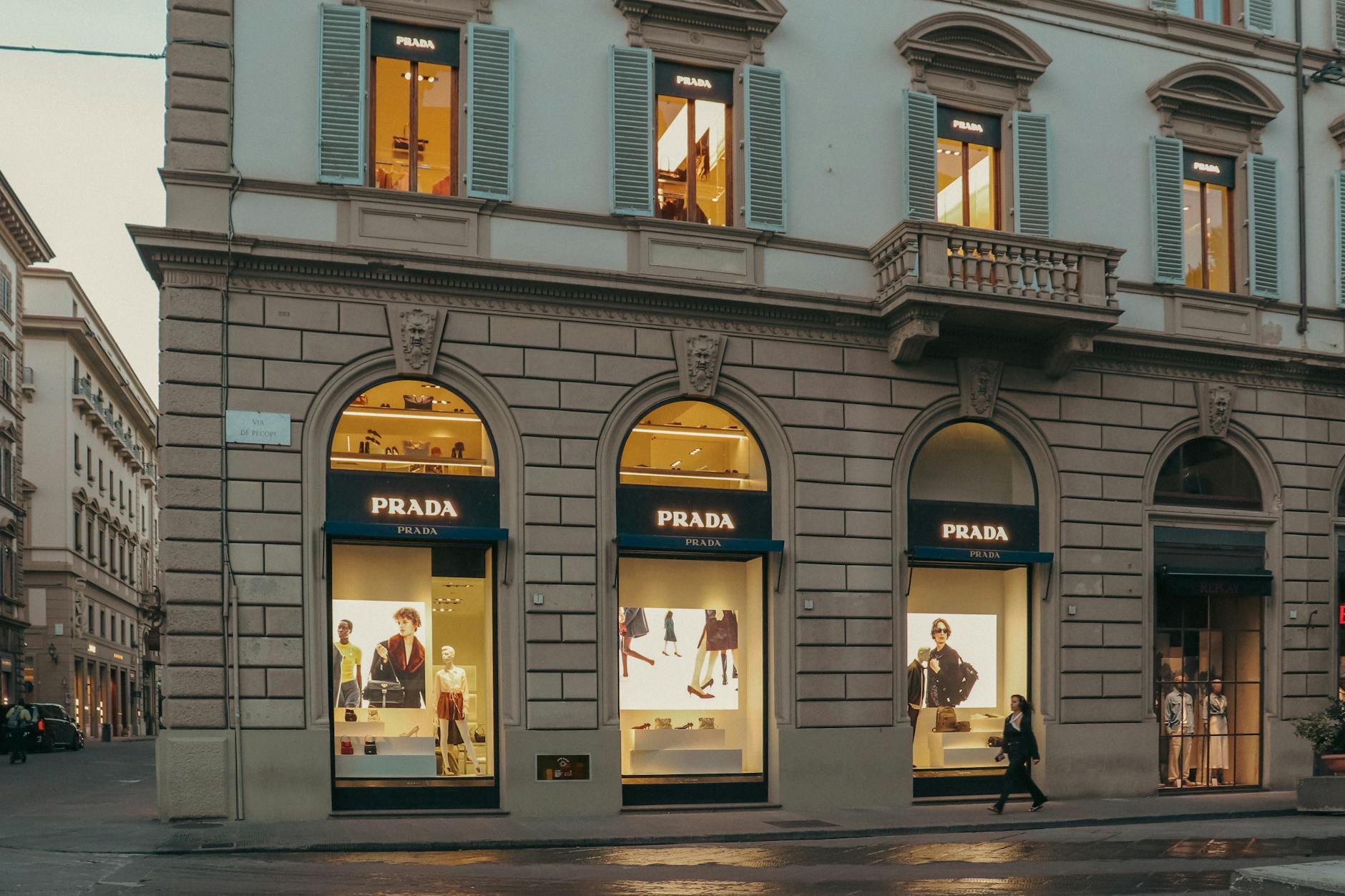
What makes it special is the density. Within these few blocks sit the global flagships of Prada, Gucci, Armani, Versace, Dolce & Gabbana, Valentino, Bottega Veneta, Louis Vuitton, Fendi, Hermès, Chanel and the great jewellers, Cartier, Bulgari and Tiffany among them. During Milan Fashion Week it becomes the epicentre of the industry; the rest of the year it is a permanent, walkable exhibition of Italian style.
The streets, one by one
Via Montenapoleone
“Montenapo” is the headline act and the street everyone pictures. Running the spine of the district, it is lined with the grandest flagships and the most prestigious jewellers, and it was recently named the most expensive retail street in the world, overtaking New York’s Fifth Avenue in a closely watched annual survey. Even if you are only looking, the architecture, the doormen and the theatre of it all are worth the walk. Pause at Pasticceria Marchesi or the historic Cova café, both Milanese institutions, for a coffee priced for the postcode.
Via della Spiga
Parallel to Montenapoleone, Via della Spiga is largely pedestrianised, which makes it the most pleasant street to stroll. It is narrower and more intimate, with a run of elegant boutiques and accessory houses where you can drift from window to window without dodging traffic. If Montenapoleone is for showing off, della Spiga is for actually enjoying the walk.
Via Sant’Andrea
Cutting across the rectangle, Via Sant’Andrea is the quietly exclusive one, home to couture houses and some of the most beautiful storefronts in the quarter. It tends to be calmer than Montenapoleone, which makes it a favourite for those who find the main drag too busy. It also holds the Bagatti Valsecchi museum, of which more below.
Via Manzoni and Corso Venezia
Via Manzoni forms the western edge, a broad, stately avenue anchored by the vast Armani megastore at number 31, complete with its hotel, restaurant and café, and by grand hotels like the Grand Hotel et de Milan. Along the district’s eastern flank, Corso Venezia has become a destination in its own right, with newer flagship “palazzo” stores from the big houses occupying restored mansions. Together they bookend the quarter in suitable grandeur, a short walk from the boutique hotels and luxury hotels that cluster nearby.
Beyond the boutiques
The fashion district is not only about shopping, and some of its best moments cost very little. Two superb house museums hide among the boutiques: the Bagatti Valsecchi Museum on Via Sant’Andrea, a sumptuous Renaissance-style mansion frozen in the 1800s, and the Poldi Pezzoli Museum on Via Manzoni, a private collection of arms, clocks and old masters in an opulent townhouse. A few minutes away, Villa Necchi Campiglio, a 1930s modernist villa with a garden and pool, is one of my favourite escapes in the whole city. These slot perfectly into our Milan museums guide and give the area depth beyond the price tags.
Then there are the cafés. Sitting down for an espresso at Cova or a pastry at Marchesi is a way to soak up the atmosphere without spending hundreds, and the early-evening aperitivo hour gives the smart bars here a glamorous buzz. Pair a fashion-district stroll with the nearby Brera district and you have one of Milan’s most rewarding afternoons on foot.
How to visit the fashion district
A few practical notes make the visit smoother. Go on a weekday if you want the streets at their calmest, mid-morning being ideal; Saturdays are busy and many boutiques keep reduced or closed hours on Sunday. Dress the part if you plan to enter the flagships: staff are courteous to everyone, but you will feel more comfortable looking tidy, and some houses operate a one-in-one-out door policy at peak times. Browsing is genuinely welcome, and there is no obligation to buy. If you do buy and you live outside the EU, keep your receipts for the VAT refund explained in our tax-free shopping guide, which on luxury purchases is well worth the paperwork. For a deeper dive into the labels and the calendar, our Milan Fashion Week guide sets the scene.
Shopping nearby for every budget
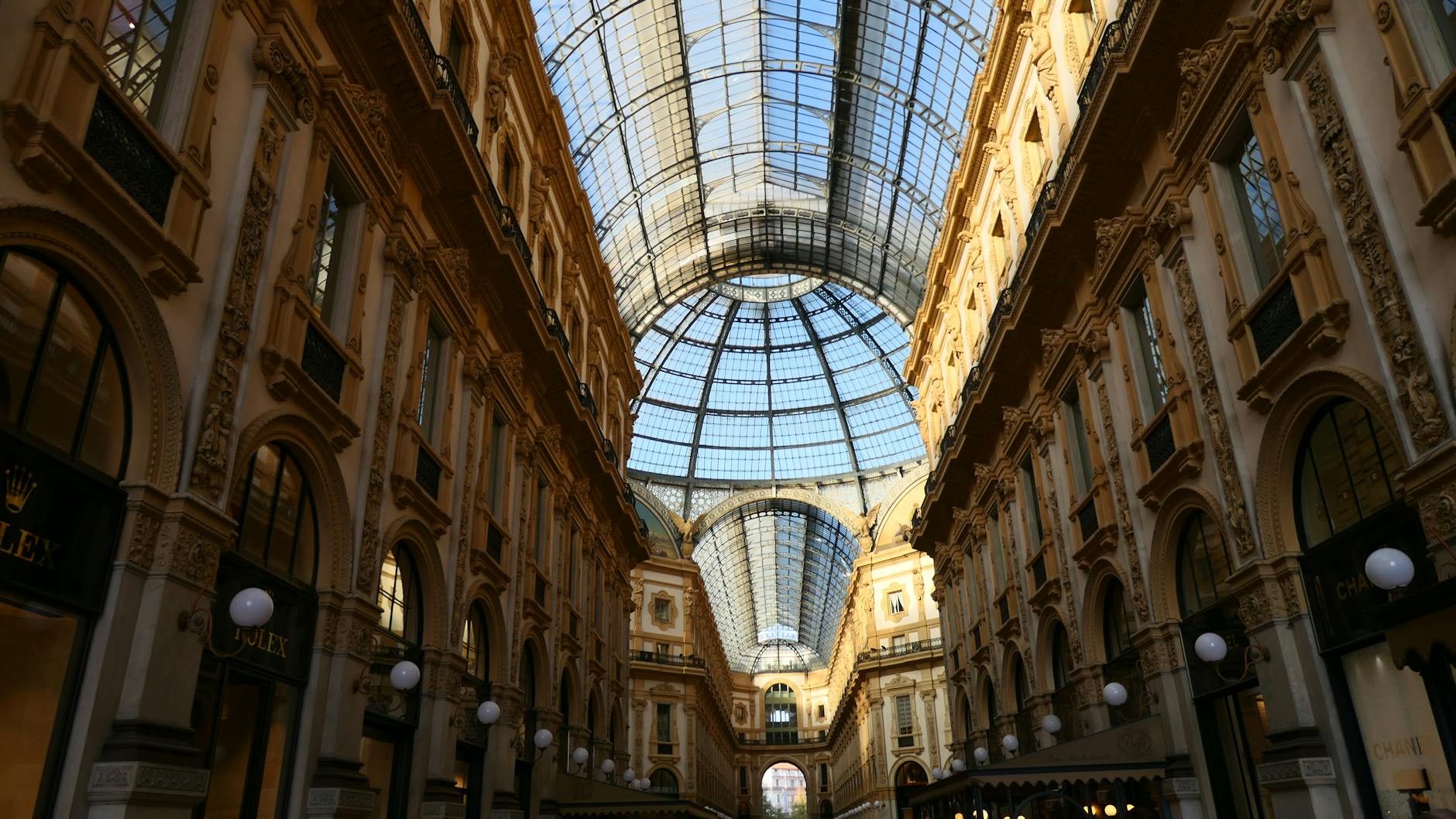
If the flagship prices make your eyes water, the surrounding area has options at every level. Steps away, the glorious Galleria Vittorio Emanuele II, the 19th-century glass-roofed arcade beside the Duomo, mixes luxury houses with the sheer spectacle of the building itself. Corso Vittorio Emanuele II, running from the Duomo to San Babila, is the mainstream high street for affordable Italian and international chains. And a little further out, Corso Buenos Aires is one of Europe’s longest shopping streets, packed with mid-range and budget fashion. For discounts on designer labels you are better off at the outlet malls near Milan or hunting vintage shopping in Navigli, while our roundup of what to buy in Milan covers the gifts and souvenirs worth carrying home.
A suggested walking route
To see the quarter properly without doubling back, start at San Babila and head up Corso Venezia to admire the new palazzo flagships, then turn into Via Sant’Andrea for its hushed couture houses and a look at the Bagatti Valsecchi museum. Continue to Via della Spiga and stroll its full pedestrian length at leisure, the most relaxed stretch of the walk. Cut across to Via Montenapoleone for the grand finale of jewellers and headline flagships, pausing for a coffee at Cova or Marchesi. Finish on Via Manzoni at the Armani megastore and the Poldi Pezzoli museum, which leaves you a two-minute walk from the Galleria and the Duomo. The whole loop takes about two hours at a browsing pace, longer if you actually go in, and it links up beautifully with a wander through neighbouring Brera afterwards.
Frequently asked questions
What is the fashion district in Milan called?
It is the Quadrilatero della Moda, sometimes called the Quadrilatero d’Oro, meaning the “fashion rectangle” or “golden rectangle”. The name comes from the four streets that form its boundary: Via Montenapoleone, Via della Spiga, Via Sant’Andrea and Via Manzoni. It lies just northeast of the Duomo and holds the flagship boutiques of nearly every major luxury fashion house in the world.
Where is the Milan fashion district and how do I get there?
It sits between the Duomo and the public gardens, a ten-minute walk from the cathedral. The nearest metro stations are Montenapoleone on the M3 yellow line and San Babila on the M1 red line, both a couple of minutes’ walk away. The district is compact and entirely walkable, so once you arrive you can cover it comfortably on foot in an afternoon.
Is Via Montenapoleone really the most expensive street?
Yes, in a widely reported recent ranking of global retail rents, Via Montenapoleone was named the world’s most expensive shopping street, overtaking New York’s Fifth Avenue. Rankings shift year to year, but it consistently sits at or near the very top, reflecting the extraordinary demand among luxury houses for a flagship address on Milan’s most prestigious street.
Can you visit the fashion district without spending money?
Absolutely. Wandering the Quadrilatero, window-shopping and admiring the architecture costs nothing and is one of the nicest free things to do in central Milan. You can also visit the area’s house museums for a modest fee, or simply enjoy a coffee at a historic café. Browsing inside the boutiques is welcome too, with no pressure to buy anything.
When is the best time to visit the Milan fashion district?
Weekday mornings are quietest and most pleasant for browsing, while Saturdays are lively but crowded. Note that some boutiques reduce hours or close on Sundays. During Milan Fashion Week, in February and September, the quarter is at its most electric but also its busiest, so visit then for the spectacle rather than relaxed shopping.
Final thoughts
The Quadrilatero della Moda is the rare luxury enclave that welcomes anyone willing to walk it, and you should, whether or not you intend to buy a thing. My ideal version is unhurried: a coffee at Cova, a slow loop of della Spiga and Sant’Andrea, a detour into Villa Necchi to cleanse the palate, then an aperitivo as the boutiques light up at dusk. Come to spend or come just to look; either way, this small grid of streets is one of the most concentrated doses of style anywhere in Europe.