A Turin day trip from Milan is the trip most foreign visitors skip because they don’t know what’s there. It’s a mistake. Turin was Italy’s first capital. It has the second-largest collection of Egyptian antiquities in the world after Cairo. It invented vermouth, which means it invented the Negroni and the Manhattan and the Americano. The Frecciarossa from Milano Centrale to Torino Porta Nuova takes fifty minutes and costs €15 to €35. I usually leave Milan at 8:30, sit down for breakfast at Caffe Mulassano by 9:30, and walk into the Egyptian Museum when it opens at 9 the next morning if I’ve stayed the night, which I often do.
Another big northern city that rewards a full day rather than three rushed hours: the same argument applies to Genoa, which is arguably the most underrated city in Italy.
This guide tells you how to do a Turin day trip from Milan the way I actually do it, with named cafes, real prices, and an honest comparison against the other obvious option, Bologna. I’ll also tell you when to skip the day trip and stay overnight instead, which is what I’d push you toward if you have one extra evening to spare.

Why Turin is worth the trip from Milan
Turin gets passed over for the obvious reasons. It isn’t Rome, it isn’t Florence, it isn’t Venice. It doesn’t have a single postcard image that tells you what it is. People who fly into Milan tend to drift toward the lakes or the Cinque Terre, and Turin sits ninety degrees off that route, quietly minding its own business.
Here’s what those people are missing. Turin was the seat of the House of Savoy, the dynasty that unified Italy in 1861, and the city served as the country’s first capital. That history left behind a chain of residenze sabaude (Savoy royal residences), eleven of them now UNESCO-listed, with the Palazzo Reale right in the center of town. The architecture is genuinely Baroque in a way Milan isn’t. The streets are laid out on a Roman grid, which means it’s the easiest big Italian city to walk. There are eighteen kilometers of arcaded porticos covering the sidewalks, so you can cross the historic center in a downpour without opening an umbrella.
Then there’s the food. Piedmont is one of Italy’s three great food regions, alongside Emilia-Romagna and Tuscany, and Turin is its capital. This is the home of vitello tonnato, bagna cauda, agnolotti del plin, white truffles from Alba an hour south, Barolo and Barbaresco wines from the same direction, and gianduja chocolate, which the Turinese invented during a Napoleonic cocoa shortage by cutting their chocolate with local hazelnuts. The aperitivo ritual, which most of the world associates with Milan, was actually born in Turin in 1786 when a man named Antonio Benedetto Carpano started selling fortified wine on Piazza Castello. More on that later, because it’s the single best reason to come.
Most importantly for your purposes, Turin is cheap by Italian big-city standards. A real aperitivo with a generous buffet runs €8 to €12. A sit-down Piedmontese lunch with wine is €25 to €35. The Egyptian Museum ticket is €15. The whole day, including the train, costs about what a single museum ticket plus lunch costs you in Florence in July.
How to get from Milan to Turin
The Milan to Turin train is one of the easiest connections in Italy. Three operators run the route and you have departures every fifteen to twenty minutes during the day.
- Frecciarossa (Trenitalia) — High-speed, fifty minutes Milano Centrale to Torino Porta Nuova. Prices €15 to €35 if you book a few days ahead, up to €50 on the day. About thirty departures daily.
- Italo — Same route, same speed, very similar pricing, often slightly cheaper if you catch a promotional fare. Italo trains usually stop at Torino Porta Susa rather than Porta Nuova, which is fine because Porta Susa is actually closer to some of the sights.
- Regionale (Trenitalia) — Two hours, no booking required, flat €13.40 fare. Useful if you’ve missed the high-speed train you booked and don’t want to pay the on-the-day high-speed price.
My standard move is to book a Frecciarossa from Milano Centrale to Torino Porta Nuova two or three days out. €19 is a normal price. Porta Nuova is a fifteen-minute walk down Via Roma straight into Piazza San Carlo and then Piazza Castello, which means you can leave the station and be standing in front of the Royal Palace inside twenty minutes.
If you’re staying near Milano Porta Garibaldi, you can also catch the train there — both Frecciarossa and Italo stop at Garibaldi a few minutes after Centrale, and it’s often less of a scrum. For the full picture on getting around the region, see our Milan transport guide.
Book through Trenitalia.com, Italotreno.it, or a third party like Trainline. Skip Omio for this route — their fees stack on a cheap ticket and Italian rail websites work fine in English.
Your perfect day in Turin
This is what I actually do. It assumes you catch an 8:00 or 8:30 Frecciarossa from Milano Centrale, which gets you into Turin by 9:30, and a 21:00 or 22:00 train back, which gets you to Milan before midnight.
- 9:30 — Arrive Porta Nuova. Walk up Via Roma. Breakfast at Caffe Mulassano on Piazza Castello — a tiny Art Nouveau room that invented the tramezzino sandwich in 1925. Order an espresso and a tramezzino standing at the marble bar like everyone else. €5.
- 10:00 — Walk five minutes to the Museo Egizio. Book your slot online the night before. Give yourself two and a half hours minimum. The mummies on the second floor and the reconstructed tomb of Kha are the things you’ll remember.
- 12:45 — Lunch. If it’s a clear day and you want a view, head up to the bistro at the Mole. If you want classic Piemontese food, walk fifteen minutes into the Quadrilatero Romano, the old Roman quarter north of Piazza Castello, and find Tre Galline or Consorzio. Order vitello tonnato and agnolotti del plin. €30 to €40 with a glass of Barbera.
- 14:30 — Palazzo Reale and the connected Galleria Sabauda. The combined ticket gets you the royal apartments, the Savoy armory, the gardens, and one of Italy’s best old-master picture collections. Two hours is enough.
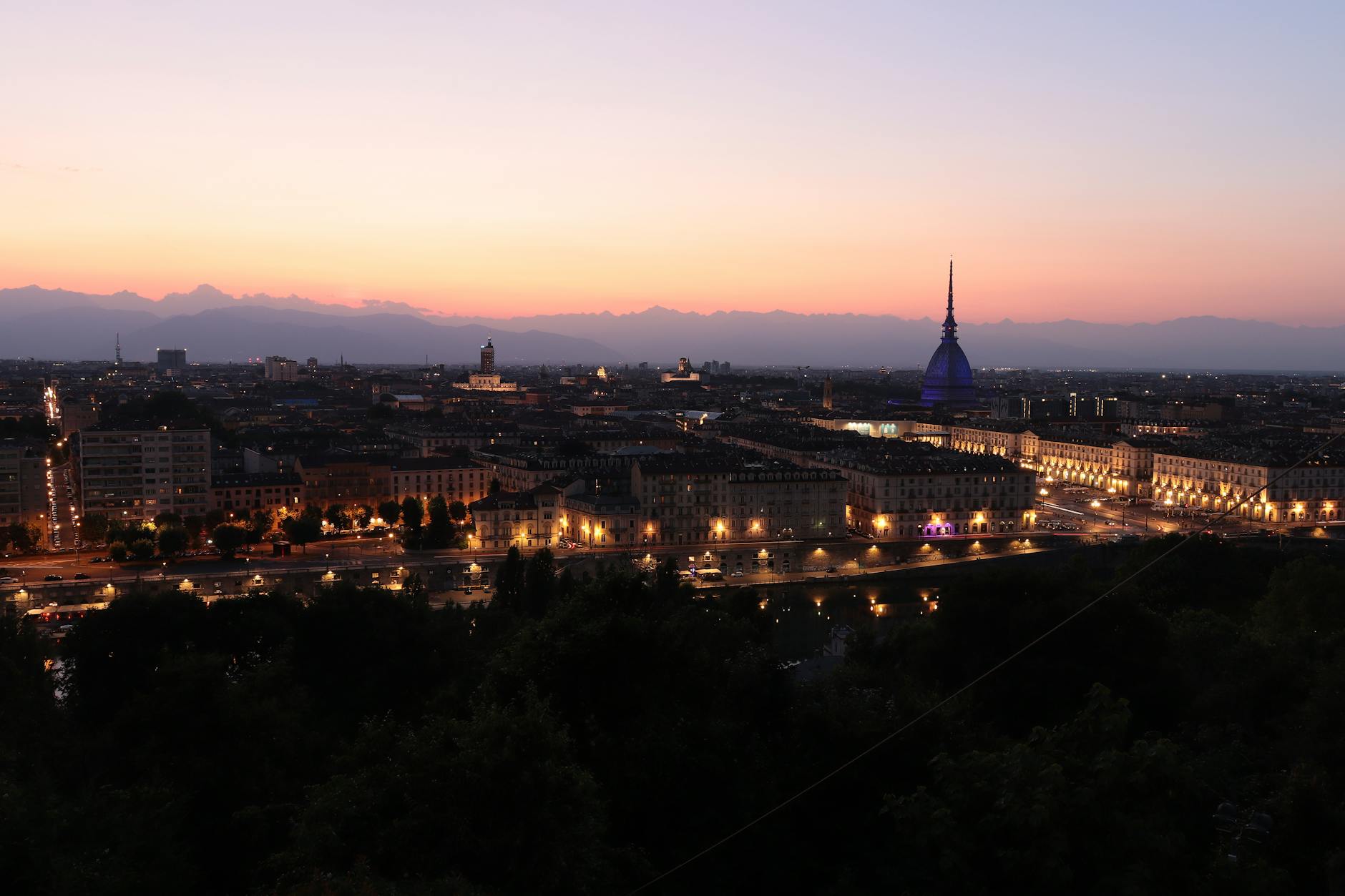
- 16:30 — Walk down to the Po. Cross the bridge at Piazza Vittorio Veneto, which is one of the largest squares in Europe and a place most tourists never reach. Look back at the hills and the Mole Antonelliana. This is the postcard view of Turin and nobody is taking photos of it.
- 18:00 — Aperitivo. This is the point of the day. Walk back to Piazza Vittorio Veneto or up to San Salvario, the bohemian quarter south of Porta Nuova. Specific recommendations in the aperitivo section below.
- 20:30 — Dinner if you’re staying, late train if you’re not. Porta Nuova to Milano Centrale on the 21:00 Frecciarossa, home by 22:00.
Two warnings on timing. The Palazzo Reale is closed on Mondays. The Mole Antonelliana cinema museum is closed on Tuesdays. The Museo Egizio is open every day except December 25 and January 1. If you’re doing this trip on a Monday, swap the palace for the Mole and the riverbank.

Top things to do in Turin
- Museo Egizio (Egyptian Museum) — The collection has over thirty thousand pieces and the museum has been completely reorganized since the 2015 renovation. The tomb of Kha and Merit, intact and complete with grocery lists, is the single best room. €15.
- Mole Antonelliana and National Cinema Museum — The Mole is the silhouette on the back of the Italian two-cent euro coin. The cinema museum inside it is built up the inside of the dome on a spiral ramp and is one of the best-designed museums in Europe. Take the glass elevator up the central shaft for the view across to the Alps. €17 combined ticket.
- Palazzo Reale — Royal Palace of the Savoys, UNESCO-listed, with the connected Royal Armory holding one of Europe’s finest medieval and Renaissance weapon collections. €15.
- Piazza San Carlo — The drawing room of Turin. Two twin Baroque churches at the south end, the equestrian statue of Emanuele Filiberto in the center, and three of the city’s most important cafes under the porticos.
- Piazza Castello — The civic heart. Royal Palace on one side, Palazzo Madama in the middle, Teatro Regio on another. You’ll cross this square six times in a day without noticing.
- Quadrilatero Romano — The old Roman quarter, all narrow streets and gas lamps, where the best small restaurants and wine bars are. Walk it in the early evening.
- The Po river and Parco del Valentino — The big park along the river. Has a full-scale fake medieval village built for the 1884 international exhibition.
- Pinacoteca Agnelli at Lingotto — The Fiat family’s personal art collection on the roof of the old Fiat factory, where the test track from The Italian Job still circles the building. A 20-minute metro ride south of the center. Worth it if you have a half day extra.
- Basilica di Superga — The Savoy mausoleum on a hill above the city. Take the rack railway from Sassi station up the hill for the view. Skip if you’re tight on time; do it if you’re staying two days.
Turin’s aperitivo culture — the real reason to come for an evening
I’ll make a strong claim. Turin has the best aperitivo culture of any city in Italy, and it is the single best reason to convert your Turin day trip from Milan into an overnight. Milan invented the modern aperitivo as a marketing exercise around 2000 and now charges €15 for it. Turin has been doing it since 1786 and still charges €8.
The history matters because it explains the experience. Antonio Benedetto Carpano invented vermouth in 1786 in his shop on Piazza Castello. Vermouth is fortified wine flavored with wormwood and a long list of botanicals, and Carpano’s version became the drink of the Savoy court. The big vermouth houses — Carpano, Cinzano, Martini & Rossi, Cocchi, Gancia — are all from Turin or the hills just outside. When you drink a Negroni or a Manhattan or an Americano anywhere in the world, you’re drinking a cocktail with Turin in it.
What this means in practice is that Turinese bartenders take vermouth seriously in a way nobody else does. You order an aperitivo and you get a real cocktail — a vermouth on the rocks with an orange peel, a Negroni, a Milano-Torino (which was literally invented in Turin), or a Punt e Mes spritz — and a plate or buffet of food that’s substantial enough to be most of your dinner. The buffet at a Turin aperitivo is not the sad bowl of stale peanuts you get in some cities. It’s focaccia, vitello tonnato, frittata, olives, cheese, sometimes a hot pasta. For €10.
Where to go:
- Caffe Mulassano (Piazza Castello) — Tiny Art Nouveau room. Get a vermouth on the rocks before lunch or after.
- Caffe Torino (Piazza San Carlo) — Belle Epoque, mirrored, oversized, and not as touristy as it looks. Brass bull medallion in the pavement out front — locals scuff their right heel on it for luck.
- Caffe San Carlo (Piazza San Carlo) — Across the square. The chandelier in the back room is the showpiece. The cocktails are honest.
- Affini (San Salvario, Via Belfiore) — Modern, no marble, two locations. The vermouth selection runs to forty bottles. This is where younger Turinese drink.
- Smile Tree (Piazza della Consolata) — Speakeasy in the Quadrilatero. Twelve seats. Book ahead.
- Caffe Al Bicerin (Piazza della Consolata) — Open since 1763. Only serves the bicerin, a layered drink of espresso, drinking chocolate, and cream. Don’t order coffee, don’t order anything else, just have the bicerin and a small biscotto and sit down. Cavour drank here. Nietzsche drank here.
Where to eat in Turin
Piedmontese food is heavier than Italian food further south and a lot more French-influenced. Butter, not olive oil. Red wine reductions. Long braises. Truffles in autumn.
- Tre Galline (Via Bellezia, Quadrilatero) — Open since 1832. White tablecloths, classical Piemontese menu, no surprises and that’s the point. Order the vitello tonnato, the agnolotti del plin in butter and sage, and the bonet for dessert. €50 a head with wine.
- Consorzio (Via Monte di Pieta) — Modern Piemontese, daily-changing menu on a chalkboard. The best bagna cauda in town in winter. Book ahead. €40 a head.
- Porto di Savona (Piazza Vittorio Veneto) — Old-school trattoria on the giant square. Long tables, paper placemats, big portions. €25 to €30 a head.
- Caffe Mulassano (Piazza Castello) — Breakfast and aperitivo. Stand at the bar. Five euros gets you espresso and a tramezzino.
- Caffe Al Bicerin (Piazza della Consolata) — The bicerin alone, mid-morning. €6.
For chocolate to take home, the names to look for are gianduiotti (the little foil-wrapped chocolate-hazelnut ingots, invented here in 1865) from Guido Gobino on Via Lagrange or Stratta on Piazza San Carlo. A box of Gobino gianduiotti is the best edible souvenir you can bring back from a day trip in Italy. €15 for a hundred grams, worth every euro. While you’re thinking about edible souvenirs, browse our Milan food guide for what to bring home from the rest of Lombardy.

Practical tips
- Torino+Piemonte Card — €31 for two days, includes admission to most museums (Egyptian, Royal Palace, Mole, Pinacoteca Agnelli, plus the Savoy residences outside the city) and unlimited public transport. Pays for itself if you hit three museums. Not worth it if you’re doing a one-day trip and only seeing the Egyptian Museum plus the Royal Palace.
- Book the Egyptian Museum online — Walk-up lines run an hour in summer. Online tickets are timed-entry and skip the queue. The museum’s own website (museoegizio.it) is fine.
- The porticos — Eighteen kilometers of them. The Savoy kings had them built so they could walk between their residences without getting wet. If it’s raining, you genuinely can cross the historic center dry.
- Public transport — One metro line, but you won’t need it. The historic center is one square kilometer and totally walkable.
- Chocolate gifts — Gianduiotti from Gobino or Stratta in vacuum-sealed boxes survive the trip back fine. Don’t buy them at the airport, the markup is brutal.
- Cash — Cards work everywhere now, but the older cafes (Mulassano, Al Bicerin) appreciate cash for small orders.
- Closed days — Royal Palace closed Mondays. Cinema Museum closed Tuesdays. Plan accordingly.
Best time to visit Turin from Milan
Turin has a continental climate, which means real winters and warm summers. The shoulder seasons are best.
- April through June — My favorite. Cool mornings, warm afternoons, the Po valley green, no humidity yet. Late May for the Salone del Libro book fair if you read Italian.
- July and August — Hot, often into the mid-30s, and the locals leave. Some restaurants close for two or three weeks in August. The museums are quieter though, and the city empties out in a pleasant way. Don’t dismiss it.
- September and October — White truffle season in nearby Alba peaks late October. Restaurants in Turin do their truffle menus from mid-October. If you only come to Turin once in your life, do it in late October.
- November through March — Cold, often grey, sometimes foggy. But also the season for bagna cauda, vermouth in front of a fireplace, and the long aperitivo. The Christmas lights — Luci d’Artista — are art installations across the city from late October through January and they’re genuinely lovely.
For other seasonal options near Milan in the warm months, see our guide to the Franciacorta wine region, which is best in late summer and early fall.
Should you stay overnight in Turin?
If you have one extra evening to spare from your Milan trip, yes. Stay one night.
The argument is the aperitivo. A Turin day trip from Milan that goes 8 to 8 captures everything except the moment Turin actually comes alive, which is the two hours from 7 to 9 in the evening when the porticos fill up, the cafe terraces fill up, and the city turns into the social scene it’s been since the 1700s. If you take the 21:00 Frecciarossa back, you taste this. If you stay the night, you live in it.
Hotels in Turin are also cheap by Italian standards. A nice four-star in the historic center runs €120 to €180 in shoulder season, against €250+ for the same quality in Milan. The Turin Palace Hotel, Hotel NH Piazza Carlina, and the Grand Hotel Sitea are the obvious choices.
If you want to think about how a one-night Turin trip fits into a longer Milan plan, our Milan itineraries guide has worked examples for three, five, and seven days that include this option.
Turin vs Bologna as a day trip from Milan
This is the comparison most people are actually making, so let me be direct about it. Bologna is a forty-five-minute Frecciarossa from Milan; Turin is fifty minutes. Both cost €15 to €35. Both are food cities. Both have porticos and red rooftops and minimal Anglo tourist presence.
The frank comparison:
- Bologna is the better food day trip. Tagliatelle al ragu, tortellini in brodo, mortadella, the Quadrilatero food market, and easy half-day side trips to Modena (balsamic) or Parma (Parmigiano and prosciutto). Bologna’s food is more accessible and more famous.
- Turin is the better museum day trip. The Egyptian Museum alone justifies the trip. Bologna’s museums are decent but no single museum is in the same league.
- Turin is the better drinking day trip. Bologna’s bars are fine; Turin’s are world-class and cheaper.
- Bologna is more visually striking. Red brick, towers, narrow medieval streets. Turin is grander, more geometric, more Northern European. If you want photogenic Italy, Bologna wins.
- Turin is bigger and harder to do in a day. Bologna’s historic center is half the size; one day actually is enough. Turin technically can be done in a day but you’ll feel like you skimmed.
If you have to pick one and you’ve never been to either: Bologna for first-time Italy travelers, Turin for second-time travelers who already know they like Italian food and want something different. If you have two free days and can do both, do both. We have a separate Bologna day trip from Milan guide that mirrors this one. Also worth comparing against Verona, which is closer (75 minutes) and has its own pull. The full overview is on our day trips from Milan page.
Frequently asked questions
Is one day enough in Turin?
One day is enough to see the headlines — Egyptian Museum, Royal Palace, Piazza Castello, Piazza San Carlo, and one good meal. It is not enough to do the aperitivo culture properly, see the Mole Antonelliana cinema museum and the Egyptian Museum in the same day, or visit Superga. If you can stay one night, do.
What is the fastest train from Milan to Turin?
The Frecciarossa 1000 covers Milano Centrale to Torino Porta Nuova in 50 minutes. Italo runs the same route in the same time. Both are far faster than driving, which takes ninety minutes to two hours depending on traffic on the A4 autostrada.
Do I need to book the Milan to Turin train in advance?
For the high-speed Frecciarossa or Italo, yes — booking two or three days ahead gets you €15 to €25 fares, while same-day prices climb to €45 or more. For the regional train, no — it’s a flat €13.40 fare you can buy at the station.
Can I do Turin from Milan without booking museums in advance?
The Egyptian Museum should be booked online — walk-up queues run an hour in summer. The Royal Palace and Mole Antonelliana you can usually buy at the door without losing much time. The Torino+Piemonte Card lets you skip most queues but only makes sense for two-day visits.
What time does Turin’s aperitivo culture start?
Bars start putting out the buffet around 6 pm and the rhythm peaks between 7 and 9. Most aperitivo bars stop serving the buffet around 9:30 and shift to a regular evening crowd. If you want to catch this and still take a train back to Milan, the 21:00 or 22:00 Frecciarossa is your move.
Is Turin safe?
Yes, very. Turin has the usual big-Italian-city pickpocket awareness around the main train station at night, but the historic center is among the safest in Italy. Locals walk home from aperitivo at midnight without thinking about it.
What should I bring back from Turin?
Gianduiotti chocolates from Guido Gobino or Stratta. A bottle of Carpano Antica Formula or Cocchi Vermouth di Torino. Grissini stirati — the long, thin breadsticks Turin invented in 1679. None of these are expensive and all of them are better than what you can find at home.
Final thoughts
I keep coming back to Turin because it’s one of the only big Italian cities that hasn’t been ruined by being famous. The Egyptian Museum on a Tuesday morning is not crowded. Piazza San Carlo on a Wednesday evening has Turinese in it, not Instagram tourists. Caffe Mulassano serves you a tramezzino in thirty seconds and charges you €2.50.
The Frecciarossa from Milan turns the whole experience into a fifty-minute commute. If you have a free day in your Milan trip and you’ve already done the obvious things — the Duomo, the Last Supper, the Navigli — Turin is the easiest and most rewarding thing you can do with that day. If you can spare an extra night, even better. The aperitivo is the reason.
For more on planning the Milan side of your trip, our Milan travel tips covers everything from SIM cards to tipping. For the Frecciarossa logistics in detail, see the Milan transport guide. And if Turin sounds like more than you want to bite off in a day, the closer options on our day trips from Milan roundup will get you there.
Related Milan guides
Keep planning with our other day trips from Milan resources: