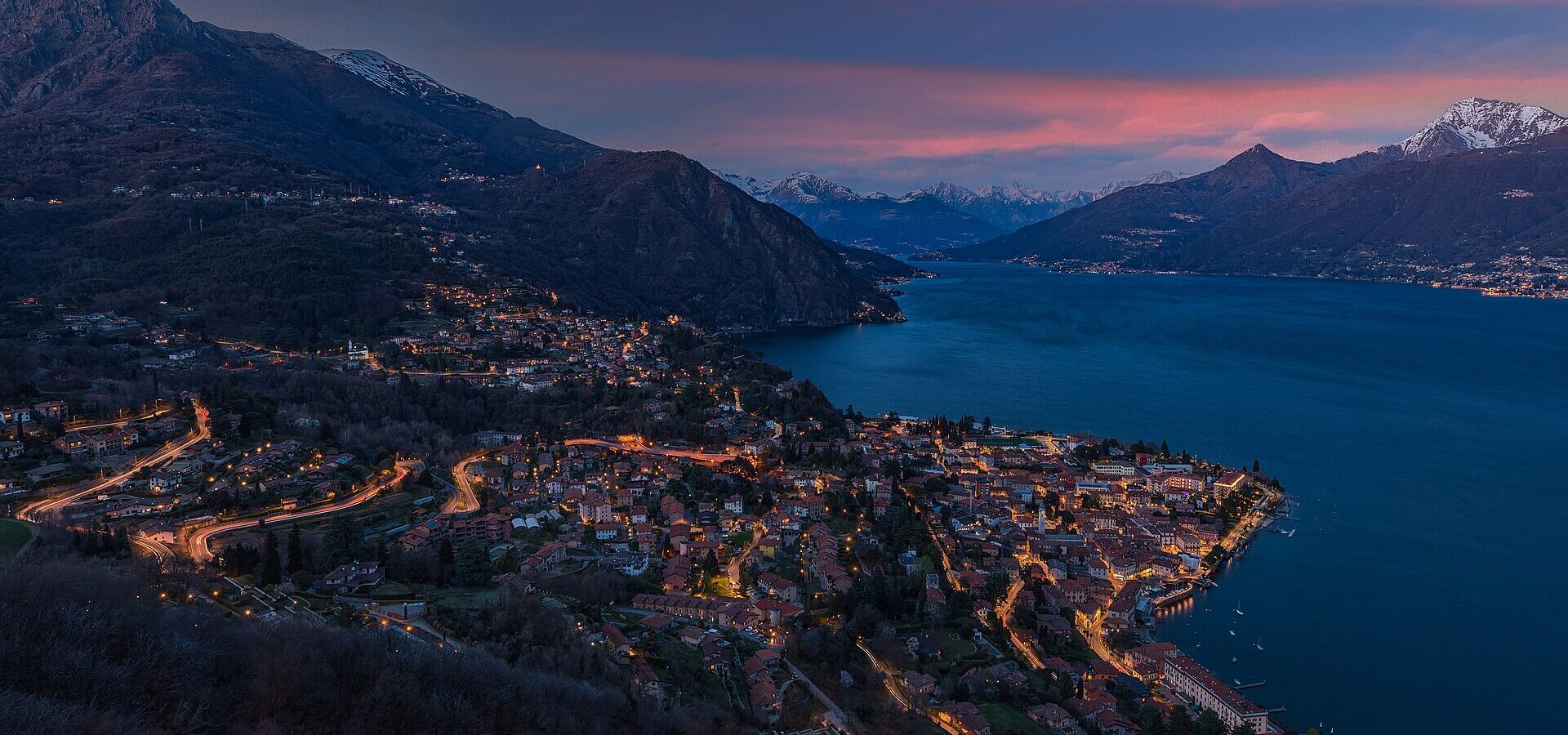
The western shore has both of Lake Como’s best gardens, its only long-distance walking route worth the name, a UNESCO World Heritage site, the lake’s only island and its cheapest mid-lake beds. It also has almost none of the visitors. They are all across the water in Bellagio, queueing for a scarf.
Menaggio is the practical one — flat, cheaper than Bellagio or Varenna, with a lido, a proper town square, a hostel, buses to Como and Lugano, and the best walking access on the lake. Tremezzo and Cadenabbia are the grand ones, holding Villa Carlotta and one of the lake’s famous hotels. Lenno is the one with Villa del Balbianello, the best swimming bay on this shore and the boat to Isola Comacina. All three sit on the ferry triangle, fifteen to twenty minutes from Bellagio and Varenna, and they are strung together by the Greenway del Lago di Como — a waymarked ten-kilometre path you can walk in about three hours. If you want the mid-lake without the mid-lake prices, this shore is the answer.
I keep coming back to this stretch, and the reason is simple: it is where the lake stops performing. Bellagio knows it is being photographed. Menaggio is just a town where people live, which happens to have a spectacular view.
The geography, briefly
The western shore of the central lake runs from Colonno in the south up through Sala Comacina, Ossuccio, Lenno, Mezzegra, Tremezzo, Cadenabbia and Griante to Menaggio, and then on north towards Gravedona and the Swiss border. Everything is threaded onto one road, the SS340, and one bus route, the C110 between Como, Menaggio and Colico.
Directly opposite, across a kilometre or so of water, is Bellagio. Varenna is a little further, on the eastern shore. Both are a short ferry hop — the mechanics are in our Lake Como ferry guide.
Menaggio
The largest and most useful town on this shore, and the one I would actually stay in.
It is built around Piazza Garibaldi, a proper square with cafés under arcades where people sit because they live there, not because they are waiting for a boat. There is a lakefront promenade, a lido with a pool and a swimming area, a supermarket, a pharmacy, a hostel as well as hotels and apartments, and enough restaurants that you can eat somewhere different every night for a week.
Crucially, it is flat. After two days of Bellagio’s stepped lanes and Varenna’s hill up to the station, this turns out to matter enormously — particularly with a pushchair, a suitcase or a dodgy knee.
What to do here
- The lido — a proper lakeside swimming complex with a pool, open in summer, and the best organised swimming on the mid-lake.
- The old centre — small, quick, and genuinely un-touristy. Twenty minutes.
- Sass Corbee — a narrow rocky gorge in the woods above the town, dramatic and free and almost entirely unvisited.
- Monte Grona and the Rifugio Menaggio — the serious walk. Start from Breglia, the village above Menaggio; the route begins on an asphalt road and turns into a well-marked path up to the refuge. This is a proper mountain day with a proper mountain view, and it is the single best thing on this shore for anyone who walks.
- The golf course — one of the oldest in Italy, up at Grandola ed Uniti, if that is your thing.
- Lugano — the Swiss border is a short bus ride north and Lugano is straightforward from here. Take your passport.
Menaggio also has the best ferry position of the three towns, sitting on the triangle with frequent crossings to both Bellagio and Varenna. If you are choosing a base, that plus the price is the argument — laid out in full in our where to stay on Lake Como guide.
Tremezzo and Cadenabbia
Two kilometres south, and a different character entirely: this is the grand end of the shore, where the nineteenth-century hotels look straight across at Bellagio.
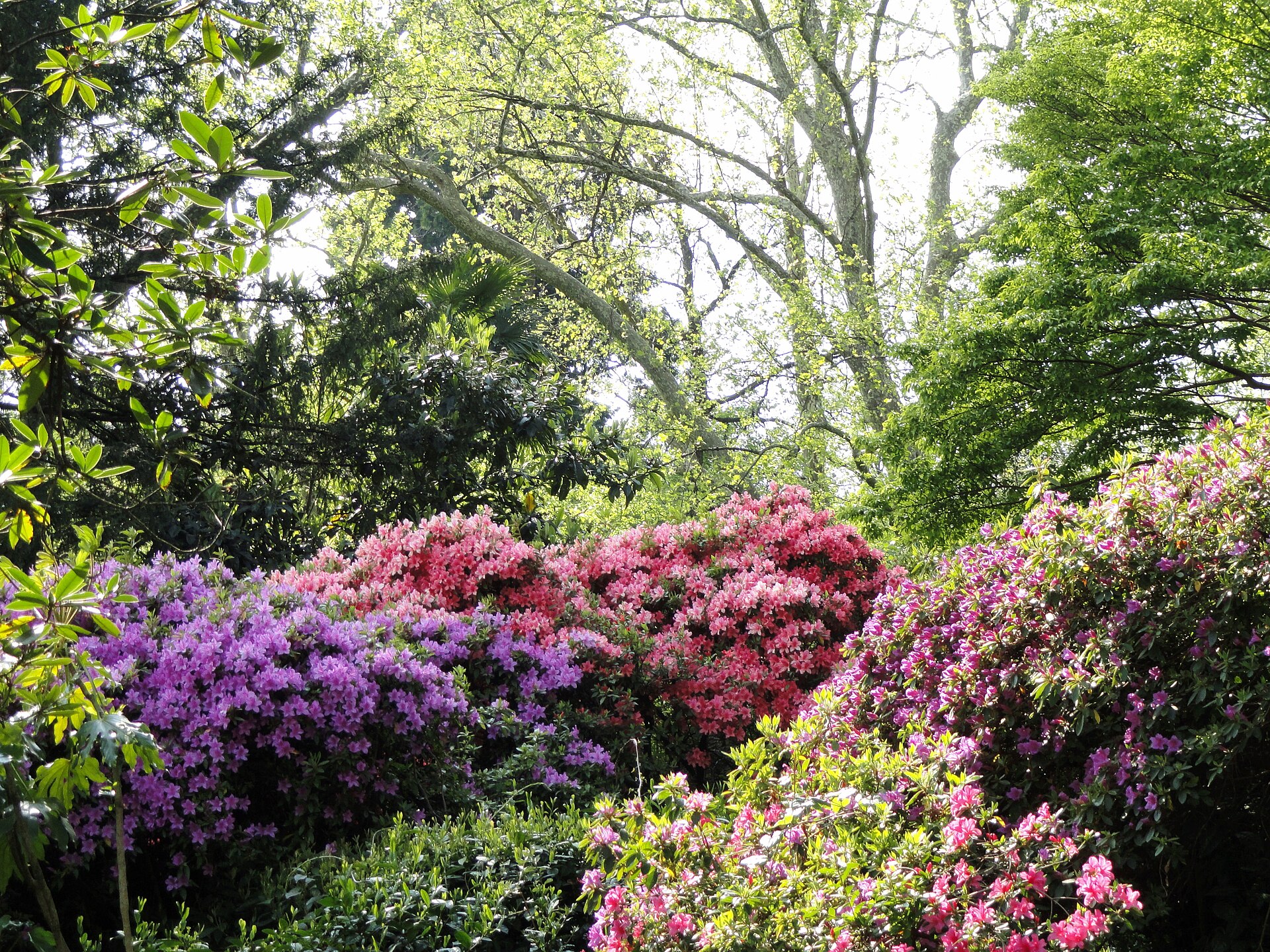
Villa Carlotta is the reason most people come. Adult admission €17.50, with over-65s at €15, students 6–18 at €7, 19–25 at €12, under-6s free and a family ticket at €35. It opens 10:00–19:00 from 20 March to 18 October, then 10:00–18:00 to 8 November and 10:00–16:00 through the winter. The ferry stop is called “Tremezzo – Villa Carlotta” and the gate is 400 metres away; the C110 stops near the entrance.
The garden runs to about fourteen hectares of camellias, ancient cedars, a bamboo grove and a fern valley, and in late April and early May the azaleas and rhododendrons do something faintly absurd across several acres of hillside. The house is a real museum with Canova sculpture in it, which means you have somewhere to go if it rains. More on how it compares with the lake’s other gardens is in our villas and gardens guide.
Cadenabbia is really a continuation of Tremezzo along the shore. Its curiosity is the Anglican church, built in the nineteenth century for the British colony who wintered here — a very odd thing to come across on an Italian lake, and a reminder that this shore has been receiving northern Europeans for two hundred years. Verdi stayed nearby and worked on La Traviata here.
Cadenabbia is also one of the four stops on the car ferry, which makes it a useful arrival point if you are driving.
Lenno, Mezzegra and Ossuccio
South again, and this is the stretch with the highest concentration of things worth stopping for.
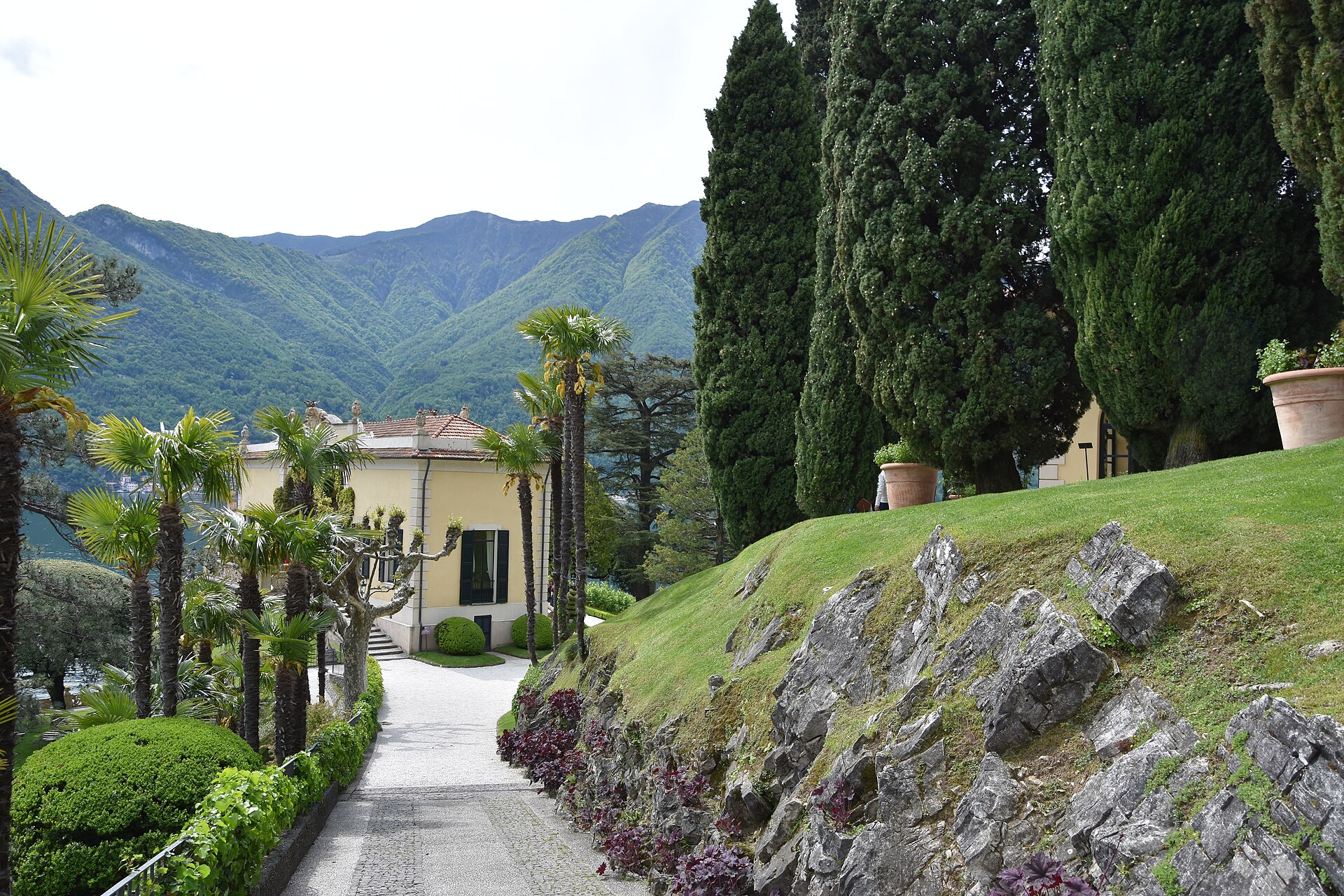
Villa del Balbianello occupies a wooded peninsula just west of Lenno, and it is the most beautiful thing on Lake Como. €13 full, €10 reduced, €38 family, free to FAI members, and — write this down — closed on non-holiday Mondays and Wednesdays through the main season. Reach it by the small shuttle boat from Lenno’s pier, which takes five minutes and is much the better arrival, or by a woodland path of roughly a kilometre that is not open every day.
Lenno itself sits on the Zoca de l’Oli, the “oil bowl” — a sheltered curve of bay named for the olives that grow around it, with a genuinely good swimming beach, a promenade and an eleventh-century church. It is the best place to swim on this shore and it is busy in August for exactly that reason.
Isola Comacina, off Ossuccio, is the lake’s only island: an archaeological park of ruined churches from a town Como destroyed in 1169 and never allowed to be rebuilt, plus a small modernist chapel and a famously eccentric restaurant. A short boat ride from Sala Comacina or Ossuccio. An hour on an empty island in the middle of the busiest part of the lake is a strange and welcome thing.
The Sacro Monte di Ossuccio is a UNESCO World Heritage site as part of the Sacri Monti of Piedmont and Lombardy — fourteen baroque chapels climbing the hillside above the lake along a devotional route, built between the seventeenth and eighteenth centuries. It is free, it is a proper walk uphill, and on a weekday you will have it entirely to yourself.
Mezzegra has a darker footnote: it is where Mussolini was shot in April 1945, at Giulino di Mezzegra. There is a marker. It draws a small and complicated stream of visitors, and it is mentioned here because people ask.
The Greenway del Lago di Como
The best free thing on this shore, and the reason to give it a full day rather than an afternoon.
The Greenway is a waymarked walking route running roughly ten to eleven kilometres from Colonno to Cadenabbia di Griante, passing through Sala Comacina, Ossuccio, Lenno, Mezzegra and Tremezzo. It takes about three hours at a walking pace, part along the water and part on the hillside, following the ancient Via Regina — the Roman-era road up the lake — for some of its length.
It is exceptionally well signed, with blue-and-yellow markers and metal plaques set into the pavement, and you genuinely do not need a map. It is open all year and manageable for most walkers, including some with mild mobility limitations, although there are cobbles and gradients.
The way to use it: take the boat or the C110 to Colonno in the morning, walk north, stop at Balbianello or Villa Carlotta on the way through, and finish at Cadenabbia or carry on to Menaggio for dinner. You can also do it in bites — any two adjacent villages make a pleasant hour, and the bus runs alongside the whole thing if you want to bail out.
Getting around
- Ferry — Menaggio, Cadenabbia, Tremezzo and Lenno are all served, and Menaggio and Cadenabbia are on the car ferry with Bellagio and Varenna.
- Bus C110 — Como to Menaggio and on to Colico, along the SS340. It is often faster and cheaper than the boat for hopping between neighbouring villages, and it runs when the boats have stopped.
- Car — possible, and the SS340 is narrow, busy and edged with walls. Parking in Lenno and Tremezzo in August is genuinely difficult. If you have a car, park it and use the bus.
- From Milan — there is no railway on this shore. Either train to Como and the C110 bus up, or train to Varenna and the ferry across, which is usually quicker. Options are compared in our Milan to Lake Como transport guide.
Eating and sleeping
Prices here run below Bellagio and below Varenna, and the gap is real rather than marginal. Menaggio has the widest range — hotels, apartments, a hostel, and restaurants that price for residents. Tremezzo and Cadenabbia have the grand hotels and correspondingly grand bills, plus a decent middle tier. Lenno is small, mostly B&Bs and apartments, and books out around the Balbianello season.
On food, this shore does the lake classics without the markup: missoltini, perch risotto, and lake fish generally. Eat in Menaggio’s back streets rather than on the Tremezzo waterfront and you will pay perhaps two thirds as much for something better.
Three ways to spend a day here
- The garden day. Early boat to Lenno, shuttle to Balbianello at opening, back for lunch at the Zoca de l’Oli, then Villa Carlotta in the afternoon. Dinner in Menaggio.
- The walking day. Bus to Colonno, walk the Greenway to Cadenabbia over about three hours with a long lunch in Lenno, then the bus or boat to Menaggio.
- The lazy day. Swim at the Lenno beach or the Menaggio lido, take the boat to Isola Comacina for an hour, and do nothing else at all. This is, in my experience, the day people remember.
Frequently asked questions
Is Menaggio a good base for Lake Como?
Yes, and Menaggio Lake Como searches deserve a better answer than they usually get, because the town is badly underrated. It sits on the same twenty-minute ferry triangle as Bellagio and Varenna, costs noticeably less, is flat, and has a supermarket, a lido and bus links the villages lack. What it does not have is postcard prettiness, which is why the prices are lower.
How do I get from Menaggio to Bellagio?
By ferry, fifteen to twenty minutes, around €5.50, with frequent crossings in season and the car ferry as well as the passenger boats. There is no sensible road route — it is an hour and a half around the head of the lake.
How long is the Greenway del Lago di Como?
Roughly ten to eleven kilometres from Colonno to Cadenabbia di Griante, about three hours of walking. It is well signed throughout and the C110 bus runs parallel to it, so you can join or leave it anywhere.
Which is better, Tremezzo or Menaggio?
Tremezzo for a grand hotel and Villa Carlotta on your doorstep; Menaggio for value, flat ground, a real town and better transport. For a stay of more than two nights, Menaggio.
Can you swim on the western shore?
Yes — better than at Bellagio. The Zoca de l’Oli bay at Lenno has a proper beach, and the Menaggio lido has a pool and organised swimming. Both are busy in August.
Is Villa del Balbianello walkable from Lenno?
There is a woodland path of about a kilometre, but it is only open on certain days and you should not rely on it. The shuttle boat from Lenno pier costs a few euros, takes five minutes and gives you the better arrival anyway.
Do I need a car for this part of the lake?
No. The C110 bus runs the whole shore, the ferries connect you to Bellagio and Varenna, and the Greenway covers the southern stretch on foot. A car is more nuisance than help here in high season.
Final thoughts
This shore is where the arithmetic of a Lake Como trip changes. You get the same water, the same mountains and the same twenty-minute ferry ride as the famous towns, plus the two best gardens on the lake and a walking route that connects them — and you pay less for a bed and less for dinner.
What you give up is the postcard: nobody’s holiday photograph is captioned Menaggio. If that does not matter to you, this is the best-value decision on Lake Como, and the Greenway on a clear morning in May is as good as this lake gets.
The wider destination is our Lake Como travel guide; the two famous towns opposite are compared in Bellagio or Varenna; and a single day on the water is timed out in our Lake Como in one day itinerary.