The most famous villa on Lake Como cannot be visited, and the second most famous one is shut two days a week for no reason anyone will explain to you at the gate. Villa d’Este at Cernobbio is a working luxury hotel; you can eat there if you book, but you cannot wander in. Villa del Balbianello, the one from the films, closes on Mondays and Wednesdays. People turn up on a Wednesday in June, having crossed the lake specially, and discover this in front of a locked gate.
There are four villa gardens on Lake Como genuinely worth paying for, and they are Villa del Balbianello at Lenno (€13, closed non-holiday Mondays and Wednesdays), Villa Carlotta at Tremezzo (€17.50, the best plant collection on the lake, spectacular in late April and May), Villa Melzi at Bellagio (around €10, late March to October) and Villa Monastero at Varenna (€13 for the garden, €15 with the house). Balbianello has the drama and Carlotta has the plants. If you only do one, make it Balbianello, and go by boat — and check the closing days before you go anywhere, because they are unforgiving.
I have done all four in a single ambitious weekend and I would not recommend it. Two is the right number for a short trip, spaced across different days, and this guide is mostly about choosing which two.
Villa del Balbianello, Lenno
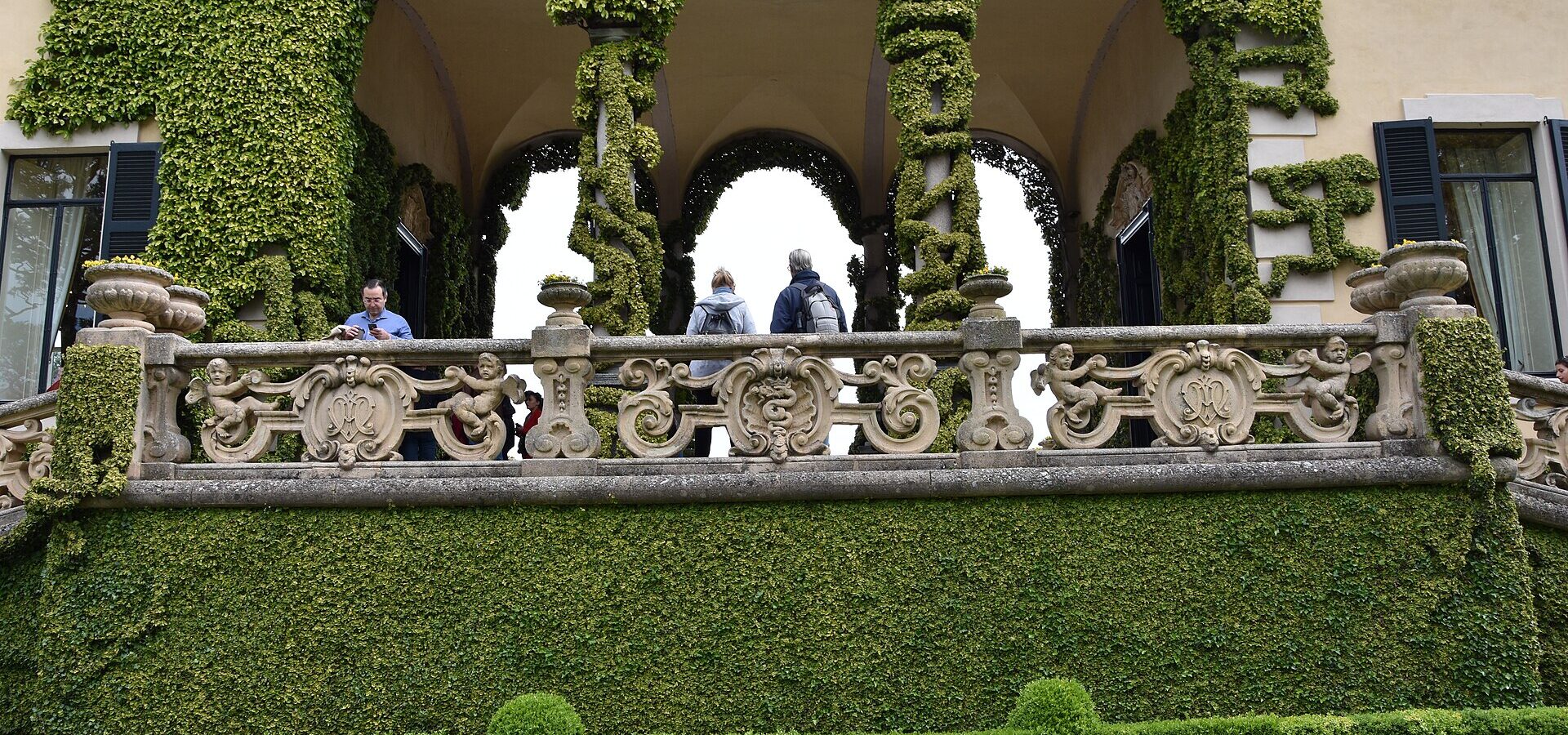
The one on the tip of a wooded peninsula, with the ivy-clad loggia and the stone terraces dropping straight into the water. It has been in Star Wars: Attack of the Clones and Casino Royale, which is why you have seen it, and it was the last home of Guido Monzino, the explorer who led the first Italian expedition to summit Everest.
What makes it different from every other villa on the lake is that the garden is essentially a piece of landscape sculpture. There are no flowerbeds to speak of. There are lawns, cypresses, holm oaks, and hedges clipped over the stonework so precisely that the whole thing looks poured rather than planted. On a still morning it is the most beautiful place on Lake Como and it is not particularly close.
The practical details
- Admission: €13 full, €10 reduced for 6–18s and students up to 25, family ticket €38. Free for FAI members — and if you plan to see several FAI properties in Italy, membership pays for itself quickly.
- Opening: weekends only from mid-February, then daily from mid-March except non-holiday Mondays and Wednesdays. This is the detail that catches people. Write it down.
- The villa interior is a separate guided visit from the garden ticket, with the Monzino collections — expedition kit, Arctic and Everest material, tribal art. Check what is included when you buy, because the arrangement changes.
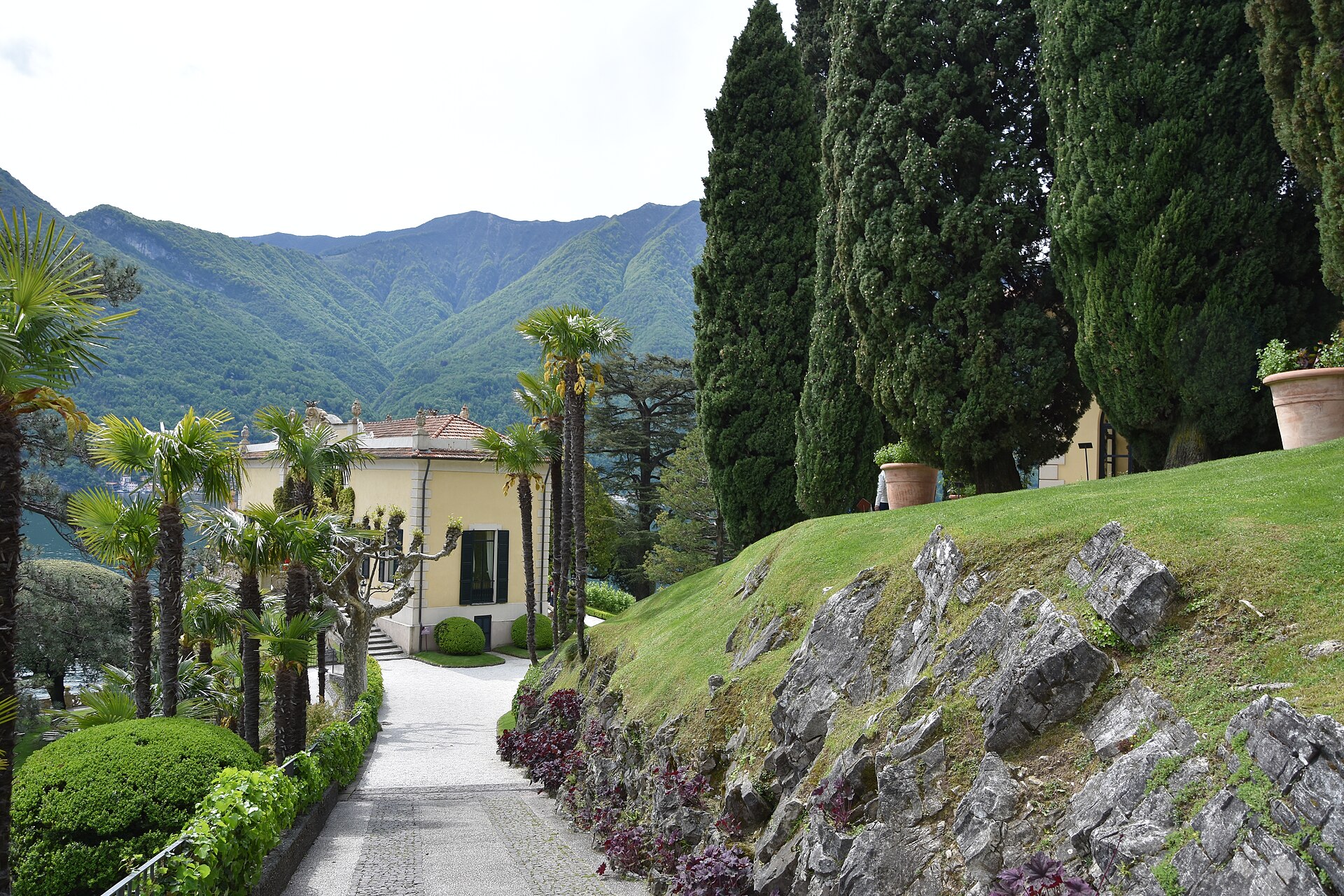
- Getting there: from the pier at Lenno, either a small shuttle boat around the headland (a few euros, five minutes, and the arrival is half the experience) or a walking path of about a kilometre through the woods, which is open only on some days. Do not assume the path.
My verdict: the best of the four, and the one I would cross the lake for. Go on the first boat of the day. It is a small site and it fills.
Villa Carlotta, Tremezzo
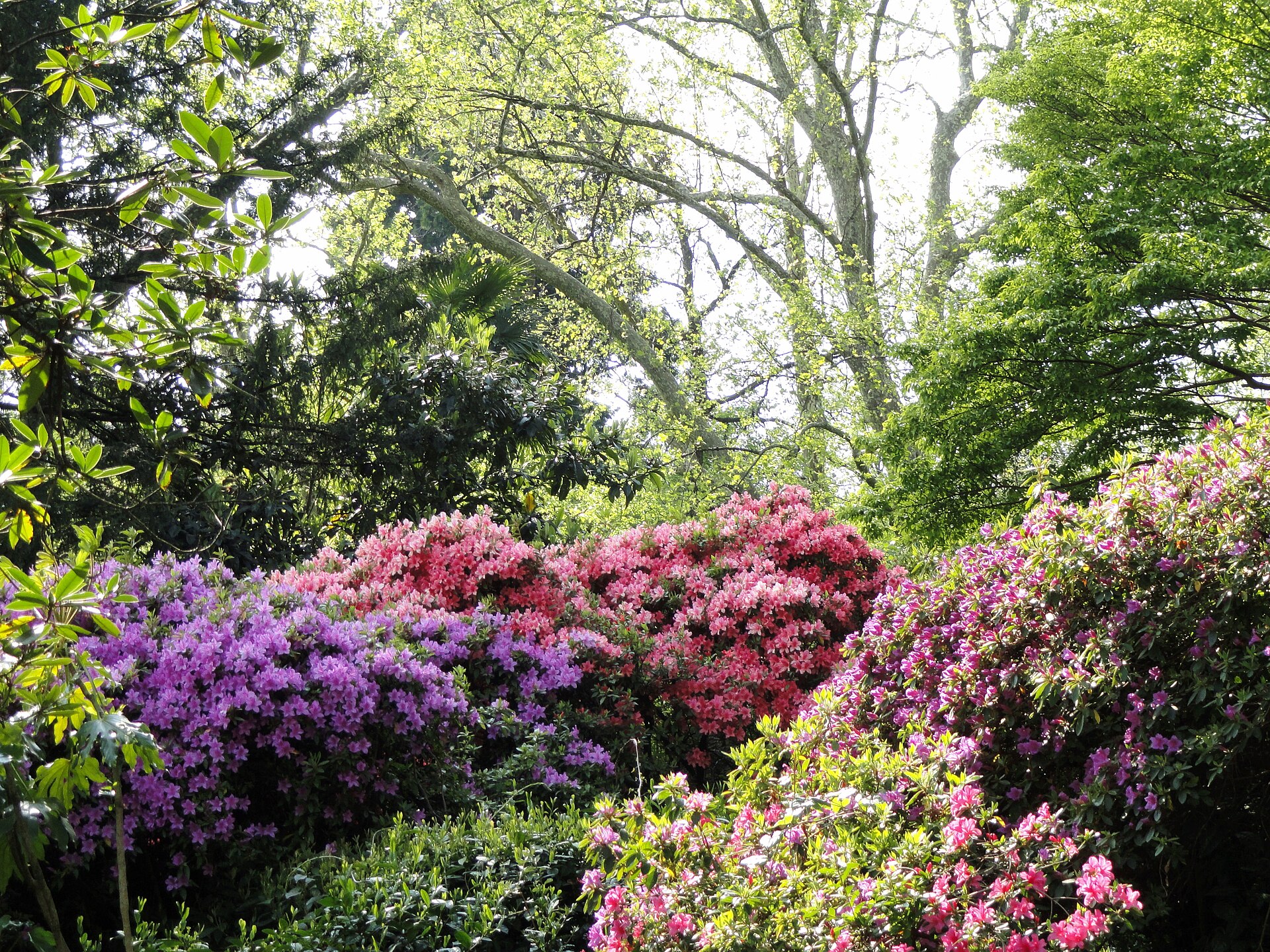
The opposite proposition: less drama, far more botany. Villa Carlotta has around fourteen hectares of garden and a plant collection that would hold its own against anything in northern Italy — camellias, ancient cedars, a bamboo grove, a fern valley, and above all the azaleas and rhododendrons, which in late April and the first half of May turn several acres of hillside into something faintly ridiculous.
The house itself is a proper museum rather than an afterthought, with Canova sculpture and a collection assembled by the Prussian princess whose daughter Carlotta gave the place its name. If the weather turns, you have somewhere to go, which is not true at Balbianello.
The practical details
- Admission: adult €17.50; over-65s €15; students 6–18 €7; 19–25 €12; under-6s free; family ticket for two adults and two children €35; groups of 15 or more €15 each.
- Opening: 20 March to 18 October, 10:00–19:00; 19 October to 8 November, 10:00–18:00; from 14 November, 10:00–16:00. Confirm the current season on the villa’s own site before travelling out of high summer.
- Getting there: the ferry stop is called “Tremezzo – Villa Carlotta” and the gate is about 400 metres from it. The C110 bus (Como–Menaggio–Colico) stops near the entrance. By car it is on the SS340 with parking nearby.
My verdict: the best value of the four if you like plants, and the worst if you do not. In May it is unmissable. In late September it is a nice garden with a good museum, and €17.50 starts to feel like a lot.
Villa Melzi, Bellagio
A long, flat, neoclassical garden running along the water just south of Bellagio’s centre — which makes it the easiest of the four to reach and the only one you can genuinely stroll to from your hotel. Around €10, open late March to October.
The design is early nineteenth-century English landscape style: sweeping lawns, specimen trees, a Japanese pond, a Moorish pavilion, and classical statues placed with a light hand. Liszt stayed here. The plane trees along the water are enormous.
It is the least dramatic of the four and the most restful, and the flatness matters — after a day of Bellagio’s stepped lanes, walking a level kilometre under old trees is a genuine pleasure. Full detail on the town is in our Bellagio guide.
My verdict: good, cheap, easy, and the right choice if you are staying in Bellagio and do not want to spend the day on a boat. Not worth a special crossing on its own.
Villa Monastero, Varenna
A twelfth-century Cistercian convent that became a private house and is now a botanical garden with a museum inside. The garden is the shape that makes it: a two-kilometre ribbon of terrace running along the waterfront, narrow, lined with citrus, palms, agaves and cypresses, with the lake immediately below you the whole way.
€13 for the botanical garden, €15 including the Casa Museo, free for under-14s, with reduced and youth rates. It closes on Tuesdays outside the peak months, so check the calendar. The house museum is a genuine period interior rather than a few roped-off rooms, and the villa also functions as a conference centre — Enrico Fermi lectured here, which is a strange thing to find on a garden ticket.
Next door, Villa Cipressi has a smaller terraced garden and is also a hotel, so you can sleep inside a garden you would otherwise pay to enter. Both are covered in our Varenna guide.
My verdict: the best garden-to-effort ratio on the lake if you are staying in Varenna, because it is a five-minute walk from the ferry. The long waterside terrace is a genuinely distinctive thing and it photographs better than it sounds.
The ones you cannot visit, and one that is free
Being clear about this saves people a wasted journey.
- Villa d’Este, Cernobbio — a five-star hotel, and one of the most famous in the world. Not open to visitors. You can book a meal or a drink if you dress for it, but there is no ticket and no tour.
- Villa Serbelloni, Bellagio — the park is visitable, but by guided tour only, roughly €10–15 for about 90 minutes, closed from November to mid-March, and you must book. Note also that the Grand Hotel Villa Serbelloni on the waterfront is a different building from the Villa Serbelloni on the hill. This confuses everybody.
- George Clooney’s house at Laglio — private, not visitable, and not usefully visible from the water. Boat tours that promise it are selling you a distant look at a gate.
- Villa Olmo, Como — the park is free and open daily, and the interior has been closed for restoration with access depending on whether an exhibition is running. Details in our Como town guide.
Two quieter alternatives worth knowing
If the four headline gardens are full, closed, or simply not what you feel like paying for, there are two options that almost no visitor considers.
Isola Comacina, off Ossuccio near Lenno, is the lake’s only island and it is essentially an archaeological park — the ruins of a town destroyed by Como in the twelfth century and never rebuilt, plus a small modernist chapel and a very old restaurant. It is not a garden, but it is a boat ride and an hour on an empty island in the middle of the busiest stretch of the lake, and it is a good antidote to a morning of clipped hedges.
The gardens behind Como town — Villa del Grumello, Villa Sucota and Villa Olmo are strung along the lakeshore west of the centre and linked by a walking route. Access varies with the season and with whatever exhibition or event is on, and Villa Olmo’s park is free and open daily. It is a much lower-key experience than Balbianello, and it costs nothing, which for a family on a budget is a real argument.
Doing the gardens with children
Honestly? Mixed. Two of these are hard work with small children and two are fine.
- Villa Melzi is the easiest: flat, shaded, a pond, plenty of lawn, and short enough that nobody melts down.
- Villa Carlotta works well because it is big enough to run around in, has under-6s free and a €7 rate for 6–18s, and the museum gives you somewhere cool to retreat to.
- Villa del Balbianello is the hardest — slopes, gravel, drops to the water, and an atmosphere in which running is frowned upon. Beautiful, and not designed for a five-year-old.
- Villa Monastero is fine, being mostly a long level terrace, and under-14s go free, which makes it the best-value family option on the lake.
When to come
The gardens have a season and it is shorter than the lake’s.
- Late March to mid-April — everything reopens, camellias and magnolias, few people. Cold mornings.
- Late April to mid-May — the peak. Azaleas and rhododendrons at Carlotta, wisteria everywhere, and the lake at its greenest. If you have any flexibility at all, come now.
- June to August — hot, busy, and the flowering is mostly over. Balbianello, being architectural rather than floral, holds up best.
- September and October — quiet, still warm, good light. Carlotta’s autumn colour is real but not why you would come.
- November to March — almost everything is closed. Villa Olmo’s park in Como and the public lakefronts are your options.
The azaleas and rhododendrons these gardens were designed around flower in a narrow window, and Milan in April explains exactly when to aim for it.
How to do two villas in one day without ruining it
The mid-lake geography does most of the work here. Balbianello (Lenno) and Carlotta (Tremezzo) are both on the western shore within a few kilometres of each other, and both are on the ferry network — the practicalities of which are in our Lake Como ferry guide.
A day that works:
- Morning — first boat to Lenno, shuttle round to Balbianello, be through the gate when it opens. Two hours, including the loggia and the point.
- Midday — back to Lenno, lunch, then the short hop up to Tremezzo (the bus is often quicker than waiting for a boat).
- Afternoon — Villa Carlotta from about 14:00. Two to three hours if you take the museum as well.
- Evening — ferry across to Bellagio or Varenna for dinner.
Do not attempt to add Villa Melzi or Villa Monastero to that. Three villas in a day is how gardens stop being enjoyable and start being a task.
The western shore towns these two sit in are covered in our Menaggio, Tremezzo and Lenno guide.
Practical notes that apply to all of them
- Check the closing day before you leave. Balbianello: Mondays and Wednesdays. Monastero: Tuesdays outside peak. Melzi and Carlotta: seasonal closures. Between them they can eat a whole trip.
- Buy online where offered, mostly to skip a queue rather than to save money.
- Shoes. These are terraced hillside gardens with gravel and steps. Balbianello in particular is not flat.
- Photography restrictions exist. Balbianello has historically restricted photography in parts of the property and inside the villa; assume you cannot photograph interiors unless told otherwise.
- Bags and picnics. Large bags may need to be left, and picnicking in the gardens is generally not allowed. Eat in the town first.
- Wheelchair access is mixed. Melzi and Carlotta are the more manageable; Balbianello involves slopes, gravel and steps throughout.
Frequently asked questions
Which Lake Como villa is the best to visit?
Villa del Balbianello, for the setting and the sheer strangeness of the loggia on its peninsula. Villa Carlotta wins if you are interested in plants, particularly in May. If you want one and only one, Balbianello.
How much does Villa del Balbianello cost?
€13 full price, €10 reduced for 6–18s and students up to 25, and €38 for a family ticket. FAI members go free. The villa interior is a separate guided visit from the garden.
What days is Villa del Balbianello closed?
Non-holiday Mondays and Wednesdays through the main season, with weekend-only opening in February and the full daily pattern starting in mid-March. This is the single most common Lake Como planning mistake.
How do I get to Villa del Balbianello?
Ferry to Lenno, then either the small shuttle boat round the headland or the woodland path of roughly a kilometre, which is not open every day. The boat is the better arrival and costs only a few euros.
Is Villa Carlotta worth €17.50?
In late April and May, easily. Outside the flowering season it is a good garden with a good museum at a slightly high price — still worth it if you have half a day, less obviously so if you are rushing.
Can you visit Villa d’Este?
No. It is a working luxury hotel with no public admission. Booking a meal is the only way in, and it should be treated as a restaurant reservation rather than a sightseeing plan.
Can you see George Clooney’s villa?
Only from a distance, from the water, and it is not worth the ticket for a boat tour that promises it. The house is at Laglio on the western shore of the Como arm and it is entirely private.
How long do you need at each villa?
Balbianello: two hours with the shuttle boat. Carlotta: two to three hours with the museum. Melzi: an hour. Monastero: an hour and a half with the house. Add travel between them and you will see why two a day is the sensible ceiling.
Final thoughts
The villas are the reason Lake Como looks the way it does. Two hundred years of very rich people competing to have the best view produced a shoreline of terraced gardens that nobody could afford to build today, and four of them are open to anyone with a ferry ticket and thirteen euros.
Pick two, not four. Go early. Check the closing day twice. And if you can possibly manage the first fortnight of May, do — the azaleas at Carlotta and the wisteria at Balbianello in the same week is the best three days this lake offers.
The wider trip sits under our Lake Como travel guide, and if you are coming up from the city for a single day, start with the Lake Como day trip from Milan.