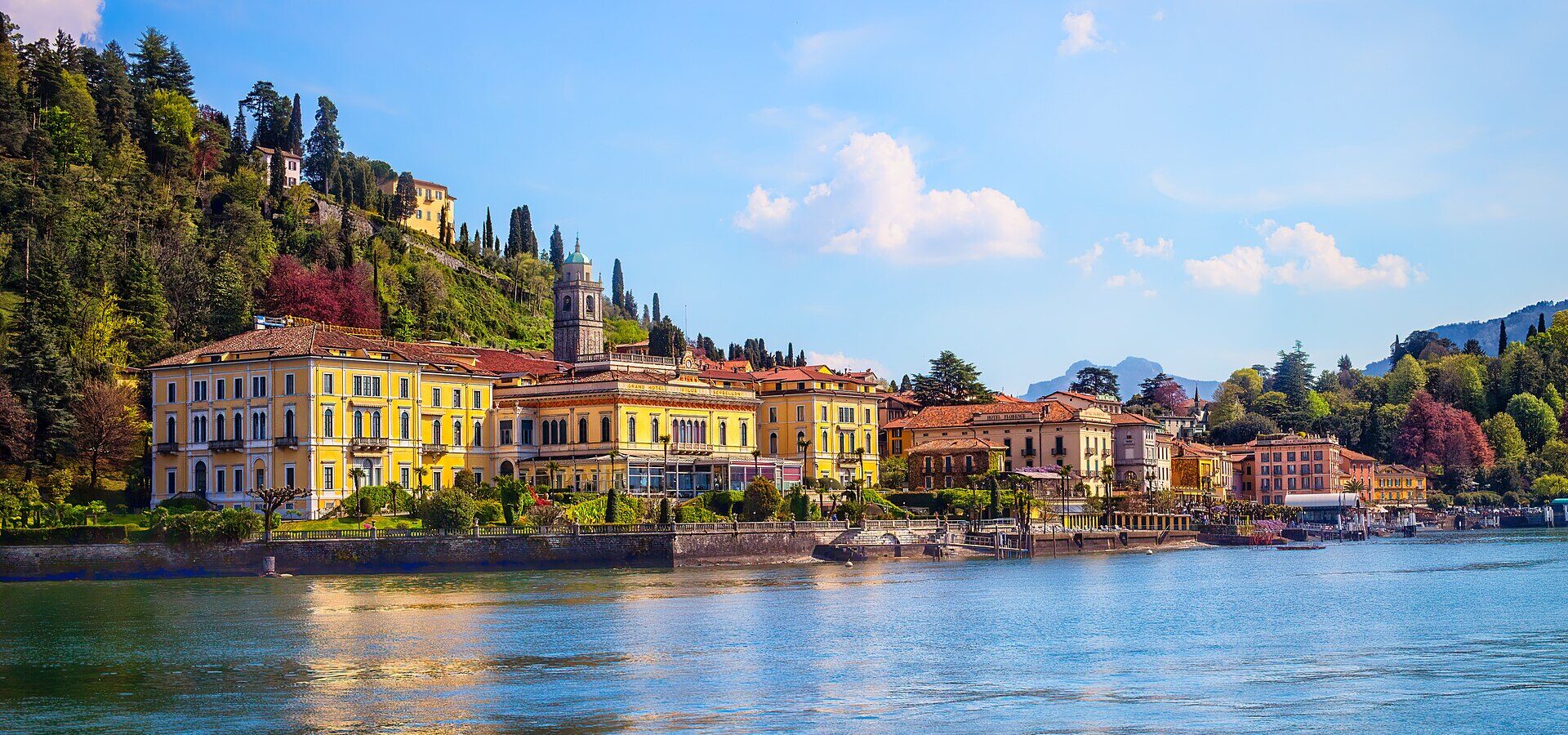
Bellagio and Varenna are twenty minutes apart on the same stretch of water. You can see one from the other. They share a ferry timetable, a mountain range and a weather forecast — and yet which one you sleep in will shape your Lake Como trip more than any other decision you make, including how long you stay.
The short answer, and I will defend it: stay in Varenna and visit Bellagio. Varenna has a direct train from Milan with no changes, hotel and restaurant prices roughly 20–30% below Bellagio, a quieter evening and a lakeside walkway with no equivalent on the lake. Bellagio has the better position, the grander hotels and the more dramatic arrival — but it is a twenty-minute ferry ride away whenever you want it, and you can have the view of Bellagio for free from Varenna’s waterfront, which is more than you can say the other way round. Choose Bellagio only if grandeur is the point of the trip, or if you are arriving by car from the west.
That is the conclusion. The rest of this is the working, because the honest answer depends on who you are and how you travel, and there are three or four specific situations where I would send you the other way.
Why this is even a question
Lake Como is an upside-down Y. The two southern legs run down to Como town and Lecco; the northern arm runs up to Colico. Where the three meet, the shores pinch together, and that junction is where all the famous scenery lives.
Bellagio sits on the tip of the promontory in the middle of the Y, looking down both southern arms at once. Varenna sits opposite it on the eastern shore, looking across at Bellagio. Menaggio is on the western shore, completing the triangle. All three are within a fifteen to twenty minute boat ride of each other, and the boats run constantly — the mechanics are in our Lake Como ferry guide.
So the question is not really about access to the lake. Both towns give you the same lake. It is about what you come home to at seven in the evening, and what you paid for it.
Getting there: Varenna wins, and it is not close
Varenna has a railway station. It is on the mainline from Milano Centrale towards Sondrio and Tirano, and the journey is about an hour with no changes. You get off at Varenna-Esino, walk ten to fifteen minutes downhill, and you are at your hotel. One ticket, one train, one walk.
Bellagio has no railway station and no realistic prospect of one. Getting there from Milan means the same train to Varenna, then the ferry across, so roughly ninety minutes and one change with luggage in the middle of it. There is also a bus from Como, which takes about an hour and a quarter along a road with more bends than straights, and which some people find unpleasant.
The luggage point deserves emphasis, because it is the thing nobody mentions. Both towns involve a hill. In Varenna the hill is between the station and the town, and you walk it downhill on arrival. In Bellagio the hill is the town, and if your hotel is up in the old streets you are carrying cases up stepped lanes from the pier. Neither has a lift, an escalator or a reliable shuttle. Pack accordingly, or budget for a taxi.
Two situations flip this. If you are driving from the west — from Como, Milan by motorway, or Malpensa — Bellagio is reachable on the western shore road and then the car ferry, and Varenna’s parking situation is genuinely poor. And if you are flying into Malpensa, our Malpensa to Lake Como guide covers the direct shuttle to Como, which favours a western-shore approach.
Price: Varenna, by 20–30%
Bellagio has been a resort since the early nineteenth century and it prices like one. The grand hotels on the waterfront are the real article — genuinely historic, genuinely lovely — and they run well into the hundreds a night in season. Mid-range hotels and B&Bs in the old town are better value but still carry a Bellagio premium, and the waterfront restaurants are the most expensive dinner on the lake outside a hotel dining room.
Varenna is not cheap — nowhere on this lake is cheap — but the same money buys noticeably more. The converted villas at the top end, including Villa Cipressi where you sleep inside gardens other people pay to walk around, sit below Bellagio’s grandes dames. The mid-range around the harbour is fairly priced. And there is a genuine budget tier up near the station and in Perledo, the village above, which Bellagio simply does not have.
Dinner tells the same story. Two courses and a glass of wine on Bellagio’s waterfront against the same meal in Varenna’s old harbour is a difference you will notice every night of the trip.
Every town on the lake, compared by price and character, is in our where to stay on Lake Como guide.
Crowds, and the shape of the day
Both towns are overwhelmed in the middle of a summer day. This is not a point of difference; it is Lake Como. The difference is in the degree and the recovery.
Bellagio takes the heaviest load on the lake. It is the name everyone knows, every coach tour includes it, and the two main shopping streets between 11:00 and 17:00 in August are genuinely unpleasant — a slow shuffle past silk shops. Varenna gets very busy too, particularly on the Passerella and around the villa entrances, but it is a smaller catchment and it clears faster.
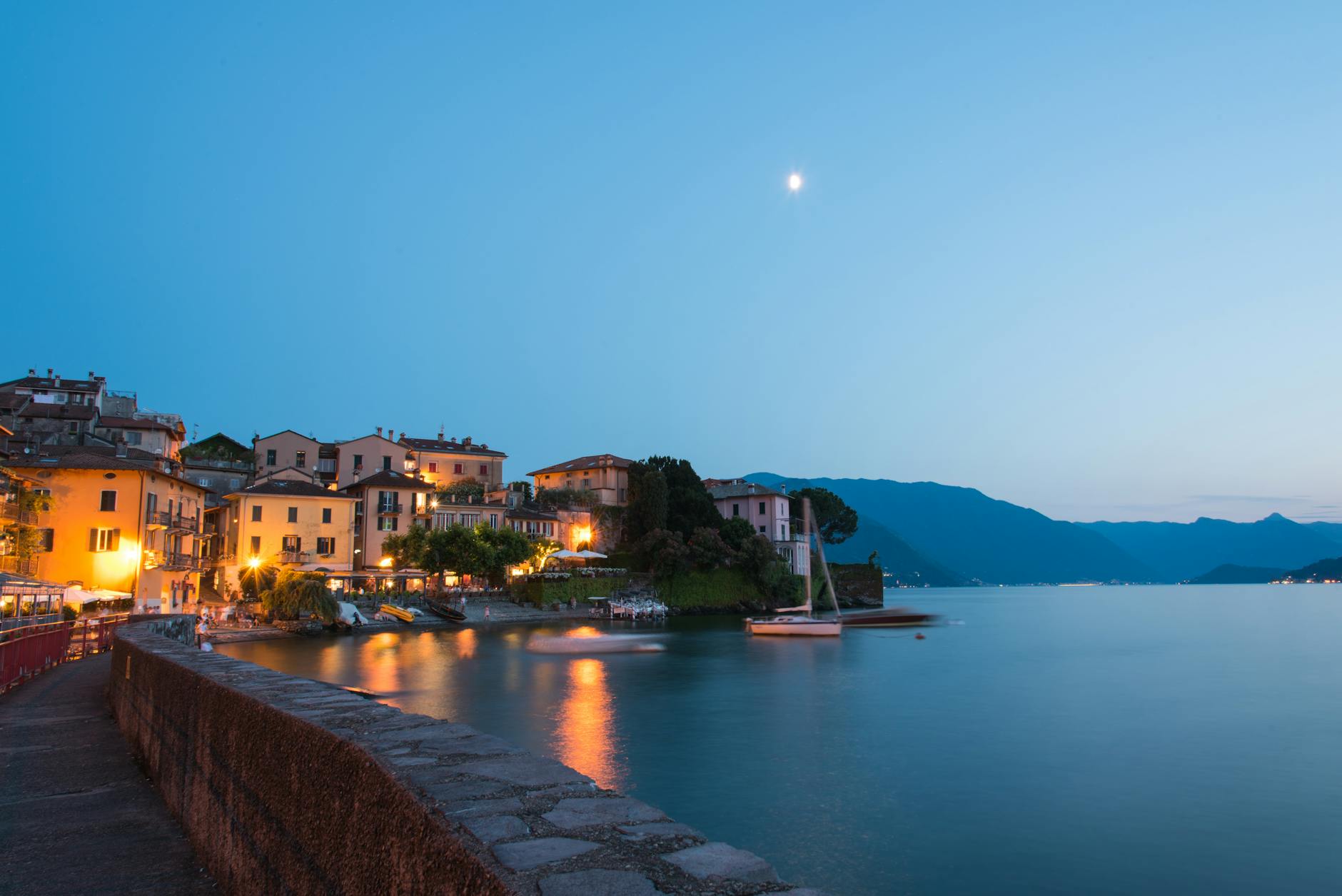
Where they really diverge is the evening. Both empty when the day boats stop, and both become lovely. But Varenna at eight at night is a quiet Italian village with a dozen restaurants and the sound of water, while Bellagio at eight at night is a resort with a promenade and people dressed for dinner. One of those is more atmospheric and one is more glamorous, and which you want is a personality question rather than a factual one.
The tactical point for either: the crowd is a day-tripper crowd, and staying overnight buys you the two hours at each end of the day when the town is yours. That is most of the argument for staying at the mid-lake at all rather than commuting from Como town.
What there actually is to do
Bellagio gives you more sights inside the town boundary:
- Villa Melzi gardens — around €10, open late March to October. Neoclassical, lakeside, beautiful, and less of a scrum than you would expect.
- Villa Serbelloni park — guided tour only, roughly €10–15 for about 90 minutes, closed November to mid-March. You must book, and the tour is worth doing for the view down both arms.
- Punta Spartivento — a ten-minute walk to the very tip of the promontory, free, and the single best free view on Lake Como.
- The stepped lanes — touristy at the bottom, quiet and real two flights up.
Varenna gives you fewer things but arguably better ones:
- Villa Monastero — €13 for the botanical garden, €15 including the house museum, free for under-14s, closed Tuesdays outside the peak months. A long ribbon of terraced garden along the water, and the best villa garden of the two towns.
- Villa Cipressi — smaller, next door, and you can stay in it.
- The Passerella degli Innamorati — the free walkway pinned to the cliff along the water. Ten minutes end to end and the thing people remember about Varenna.
- Castello di Vezio — about twenty minutes uphill, a ruined castle with falconry displays and a view straight down onto the town and across to Bellagio.
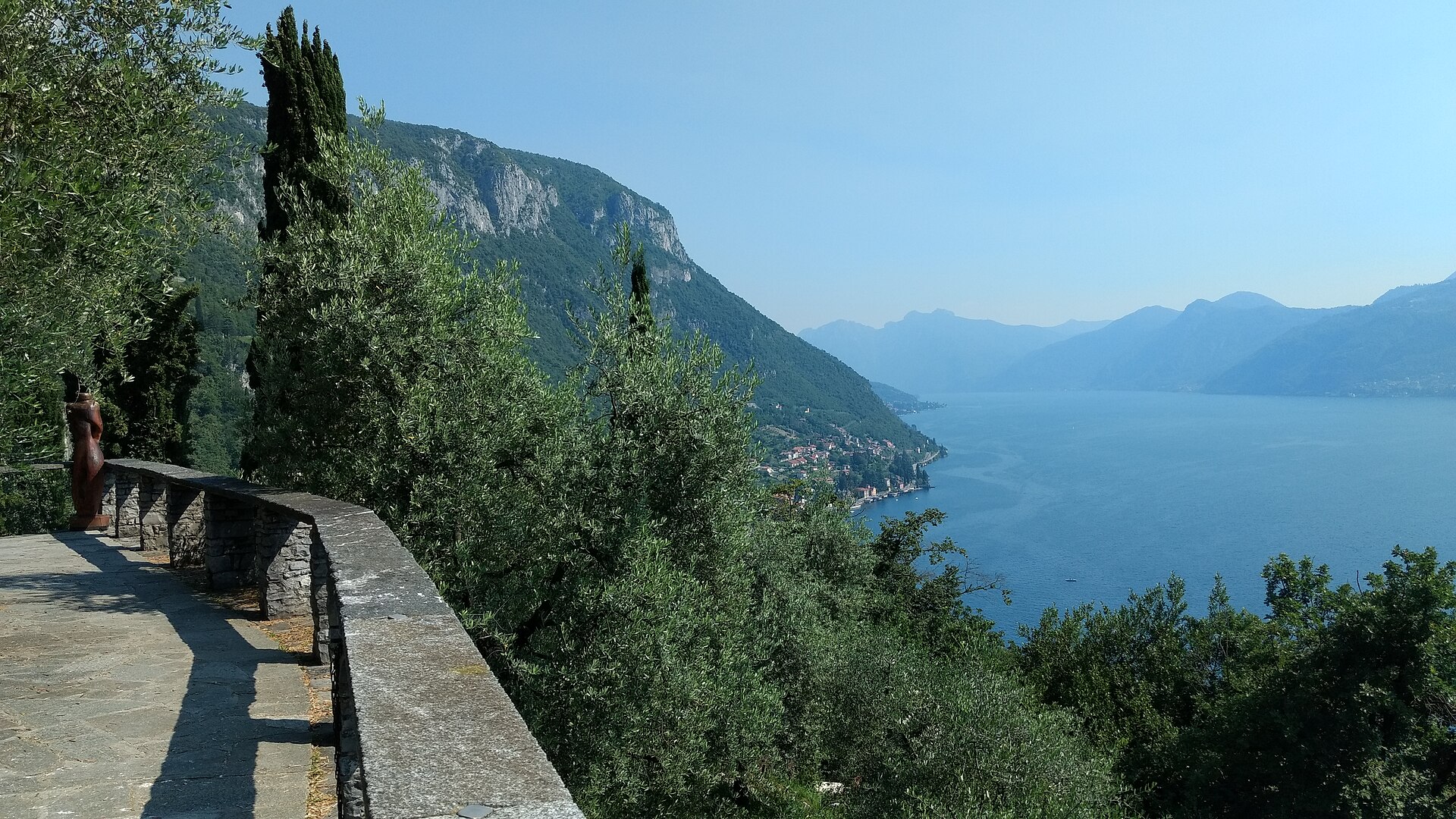
If you are counting, Bellagio has the higher total. If you are weighing, Varenna’s four are more varied — garden, cliff walk, castle, harbour — and one of them is free. Neither town takes more than a full day to see properly, which is precisely why you should not agonise: you will visit both.
Terrain, swimming and getting around on foot
Both towns are built on slopes and neither is easy going. Some specifics worth knowing before you book:
- Bellagio is a promontory, so the town climbs steeply from a flat waterfront. The lakeside strip is level and pleasant; everything behind it is steps. Hotels advertise “lake view” and mean “four flights up”.
- Varenna is a shelf on a cliff. The Passerella is level, the old harbour is level, and the connection between the two involves steps and a slope. The station is a proper hill above the town.
- Swimming: Varenna has better and more obvious access, with swimming directly off the waterfront and the rocks. Bellagio has a lido on the eastern side of the promontory and spots around Pescallo and Loppia, but the centre itself is harbour and jetty.
- Accessibility: neither is good, and I would not send someone with serious mobility difficulties to either as a first choice. Menaggio and Tremezzo on the western shore are considerably flatter.
Which is the better hub?
If you plan to move around the lake daily, the hub question matters more than the town itself.
Bellagio is the more central pier, and boats to Varenna, Menaggio and Cadenabbia all call there frequently. If your days are ferry days, Bellagio saves you a few minutes each time.
Varenna’s advantage is that it has both the boat and the train. That means you can do the mid-lake triangle by water and also go north to Colico, or south to Lecco, or back to Milan for an evening, without a ferry being involved at all. For a longer stay with varied days, that flexibility is worth more than a central pier.
There is also a third option almost nobody weighs up, and they should: Menaggio, on the western shore, is cheaper than both, flatter than both, has a proper bus service down to Como and up to the Swiss border, and is on the same twenty-minute triangle.
We cover the western shore towns in our Menaggio, Tremezzo and Lenno guide.
Out of season
From November to March both towns wind down hard, and this is where the gap opens up again.
Varenna’s villas reduce their hours or close, restaurants shut from November, and the ferry timetable thins. It is beautiful and largely asleep. Bellagio has more year-round hotel capacity and a slightly longer season, but Villa Serbelloni’s park closes from November to mid-March and Villa Melzi shuts for the winter entirely.
My honest advice for a winter trip: stay in Varenna anyway, because the train still runs to the door regardless of what the boats are doing, and being weather-dependent for your only transport link in February is a bad plan.
The scorecard
- Ease of arrival: Varenna, decisively. Direct train, no changes.
- Price: Varenna, by roughly 20–30% on both beds and dinner.
- Position and views: Bellagio. It looks down two arms; Varenna looks at Bellagio.
- Evening atmosphere: Varenna if you want quiet, Bellagio if you want glamour.
- Things to do in town: Bellagio, narrowly, on volume.
- Best single free thing: tie — Punta Spartivento against the Passerella.
- Swimming: Varenna.
- Hub flexibility: Varenna, because it has the train as well as the boat.
- Arriving by car: Bellagio.
- Sheer romance of the arrival: Bellagio, and it is not close. Coming in by ferry with the town stacked up in front of you is the moment people remember.
So who should choose which?
Choose Varenna if you are coming by train from Milan; you are on any kind of budget; you are staying three nights or more; you want to swim; you want a quiet evening; you are travelling out of season; or you want to mix lake days with a trip north to the mountains.
Choose Bellagio if the trip is a special occasion and the hotel is part of the point; you are arriving by car from the west; you want the grand nineteenth-century resort experience rather than a village; you are staying one or two nights only and want the headline; or you have visited before and know you like it.
Choose neither if you want a real town with shops, a hospital and something open in November — that is Como — or if you want flat ground, better value again and good bus links, which is Menaggio.
If neither of these two is quite right, Menaggio, Tremezzo and Como are all in our wider where to stay on Lake Como guide.
Frequently asked questions
Is Bellagio or Varenna better for a first visit to Lake Como?
Varenna as a base, Bellagio as a day out from it. That combination gives most first-timers the easier arrival, the better value and the famous view — and you will see Bellagio properly rather than through a coach-tour crowd, because you can go early or late.
How far apart are Bellagio and Varenna?
Fifteen to twenty minutes by ferry, at around €5.50 one way. Boats run frequently through the day in season. By road they are an hour and a half apart, because there is no bridge.
Can I stay in Varenna and visit Bellagio in the evening?
Yes, and it is a lovely thing to do — but check the last boat back before you order dessert. Evening crossings finish earlier than visitors expect, and a taxi round the head of the lake is expensive.
Which is cheaper, Bellagio or Varenna?
Varenna, on both accommodation and food, by roughly a fifth to a third for equivalent quality. Varenna also has a genuine budget tier near the station and in Perledo that Bellagio lacks.
Is Bellagio worth staying in at all?
Yes, for one or two nights, if the budget allows. Bellagio after the day boats leave is a different town from the one the crowds see, and that transformation is the best argument for paying the premium.
Which has better restaurants?
Bellagio has more of them and a higher ceiling. Varenna has fewer, and better value at the middle. In both towns, the rule is identical: walk two streets away from the water before you sit down.
What about Menaggio?
Genuinely underrated. Cheaper than both, flatter, with a good bus network and the same ferry triangle. It gets overlooked because the name is not famous, which is exactly why the prices are lower.
Final thoughts
The stakes here are lower than the internet suggests. These two towns are twenty minutes apart, you will see both, and neither choice will ruin a trip.
But if you want the version that goes smoothest — one train from Milan, a downhill walk to the hotel, dinner you are not wincing at, a swim off the rocks and the postcard view of Bellagio from your side of the water — that is Varenna, and it has been my answer every time someone has asked.
Then spend a day in Bellagio, arrive on an early boat, walk to Punta Spartivento before the coaches land, and go home understanding why everyone else is there. The detail on each is in our Bellagio guide and our Varenna guide, and the wider trip sits under the Lake Como travel guide.