There isn’t one Lake Como. The lake is forked like an upside-down Y, and the train station you choose in Milan decides which arm of that Y you’ll actually see. Get this wrong and you’ll spend your day in the wrong town, looking at the wrong view, wondering why everyone on Instagram seems to have been somewhere prettier. Get it right and you’ll be on a ferry deck with an aperitivo by lunchtime. Milan to Lake Como transport is genuinely simple once you understand the geography — there are two trains, two stations on each end, a bus, a car option, and a tour-bus shortcut — and this guide walks through all of them with current 2026 prices, journey times, and the specific platforms you’ll need.
I run the Milan-to-Como route at least once a month, usually for a half-day on the water and back in time for dinner in Brera. Most of what’s written online treats getting to Lake Como from Milan as one undifferentiated trip. It isn’t. The difference between Cadorna and Centrale, between Como Nord Lago and Como San Giovanni, between Varenna and Bellagio — those are the choices that make or break the day.
The two trains, two stations problem
Here’s the part that confuses every first-timer. Milan has multiple central rail stations, and the two relevant ones for Lake Como — Milano Centrale and Milano Cadorna — run on completely different railway networks operated by the same company (Trenord) but along different tracks to different terminals in Como itself. They are not interchangeable.
Milano Centrale is the giant Mussolini-era marble cathedral most travelers already know. Trains from here run on the Trenitalia/Trenord state network and arrive at Como San Giovanni — a station on the hill above central Como. It’s faster (37–40 min) but you’ll need to walk about 15 minutes downhill, or grab a taxi, to reach the lakefront and ferry pier.
Milano Cadorna is the smaller, calmer station next to the Castello Sforzesco. Trains from here run on the historic Ferrovie Nord private suburban line and arrive at Como Nord Lago — a tiny terminus literally on the lakefront, in Piazza Matteotti, fifty steps from the ferry tickets. It takes about an hour, slightly slower, but you step off the train and you’re at the water.
The headline question isn’t “which is faster.” It’s “where are you going once you arrive?” If you’re catching a ferry to Bellagio or Varenna, Cadorna to Nord Lago wins by a country mile. If you’re hiking the Brunate funicular or eating in the old town first, San Giovanni from Centrale is fine. If you’re heading to the Centro Lago (the central Y-fork) directly, neither — you want the Varenna route, covered further down.
Flying in rather than starting in the city? There is now a direct shuttle from the airport, and the routes differ — see our guide to getting from Malpensa to Lake Como.
Train option 1: Cadorna to Como Nord Lago (€4.80, ~1 hour)
This is the option I use 80% of the time, and the one most short-stay travelers should default to. The train Milano Como route from Cadorna is operated by Trenord on the Ferrovie Nord line (designated S40/RE for the regional express). It runs every 30 minutes on weekdays and roughly hourly on Sundays. Standard fare is €4.80 one-way in second class, with no first class on this regional line.
The ride takes between 57 minutes and 1 hour 7 minutes depending on whether you catch the express (“Regionale Veloce”) or the all-stops version. The faster trains skip the suburban stops between Saronno and Como; either way you’re at the lake in around an hour. Aim for the express if it lines up — check the boards for “RE” rather than “S40.”
What makes Cadorna worth it is the arrival. Como Nord Lago station sits directly on Piazza Matteotti, the lakefront square. Walk out of the station, cross the street, and you’re at the imbarcadero ferry pier with departures to Bellagio, Menaggio, Varenna, and the small towns up the western shore. Total transit from “leaving the train” to “boarding the ferry” can be under five minutes if the timing works.
Cadorna is also easier to reach from the city center than Centrale. Metro lines M1 (red) and M2 (green) both stop at Cadorna FN. If you’re staying anywhere near Duomo, Castello, or Brera, you can be on the platform in 15 minutes flat — see our Milan metro guide for the fastest routes.
Train option 2: Centrale to Como San Giovanni (€5.20 regional, or €15+ Frecciarossa)
From Milano Centrale, the Trenord regional service to Como San Giovanni takes about 37–40 minutes for €5.20 one-way. There are roughly 57 trains per day, with at least one or two per hour throughout the day. This is the standard Milan to Como train option you’ll see quoted on most travel sites because it’s the fastest regular service.
The catch — and there is one — is the arrival station. Como San Giovanni sits on a hill on the southwest edge of the old town, about 1.2 km from the lakefront and ferry pier. It’s a 12–15 minute walk downhill through residential streets, or 6 minutes on bus C/circolare, or a €10 taxi. The walk is fine in good weather but adds time that mostly cancels out the train’s speed advantage over Cadorna.
There’s also a Frecciarossa option. Some high-speed Trenitalia trains heading north toward Chiasso, Lugano, or Tirano stop at Como San Giovanni. The Frecciarossa takes ~30 minutes but costs €15–25 depending on how far in advance you book. For three minutes of time savings I almost never bother. The exception is the Tirano-bound EuroCity (run jointly with Swiss Railways) — comfortable, scenic, and worth it if you’re already booking ahead.
Centrale wins if (a) you’re already at Centrale for a different reason, like coming from the airport — see our Milan airport transfers guide for that connection — or (b) you specifically want to start the day in upper Como city rather than at the lake.
Arriving at Como San Giovanni or Como Lago and wondering what to do once you are down the hill? Start with our Como town guide.

Going to Varenna instead: Centrale to Varenna-Esino (€7.40, ~1 hour)
Here’s the option seasoned travelers know and first-timers miss. If your real goal is Milan to Bellagio, or any of the picture-postcard towns in the Centro Lago (Varenna, Bellagio, Menaggio, Tremezzina, Villa del Balbianello), skip Como entirely. Take the train from Milano Centrale toward Tirano or Sondrio and get off at Varenna-Esino.
The journey is around 1 hour on a Trenord/Trenitalia regional service (RegionaleVeloce), or about 1 hour 15 minutes on slower regionals. The fare is €7.40 in second class. Trains run roughly hourly throughout the day. You’re going further north and east than Como, ending up on the eastern arm of the lake right at the Centro Lago — which is the prettiest section, where the three lake arms meet.
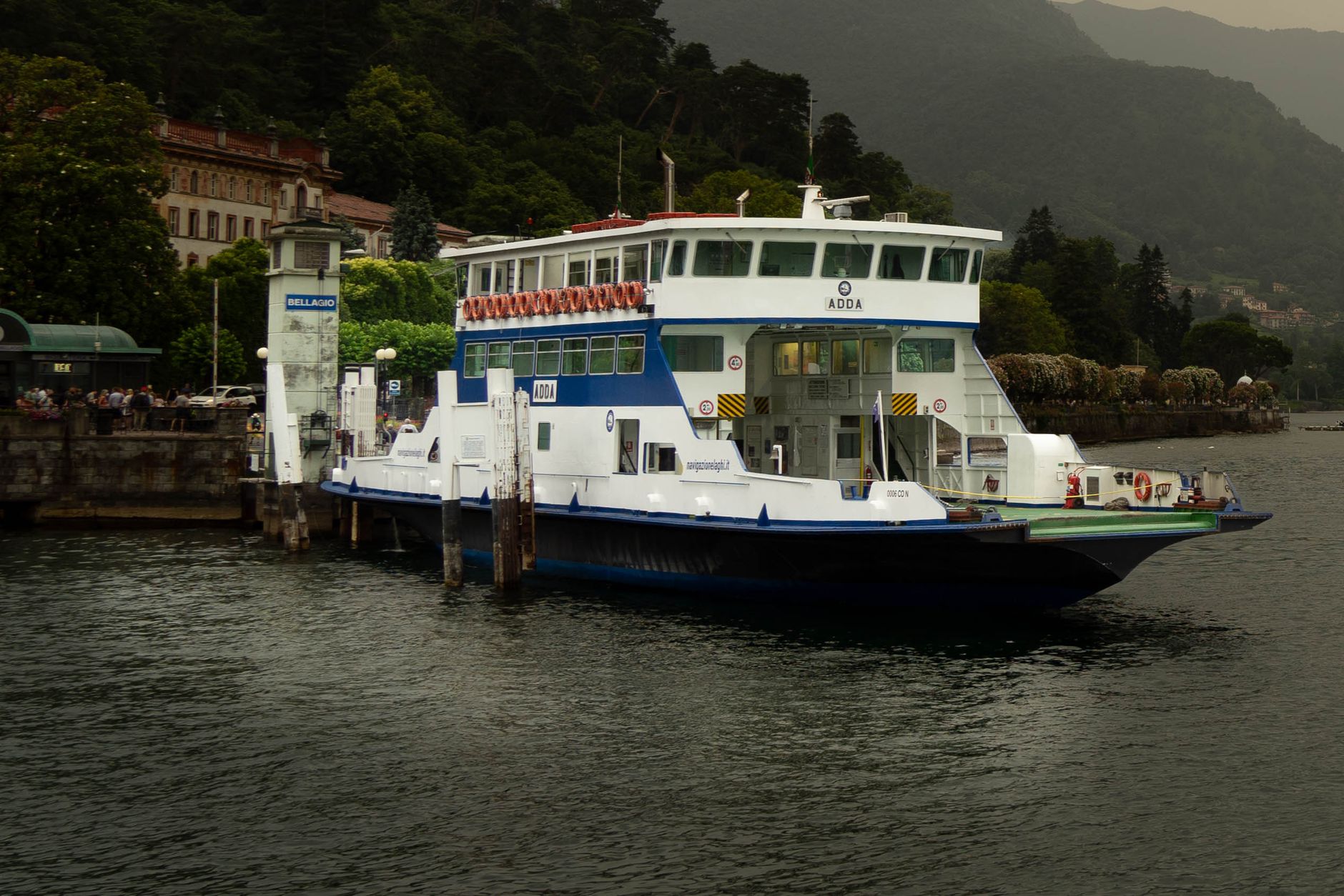
From Varenna-Esino station, walk down the hill to the lakeside (8–10 minutes, well-signed) or grab a €10 taxi to the imbarcadero. The Navigazione Lago di Como passenger ferry to Bellagio takes 15 minutes and costs around €5.50 one-way. There’s also a frequent car ferry on the Varenna-Bellagio-Menaggio triangle every 20–30 minutes.
This is the route I recommend to anyone who’s done Como before, or anyone whose main reason for the trip is “I saw a photo of Bellagio.” The total journey is around 90 minutes door-to-Bellagio, comparable to faffing about with Como-side ferries, and the train ride along the eastern shore is genuinely scenic once you pass Lecco.
The Sondrio and Tirano line out of Centrale drops you straight at the lake — our Varenna guide covers the town at the other end, including the steep walk down from the station.
The Tirano line runs the full length of Como’s eastern shore before it turns north into the mountains — which is why the Bernina Express day trip starts with two of the best hours of ordinary railway in Italy.
Driving from Milan to Lake Como
Renting a car is a defensible choice if you want to circumnavigate the lake, hit multiple villages in one day, or get to the smaller villas (Balbianello, Carlotta, Monastero) that ferries reach awkwardly. It’s not a defensible choice if you’re staying in the obvious towns — trains and ferries do that better, faster, and without parking pain.
The main route is the A9 Autostrada dei Laghi from Milan north to Como. It’s about 50 km, takes around 1 hour 15 minutes in non-rush conditions, and tolls run €4–6 depending on exit. The A9 dumps you at Como city. If you’re going further north to Bellagio, Menaggio, or Varenna, you’ll continue on the SS340 Regina along the western shore (slow, twisty, gorgeous, often jammed in summer) or the SS342/SS36 via Lecco on the eastern shore (faster, dual carriageway most of the way).
For Bellagio specifically, the SS583 from Lecco runs along the lake’s eastern shore and over the peninsula tip — it’s about 1 hour 45 minutes total from Milan in light traffic, and 2 hours 30 minutes in summer Saturday traffic. I’ve sat in that traffic. Don’t sit in that traffic.
Parking is the real problem. Bellagio, Varenna, and central Como have small paid lots that fill by 10 AM in season. Expect €2–3 per hour or €15–25 for the day, and expect to circle. If you’re committed to driving, our renting a car in Milan guide covers pickup logistics — most rentals are at Linate, Malpensa, or Centrale, not the city center, which adds time to the start of your day.
Organized tour buses from Milan
For travelers with one day in Milan and limited patience for logistics, a guided coach tour is a genuinely reasonable option. Typical full-day tours from Milan to Lake Como run €70–110 per person and include the bus, a guide, a ferry transfer between Bellagio and Varenna or Como and Bellagio, and sometimes a wine tasting or villa visit. Lunch is usually optional and not included.
What you get: someone else solves the train-station decision, the ferry timing, and the “which town first” question. You’re collected at a central point (usually near Centrale or Duomo), driven directly to Bellagio or Como, given 2–3 hours of free time at each stop, and bused back. Total day is typically 9 to 6.
What you lose: control over pace, ability to linger, and the cheapness of doing it yourself. The DIY version of the same day costs maybe €25 in train and ferry fares per person. The €80 premium buys you convenience.
Tours run year-round but are most frequent April through October. Book the day before in shoulder season; book a week ahead in July and August. If you’re combining a Lake Como day with other excursions, our broader day trips from Milan guide has the full menu.
Once you’re at the lake: ferries and buses
Getting to the lake is half the puzzle. Moving around it is the other half, and it’s where most one-day visitors waste time. The lake is shaped like an upside-down Y, with Como at the bottom-left tip, Lecco at the bottom-right tip, and Colico at the top. The three arms meet at the Centro Lago, where Bellagio, Varenna, and Menaggio form a triangle.
The main ferry operator is Navigazione Lago di Como. From Como city, the slow battello to Bellagio takes about 2 hours 15 minutes and costs around €12 one-way, stopping at every town along the western shore. The fast servizio rapido hydrofoil cuts that to 45 minutes for €17, with limited stops. From Varenna, the small passenger ferry crosses to Bellagio in 15 minutes for around €5.50.
The Centro Lago triangle ferry — Varenna, Bellagio, Menaggio, and back — runs every 20–30 minutes and is the most efficient way to see three towns in a day. A €17.50 day pass (the “Centro Lago” biglietto giornaliero) lets you hop on and off all day within that triangle.
Buses are an alternative for Como-to-Bellagio: the C30 bus runs from Como to Bellagio in about 1 hour 10 minutes for €3.40. It’s twisty, slow, and the views from the lakeside seats are good — but if you get carsick on switchbacks, take the ferry. The C110 runs Como to Menaggio (1 hour, €3.40) along the western shore.
Once you have worked out how to get there, the next question is where to go — our Lake Como travel guide covers the towns, the ferry network and the villas.

Day trip vs overnight — which transport plan fits your trip
If you’re doing this as a day trip, the math is simple. Cadorna to Como Nord Lago (€4.80, ~1 hour), then either stay in Como city for a half-day, or jump on the fast hydrofoil to Bellagio (€17, 45 min) for a full-day “Centro Lago” loop. Back on a 6 or 7 PM train, dinner in Milan by 9. Our Lake Como day trip from Milan walks through the timing in more detail.
If you have two days, the better plan is Centrale to Varenna-Esino (€7.40, ~1 hour), stay one night in Varenna or Bellagio, ferry around the Centro Lago on day two, and return from Varenna in the evening. This route hits the prettiest parts of the lake without the Como-city walk-around. The Milan plus Lake Como itinerary page covers the overnight version.
If you’re a transit nerd or want to combine Como with another stop, you can also chain destinations — Como in the morning, train from Como San Giovanni up to Lugano or back via Bergamo. The Milan train travel guide covers the broader regional rail network.
Practical tips for the Trenord trains
A few things I wish someone had told me on my first Milan-to-Como run.
- Buy tickets at the green Trenord machines in either station, or use the Trenord app. Both are easy and in English. Avoid the staffed ticket window unless you need a specific seat reservation — the line is always longer than the train wait.
- Validate paper tickets at the green-and-yellow box on the platform before boarding. Failure to validate is a €50+ fine and the ticket inspectors do not care that you’re a tourist. App tickets are pre-validated and don’t need the green box.
- Luggage rides free on regional trains. There are racks at the ends of each car. Don’t pay extra anywhere for “large luggage.”
- Last train back from Como to Milan is usually around 22:30 on weeknights and slightly earlier on Sundays. Check the return board when you arrive — don’t assume.
- Seat reservations aren’t a thing on regional trains. Sit anywhere. On Frecciarossa, your ticket has an assigned seat printed on it.
- First and last cars are usually emptiest. The middle cars near the platform entrance fill first.
If you’re connecting from elsewhere in the city, the overall Milan transport guide covers metro, tram, and bus options to get to Cadorna or Centrale. For shorter intra-Milan hops, the tram guide and taxi and ride-sharing pages are worth a look. If you’d rather pedal to the station, the biking in Milan guide covers the bike-share network, which has stations near both Cadorna and Centrale.
FAQ
How long is the train from Milan to Lake Como?
The fastest regular train is 37–40 minutes on the Trenord regional from Milano Centrale to Como San Giovanni. The Cadorna-to-Como Nord Lago train is slightly slower at 57 minutes to 1 hour 7 minutes, but arrives directly at the lakefront. Trains to Varenna-Esino on the eastern shore take about 1 hour.
Which Milan station should I use for Lake Como?
Use Milano Cadorna if you want to step off the train onto the lakefront in Como. Use Milano Centrale if you want the faster ride and don’t mind a 15-minute downhill walk in Como, or if you’re going further to Varenna or Bellagio.
Is it expensive to get to Lake Como from Milan?
No. A one-way regional ticket runs €4.80–€7.40 depending on which station and destination you choose. A full round-trip to Varenna with a Centro Lago ferry day pass is around €32 per person total.
How do I get to Bellagio from Milan?
Best option: train from Milano Centrale to Varenna-Esino (€7.40, ~1 hour), then 15-minute ferry across to Bellagio (€5.50). Total ~90 minutes door to door. Alternative: train to Como, then 45-minute fast hydrofoil up to Bellagio (€17). Avoid the C30 bus unless you specifically want the road views.
Can I do Lake Como in a day from Milan?
Yes, easily. A 9 AM departure puts you on a ferry in Como by 10:15 or in Bellagio by 11:30, with five or six hours at the lake before catching a 6 or 7 PM train back. The Cadorna-to-Nord-Lago route is the most efficient for a half-day; the Varenna route is best for a full day with the Centro Lago triangle.
Do I need to book trains to Como in advance?
No. Trenord regional trains have no seat reservations and the fare is the same whether you buy a month ahead or five minutes before departure. Just walk up and buy. The exception is the Frecciarossa, where advance booking can save €5–10.
Final thoughts
The reason most travelers blow the Milan-to-Lake-Como run is that they read one blog, pick one station, and ignore the geography. The two-station, two-terminal setup looks complicated for fifteen seconds and then becomes the most useful piece of information you’ll have all week. Milan to Lake Como transport is genuinely one of the best train rides in Italy, and the cheapest hour-long escape from any major European city I can think of.
My default recipe, written out: take the metro to Cadorna FN, buy a €4.80 ticket at the machine, catch the next “RE” train to Como Nord Lago, walk fifty steps to the ferry pier, ride the hydrofoil up to Bellagio for lunch on the water, ferry back across to Varenna for an afternoon walk, then take the Trenord regional from Varenna-Esino back to Centrale. Total cost around €35, total time about ten hours, three of Lake Como’s best towns in one day. Do that and you’ll understand why everyone keeps coming back.