Milan has six train stations and the fork in the road on every Italian trip starts with the same question: which one? I have been catching trains out of this city for years and the wrong choice still costs me time. This Milan train station guide is the version I wish someone had handed me on my first visit, when I dragged a suitcase across town because I assumed every fast train left from Milano Centrale. Most of them do. Not all of them. The five-minute decision you make booking the ticket determines whether you arrive at your hotel relaxed or sweating through a metro transfer with thirty seconds to spare.
What follows is the working knowledge I use to move around northern Italy by rail: which station fits which trip, how Trenitalia and Italo actually compare once you stop reading the marketing copy, the regional ticket rule that gets tourists fined €50 a week, and the specific times and fares for the day trips and city hops worth your morning. If you want the broader picture on getting around the city itself, I keep that in the Milan transport guide. This one is trains.
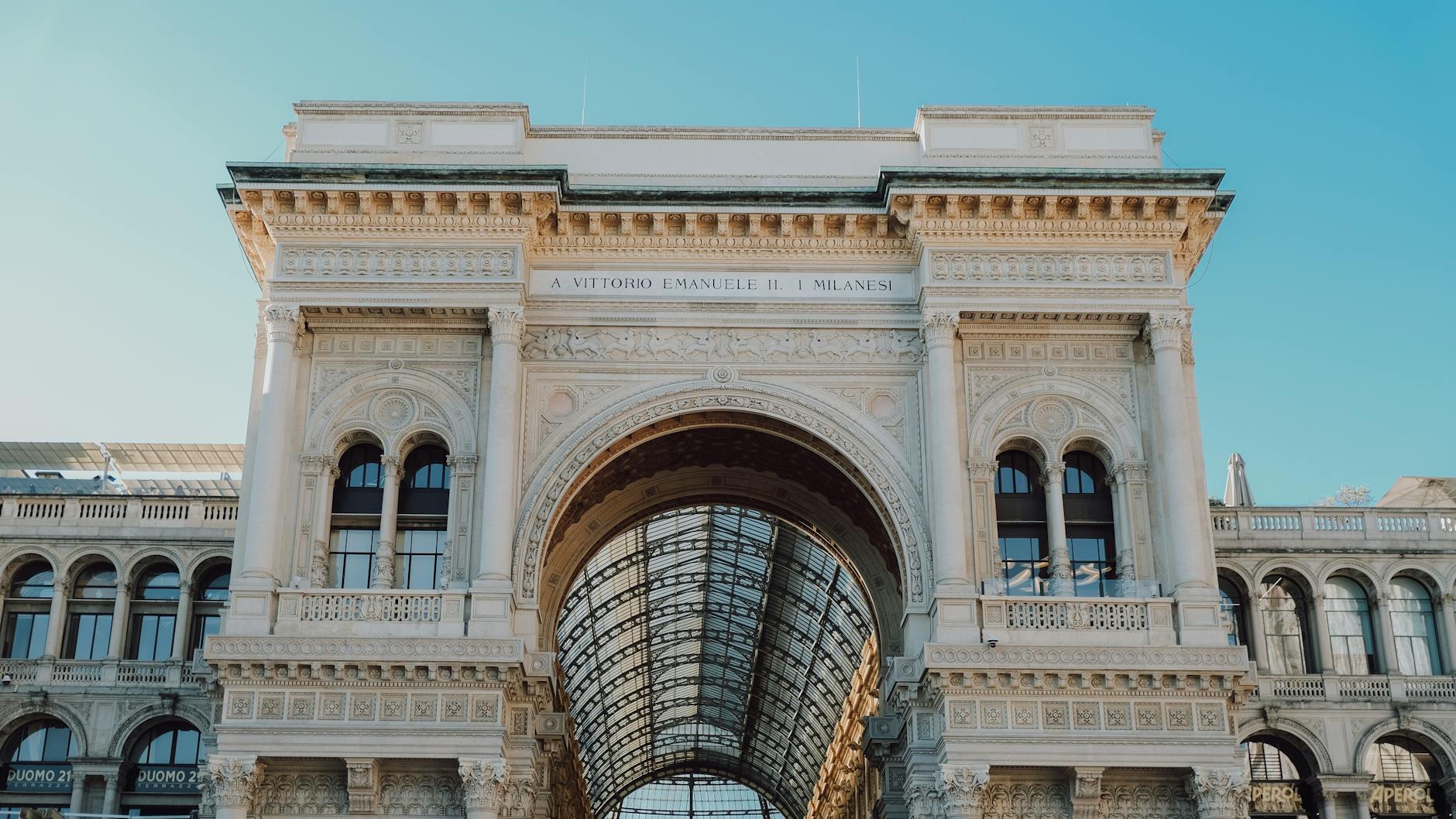
The Milan train station landscape
Milan’s six stations are not equal. They split into one giant terminus, two serious secondary stations, and three smaller ones you might use if your hotel is nearby or your specific train happens to stop there. Knowing the cast in advance saves you from booking a ticket out of the wrong end of town.
- Milano Centrale — the main hub. Every Frecciarossa, almost every Italo, all international trains, Trenord regional, Malpensa Express. Metro M2 (green) and M3 (yellow).
- Milano Porta Garibaldi — second-largest. Italo’s preferred terminus, heavy Trenord regional traffic, fast trains to Turin and Venice. Metro M2 and M5 (lilac).
- Milano Cadorna — Trenord only. Lake Como (Nord Lago line), Malpensa Express terminus, regional Varese. Metro M1 (red) and M2.
- Milano Rogoredo — southeast, on the Bologna line. Many Frecciarossa and Italo to Rome stop here. Metro M3.
- Milano Lambrate — east. Regional and a handful of long-distance stops. Metro M2.
- Milano Porta Romana — south. Mostly regional and Passante suburban trains. Metro M3.
Centrale, Garibaldi, Cadorna are the three you actually need to learn. The others are useful only if your specific ticket says so or your apartment is across the street. Always check the station name printed on your ticket before you head out — it is the single most common mistake travelers make in Milan, and I have watched at least four people sprint through Centrale because their Italo was leaving from Garibaldi.
Milano Centrale: the main hub
Milano Centrale opened in 1931 and looks like it was designed by an architect who wanted to intimidate passengers into respecting trains. The cavernous travertine façade, the carved eagles, the soaring iron-and-glass roof over 24 platforms — it is one of the great Italian train station experiences and worth a few minutes of standing still even if you are only changing trains. About 320,000 passengers pass through daily, on roughly 500 trains. It is the second-busiest station in Italy after Roma Termini.
Layout, in plain terms
Three levels. The platforms are upstairs (called the Galleria delle Carrozze in older signage). Underneath is the main ticket hall and the food court. Below that is the metro mezzanine connecting to M2 and M3. You enter on either side from Piazza Duca d’Aosta or from Via Vittor Pisani / Via Sammartini, ride the escalators up past two floors of shops, and emerge at the front of the platforms. Track 1 is on your far right facing the trains; track 24 is on the far left. The Frecciarossa and Italo trains usually leave from the higher-numbered platforms (15 to 21), and Trenord regional trains tend to use the lower numbers.
What you need to know inside the station
- Left luggage (KiPoint): on the ground floor near platform 21, currently €6 for the first 5 hours, €1/hr for hours 6-12, €0.50/hr after. Open roughly 6:00 to 23:00. Bring your ID. Lines build before 11:00 on summer weekends.
- Sala Freccia Club lounge: across from track 21. Free for Trenitalia Executive class passengers, Salottino bookings, and Cartafreccia Gold/Platinum cardholders. Coffee, snacks, decent Wi-Fi, quiet seating.
- Sala Blu: near track 4. Assistance for passengers with disabilities — book ahead through Trenitalia or call 02 32 32 32.
- Ticket office and machines: in the main hall under the platforms. The red Trenitalia machines and the maroon Italo machines are both easy to use in English, but I would rather buy on the app and skip the line entirely.
- Food court: mezzanine level. Specifics in the practical tips section below — most of it is mediocre.
- Metro: follow the M signs to the lower level for M2 and M3. If you are heading to Duomo, take M3 (yellow) southbound — three stops, six minutes.
One quirk: there is no platform-side ticket check. You can walk between platforms behind the buffer stops without going through any barrier. That makes platform changes easy but it also means pickpockets and scammers wander freely — more on that below.
Milano Porta Garibaldi: the second station that matters
Garibaldi is where Italo lives. Italo’s headquarters are technically in Rome, but its operational heart in northern Italy beats out of Milano Porta Garibaldi, and a lot of Italo’s Milan departures terminate or originate here rather than at Centrale. If you booked Italo to Turin, Venice, Verona, or Bologna, check your ticket — there is a real chance it leaves from Garibaldi, not Centrale.
The station sits at the edge of the Porta Nuova business district, the cluster of glass towers including the UniCredit and the Bosco Verticale. It is on M2 (green) and M5 (lilac), which gives it the best metro connectivity in the city — M5 runs straight to San Siro for football and M2 cuts across to Centrale in two stops if you guessed wrong. Trenord regional trains to Como (Como San Giovanni), Bergamo, Lecco, Brescia, and Cremona run heavily out of Garibaldi.
Compared to Centrale, Garibaldi feels smaller, lower-ceilinged, more 1960s-functional. Crowds are lighter, food options are limited but the espresso bar on the upper level is fine, and the platforms are easier to navigate because there are only 22 of them and they are signed cleanly. If you are headed to a hotel in Porta Nuova, Isola, or even Brera, Garibaldi is actually closer than Centrale — Brera is about a 15-minute walk south.
Milano Cadorna: the Lake Como and Malpensa station
Cadorna is the smallest of the three core stations and the easiest to use. It is a Trenord-only terminus — no Frecciarossa, no Italo, no Trenitalia long-distance, no international. What it does serve: the Nord Lago line up the western shore of Lake Como (Como Nord Lago station, right on the water), Varese, Saronno, and the Malpensa Express direct to Malpensa airport Terminal 1 and Terminal 2 in about 30 minutes. The full breakdown of which station to use for the lake is in my Milan to Lake Como transport guide; for airport mechanics see Milan airport transfers.
Cadorna sits on Piazzale Cadorna, less than a mile from Duomo, and the station is connected to M1 (red) and M2 (green). The metro stop is named Cadorna FN. The building itself is a tidy modernist piece with a giant Claes Oldenburg sculpture (a needle and thread) in the square out front, which is a useful landmark when you are lost. Eight platforms, all at street level, no escalators, no confusion. If you are doing a Lake Como day trip and your hotel is anywhere near the city center, Cadorna beats Centrale every time on convenience even though the train ride takes about ten minutes longer than the Trenitalia equivalent from Centrale to Como San Giovanni.
Airport services work slightly differently from the mainline network: our Malpensa Express train guide covers the fares, the app and which Milan terminus to aim for.
Rogoredo, Lambrate, and Porta Romana
You probably do not need to think about these three, but you might end up at one, so a quick orientation.
Milano Rogoredo is the one to know. It is the southeastern stop on the line to Bologna, Florence, and Rome, and many high-speed trains stop here a few minutes after leaving Centrale. If your hotel is near Rogoredo (M3 yellow line, southern end), you can save 20 minutes on departure day by boarding there instead of trekking to Centrale. The station was rough a decade ago but the neighborhood has been cleaned up considerably and the platforms are perfectly safe in daylight hours.
Milano Lambrate is east, on M2 (green). A handful of long-distance trains stop here. It is mostly a regional and Passante suburban hub. Unless your ticket says Lambrate, you can forget about it.
Milano Porta Romana sits south of the city center on M3 (yellow). It handles Passante suburban trains and a few regional services. Same advice — if your ticket says Porta Romana, go to Porta Romana; otherwise ignore it.
Trenitalia vs Italo: high-speed compared
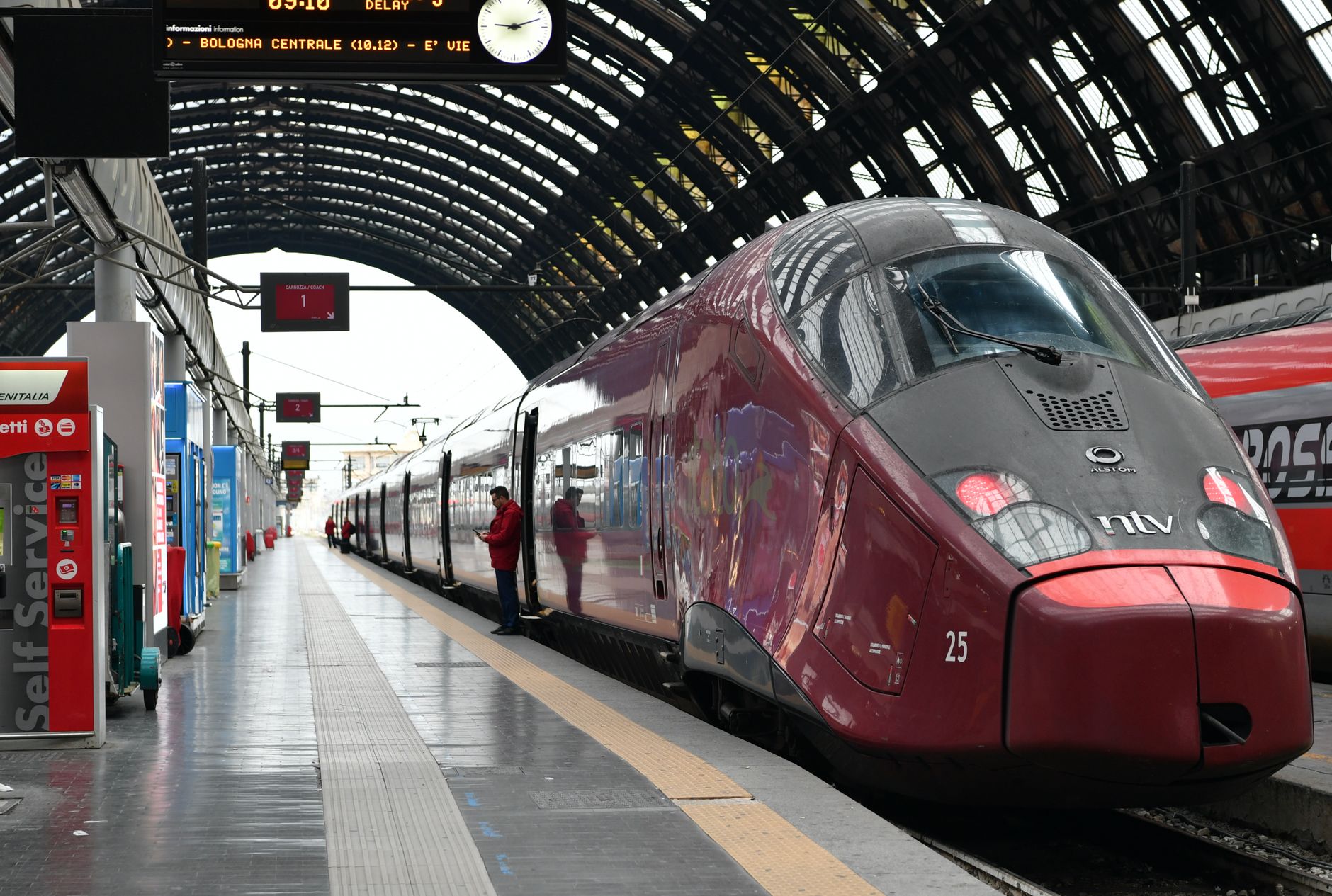
This is the question I get asked more than any other. Short answer: both are excellent, the difference between them on most routes is €10-30 either direction depending on when you book, and the smart move is to open both sites in two tabs and compare your specific date. The longer answer matters if you want a quiet ride, a hot meal, or a guaranteed seat in business class.
Trenitalia (Frecciarossa, Frecciargento, Frecciabianca)
Trenitalia is the state operator. The flagship is the Frecciarossa (red arrow), running at 300 km/h on the dedicated high-speed lines. Below it sit the Frecciargento (silver arrow), which mixes high-speed and conventional track, and the Frecciabianca (white arrow), conventional tracks only. Four classes on the Frecciarossa 1000:
- Standard: 2+2 seating, perfectly fine, the workhorse fare class.
- Premium: same 2+2 layout but slightly wider seats, welcome drink, leather upholstery.
- Business: 2+1 seating, more legroom, dedicated quiet area in some carriages, complimentary snack and drink. This is the sweet spot — book it when it is under €60 to Rome.
- Executive: 1+1 seating, full meal, lounge access at Centrale and other major stations, the most legroom on Italian rails. Expensive but excellent.
Trenitalia runs more departures than Italo on most routes — particularly Milan-Florence, Milan-Venice, and any route that touches a smaller city. The on-board catering car (the Bistrò) sells hot pasta and decent espresso. The booking site is functional in English and the Trenitalia app lets you store tickets in Apple Wallet.
Italo (NTV)
Italo launched in 2012 as Italy’s first private high-speed operator, breaking Trenitalia’s monopoly on the main corridors and immediately driving fares down. The trains are sleek AGV 575s and newer EVO models in dark red and grey. Four classes:
- Smart: equivalent to Standard. Comfortable enough, 2+2 layout.
- Comfort: a little more legroom, on certain trains only.
- Prima: 2+1 layout, snack and drink included, equivalent to Trenitalia Business.
- Club Executive: 1+1 layout in the nose of the train, full meal, lounge access (Italo Club at Milano Centrale, Garibaldi, Rome Termini, others).
Italo Milan operations split between Centrale and Garibaldi, with more departures from Garibaldi than people expect. Italo’s network is deliberately narrower — it concentrates on the high-volume corridors (Turin-Milan-Venice and Rome-Florence-Milan-Naples) and skips secondary destinations like Genoa, Trieste, Bari. If you are going to a smaller Italian city with one connection, Trenitalia will almost always be the better routing.
Which one to actually book
On the Milan-Rome route, both companies run roughly hourly, both take about 3 hours, both charge €19-90 in advance economy and €100+ on the day of travel. Italo’s entry-level Smart fares often undercut Trenitalia’s Super Economy by a few euro; Trenitalia’s Executive beats Italo’s Club on catering. For a quiet, modern ride in economy I marginally prefer Italo. For maximum flexibility and the most departure times I take Trenitalia. The actual right answer: check both, book whichever is cheaper on your date, then stop thinking about it.
The busiest route out of Centrale by some distance — our guide to the Milan to Venice train covers fares, the two operators and which Venice station to book.
Regional trains: Trenord and Trenitalia Regionale
Regional trains are how you reach Lake Como, Bergamo, Brescia, Cremona, Pavia, and the small towns of Lombardy. Two operators run them in this region: Trenord, a joint venture between Trenitalia and the Lombardy regional government, and Trenitalia Regionale, the national operator’s regional arm. The split is geographical and not always intuitive — Trenord runs the Como Nord Lago line from Cadorna, the Malpensa Express, and most Brescia and Bergamo regional services; Trenitalia Regionale runs Milan-Como San Giovanni, Milan-Bergamo direct, and the southern regional lines.
Pricing is fixed by zone, not by demand. A ticket to Bergamo costs about €6 today, about €6 in August, about €6 the night before; check the current fare on Trenord’s site before you go. There are no advance discounts, no peak surcharges, no seat reservations. You buy, you board, you sit anywhere.
Some of the best value on the regional network runs south rather than north: the Pavia day trip reaches a UNESCO-grade monastery with its own station in about half an hour.
Two hours on a Trenord regional via Cremona gets you somewhere most visitors never reach: the Mantua day trip explains the timings, the fare and why you should book one museum slot before you board.
The most spectacular use of an Italian regional ticket is the run up to Tirano, where the Swiss narrow gauge takes over: see our Bernina Express day trip from Milan for how to assemble the whole thing yourself.
The validation rule
This is where tourists get stung. Paper regional tickets must be validated before boarding by stamping them in one of the small green or white boxes at the platform entrance. The stamp prints the date and time. An unvalidated paper ticket is treated as no ticket and the fine is €50 plus the fare. The conductor does not care that you are a tourist, did not know, or only spoke English. They will fine you.
The good news: tickets bought through the Trenord or Trenitalia app do not need to be validated. The app generates a QR code and the conductor scans it; the purchase timestamp counts as validation. If you ever buy regional tickets in Italy, buy them through the app and forget the green boxes exist.
How to buy tickets without overpaying
The pricing logic for Italian trains is split into two completely different worlds and confusing them is how people end up paying €120 for a journey that could have cost €29.
High-speed (Frecciarossa, Italo, Frecciargento): dynamic pricing. The earlier you book, the cheaper the fare. Book 60-90 days out for the rock-bottom Super Economy or Low Cost fares — I have paid €19.90 Milan to Rome in Standard class booking three months ahead, and the same seat the morning of travel cost €117. The fare buckets are non-refundable and changeable only with fees, so book early only if you are sure of your dates. Sweet spot: 30 days ahead in Business or Prima, usually €45-65 to Rome.
Regional (Trenord, Trenitalia Regionale): fixed price, no discount for booking ahead. Buy the morning of travel through the app. The one trap: Trenitalia.com charges a €2-ish booking fee for regional tickets that the Trenord app does not. For Lombardy regional travel, install the Trenord app and use it exclusively. For regional travel elsewhere in Italy, use the Trenitalia app — it is annoying but cheaper than the website for some routes.
Apps I actually have on my phone: Trenitalia, Italo Treno, Trenord. Three apps for what should be one transaction is a peculiarly Italian solution, but each does its own routes better than the alternatives.
Italy’s flagship route, and the one where booking badly costs you most — our guide to the Milan to Rome train covers the fare ladder and both operators.
Practical tips you will not find on the operator websites
Where to wait for your platform
Platform assignments for high-speed trains at Centrale post 10-15 minutes before departure on the big yellow departure boards (partenze). Do not stand at a specific track waiting before the assignment — they change platforms frequently. The crowd at the center of the hall under the boards is where everyone congregates, and the moment the platform posts there is a small stampede toward the gates. There is now a soft ticket check at the entrance to most Frecciarossa and Italo platforms — a staff member glances at your QR code. Standard tickets get scanned at the seat by the conductor after departure.
Validation: only for regional paper tickets
To repeat because it matters: high-speed tickets are never validated, app regional tickets are never validated, only paper regional tickets need the green box. Validate, board, sit anywhere in the open coaches.
Food at Centrale that is not terrible
The mezzanine food court is a sea of mediocrity, but two reliable options. Spontini (Milan’s famous thick-crust pizza al taglio) has an outlet in the station — €5 for a slab that travels well. Princi the bakery is on the ground floor of the Galleria, fresh focaccia and panini for €4-6. Avoid the big chain coffee bars on the upper level — espresso is twice the going rate and half the quality. The standing-room espresso bar inside the WHSmith-equivalent newsagent on the platform level is actually fine for €1.20.
Pickpocket awareness
The station and the streets immediately around it (Piazza Duca d’Aosta, Via Vitruvio, the underpass to Via Sammartini) are the worst pickpocket and scam zone in Milan after Duomo. Watch your pockets on the metro descent, do not put your phone on a café table, ignore anyone who approaches you with a clipboard or a piece of string. My full breakdown is in Milan tourist scams. None of this is dangerous, just expensive if you are sloppy.
Left luggage costs and locations
KiPoint at Centrale is €6 for 5 hours, then increasing per hour. Garibaldi has a smaller KiPoint near the main entrance at similar rates. Cadorna does not have official left luggage inside the station, but there are private operators a block away on Via Boccaccio (around €5/day). If you are checking out of a hotel and have a long evening before a train, your hotel will almost always store bags for free — ask before you check out.
There are no lockers at Centrale, whatever you have read — see our guide to luggage storage in Milan for what to do instead.
How early to arrive
For Frecciarossa and Italo: 20 minutes is enough if you know the station. 30 if it is your first time. Unlike airports, there is no security line and no boarding gate process — you walk on, find your reserved seat, sit down. For regional: 10 minutes including validation. International night trains: 30 minutes, as boarding procedures are more involved.
Top day trips and overnight trips from Milan by train
Milan’s location at the head of the Italian peninsula makes it the best rail base in the country. Here is the cheat sheet I actually use. The full list with itineraries is on the day trips from Milan page.
- Como — 37 minutes from Cadorna to Como Nord Lago (Trenord, €4.80) or 40 minutes from Centrale to Como San Giovanni (Trenitalia Regionale, €4.80). Cadorna wins if you want to step off the train onto the lake.
- Bergamo — about 48 minutes from Centrale on Trenitalia Regionale, about €6. The funicular up to Bergamo Alta is the city’s headline experience.
- Verona — 1h 10m on Frecciarossa, €19-35 in advance. Arena, balcony, Piazza Erbe. See the Verona day trip from Milan guide.
- Turin — 1 hour on Frecciarossa or Italo, €15-30 in advance. Royal palaces, Egyptian Museum, the best aperitivo culture in northern Italy. Details in Turin day trip from Milan.
- Venice — 2h 15m on Frecciarossa to Venezia Santa Lucia, €25-45 in advance. Long day trip but workable, overnight better.
- Bologna — 1 hour on Frecciarossa, €25-45 in advance. Eat all day, take the late train back. See Bologna day trip from Milan.
- Florence — 1h 55m on Frecciarossa, €25-50 in advance. Doable as a day trip with an early start, better as a one-night.
- Rome — 3 hours on Frecciarossa or Italo, €19-90 advance, €117+ same-day. Worth a long weekend, not a day trip.
Bergamo is the day trip from Milan I keep going back to. Most travelers spend three days in Milan and treat day trips as an afterthought. They miss the better option an hour east — walled, medieval Bergamo Alta, which feels like the version of Italy you came to see, minus the cruise crowds of Cinque Terre. Trenitalia runs Milano Centrale to Bergamo in about 48 minutes for around €6 on the regional service. I usually catch the 8:33.
A few more that repay the ticket, each with its own guide:
- The fastest way out of the city to Tuscany — our guide to the Milan to Florence train covers fares, both operators and the day-trip timings that work.
- Forty minutes east on the Venice mainline sits the most under-visited city in Lombardy: our Brescia day trip guide explains what to do when you get off.
- The Venice mainline is the workhorse for eastern day trips: it puts you at Desenzano del Garda in about an hour, which is how the Sirmione day trip works at all.
- The Domodossola line is the most useful stretch of track for a day-tripper — the Swiss-bound EuroCity trains reach Stresa in about an hour. See Stresa and the Borromean Islands for what to do when you get off.
- Milan’s most surprising direct train runs to Zurich in 3h17: see our Switzerland day trip from Milan for the EuroCity timings, the Supersaver fares and what customs actually check on the way back.
- Liguria is further than the map suggests, because the Apennines sit in the way — our guide to Genoa and Portofino from Milan puts real numbers on the connections.
- Lecco, Sondrio, Tirano, Chiavenna and Domodossola are the railheads that matter in winter: see ski day trips from Milan for which resort sits above each one and what the combined snow-train ticket includes.
- The shortest useful journey on the whole network runs to Monza in about ten minutes, and once a year it carries a Formula 1 crowd — see our Italian Grand Prix at Monza guide.
FAQ
Which Milan train station is closest to Duomo?
Milano Cadorna, less than a mile northwest of Duomo and one metro stop on M1. Centrale is about 2.5 miles north and three stops on M3. Garibaldi is roughly the same distance northwest and three stops on M2.
Do I need to validate Trenitalia tickets?
Only paper regional tickets. High-speed tickets (Frecciarossa, Italo, Frecciargento) have a seat assigned and are never validated. App-purchased regional tickets are validated automatically by the purchase timestamp. Paper regional tickets must be stamped in a green or white box on the platform before boarding — fine for failure is €50 plus the fare.
Is Italo cheaper than Trenitalia?
Sometimes by €10-30, sometimes the opposite, depending on the route and how far in advance you book. Italo’s entry-level Smart fares often undercut Trenitalia’s Super Economy by a few euro, but Trenitalia runs more departures so the cheap buckets last longer. Always check both — italotreno.com and trenitalia.com — before booking. The default-to-one-operator approach is exactly how you overpay.
How early should I arrive for a Frecciarossa?
Twenty minutes if you know the station, thirty if it is your first time at Centrale. There is no security check and no boarding gate; you walk to your assigned platform when it posts (10-15 minutes before departure) and board directly. Cutting it to 10 minutes is doable but stressful.
Can I buy train tickets at Milano Centrale?
Yes. Trenitalia and Italo both have staffed ticket offices and self-service machines in the main ticket hall on the ground floor. Machines accept cards and cash, run in English, and take about two minutes. The app is faster and avoids the line — install Trenitalia, Italo Treno, and Trenord before you arrive.
Where is left luggage at Milano Centrale?
KiPoint left luggage is on the ground floor near platform 21, currently €6 for the first 5 hours, with smaller hourly rates after. Bring photo ID. The line gets long before noon on summer weekends — if you have an early train arrival and an afternoon checkout, drop bags first thing.
Final thoughts
The Italian rail network is one of the best things about traveling in this country. Frequent, fast, comfortable, almost always on time. Milan is the best hub on that network — six stations giving you direct access to Lake Como in 40 minutes, Turin in an hour, Venice in two, Rome in three, Paris overnight. Spend ten minutes learning which station serves which route, install the three apps before you fly in, and the rest of Italy opens up as a series of day trips and short hops with no rental car required. The companion guides on the Milan metro, trams, taxis and ride-sharing, biking, car rental, and hotels near Milano Centrale cover the rest of the city-side logistics.
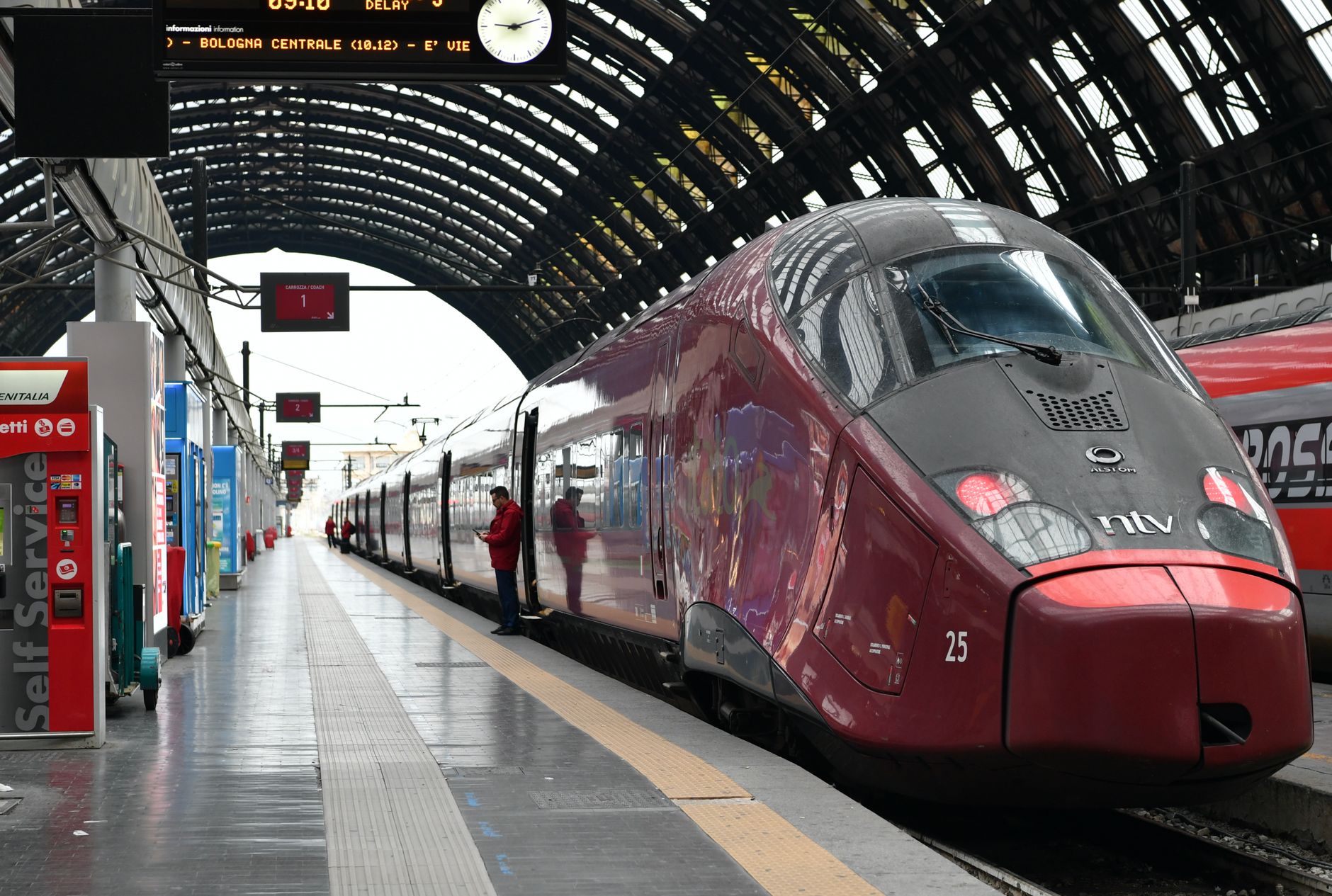
The Milan train station guide above is the one I send to friends visiting for the first time. Memorize the three names — Centrale, Garibaldi, Cadorna — keep the apps installed, validate your paper regional tickets, book your high-speed trains a month out. Do those four things and you will move around Italy faster, cheaper, and with less stress than nine in ten tourists who land at Malpensa with no plan.