Milan added almost 70 km of bike lanes during the pandemic, and it genuinely changed the city. I used to dread cycling here — too many trams, too many cobblestones, too many drivers who treat zebra crossings as a polite suggestion. Now I do most of my errands on a BikeMi pedelec, and on Sundays I’ll ride 20 km down the Naviglio Grande towpath without ever sharing a lane with a car. Biking in Milan in 2026 isn’t the white-knuckle experience it was a decade ago. It’s actually the fastest way across the center between 8 and 10 in the morning, and it’s almost always cheaper than a taxi.
This guide covers what biking in Milan actually looks like now: the BikeMi system (prices, e-bikes, where the docks are), the free-floating apps that fill the gaps, the six routes I’d send any visitor on, where to rent a real bike if you want to go further afield, and the small things — tram tracks, cobblestones, theft — that nobody warns you about until you’ve learned the hard way.
Is Milan actually good for cycling now?
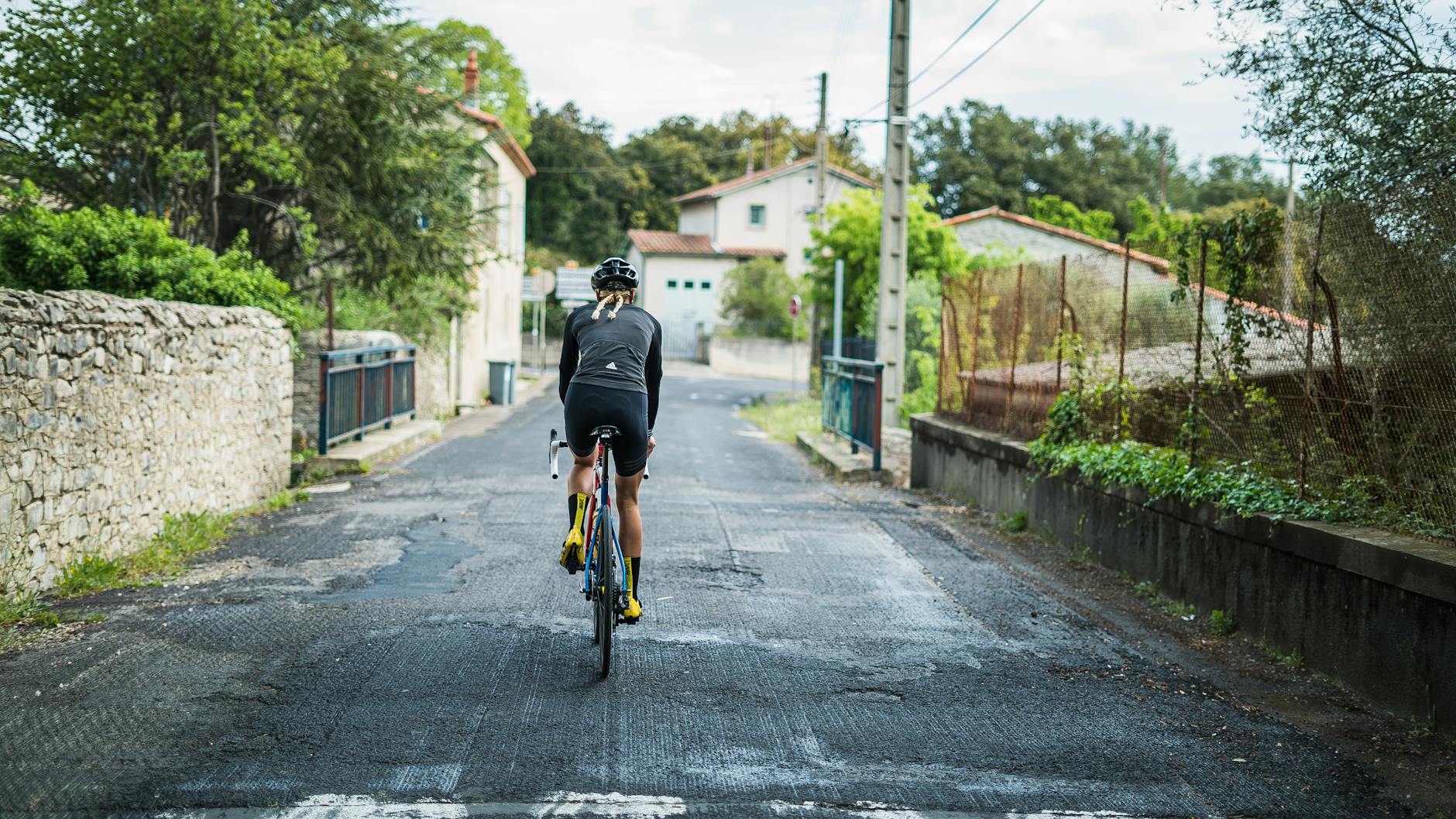
Short answer: yes, with caveats. Milan is flat — properly flat, the kind of flat where you can ride a single-speed across town without breaking a sweat — and the city has invested heavily in cycling infrastructure since 2020. There are more than 320 km of bike lanes and “cycle itineraries” now, including the cavalcavia overpasses that connect Porta Romana to Corvetto and the protected lanes along Corso Buenos Aires and Viale Monza. The famous COVID-era expansion added bidirectional lanes through neighborhoods like Isola, NoLo, and along Corso Venezia that have largely stayed.
The caveats: tram tracks are everywhere in the center and they will catch a narrow tire if you cross them at the wrong angle. Cobblestones in Brera, the Quadrilatero, and the streets behind the Duomo will rattle your fillings loose. And Milanese drivers, while statistically not the worst in Italy, do not look for cyclists the way Dutch or Danish drivers do. Still — for a city of 1.4 million, cycling Milan is now a credible primary mode of transport, not just a tourist activity. I know multiple locals who sold their cars in the last two years and replaced them with an e-bike subscription and the occasional FreeNow ride.
BikeMi: the official bike share system
BikeMi is the docked, station-based Milan bike share run by ATM (the city’s transport authority) together with Clear Channel. It launched in 2008 and is now Italy’s largest bike scheme, with roughly 325 stations and a fleet of around 5,000 bikes split between standard pedal bikes, pedal-assist e-bikes (pedelecs), and a smaller number of cargo and child-seat models. It operates from 6:00 to 2:00 every day — yes, including Sundays — and you can ride for up to two hours per trip before overage fees kick in.
BikeMi prices in 2026
- Daily pass: €4.50 for 24 hours from your first unlock
- Weekly pass: €9 for 7 days
- Annual subscription: €36 (€27 if you hold an ATM annual pass)
- Overage: €2 per hour for standard bikes, €4 per hour for e-bikes once you pass the 2-hour limit per trip
All subscriptions include unlimited trips during the validity period. The trick most tourists miss: the daily pass and the weekly pass are absurdly cheap compared to the metro day pass, and they cover e-bikes too. If you’re in Milan for three or four days and want to actually explore, the €9 weekly pass is the best transport deal in the city.
How to register
Download the BikeMi app (iOS or Android), enter your details, add a credit card. You don’t need an Italian phone number. The app then becomes your unlock key — pick a bike at any dock, tap “unlock” in the app, scan the QR code on the bike or enter the bike number, and the smart lock on the rear wheel releases. To end your trip, push the bike back into any empty slot at any station and wait for the green light. Don’t walk away until you see it.
Finding docks and e-bikes
The app shows live station availability — both how many bikes are free and how many empty docks there are (important, because nothing is worse than arriving at a full station with a bike you can’t return). E-bikes are flagged with a lightning bolt icon. Central neighborhoods — Brera, Duomo, Garibaldi, Porta Venezia — have a station roughly every 300 meters. Coverage thins out past the M2 and M3 ring but still reaches places like Bicocca, Lambrate, and Famagosta.

The free-floating alternatives
BikeMi covers most of what you need inside the inner ring. For anywhere else — and for late nights when you’ve missed the 2:00 cutoff — the free-floating operators take over. As of 2026 the main players in Milan are Lime, Dott, and RideMovi. Bird pulled back from Milan, and Voi has not held a license here for some time despite operating elsewhere in Italy.
All three work the same way: download the app, register a card, scan the QR code on the bike to unlock, and end the trip by parking inside the allowed zone (the app will show you the map and refuse to end the ride outside it). Pricing is broadly comparable — expect roughly €1 to unlock and €0.20–€0.28 per minute for an e-bike, depending on operator and time of day. Day passes and longer-duration packs are usually available in-app and bring the per-minute cost down sharply if you’re using them for a full afternoon.
When I’d choose free-floating over BikeMi: if I need to end my trip somewhere without a dock, if it’s after 2 a.m., or if I’m doing a one-way ride from the center out to a neighborhood like NoLo or Città Studi. When I’d stick with BikeMi: every other time. Per-minute pricing adds up fast, and a €4.50 BikeMi day pass is hard to beat.
Top 6 routes to actually ride
1. Naviglio Grande towpath to Abbiategrasso (20 km)
This is the route. Pick up a bike at Porta Genova, drop down to the canal, and ride south-west along the left bank. The first kilometer or two is busy and lined with bars; once you pass the ring road, the towpath turns into a proper cycle path that follows the canal all the way to Abbiategrasso. Old ringhiera houses on one side, water on the other, and very little car traffic. Stop at Gaggiano or Castelletto for an espresso. Total: about 90 minutes one way at an easy pace, and you can put the bike on the regional train back to Porta Genova from Abbiategrasso for €2.40.
2. Naviglio Pavese to Pavia (35 km)
The bigger, quieter cousin of the Naviglio Grande. From Darsena, follow the Naviglio Pavese south. The path is mostly paved, occasionally hard-packed dirt, and almost completely flat. You’ll pass locks designed by Leonardo, sleepy towns like Binasco, and acres of rice paddies before rolling into Pavia for lunch by the Ticino river. Take the train back from Pavia (about 25 minutes to Milano Centrale; regional trains allow bikes for a small supplement). This is a half-day commitment and I’d only do it on an e-bike or a road bike, not a BikeMi.
3. Parco Sempione and Castello loop (4 km)
The easiest, most central ride in the city. Start at the Castello Sforzesco, do a loop of Parco Sempione, swing out to the Arco della Pace, then come back down past the Triennale and the Arena. Twenty minutes total, mostly on car-free park paths. Perfect first ride to get a feel for the city. There’s a BikeMi station right at the foot of the Castello.
4. Idroscalo loop (5 km)
Milan’s “sea” — an artificial lake built in the 1920s as a seaplane base, now ringed by a 5 km cycle path and surrounded by a park. It’s east of the city near Linate airport and reachable by bike via the cycle path along Viale Forlanini or by metro M4 to Linate then a short ride. Flat, scenic, popular with rollerbladers and dog-walkers on Sundays. Bring a swimsuit in summer.
5. Parco Lambro (7 km of loops)
The largest park in Milan, in the north-east. Wooded paths, a small river, a community farm, and zero traffic. Less scenic than the Navigli but quieter, and a great rainy-day-clearing ride. Reach it via the protected lane on Viale Palmanova or via M2 to Cimiano.
6. Central historic loop: Duomo to Brera to Garibaldi (6 km)
The tourist-greatest-hits loop. Start at Piazza Duomo, ride up Via Mercanti and through the Cordusio, swing into Brera via Via Pontaccio, exit past the Pinacoteca, cross into the modern Porta Nuova / Garibaldi district to look at the Bosco Verticale and Piazza Gae Aulenti, then come back down Corso Como and Corso Garibaldi. About an hour with photo stops. Cobblestones in Brera — go slow.
Where to rent a real bike (not bike share)
BikeMi and free-floating e-bikes are fine for hopping around the city, but they’re heavy, geared for upright comfort, and not designed for a 60 km day. For anything longer — riding to Lake Como, doing a serious road loop in the Brianza hills, or just wanting a bike you can actually push — go to a proper bike rental Milan shop.
- Rossignoli (Corso Garibaldi, just north of Brera): The oldest bike shop in Milan, opened in 1900. They sell beautiful Italian city bikes and also rent. Friendly with tourists, English spoken. Daily rates from about €15 for a city bike.
- AWS Bici Milano (near Stazione Centrale): Specialists in road bike and gravel rental. They’ll set up a Bianchi, Pinarello, or Wilier with pedals and saddle to your spec. Expect €40–€60/day for a carbon road bike with a deposit on a card.
- Cicli Maciste (Porta Venezia): Independent shop with a small e-bike and trekking-bike rental fleet. Good for day trips out of the city.
- Bike District (Navigli): Convenient for picking up a bike and immediately rolling onto the Naviglio Grande towpath. They do e-bikes, hybrids, and have child seats.
Most of these will give you a discount for a multi-day rental and will throw in a helmet and a lock. Always ask for a second lock — Milan’s bike theft scene is real and a single cable lock will not save you.
Cycling rules and etiquette
Italian cycling law is more relaxed than you might expect. Helmets are not legally required for adults — children under 12 must wear one as of 2024, but adults are on the honor system. I wear one anyway and I’d strongly recommend you do too, especially the first day when you’re still learning the rhythm of Milan’s intersections. Lights — front white, rear red — are mandatory from dusk and inside tunnels. BikeMi and the free-floating bikes come with built-in lights that turn on automatically; rental bikes from a shop will too.
Other things to know:
- No sidewalk cycling. It’s technically illegal and locals will glare at you. Use the road or the bike lane.
- Contraflow lanes (doppio senso ciclabile) exist on many one-way streets in the center, marked with white bike symbols on the asphalt. You can legally ride against car traffic on these — but expect drivers to be surprised by you.
- Tram tracks. Cross them at a sharp angle, ideally 90 degrees. Crossing parallel to a track will catch your tire and put you on the ground. This is the single most common cause of cycling injuries in Milan, and it does not care how experienced you are. The tram network is enormous, so you’ll be crossing tracks constantly.
- ZTL zones. The Area C and Area B congestion zones don’t apply to bikes — you can ride into the historic center freely without worrying about cameras.
- Drinking. The legal blood alcohol limit applies to cyclists too. One aperitivo Spritz is fine; three is not.
Tackling the cobblestones
This is the Milan-specific problem nobody mentions. Wide stretches of the historic center — most of the Quadrilatero around Via Montenapoleone, the streets behind the Duomo, much of Brera, and large sections of the Navigli — are paved in granite setts, the big square cobbles the Romans would have recognized. On 23mm road tires it’s miserable. On a BikeMi bike with 28mm or 32mm tires it’s bearable. On a hybrid or gravel bike with 35–40mm tires it’s actually fine.
If you’re renting from a shop and planning to ride in the center, ask explicitly for the widest tires they have, and accept a steel or aluminum frame over carbon. Pressure matters too — run tires at the lower end of the recommended range to absorb the chatter. And in the rain, slow down. Wet granite setts are skating-rink slick, particularly on the tram-shared streets like Via Torino.
Where to bike to grab food along the way
Half the point of cycling here is that it makes aperitivo hopping much easier. A few of my favorite ride-and-eat stops:
- Naviglio Grande bars between Porta Genova and Romolo: Mag Café for proper cocktails, Rita & Cocktails on Via Angelo Fumagalli for the best Sazerac in the city (and a place to lock up out front).
- Parco Sempione kiosks: The bar inside the Triennale serves a decent aperitivo with a view of the park. There’s also a casual kiosk by the Arena that does panini and beers.
- Crota Piemunteisa on Piazza Beccaria: Tucked behind the Duomo. Lock the bike on Via Larga and walk in. Old-school Piedmontese, good wine list.
- Abbiategrasso for the canal ride: If you do the full Naviglio Grande route, pull off at Trattoria del Gallo for cassoeula in autumn or risotto alla milanese any time of year.
- Pavia for the Naviglio Pavese: Bardelli on the river is the post-ride reward — fritto misto and a glass of Bonarda before you wheel the bike onto the train back.
One thing to know: many proper restaurants in central Milan won’t let you bring the bike inside and there isn’t always a rack outside. Bring a U-lock and find a sign post or a railing. A frame lock alone is not enough — see below.
Practical tips
Locking and theft
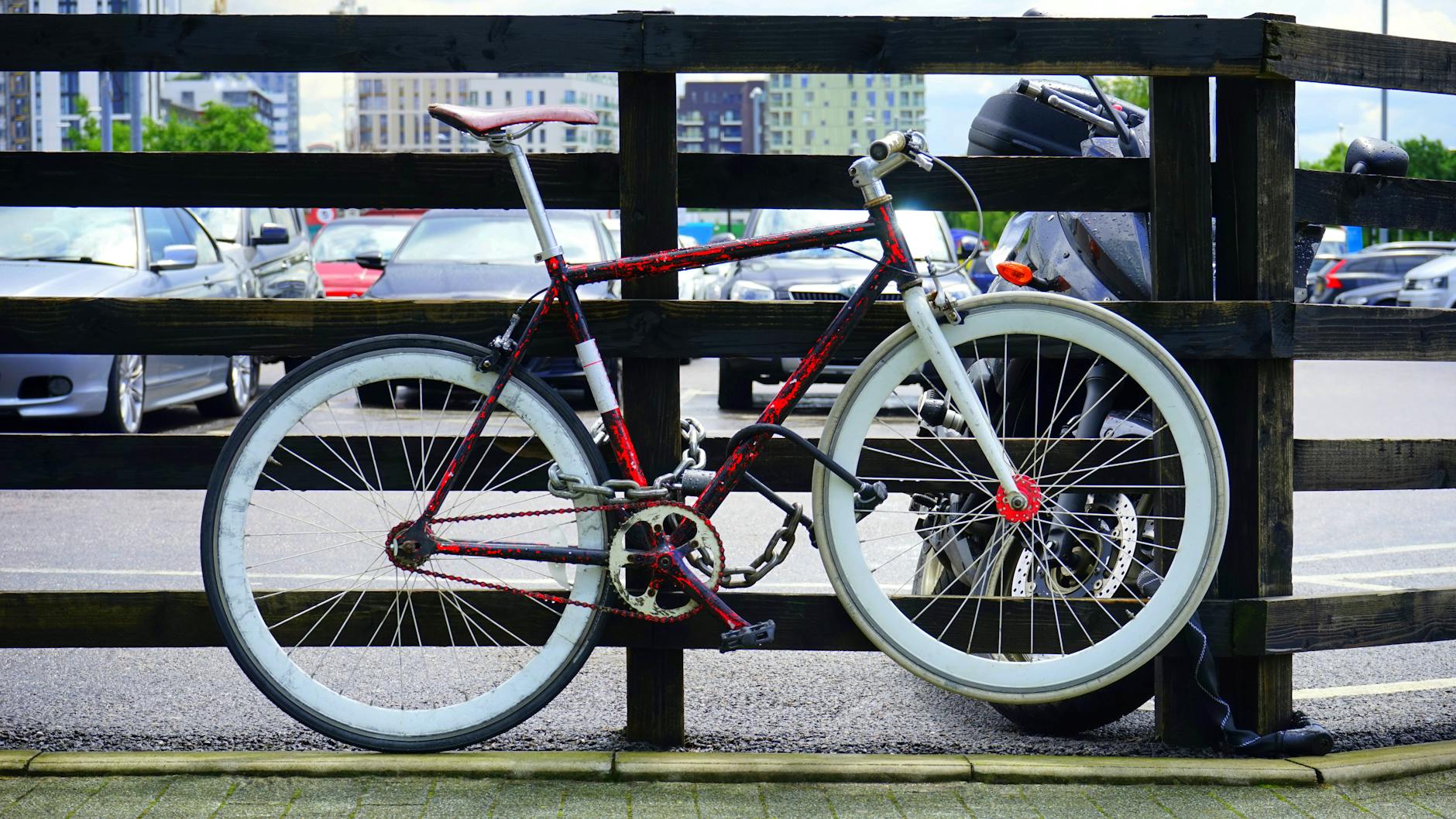
Milan has a bike theft problem. It’s not Amsterdam-level, but it’s bad. Cable locks get cut in seconds. Frame locks (the kind that immobilize the rear wheel but don’t lock the bike to anything) get the bike picked up and put in a van. You need a U-lock or a heavy chain, locked through the frame to a fixed object, ideally with a secondary cable through the front wheel. If you bring your own bike to Milan, register it with the Comune’s bike registry — police occasionally recover stolen bikes and matching them to owners depends on serial numbers.
The worst neighborhoods for theft are around Stazione Centrale, the area immediately west of Porta Garibaldi, and any unattended bike rack near a university (Bocconi, Politecnico, Bicocca). Don’t leave a nice bike outside overnight anywhere.
Bikes on public transport
On the Milan metro, bikes are allowed only on Saturdays, Sundays, and public holidays, plus weekday evenings after 20:00. Folding bikes are allowed any time. On trams and city buses bikes are not allowed at all — folding only. For full rules on combining a bike with the metro and surface transport, the Milan metro guide covers ticketing and the bike-permitted hours in detail, and the broader Milan transport guide is the best overview if you’re stitching multiple modes together.
Getting bikes to Lake Como by train
Trenord regional trains accept bikes on a per-trip €3.50 supplement — you buy it at the station or in the app along with your ticket. Look for the bike pictogram on the train carriages and load into the marked car. The Milano Centrale to Varenna run takes about an hour and gets you to the most beautiful stretch of Lake Como, and from Como San Giovanni you’re a 90-minute ride from Bellagio if you want to do it on two wheels. See the Milan to Lake Como transport guide for which trains accept bikes and how to validate the supplement.
Other transport when biking won’t work
Rain, late night, heavy luggage, hot August afternoon — you won’t always want the bike. The airport transfer options cover Malpensa, Linate, and Bergamo runs. Renting a car only makes sense if you’re heading well out of the city; inside the ring road, a car is a liability. And for spontaneous one-off trips, the metro and tram network covers what cycling can’t.
FAQ
Is BikeMi worth it for tourists?
Yes, especially the €9 weekly pass. It’s cheaper than a single day of metro tickets and gives you unlimited use of both standard and e-bikes for a week. The only reason to skip it is if you’re staying outside the central coverage area or you only need one or two short rides — in which case Lime or Dott are simpler.
Do you need a helmet to cycle in Milan?
Not legally for adults. Children under 12 must wear one. I’d still recommend an adult helmet — Milan’s tram tracks and erratic drivers make minor falls more likely than they should be. Rental shops include helmets free; BikeMi and free-floating bikes do not provide them.
Can you bike from Milan to Lake Como?
Yes. The most popular route is the Villoresi Canal cycle path from Sesto San Giovanni up to Castellanza, then onward through the Varese province roads to Como, about 70–80 km depending on the variant. It’s a full day on a road or gravel bike. Most people instead take the train with their bike and ride along the lake itself, which is more scenic.
Are e-bikes available in Milan?
Plenty. BikeMi has roughly 1,000 pedelecs across its docked fleet, included in any subscription. Lime and Dott operate thousands of free-floating e-bikes. And every proper bike rental shop offers e-bike rentals from around €25–€35 per day.
How much does BikeMi cost?
€4.50 for a 24-hour pass, €9 for a 7-day pass, €36 for an annual subscription (€27 for ATM annual pass holders). All include access to standard and e-bikes. Trips over 2 hours incur extra charges — €2/hour for standard, €4/hour for e-bikes.
Is biking in Milan safe?
Reasonably, if you’re attentive. The city is flat, has growing infrastructure, and most drivers will give you space on a marked lane. The two main risks are tram tracks (cross at a sharp angle) and being doored by parked cars (ride at least a meter out from the kerb). Wear a helmet, use lights at night, and stay off the sidewalks. Compared to Rome or Naples, Milan is far easier.
Final thoughts
Biking in Milan in 2026 is the version of Milan I wish I’d had a decade ago. The BikeMi system works, the bike lane network is finally usable, the Navigli routes connect you to genuinely beautiful countryside within twenty minutes of the Duomo, and the rental scene gives you options whether you want a city beater or a carbon road bike for the Brianza hills. The cobblestones haven’t gone anywhere and the tram tracks still demand respect, but neither is a real obstacle once you’ve spent an afternoon getting used to them.
If you’re in town for a few days, my recommendation is simple: buy the €9 BikeMi weekly pass, ride the Parco Sempione loop on day one to get your bearings, then do the Naviglio Grande towpath on a sunny afternoon. Layer in a longer rental ride if you want to push further. Combine bikes with the Navigli area, fold in some of the main sights, and use the saddle time to scout your favorite photography spots and outdoor options for the next visit. The city looks different at bike speed — slower than a tram, faster than a walk, and just close enough to the buildings to actually see them.