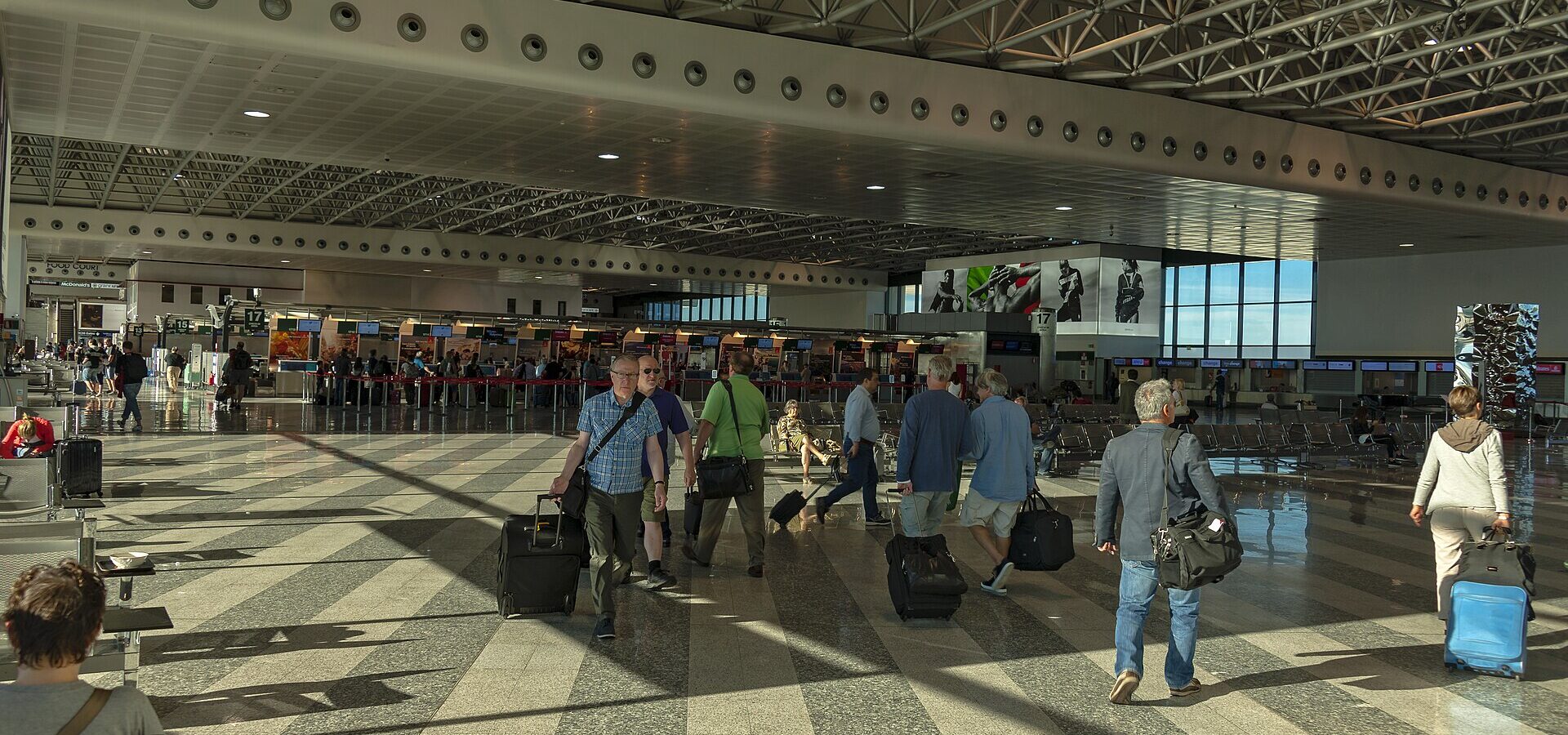
Milan has three airports, and none of them is in Milan. Malpensa sits 50 km northwest, closer to Lake Maggiore than to the Duomo. Linate is the exception that proves the rule at 7 km east, near enough that you can watch planes on approach from a rooftop bar in Porta Venezia. And Bergamo — the one your Ryanair booking cheerfully calls “Milan Bergamo” — is 45 km east, in a different province, at the foot of a different set of mountains. Between them they handled just under 60 million passengers in 2025, which makes the Milan airport system the second busiest in Italy after Rome.
Bergamo is the awkward one, and the transfer is the whole story — coaches, the cheap bus-plus-train route and the long-delayed rail link are covered in our guide to getting from Bergamo airport to Milan.
Linate is the small one, and the one you want — the M4 metro, the terminal layout and the night curfew that occasionally sends flights to Malpensa are all covered in our Linate airport guide.
Malpensa is the one most visitors land at, and it is big enough to need its own briefing — terminals, lounges, border queues and the walk to satellite C are all in our full Malpensa airport guide.
I have flown into all three more times than is reasonable, usually because I booked on price rather than sense. What I have learned is that the airport you choose shapes the first four hours of your trip more than almost any other decision, and that most of the pain people describe on arrival — the missed last train, the €110 taxi, the 90-minute passport queue — comes from not knowing what they were walking into. This guide is the orientation I wish I had had: which airport does what, how each terminal is laid out, what changed in 2026, and how to pick the right one before you book.
Milan is served by Malpensa (MXP), Linate (LIN) and Bergamo Orio al Serio (BGY). Malpensa is the intercontinental hub, 50 km from the city, with two terminals connected by a free 24-hour shuttle. Linate is the closest and easiest, a single compact terminal 12 minutes from San Babila on the M4 metro, and handles mostly short-haul and domestic flights. Bergamo is the low-cost gateway 45 km east, reached by shuttle bus in around 50 minutes. If you can choose, fly into Linate; if you are coming from outside Europe, you will almost certainly land at Malpensa.
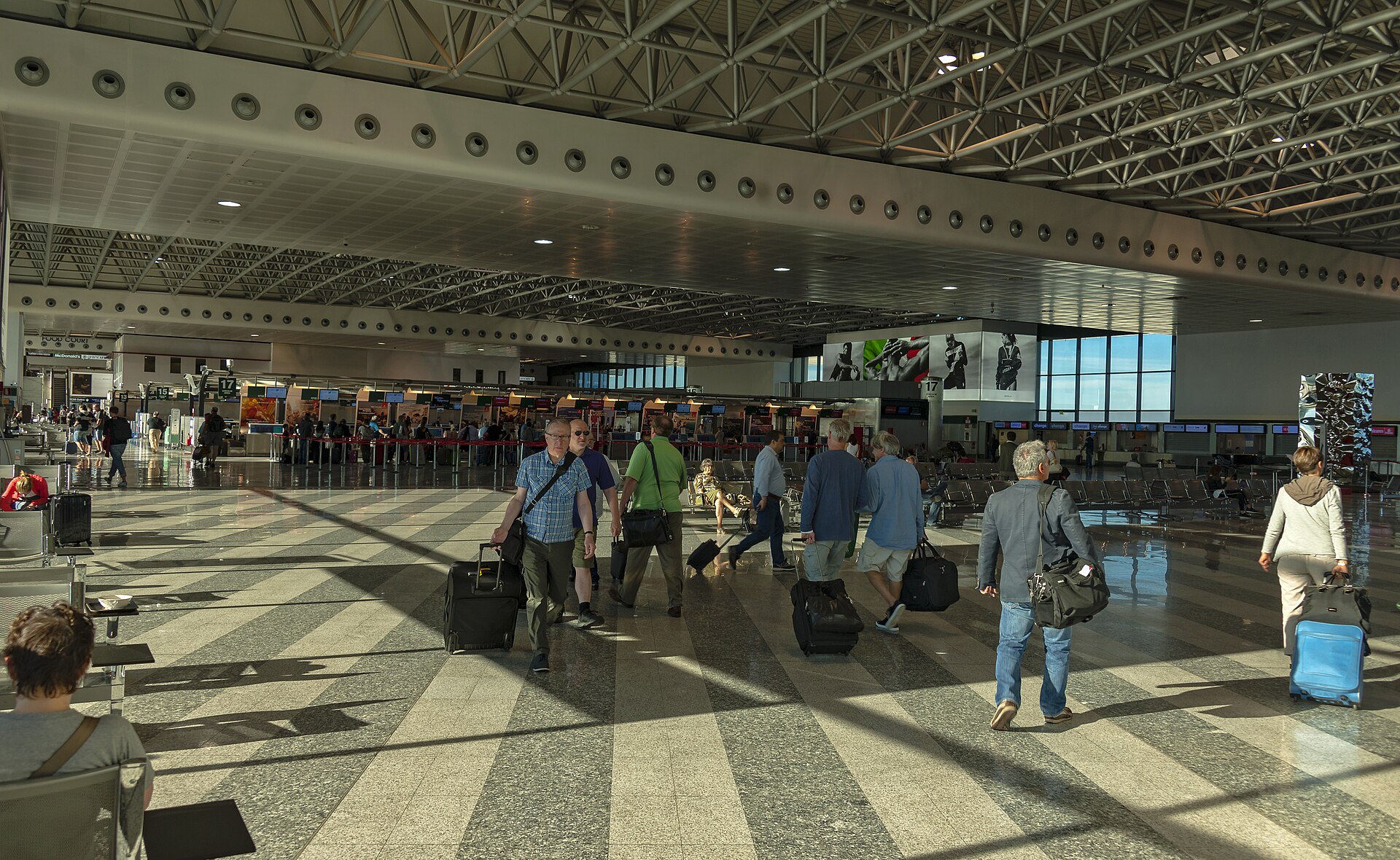
The three Milan airports at a glance
Before the detail, here is the shape of the thing. These are the numbers that actually change your decision — distance, transfer time, and what sort of flights land there.
- Malpensa (MXP) — 50 km northwest. Around 31 million passengers a year. Two terminals. All intercontinental flights, most full-service European carriers, and every long-haul route into northern Italy. Train to Milano Centrale in 51 minutes, or Cadorna in 37.
- Linate (LIN) — 7 km east. Around 11 million passengers a year. One terminal, roughly 15 gates. Domestic Italian routes, short-haul Europe, heavy business traffic. Metro to San Babila in 12 minutes for €2.20.
- Bergamo Orio al Serio (BGY) — 45 km east. Around 17 million passengers a year, making it Italy’s third busiest. Almost entirely low-cost: Ryanair, Wizz Air, easyJet. Shuttle bus to Milano Centrale in 50–60 minutes for around €10.
Malpensa and Linate are both run by SEA, the Milan airports authority, which is why they share ticketing systems, signage and a certain corporate sameness. Bergamo is run by SACBO and feels like a different country — brisker, cheaper, more chaotic, and in the middle of the most ambitious rebuild of the three.
Malpensa (MXP): the intercontinental one
If you are reading this from outside Europe, this is your airport. Malpensa is where Emirates, Delta, American, Turkish, Qatar, ITA Airways and the rest of the long-haul world put their northern Italy flights, and it grew 8.6% in 2025 to just over 31 million passengers — well ahead of the Italian average. Officially it is now Milano Malpensa Airport Silvio Berlusconi, renamed in 2024, though nobody in Milan calls it that and the signage still mostly says Malpensa.
The airport’s defining feature is distance. Fifty kilometres is roughly Gatwick-to-central-London, and it is the single fact that should shape your arrival planning. You cannot pop out to Malpensa. You cannot nip back for a forgotten passport. Budget an hour door to door in either direction and you will rarely be wrong.
Terminal 1 vs Terminal 2: which one are you in?
Malpensa has two terminals and the split is unusually simple: Terminal 2 is easyJet, and Terminal 1 is everyone else. That is very nearly the whole rule. Terminal 1 handles all intercontinental flights, all the full-service European carriers — ITA, Lufthansa, Air France, British Airways, Emirates, Etihad, Turkish, Delta, American — and the great majority of departures.
Terminal 1 is large and built around a central hub with three piers, plus a satellite for non-Schengen gates that you reach by an underground people-mover. If your boarding pass says a gate in the B range for a non-Schengen departure, allow extra time: the walk plus the shuttle is a genuine 15 minutes from the main concourse, and it is the classic way to miss a flight at Malpensa.
Terminal 2 is a low, functional building with far fewer facilities. If you are flying easyJet, eat before you get there. It has a handful of cafes and a small shop, and at 5 a.m. on a Saturday in summer the queues to drop a bag can be brutal.
Getting between the terminals: the Skylink shuttle
The two terminals are about 4 km apart and connected by a free shuttle bus that runs 24 hours a day. During the day it goes roughly every 7–20 minutes, dropping to around every 30 minutes in the small hours between about 22:45 and 05:15. The journey itself is under 10 minutes.
This matters more than it sounds. The Malpensa Express train serves both terminals, but if you buy a ticket to Terminal 1 and your flight is from Terminal 2, you are looking at a shuttle transfer on top of your train journey. Check your terminal on your boarding pass before you buy anything. There is also a free connecting train between the two terminals on the airport line, which is quicker than the bus if the timing lines up.
Facilities, lounges and where to wait
Terminal 1 is comfortably the better place to be stuck. Airside there is a proper duty-free run, a reasonable spread of restaurants, pharmacies, and enough seating that you can usually find a bank of chairs without armrests if you need to lie down.
For lounges, the main pay-in option airside in the non-Schengen area at Terminal 1 is Sala Montale, near the B gates, open roughly 06:00–22:00. Paid entry runs around €39 per person, and it accepts Priority Pass subject to capacity, which in practice means it can and does turn people away at peak times. There is also a Premium lounge in the old Casa Alitalia space at a considerably steeper walk-up rate of about €68. If you are travelling with a lounge-access credit card, arrive early rather than late; capacity restrictions bite hardest between 09:00 and 11:00 and again in the early evening long-haul bank.
Terminal 2 has essentially nothing in the way of lounges. Plan accordingly.
How early should you arrive at Malpensa?
For a Schengen departure from Terminal 1, two hours is comfortable. For non-Schengen or intercontinental, make it three — not because check-in is slow, but because the combination of passport control and the satellite transfer eats time in a way that surprises people. For Terminal 2 and easyJet in summer, two and a half hours, and I do not think that is excessive.
Linate (LIN): the one you actually want
Linate is the airport Milanese people use when they have the choice. Officially Milano Linate Enrico Forlanini, it sits 7 km from the Duomo in the eastern suburbs and handles around 11 million passengers a year, mostly domestic Italian routes, short-haul Europe and a dense weekday business traffic to Rome, Paris, Frankfurt and London.
It is small. One terminal, three levels — arrivals on Level 0, departures on Level 1, lounges and offices on Level 2 — and roughly 15 gates. You can walk from the taxi rank to your gate in under ten minutes. After the security zone you get duty-free, a few cafes, and a couple of business lounges, and that is broadly it. There is no sprawl to get lost in, which is the entire appeal.
The M4 metro changed the arithmetic
Until 2023, Linate’s advantage was purely about distance; you still had to deal with a bus or a taxi. Then the M4 — the blue line — opened with a station inside the terminal, and the calculation changed completely.
The metro now runs from Linate Aeroporto to San Babila in about 12 minutes, and San Babila is a two-minute walk from the Duomo. A ticket costs €2.20, is valid for 90 minutes, and covers onward travel on the rest of Milan’s metro, tram and bus network within the urban area. Trains run from roughly 05:30 to 00:30. The station has lifts, escalators and step-free access throughout.
To put that in perspective: getting from Linate to the centre of Milan is now cheaper and faster than getting from Malpensa to the outskirts. If a Linate flight costs €40 more than a Malpensa one, it is frequently still the better buy once you price the transfer and value your time at anything above zero.
What Linate is not good for
Linate has a slot-constrained runway and strict traffic rules that historically capped it at short-haul. You will not find intercontinental flights here, the retail is thin, and if your flight is delayed there is very little to do. It is also close enough to residential Milan that it has a night curfew, so there are no late-night arrivals to rescue you from a delay — a badly delayed Linate flight can end up diverted to Malpensa, which is an unpleasant surprise at 23:00.
Bergamo Orio al Serio (BGY): the budget gateway
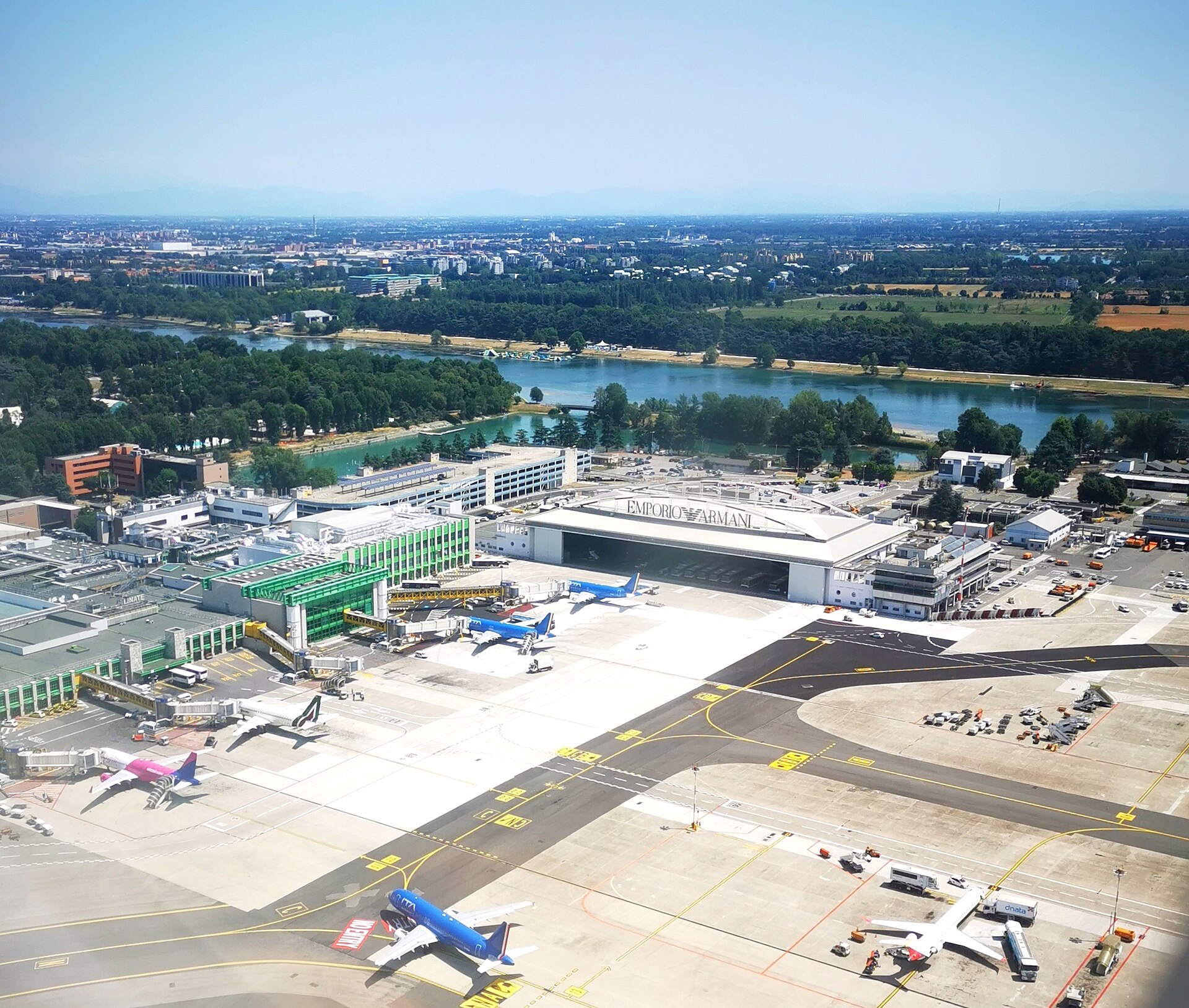
Bergamo is Italy’s third busiest airport, handling close to 17 million passengers a year, and it is very nearly a pure low-cost operation. Ryanair dominates, with Wizz Air and easyJet filling in. Its full name is Il Caravaggio International, and Ryanair’s insistence on branding it “Milan Bergamo” has caused more arrival-day confusion than any other naming decision in Italian aviation.
Here is the honest framing: Bergamo is not in Milan, is not close to Milan, and has no train to Milan. What it has is a well-drilled shuttle bus operation that runs to Milano Centrale in 50–60 minutes for around €10, frequently, and late. That is genuinely fine. It is not a scam and it is not a disaster — it is just a 45 km bus ride that you need to build into your plans and your budget.
What the 2026 rebuild changed
Bergamo has spent the last few years in near-permanent construction, and a lot of it has now landed. The departures area on the first floor has been expanded to 7,500 square metres with 14 security lanes running new-generation scanners — which means you can leave liquids and electronics in your bag, and liquids up to 2 litres per container are permitted through those lanes. On the ground floor, the check-in hall gained a 4,300 square metre extension and 30 more self check-in stations, bringing the total to 64.
The non-Schengen boarding area has been extended with a new pier, and from summer 2026 the airport operates 16 Schengen and 11 non-Schengen gates, 27 in total. In practical terms, the airport that used to be a byword for scrum-like security queues is now one of the more pleasant low-cost airports in Europe to depart from. If your last memory of Bergamo is from 2019, update it.
The railway that is coming
The big change still in progress is rail. A 5.3 km double-track link is being built from the airport to Bergamo’s main station, with a four-platform station connected to the arrivals hall by a tunnel, financed to the tune of over €200 million through Italy’s PNRR recovery plan. The plan calls for up to eighty daily connections, including two an hour from Milano Centrale, with a journey time somewhere in the 45–60 minute range.
It was scheduled for completion around the start of 2026, timed to the Milano-Cortina Winter Olympics. Infrastructure timelines being what they are, check the current status before you rely on it — and in the meantime, the shuttle buses run exactly as they always have. If the trains are running when you arrive, take them; if not, nothing is lost.
Should you use Bergamo as a base instead?
Worth considering, and almost nobody does. Bergamo is a genuinely beautiful city — the walled Città Alta on its hill is one of the loveliest urban spaces in Lombardy — and hotel prices there are a fraction of Milan’s. If you land at BGY late and fly out of BGY early, spending the first and last nights in Bergamo rather than bussing into Milan twice is a real option. See our Bergamo day trip guide for what the city actually offers.
Which Milan airport should you fly into?
Most people do not get a free choice — the route decides. But when you do have options, here is how I would think about it.
If you are coming from outside Europe
Malpensa, and there is rarely a decision to make. It is the only Milan airport with intercontinental service. Fly into Terminal 1, take the Malpensa Express, and accept the 50 km.
If you are flying within Europe
Linate first, Malpensa second, Bergamo third — but weight that by price. The rough rule I use: Linate is worth paying up to about €50 more for than Bergamo on a short trip, because you save roughly 90 minutes of transfer time in each direction plus around €20 in fares. On a two-night city break that is a meaningful slice of your trip. On a ten-day trip it matters much less, and Bergamo’s low fares start to win.
If you are heading straight for the lakes
Malpensa, without question, and do not go into Milan at all. Malpensa sits northwest of the city, which puts it on the correct side for Lake Maggiore, Lake Como and the Alps. There are direct bus and rail options that bypass Milan entirely, and dragging your luggage through Milano Centrale to come back out again is a wasted two hours. Our guide to Lake Como from Milan covers the onward routes.
If you are connecting onward in Italy
Malpensa if you want the train — the Malpensa Express drops you at Milano Centrale, from where high-speed services run to Venice, Florence, Rome, Turin and Bologna. Linate if you are flying onward domestically, since it handles the bulk of Italian domestic traffic. Our Milan train travel guide explains the onward network.
Border control in 2026: EES, ETIAS and longer queues
This is the single biggest change to arriving in Milan in years, and a lot of travellers still do not know about it.
The EU’s Entry/Exit System (EES) became fully operational across Italian airports and ports on 10 April 2026. It replaces passport stamping for non-EU travellers with a biometric registration: fingerprints and a facial scan, recorded the first time you cross a Schengen external border, then re-used on subsequent trips. The European Commission confirmed in July 2026 that it would not suspend the system despite pressure from airports and airlines during the summer peak.
What this means in practice at Malpensa, which handles the overwhelming majority of Milan’s non-Schengen arrivals: your first arrival under EES will take longer than you expect. The bottleneck is the initial registration, which adds several minutes per traveller compared with a stamp, multiplied across an entire long-haul flight of first-timers. Subsequent entries are much faster because your biometrics are already on file.
Two things help. First, the EU’s Travel to Europe app lets non-EU nationals pre-register passport data and a facial image within the 72 hours before reaching the border — worth doing the night before you fly. Second, if you have a tight onward connection, a train to catch, or a booked transfer, build in a buffer of at least an extra hour on a first arrival. Experiences vary sharply between Italian airports and between shifts at the same airport.
Separately, ETIAS — the pre-travel authorisation for visa-exempt visitors from the US, Canada, Australia, Japan and elsewhere — is expected to launch in the last quarter of 2026. It is an online application with a small fee, not a visa, but it will be a required step before you board. Check the official EU pages for the current status close to your travel date, because this timeline has moved before.
Getting from the airports into Milan
Each airport has a different answer, and the full breakdown of trains, coaches, taxis and private transfers — with current prices, frequencies and the specific bus stop names — lives in our dedicated Milan airport transfers guide. The headline version:
- Malpensa — the Malpensa Express train is the default: around €15, four trains an hour, 51 minutes to Milano Centrale or 37 to Cadorna. Coaches cost about €10 and take 50–70 minutes. The official flat-rate taxi is €110.
- Linate — the M4 metro at €2.20 and 12 minutes to San Babila beats everything else. Bus 73 is the same fare and slower. A taxi runs €25–€35.
- Bergamo — the shuttle bus to Milano Centrale, around €10 and 50–60 minutes. There is a slower train option via Bergamo city centre.
Once you are in the city, our guide to getting around Milan covers the metro, trams and contactless payment.
Sleeping at, and near, the airports
Milan’s flight schedules produce a lot of very early departures and very late arrivals, and the honest answer is that an airport hotel is sometimes the right call rather than a defeat.
Around Malpensa there is a cluster of chain hotels in Somma Lombardo and Case Nuove with free shuttles, generally cheaper than equivalent rooms in central Milan. If your flight leaves before about 07:30, staying out there beats a 04:30 alarm and a taxi. Linate is close enough to the city that there is no real case for an airport hotel — stay in Milan and take the metro. At Bergamo, the airport hotels are functional, but staying in Bergamo’s Città Bassa is barely more expensive and infinitely nicer.
Sleeping in the terminal is possible at Malpensa Terminal 1, which stays open overnight and has landside seating, though it is bright, cold and heavily trafficked. Terminal 2 and Linate are not places you want to spend a night. For alternatives in the city, see where to stay in Milan.
Practical things that catch people out
A short list of the mistakes I see repeatedly, most of which cost money.
- Booking a ticket to the wrong terminal at Malpensa. Check your boarding pass. easyJet is Terminal 2; everyone else is Terminal 1.
- Assuming “Milan Bergamo” is in Milan. It is 45 km away in another province. Budget an hour and €10 each way.
- Not validating a paper ticket. Italian regional trains and the Malpensa Express require validation before boarding if you have a paper ticket. Fines are real and inspectors are not sympathetic.
- Using an unofficial taxi at Malpensa arrivals. The flat rate to central Milan is €110 and it is posted. Anyone quoting a different figure in the arrivals hall is not an official taxi.
- Cutting the last train fine. The Malpensa Express finishes around midnight and the M4 around 00:30. After that you are on night buses or a taxi.
- Forgetting Linate’s curfew. A significantly delayed evening flight to Linate can be diverted to Malpensa, which turns a 15-minute transfer into an hour.
- Underestimating EES on a first arrival. Add an hour of buffer, and pre-register on the app if you can.
- Trying to store luggage at the airport for a day trip. It is expensive. Milan’s city-centre layover options are usually a better bet.
Hiring a car at the Milan airports
If your trip involves the lakes, the Alps, Franciacorta or the Piedmont wine country, hiring a car is reasonable. If your trip is Milan, it is not — the city’s Area C congestion charge and Area B low-emission zone make driving in the centre an expensive irritation, and parking is worse.
Malpensa is the natural pickup point. It has the largest rental desks, sits directly on the A8 motorway network, and points north and west towards Maggiore, Como and the Aosta valley without ever touching Milan traffic. Collect there, drive straight out, and drop back on the way home. Linate has rental desks in arrivals but pushes you onto the eastern ring road and into the city’s restricted zones almost immediately, which is the wrong direction for most road trips. Bergamo is well positioned for Lake Iseo, the Val Camonica and eastwards to Garda.
Two Italy-specific points that catch visitors. First, if you are not an EU licence holder you will generally need an International Driving Permit alongside your home licence, and rental desks do check. Second, almost every hire car in Italy is manual by default; automatics exist but cost substantially more and must be booked well ahead. Our guides to renting a car in Milan and day trips from Milan go into the detail.
Accessibility, families and reduced mobility
All three airports provide assisted travel free of charge under EU regulation, but it must be requested through your airline at least 48 hours before departure. Turning up and asking on the day usually works, but it can mean a long wait, particularly at Malpensa Terminal 1 where the distances are genuinely substantial.
Linate is comfortably the easiest of the three for anyone with limited mobility, small children or a lot of luggage. The terminal is small, level and quick to cross, and the M4 metro station inside the building is fully step-free with lifts and escalators throughout — a rare thing on the Milan network, much of which is not. If you are travelling with a pushchair or a wheelchair, the Linate-plus-M4 combination is by some distance the least stressful way into the city.
Malpensa is manageable but long. The Malpensa Express trains have level boarding and space for wheelchairs and luggage, though the platforms at Milano Centrale involve a walk. Bergamo’s rebuilt terminal is modern and largely step-free, but the shuttle-bus transfer into Milan involves lifting luggage into a coach hold, which is worth factoring in. For getting around once you arrive, see our Milan accessibility guide.
Frequently asked questions
How many airports does Milan have?
Three: Malpensa (MXP) 50 km northwest, Linate (LIN) 7 km east, and Bergamo Orio al Serio (BGY) 45 km east. Malpensa and Linate are operated by SEA; Bergamo by SACBO. Together they handled around 59.5 million passengers in 2025.
Which Milan airport is closest to the city centre?
Linate, by a wide margin. It is 7 km from the Duomo and connected by the M4 metro, which reaches San Babila in about 12 minutes for €2.20. Malpensa is 50 km away and Bergamo 45 km.
What is the difference between Malpensa Terminal 1 and Terminal 2?
Terminal 2 handles easyJet flights only. Terminal 1 handles every other airline, including all intercontinental and full-service European carriers. A free shuttle bus connects them 24 hours a day, taking under 10 minutes, and both terminals are served by the Malpensa Express train.
Is Bergamo airport actually in Milan?
No. Bergamo Orio al Serio is 45 km east of Milan in the province of Bergamo, and is marketed as “Milan Bergamo” by low-cost airlines. Getting into Milan takes 50–60 minutes by shuttle bus for around €10. A direct rail link to the airport is under construction.
Which Milan airport should I fly into?
Linate if you have the choice and are flying short-haul, because the M4 metro makes the transfer trivial. Malpensa if you are flying from outside Europe, or heading straight to the lakes. Bergamo if the fare saving is large enough to justify roughly 90 extra minutes of transfer each way.
How early should I get to Milan airports?
Two hours for a Schengen departure from Malpensa Terminal 1 or Linate; three hours for non-Schengen or intercontinental from Malpensa, because of passport control and the satellite gate transfer. Two and a half hours for Terminal 2 or Bergamo in peak summer.
Do I need ETIAS to fly to Milan?
Not yet, but likely soon. ETIAS is expected to launch in the last quarter of 2026 for visa-exempt non-EU travellers. The Entry/Exit System (EES), which takes fingerprints and a facial scan at the border, has been fully operational at Italian airports since 10 April 2026 and already applies.
Final thoughts
The three Milan airports are not really competitors so much as three different products wearing the same city’s name. Malpensa is the serious international gateway with a serious commute attached. Linate is a small, fast, slightly old-fashioned city airport that the M4 metro turned into the best-value arrival in northern Italy. Bergamo is a low-cost machine that has quietly rebuilt itself into something much more comfortable than its reputation, and is about to get a railway.
Pick the one that matches your trip rather than the one with the cheapest headline fare, allow properly for the new biometric border checks on a first arrival, and check your terminal before you buy a train ticket. Do those three things and the rest of Milan opens up easily — starting with our guide to the best things to do in Milan.