The same lifts that make Milan’s metro wheelchair-accessible make it a good city for a pushchair. Our guide to Milan with a baby or toddler uses the step-free network from a parent’s point of view.
Milan is more milan wheelchair accessible than Rome or Florence, but that is a low bar. Cobblestones in Brera and the Cinque Vie, tram lines laid in the 1920s, and curb cuts that disappear the moment you leave a major piazza mean you still need to plan. The good news, and it is genuinely good news as of spring 2026: the M1 red line is now fully accessible after a EUR 80 million elevator program tied to the Milano Cortina 2026 Paralympics, the M5 lilac and M4 blue lines were step-free from the day they opened, and the Duomo has a working south-side elevator to the lower terrace. I have pushed and rolled through this city across three trips with a friend who uses a manual wheelchair, and this guide is what I wish I had read before the first one.
Most accessibility content about Milan is generic. This one names stations, exits, ramp grades, and which Aperol-stained bar will actually let you through the door. If something has changed since I last checked, write me and I will update it.

Milan Accessibility, Honestly Assessed
Italian disability law is older and better than visitors expect. Legge 13/89 mandates barrier-free design in all new buildings and major renovations, and Legge 104/92 grants protected status and discounts to disabled residents. The catch is enforcement. A 1920s palazzo converted into a boutique hotel in 2018 should be compliant, but “compliant” can mean a portable ramp in a closet that the night clerk has never been shown how to deploy. Call ahead. Always.
What has genuinely improved for 2026: the Comune di Milano completed the long-promised elevator retrofit on Metro M1, brought M2 to roughly 91% step-free coverage, and started swapping out 48 elevators and 52 escalators on M3 because the old ones broke too often. The Olympic Village in Porta Romana was designed to universal accessibility standards from day one. The Verona Arena, where the Paralympics opens in March 2026, has new ramps and lifts that will stay after the Games. Tourist information at YesMilano and the Comune portal now publish station-by-station status updates that actually match what you find on the ground, which was not true two years ago.
What has not improved: sidewalks in Centro and Brera, vintage trams, and the gap between “accessible” on a hotel’s website and the reality of a 70 cm doorway. Plan for both Milans.
Getting to Milan: Airport Accessibility
All three Milan airports are served by Sala Amica, the free SEA-operated assistance program for passengers with reduced mobility. It is genuinely good and the staff are well trained. Book through your airline at least 48 hours before departure, ideally a week, using the IATA codes WCHR (assistance to the aircraft door), WCHS (assistance up the airbridge but can walk short distances), or WCHC (assistance to the seat).
Malpensa (MXP) Terminals 1 and 2 are both fully step-free with elevators between all levels, accessible toilets on every floor, lowered check-in desks, and dedicated security lanes. The Sala Amica meeting points are signed in arrivals and departures. The Malpensa Express train to Cadorna and Centrale has level boarding from Platform 1 at the airport, though you should signal staff so they place the gap-filler ramp. The terminal shuttle is wheelchair-friendly. Phone: +39 02 232 323.
Linate (LIN) is small, single-terminal, and after its 2021 refurbishment the easiest Italian city airport for wheelchair users I have used. The M4 blue line metro now connects Linate directly to San Babila in 12 minutes, fully step-free both ends. There are two Sala Amica points: one near doors 1 and 2 in departures, one airside near the gates.
Bergamo Orio al Serio (BGY) is the Ryanair airport an hour east. It has accessible toilets and lifts, but the bus link to Milano Centrale is a coach with a wheelchair lift that the driver may or may not have used recently. If budget allows, get a Milano-bound shuttle that uses a low-floor accessible vehicle, or pre-book an adapted taxi from the rank.
For more on getting around the city once you arrive, see my Milan transport guide.
Milan Metro Accessibility: Line by Line
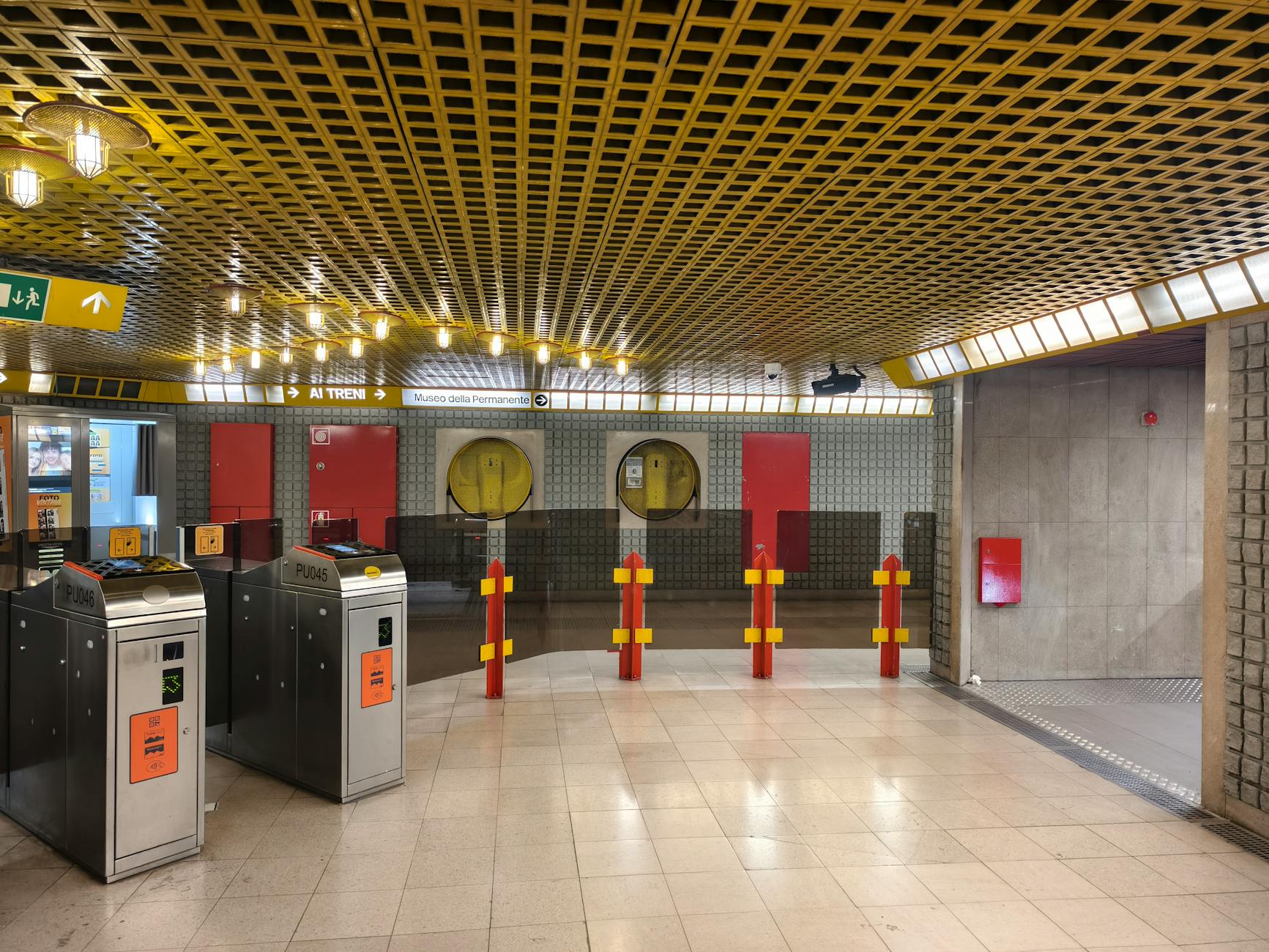
The Milan metro, run by ATM, is now the most wheelchair-friendly underground system in Italy. As of February 2026, after the PNRR-funded retrofit, the picture looks like this.
- M1 (red): Fully accessible. All 38 stations now have lifts between street, mezzanine, and platform. The 13 missing stations got their elevators in the last push before the Olympics.
- M2 (green): 32 of 35 stations accessible (about 91%). The three exceptions still being finished are Cascina Antonietta, Cascina Burrona, and Villa Pompea, all on the eastern Cologno branch and irrelevant to most tourists. The central and southern sections are fully step-free.
- M3 (yellow): Fully accessible by design, though some elevators are being replaced through 2026. ATM posts daily status; if a lift is out, the next accessible station is usually one stop away.
- M4 (blue): Fully accessible. Newest line, opened in stages 2022 to 2024, connects Linate airport to San Cristoforo with platform-edge doors and level boarding everywhere.
- M5 (lilac): Fully accessible. Driverless, level boarding, runs Bignami to San Siro Stadio.
Practical tips. Lifts at older M1 and M2 stations are often signposted at only one street exit, which may not be the one nearest your hotel. Check the ATM app before you surface or you can end up on the wrong side of a six-lane viale. Tactile platform edges are standard. Staff at major interchanges like Duomo, Cadorna, Centrale, and Loreto are used to helping; smaller stations can be unstaffed. The ATM Travel Free Pass gives free public transport to disabled residents of Lombardy and their companion; tourists do not qualify but the standard 24-hour ticket is EUR 7.60 and unlimited.
Trams, Buses, and Surface Transport
Milan’s tram network is one of the most charming in Europe and a real accessibility headache. The vintage orange Carrelli 1928s trams, the ones tourists photograph on Via Orefici, have a single high step and no ramp. They are not wheelchair accessible and never will be. The newer green and white Sirio and Sirietto trams, used on lines 4, 7, 9, 10, 12, 14, 15, 19, and 24 among others, have low floors and a wheelchair space mid-car with a flip-up ramp the driver deploys on request. Routes 1 and 5, which serve the Castello and Centro, mix old and new stock; check the icon on the front of the approaching vehicle.
City buses are almost universally low-floor with kneeling suspension and a wheelchair ramp at the middle door. Press the blue wheelchair button on the post just before your stop so the driver knows to deploy it. The 73 from Linate (before M4 made it redundant) and the 94 ring route are fully accessible workhorses.
The ATM Milano app, available in English, lists accessibility status by stop and vehicle in real time. It is not perfect but it is the best tool you have.
Accessible Taxis and Ride-Sharing
Milan has roughly 50 wheelchair-accessible taxis, marked with the Easy Taxi logo and equipped with a powered ramp or lift and tie-down anchors. That is not many for a city of 1.4 million, and the municipality has tendered another 150 licensed vehicles for delivery through 2026, but you cannot count on flagging one down. Book ahead.
- Radiotaxi 02 8585: The most reliable for accessible vehicles. Call 24 hours ahead if you can.
- Radiotaxi 02 4040 (Taxi Blu): Specify taxi attrezzato at booking. Has a dedicated accessibility page.
- Radiotaxi 02 6969: Smaller fleet of adapted vehicles, fine for off-peak.
For ride-sharing, FreeNow (the European app that replaced MyTaxi) lets you filter for “wheelchair accessible” and connects to Radiotaxi inventory. Uber Black and Uber Van operate in Milan but standard sedans cannot take a non-folding chair; Uber Van is your best bet for a power chair with a folding ramp companion. Deaf travelers can use the Italian-language Taxi Sordi app, which sends your location to the dispatch center without a phone call.
Fares for accessible taxis are the same as standard taxis. Tipping is not expected; round up if the driver helped with transfers and luggage. More on local custom in my Milan tipping etiquette guide.
Wheelchair-Accessible Sights and How to Reach Them
Duomo di Milano
The cathedral itself is step-free via the wheelchair ramp at the front doors on Piazza Duomo. A manual wheelchair is available free at the DuomoInfopoint at Piazza Duomo 14/A; leave an ID document. Entry to the cathedral is free for disabled visitors and one companion. The terrace lift is on the south side, runs daily 10:00 to 17:00, and takes you to the lower terrace only, behind the choir. The south lift cabin is 77 x 106 x 130 cm; if it is out of service the north lift (65 x 111 x 137 cm) substitutes. You cannot reach the upper rooftop, which requires climbing stairs from the lower terrace. Descent is via stairs, so you ride the same elevator back down. The crypt and Battistero are partially accessible by smaller lifts but staff need to be summoned. My full Duomo guide covers timed entry and ticket types.
The Last Supper (Cenacolo Vinciano)
Fully accessible and one of the better-run disabled visitor experiences in Italy. The refectory is on a single flat level. Ramps and lifts connect the entrance, the dehumidification waiting rooms, and the viewing hall. There are tactile relief models with Braille for blind visitors and an audio-description app. Disabled visitors and one companion are free, but you must book a timed slot in advance like everyone else; capacity is brutal. Book through lastsupper.shop or call +39 02 92800360. Bring documentation. Practical advice on the timed-slot lottery in my Last Supper tickets guide.
Castello Sforzesco
The vast brick courtyards are mostly accessible: the main entrance through the Torre del Filarete has a long, gentle ramp, and the gravel inside the first courtyard has been compacted enough that a manual chair rolls with effort. The museums inside (Pinacoteca, Egyptian Museum, Museum of Ancient Art with Michelangelo’s Rondanini Pieta) have elevators to most floors, though a handful of upper rooms in the Sala delle Asse wing have two or three steps with no lift. The Sempione Park behind the castle is fully accessible on paved paths. More in my Castello Sforzesco guide.
Teatro alla Scala
La Scala has reserved wheelchair seating in the stalls (two spaces per performance) plus seating for two companions, booked through the box office at least 48 hours ahead via [email protected]. The Museo Teatrale next door is accessible by elevator with views into the auditorium during the day.
Pinacoteca di Brera
Elevator to all four floors of the gallery, accessible toilets, and a step-free route from the courtyard entrance. The lift is in the corner past the bookshop; ask staff to point you to it because the signage is poor. Disabled visitors and one companion are free. The surrounding Brera neighborhood is the worst-cobbled in central Milan, so plan your taxi drop right at the Palazzo Brera courtyard, not on Via Brera. See my Brera gallery guide.
Galleria Vittorio Emanuele II
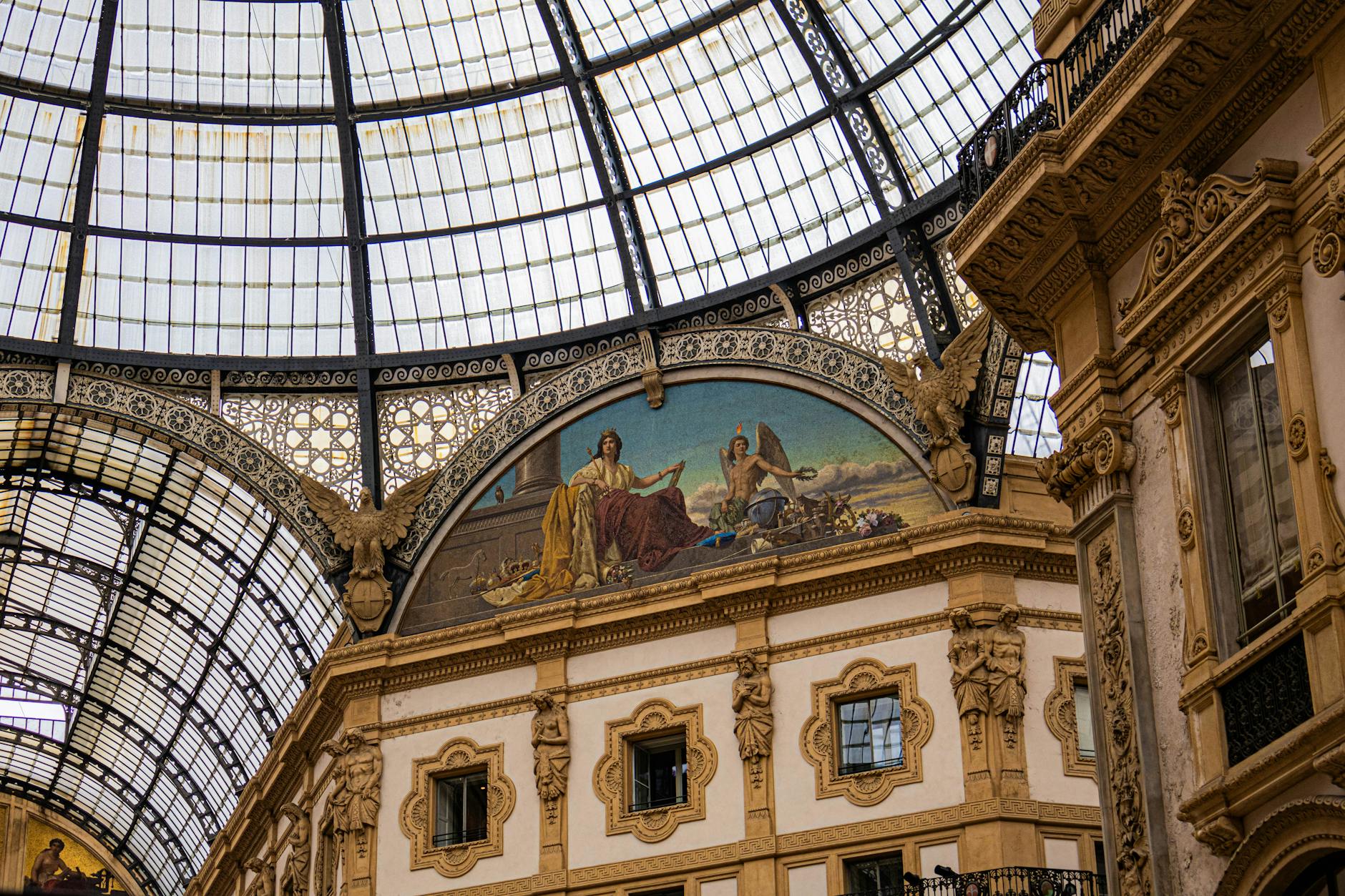
The shopping arcade between Duomo and La Scala has level marble floors throughout, no steps at any of the four entrances, and accessible toilets at the Mercato del Duomo end. The famous bull mosaic where superstitious Italians spin a heel is in the central octagon, easy to reach.
Bosco Verticale and Porta Nuova
The Stefano Boeri towers and the entire Porta Nuova district around Piazza Gae Aulenti are post-2010 construction designed for accessibility. Level public squares, plentiful curb cuts, accessible toilets in the shopping center under the piazza, and a step-free path from Garibaldi station (M2/M5 accessible) through the elevated walkways. This is the easiest neighborhood in Milan for a wheelchair user.
Navigli
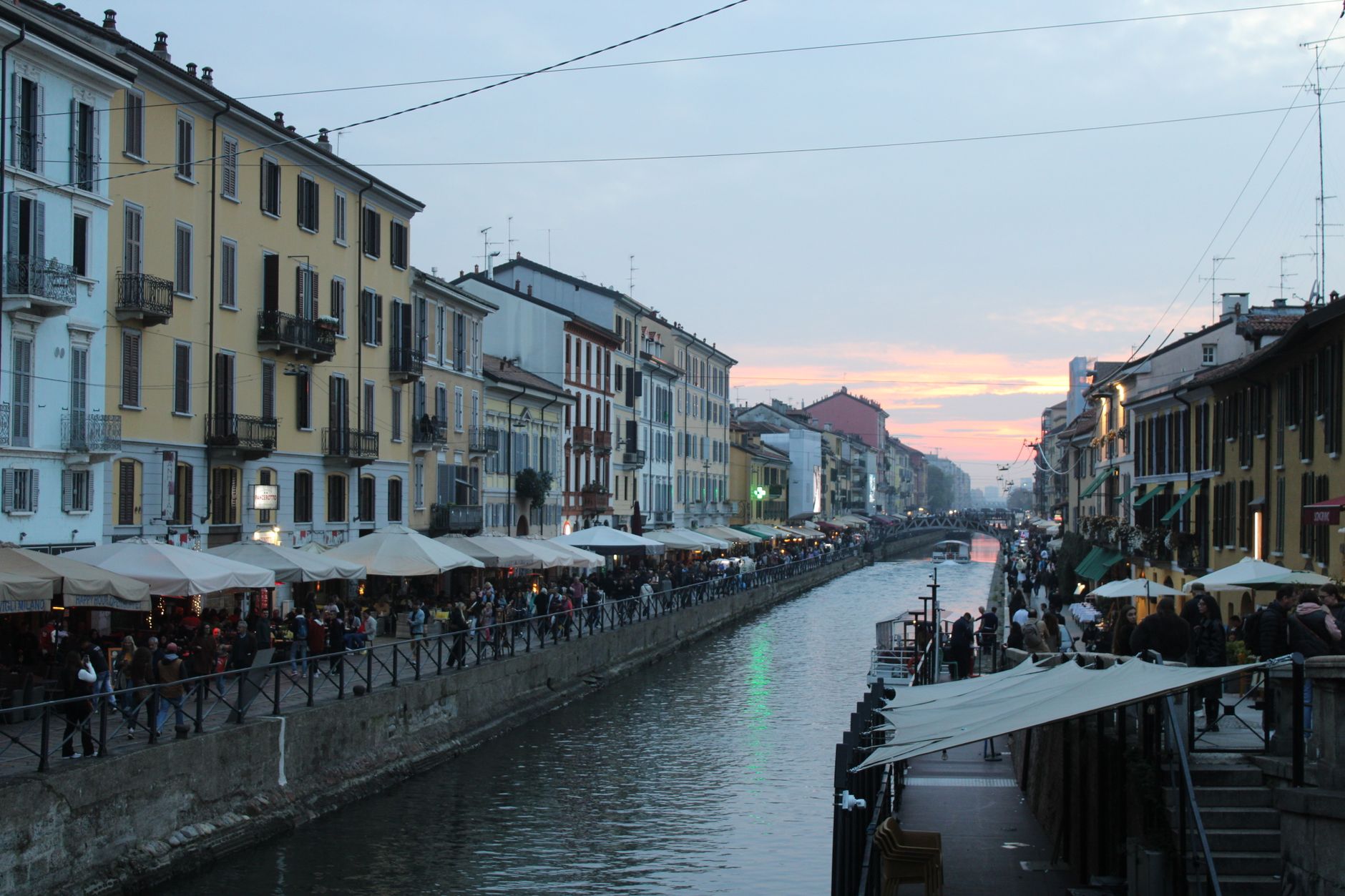
The canals are stone-cobbled along the most photographed stretch of Naviglio Grande, which is rough. The towpath alongside the water is paved asphalt and rideable, particularly the eastern side of Naviglio Grande between Porta Genova and the Vicolo Lavandai. Most aperitivo bars here have one or two steps at the door; the ones I list below are the exceptions.
Accessible Hotels in Milan
Italian hotels rated three stars and above are required to have at least one accessible room under Legge 13/89, but the standard varies wildly. The chain hotels are your safest bet. Always email ahead with specifics: door widths, shower type (roll-in versus tub with grab bars), bed height, and whether the lift reaches the floor your accessible room is on. The word you want in Italian is camera per disabili with doccia a filo pavimento (roll-in shower).
- Hilton Milan on Via Galvani has two fully accessible rooms with roll-in showers, fold-down seats, grab bars, and 80 cm doors. Five minutes step-free from Centrale station.
- Melia Milano in Citylife has three accessible suites, the best appointed I have seen in Milan, with king-bed-height adjustable platforms and visual-alarm fire systems. M5 Tre Torri is across the street, fully step-free.
- NH Collection Milano President near San Babila is well-located for sightseeing with accessible rooms that have roll-in showers. The lift is small (90 x 110 cm).
- Hotel Principe di Savoia on Piazza della Repubblica is the grand-dame option with a fully retrofitted accessible suite. Expect to spend.
- Starhotels Anderson at Centrale is the value pick, with one large accessible room facing the courtyard and a roll-in shower with seat.
Avoid most independent boutique hotels in Brera, the Cinque Vie, and the Quadrilatero unless you have confirmed the access route in writing including the front entrance, lift dimensions, and bathroom layout. Many advertise “accessible” but mean “no stairs once you are inside the room.” My broader where to stay in Milan guide covers neighborhoods generally.
Accessible Restaurants and Aperitivo Bars
Step-free entrance, table seating that fits a chair, and an accessible bathroom are the three things to check. Italian restaurant bathrooms are notoriously tight, often down a flight of stairs in a basement. The list below has been verified in person.
- Eataly Smeraldo, Piazza XXV Aprile. Step-free entrance, elevator between all four food-hall floors, accessible toilet on the ground floor. The best one-stop food building for wheelchair users in Milan.
- La Rinascente food hall, top floor next to the Duomo. Lift access from the ground floor, level seating with Duomo terrace views. Toilets are accessible.
- Bar Basso, Via Plinio. The temple of the Negroni Sbagliato has a single low threshold at the door (about 3 cm), level interior, accessible bathroom. Service is famously brisk; tell them what you need.
- Trattoria Milanese, Via Santa Marta. Old-school cotoletta, level entry, ground-floor seating, one tight accessible toilet. Book ahead.
- Mag Cafe, Ripa di Porta Ticinese. Naviglio cocktail spot with a portable ramp deployed on request; bathroom is unfortunately upstairs, so use one before you arrive.
- Pave, Via Felice Casati. Excellent pastry, step-free, accessible toilet, ground-floor seating.
Aperitivo culture works in your favor: at 18:30 in summer, half of Milan eats outside on level pavement with a spritz in hand. You do not need a sit-down restaurant to eat well here.
Accessibility for Blind and Low-Vision Travelers
The Unione Italiana Ciechi e Ipovedenti Milano section, based at Via Mozart 16, is the local resource hub and welcomes visitors who want orientation help or recommendations. Tactile guide paths in yellow rubber run through Milano Centrale, Cadorna, Garibaldi, and the major metro interchanges, and most M4 and M5 stations have edge tactile markers and audible door chimes. Crossing signals at major intersections in Centro chirp; smaller streets do not.
Audio guides are standard at the Duomo, Pinacoteca di Brera, Museo del Novecento, and the Last Supper. The Cenacolo also offers tactile relief models of Leonardo’s composition. The Triennale and the Museo del Risorgimento have dedicated tactile tours; book at least a week ahead. Guide dogs and assistance dogs travel free on all ATM transport and in all taxis, by law; you should not be charged extra and you should not be refused, though it occasionally happens at smaller restaurants. Carrying a copy of the Italian access law in your phone helps shut down any argument.
Accessibility for Deaf and Hard-of-Hearing Travelers
Induction loops are installed at Malpensa and Linate airport information desks, Milano Centrale ticket windows, La Scala box office, and the main floors of Pinacoteca di Brera and Castello Sforzesco. Italian Sign Language (LIS) guided tours are offered monthly at the Pinacoteca, the Museo del Novecento, and the Museo Diocesano; check websites for the schedule. The Taxi Sordi app I mentioned earlier sends your location to dispatch without a voice call. Visual-alarm fire systems are required in newer hotels but are not standard in older properties; ask before booking.
Closed-caption film screenings happen weekly at the Anteo Palazzo del Cinema. La Scala does not subtitle performances but supertitles are projected for all opera, which helps if you read Italian or English.
Cognitive and Neurodivergent Accessibility
This is the area where Milan, like most European cities, is furthest behind, but 2026 is moving things. The Pinacoteca di Brera and Triennale both now offer “quiet mornings” once a month with reduced lighting, lower music, and smaller visitor caps; check ahead. The Museo del Novecento publishes sensory maps of its galleries flagging loud rooms and bright installations. The Olympic and Paralympic organizers have funded a sensory-friendly traveler initiative through Milano Cortina 2026 that should leave behind a citywide sensory map of metro stations, museums, and public spaces.
Practical tips. Avoid Centrale and Duomo metro stations at rush hour (08:00 to 09:30 and 18:00 to 19:30) if you can; they are loud, crowded, and echoey. The M5 is the calmest line by a long way. Aperitivo bars get loud after 19:00, so eat earlier or eat outdoors. Italian restaurant service can feel hurried; tell the waiter “con calma, per favore” (slowly, please) and they will usually adapt.
Renting Mobility Equipment in Milan
Several local companies rent manual wheelchairs, power wheelchairs, mobility scooters, rollators, and shower chairs, and most will deliver to your hotel.
- OrtoSan Milano: Manual wheelchairs from EUR 15 per day, power chairs from EUR 35 per day, scooters EUR 30 to EUR 40 per day. Free hotel delivery in the central Cerchia dei Bastioni, small fee outside.
- Vivere Senza Barriere: Specialists in pediatric and bariatric equipment, useful for travelers with non-standard needs. Booking by phone in Italian or via online form.
- Mobility Rent Italia: National operator with a Milan depot, English booking site, all-inclusive insurance.
If you are flying with your own chair, label it clearly with weight, battery type (dry, gel, lithium), and turn-off instructions; Sala Amica at both airports is experienced but a clear label avoids problems at oversize baggage.
Practical Tips and Resources
A short list of things worth knowing before you arrive.
- MilanoPerTutti (milanopertutti.it) is the municipality’s accessibility portal, with searchable maps of accessible toilets, parking spaces, and barrier-free routes. The mobile version is the better one.
- Carta Bianca is the Comune di Milano’s free accessibility card for disabled residents, granting transit and parking benefits. Tourists cannot get it, but the same parking bays (white outlines with the wheelchair symbol) are free to use with any EU disability badge or non-EU equivalent displayed.
- Emergency numbers: 112 for any emergency in English or Italian; 118 specifically for medical. Pharmacies (farmacia) display a rotating green cross showing the nearest open one after hours.
- Disabled Travel Italy and Sage Traveling publish detailed Milan reviews; cross-check both when planning.
- SIM cards: Italian carriers all sell tourist plans with data; an Italian number helps with taxi bookings. See my SIM card and Wi-Fi guide.
- Safety: Milan is statistically safer than Rome or Naples but pickpocketing on transit is real; carry less cash and use the inside pocket of a chair bag. See my is Milan safe guide for context.
- Museum pass: Free entry rules apply to disabled visitors and companions at most state museums, so a pass may not save you money. My Milan museum pass breakdown shows when each is worthwhile.
- Broader travel tips: See Milan travel tips and Milan attractions guide for non-accessibility-specific planning.
FAQ
Is Milan a good city for first-time wheelchair travel in Italy? Yes, with Rome, Bologna, and Turin. Avoid Venice, Siena, and the Cinque Terre as first trips; they will dishearten you. Milan rewards planning and punishes spontaneity.
Do I need to bring documentation of my disability? For free admission at the Duomo, Last Supper, La Scala, and most state museums, yes. A government-issued disability card or doctor’s letter in English is usually accepted. Carry it.
Are Milan taxis required to take wheelchairs? Standard taxis can refuse a non-folding chair on space grounds. The 50 Easy Taxi accessible vehicles cannot refuse on disability grounds. Book one rather than hope.
How accessible is a day trip to Como or Bergamo from Milan? Bergamo’s medieval upper town is fundamentally inaccessible; the funicular is step-free but the Citta Alta streets are cobbled and steep. The lower town and the Accademia Carrara are doable. Como is mostly flat along the lakefront with accessible ferries; Bellagio has some steps. Plan around the ferry timetable.
Will the Milano Cortina 2026 Olympics make the city more crowded? Yes, particularly February 6 to 22 (Olympics) and March 6 to 15 (Paralympics). Hotels are booked and prices doubled. Accessibility staffing will be at its peak, however, so if you have a flexible date and a high tolerance for crowds, mid-Paralympics is paradoxically a great time to experience Milan’s transport at its most attentive.
Is the Milan metro safe at night for solo disabled travelers? Generally yes, more so than the bus network. Stations have CCTV and emergency intercoms at platform level. The last train runs around 00:30. After that, book an accessible taxi.
Final Thoughts
Milan in 2026 is at an inflection point. The Olympic infrastructure money has finally fixed problems that had been ignored for decades, including the maddening gap in M1 elevator coverage that made entire central neighborhoods impractical for wheelchair users. The legacy effects, the new ramps at Verona Arena, the universal-design Olympic Village in Porta Romana, the upgraded regional trains, will outlast the medals. The city will not be perfect. The 1920s tram tracks will still rattle your spine, the curbs in Cinque Vie will still be nine inches high, and a hotel concierge will still tell you the lift is “almost big enough.” But you can plan around it, and what you cannot plan around, the people of Milan will usually try to help you with. Bring documentation, book accessible taxis the day before, and stay in Porta Nuova or near a new M4 station if budget allows. Then go drink the spritz, look at the Leonardos, ride the lilac line just for the view, and write me what I got wrong.