Castello Sforzesco Milan: Complete Guide to Museums, Hours & Tickets (2026)
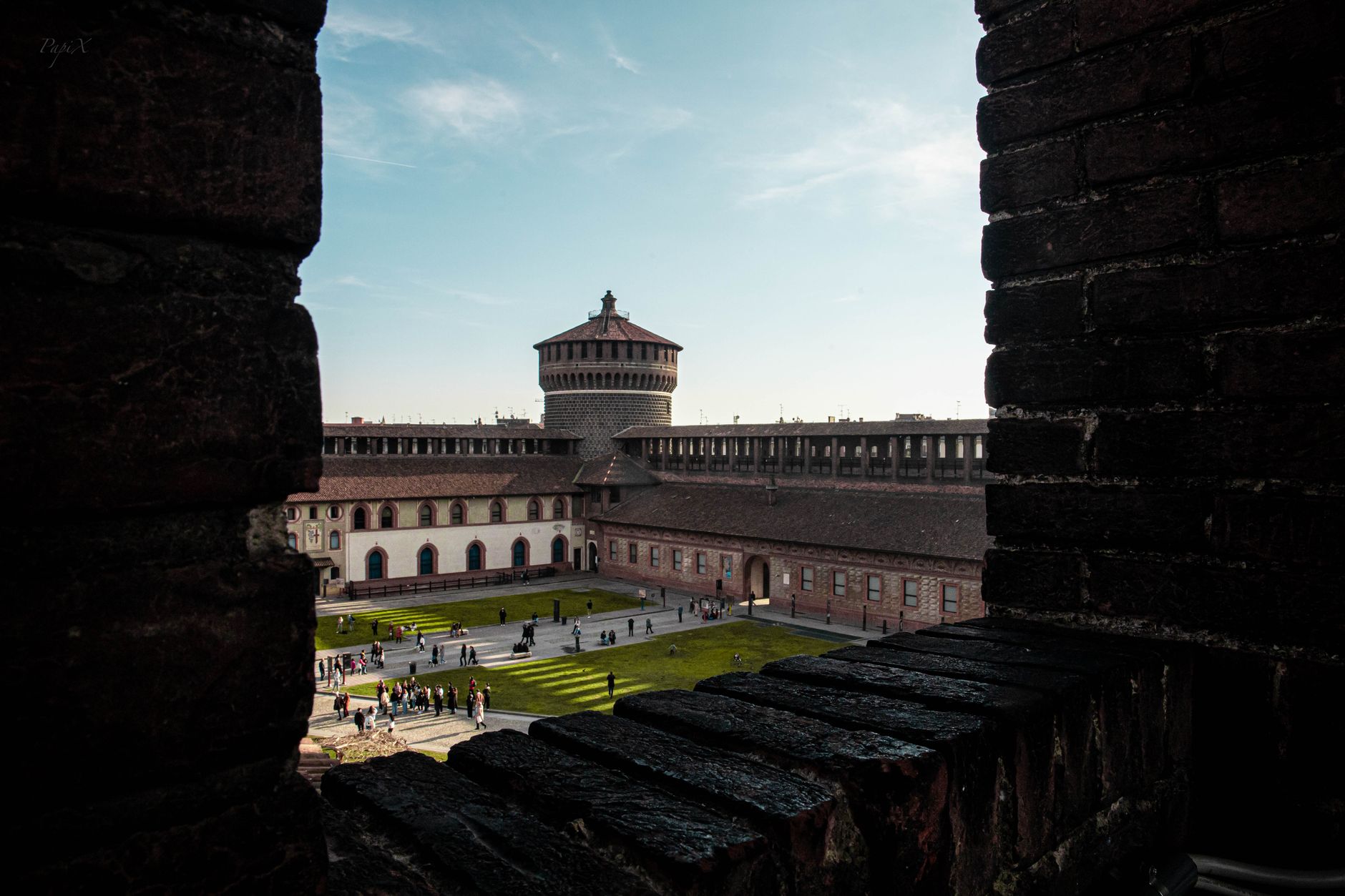
I walk through the Castello Sforzesco Milan probably twice a month and the gate towers still stop me. The red-brick Torre del Filarete is the kind of thing you photograph the first time, ignore the second time, then notice again on the fifth visit because the light hit the merlons a certain way. The castle sits where Foro Buonaparte meets Largo Cairoli, a ten-minute walk from the Duomo, and it does triple duty as a fortress, a free public courtyard, and a complex of eight civic museums that almost no one finishes in a single afternoon. This guide is the one I wish someone had handed me before my first proper visit: what to skip, what to linger on, when to come for free, and where to eat afterward when your feet quit.
Why Castello Sforzesco deserves more than a photo
Most people walking from the Duomo to Parco Sempione stop at the Torre del Filarete, snap the fountain, and keep going. That is fine for ten minutes. It is also a waste. The Sforza Castle Milan complex contains Michelangelo’s final unfinished sculpture, a Leonardo-painted ceiling in the Sala delle Asse, a 1,500-painting picture gallery with Mantegna, Bellini and Canaletto, an Egyptian mummy from the 7th century BC, and one of Europe’s better collections of historical musical instruments. The entry fee for all of it is the price of two cappuccini.
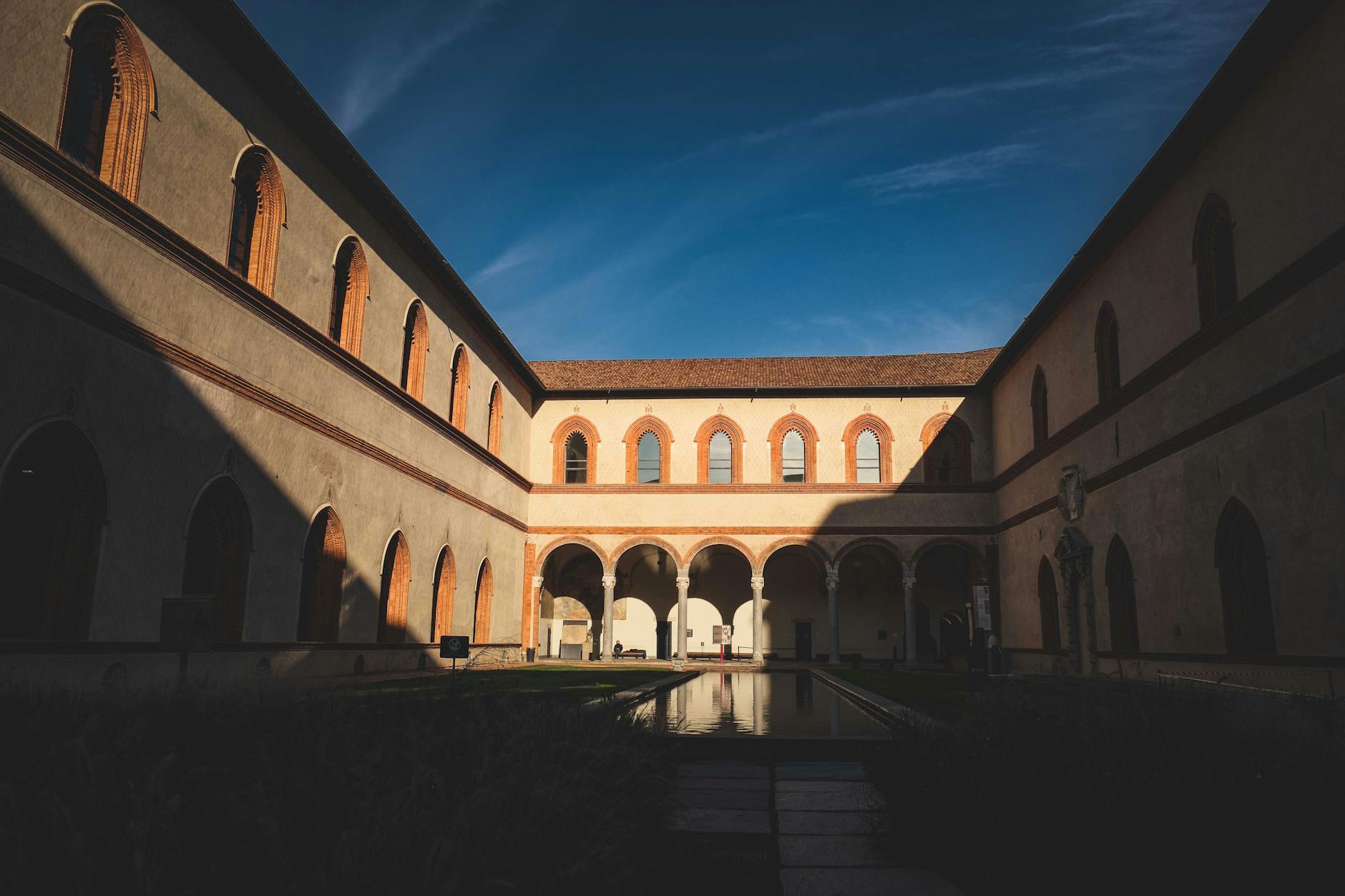
The other thing the photo-and-go crowd misses: the courtyards themselves. The Corte Ducale is a quiet rectangle of brick and stone that Ludovico Sforza used as his private garden in the 1490s. On a weekday morning, before the school groups arrive, you can hear pigeons and your own footsteps and almost nothing else. That kind of silence in central Milan is rare enough to be worth the detour by itself.
A short history: Visconti, Sforza, Napoleon
The first version of this site was a 14th-century Visconti fortress called the Castello di Porta Giovia. Milanese citizens tore most of it down in 1447 during the brief Ambrosian Republic, which lasted about as long as a Netflix limited series. When Francesco Sforza took control of the duchy in 1450, he rebuilt it bigger, smarter, and with a clearer message: the Sforzas were not leaving. His son Ludovico il Moro hired Leonardo da Vinci and Bramante to decorate the interiors, which is how the Sala delle Asse ended up with a Leonardo-painted canopy of mulberry branches.
Then came the bad centuries. Spanish, French and Austrian garrisons used the castle as a barracks. Napoleon’s troops demolished the outer ravelins in the early 1800s. By the late 19th century the city was ready to knock the whole thing down, and only the architect Luca Beltrami’s restoration campaign between 1893 and 1905 saved it. Beltrami rebuilt the Torre del Filarete from Renaissance drawings — the original had exploded in 1521 when lightning hit the gunpowder store. Allied bombs damaged the castle again in August 1943. What you see today is therefore part-medieval, part-Renaissance, part-Beltrami reconstruction, part-postwar repair. It reads as one building because it has been continuously stitched back together for six hundred years.
Tickets, hours and the free entry window
Castello Sforzesco tickets for the combined museums cost 5 euro full price and 3 euro reduced (students 18-25, over-65s, groups). Under 18s and EU residents under 25 with ID enter free. The ticket is good for one entry on the day you buy it and covers all eight civic museums inside the castle walls.
Museum hours are Tuesday to Sunday, 10:00 to 17:30, last entry 16:30. Closed Mondays, January 1, May 1 and December 25. The courtyards themselves are open daily, 7:00 to 19:30, completely free, including on Mondays when the museums are shut. If all you want is the architecture and a walk through to Parco Sempione, you never need a ticket.
The free museum windows are worth memorising:
- First and third Tuesday of every month, after 14:00 — free entry to all museums
- First Sunday of every month — free entry all day
- Last hour before closing (16:30-17:30) — free entry on most days for residents and students; check the ticket desk for current rules, which Comune di Milano adjusts periodically
My honest take: the first Sunday gets mobbed and the queue for the Pietà Rondanini snakes through the courtyard. The first Tuesday after lunch is the sweet spot — locals are at work, the tour buses have moved on, and you can stand in front of Michelangelo’s last sculpture without anyone breathing on your neck. Book regular Castello Sforzesco tickets online if you want to skip the small queue at the desk, but for €10 I usually just walk up.
The museums inside: what to see and in what order
Eight museums sound like a lot. In practice, three are essential, two are interesting if you have the time, and the rest are for return visits or people with specific obsessions. Here is how I rank them.
1. Museo della Pietà Rondanini
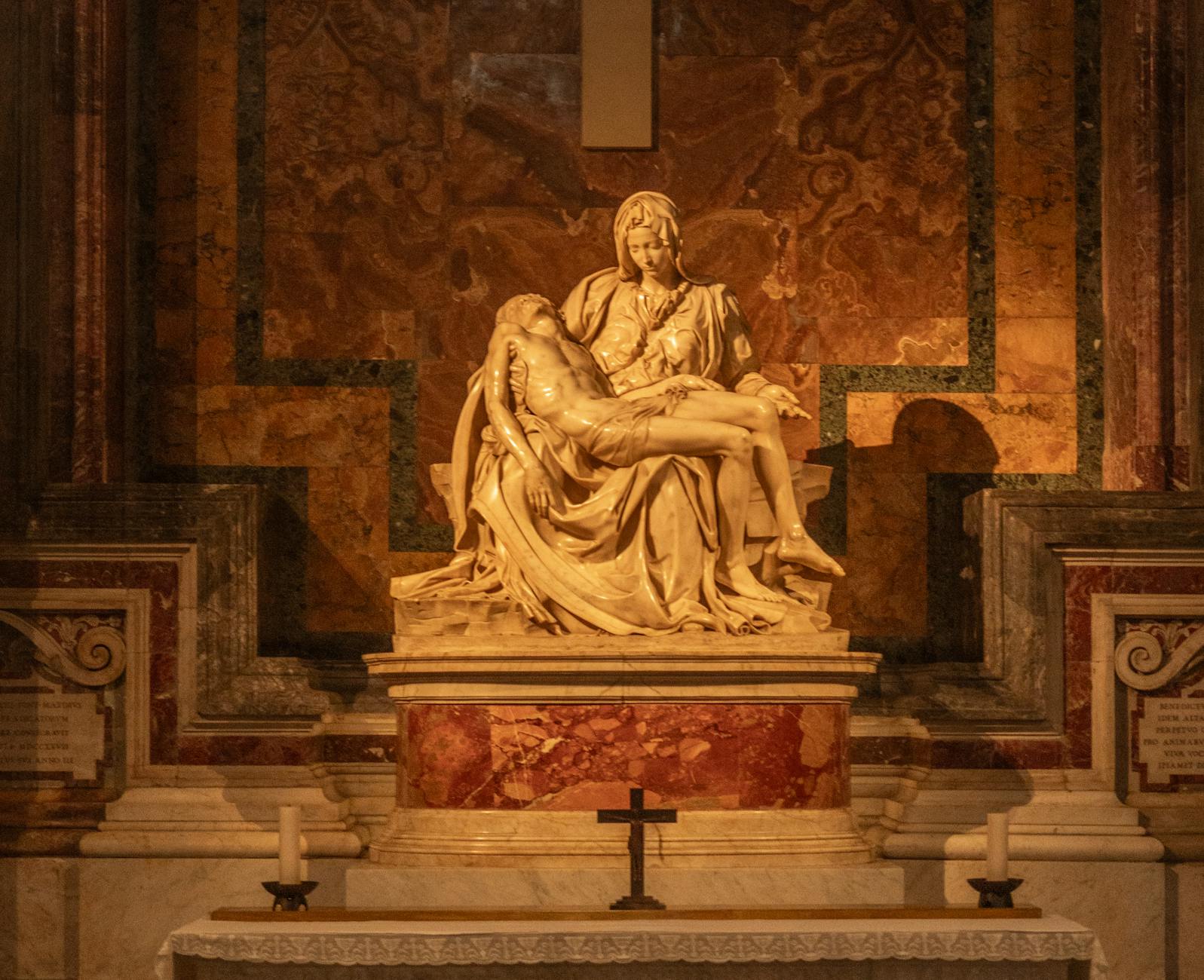
This is the one you cannot skip. Michelangelo carved the Pietà Rondanini in the last years of his life and was reportedly still working on it six days before he died in 1564, aged 88. It is unfinished, which is the point. Christ’s body is impossibly thin, almost dissolving back into Mary’s. You can see chisel marks where the master changed his mind, repositioned the figures, and left a separate detached arm of an earlier version still attached to the marble block. The museum sits in the former Spanish Hospital, a vaulted brick room with cold north light. Allow 20 minutes if you only glance, 45 if you actually look. Free audio commentary on your phone via the castello-sforzesco.milano.it site.
2. Museo d’Arte Antica (Museum of Ancient Art)
Eleven rooms of medieval and Renaissance sculpture on the ground floor of the Corte Ducale. The headline pieces are Bonino da Campione’s equestrian funerary monument to Bernabò Visconti (1363), which used to stand inside a Milan church and feels weirder up close than in any photograph, and the Sala delle Asse — Leonardo da Vinci’s painted ceiling of intertwined mulberry branches and gold knots. The Sala reopened to the public after a years-long restoration and is one of the rare places you can see Leonardo’s actual brushwork on the wall where he put it. Time: 45-60 minutes.
3. Pinacoteca (Picture Gallery)
About 230 paintings on display from a collection of roughly 1,500. The hits are Mantegna’s Madonna in Glory and Saints, Antonello da Messina’s St Benedict, a beautiful Bellini, two Canalettos of Venice, and Bernardo Bellotto’s Milanese views. The hanging is dense and old-fashioned in a way I find charming — paintings stacked two high, no didactic panels shouting at you. Time: 45 minutes. Skip if you are doing the Pinacoteca di Brera the same day.
4. Museo degli Strumenti Musicali (Museum of Musical Instruments)
Around 700 instruments, including a spinet attributed to the workshop of Antonio Stradivari, baroque lutes inlaid with mother-of-pearl, a glass harmonica, and a 17th-century clavicytherium that looks like a vertical harpsichord designed by someone who had taken mushrooms. Children pass through quickly; anyone who has played an instrument will stay an hour. Time: 30-45 minutes.
5. Museo Egizio (Egyptian Museum)
In the basement of the Cortile della Rocchetta. Smaller than Turin’s famous Egyptian museum but free with the same ticket, so worth the 20 minutes. Includes a wood-painted sarcophagus, the mummy of Ankhpakhered from the 7th century BC, papyri, ushabti figurines, and a clean modern display that does a good job explaining funerary practice. Time: 20-30 minutes.
6. Museo della Preistoria and Museo dell’Arte Decorativa
Prehistory and decorative arts — furniture, ceramics, ivories, tapestries. Honestly: only if you have a full day and a particular interest. Time: 30 minutes combined.
7. Achille Bertarelli Print Collection and the Civic Archaeological collections
Specialist holdings, mostly used by researchers. Worth a glance for the temporary exhibits but not a destination.
Walking the courtyards: Corte Ducale, Cortile delle Armi, Rocchetta
Even if you skip every museum, the three main courtyards are a small architectural lesson worth twenty free minutes.
Cortile delle Armi is the huge first courtyard you enter through the Torre del Filarete. It used to be the parade ground where Sforza troops drilled. Today it is paved with cobbles, lined with mulberry trees, and crossed by office workers cutting through to Cadorna. There is a small fountain near the entrance and benches in the shade.
Corte Ducale is the smaller, more elegant courtyard on the left as you walk through. This was Ludovico Sforza’s private quarter, decorated by Bramante. The arched loggia along one side has carved capitals worth a slow walk. The Pietà Rondanini Museum entrance is here, off the southwest corner.
Cortile della Rocchetta is the inner keep — the part Francesco Sforza built first in 1450 as the defensible last refuge if the rest of the castle fell. Three sides of arcaded brick, very plain, very strong. The Egyptian Museum sits below. Climb the small staircase on the north side and you reach the ramparts walk, which gives you a free view over Parco Sempione and the Arco della Pace.
Parco Sempione behind the castle
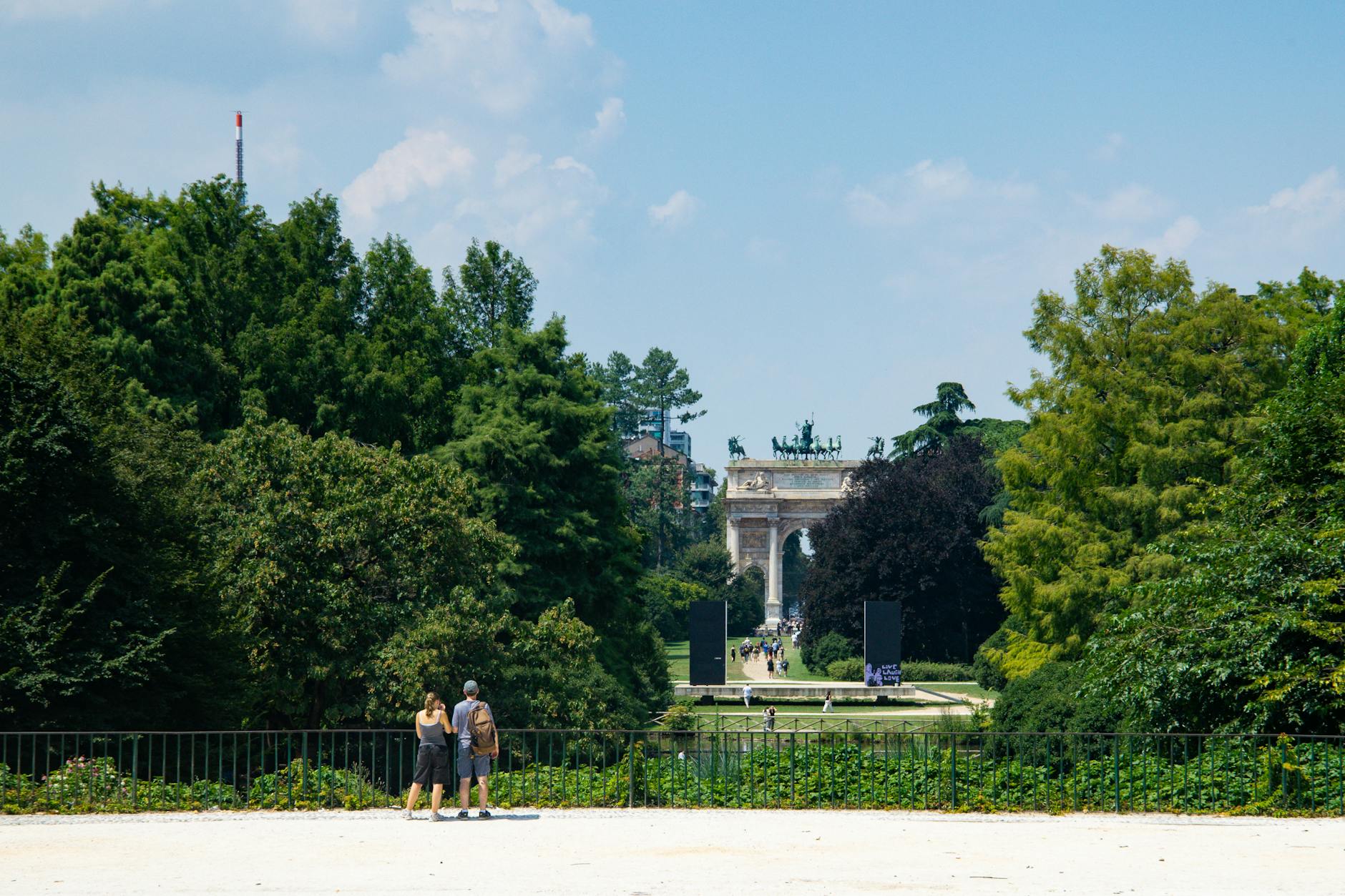
The 47-hectare Parco Sempione opens directly off the back of the castle through the Porta del Soccorso. It was laid out as an English-style landscape garden by Emilio Alemagna in 1888 on what had been the Sforza ducal hunting reserve. If the castle is the brain of this neighbourhood, the park is the lungs.
Things actually worth doing in the park:
- Walk the lake loop (about 20 minutes). Carp, mallards, a small wooden bridge, the kind of melancholy 19th-century park atmosphere I find soothing.
- Triennale di Milano on the western edge — design museum, free permanent collection, ticketed temporary shows. The rooftop terrace café has a view back at the castle.
- Torre Branca, Gio Ponti’s 108-metre steel observation tower from 1933. Lift to the top, 6 euro, best panoramic view of central Milan that does not require booking ahead like the Duomo terraces.
- Arco della Pace at the far north end. Napoleonic triumphal arch finished in 1838, modelled on Roman triumphs. Sit on the steps in late afternoon and watch the light change on the marble.
- Acquario Civico, a small Liberty-style aquarium from 1906 that is free to enter and a good cool-down on a hot July afternoon.
I have written more about the park’s design context in our Milan attractions guide, but the short version is: do not treat Parco Sempione as a quick cut-through. It rewards a slow hour.
Where to eat near Cairoli and Cadorna
The streets around the castle are touristy, which means the bad restaurants outnumber the good ones. These are the places I actually return to.
- Princi, Largo La Foppa (Brera edge, 8 minutes from the castle). The original Milanese bakery chain. Get the pizza al taglio with mortadella and stracciatella, around 4-5 euro a slice, and eat it standing at the counter. Cheap, fast, properly good bread.
- Latteria di San Marco, Via San Marco 24 (Brera, 12-minute walk). Twenty seats, no reservations, ring the bell. Family-run since 1933. The riso al salto (crisp pan-fried saffron risotto cake) is the dish to order, around 18 euro. Cash only most days. Worth the walk.
- Trattoria Milanese, Via Santa Marta 11 (Magenta, 10 minutes south of the castle). Old-school Milanese cooking since 1933 — cotoletta alla milanese, ossobuco, risotto allo zafferano. Mains 22-30 euro. Touristy now but the kitchen still does the classics correctly.
- Bar Magenta, Via Carducci 13 (Magenta, 7 minutes). Liberty-style bar from 1907 with marble counters, decent panini at lunch (7-9 euro), and a proper Negroni in the evening for 9 euro. Good for an aperitivo after the museums.
- Luini, Via Santa Radegonda 16 (between Duomo and the castle, 12 minutes). Stand-up panzerotti window, fried half-moon dough pockets stuffed with mozzarella and tomato. 3.50 euro. Queue is always there. Worth it.
Practical tips most guides skip
The Pietà Rondanini room gets full at 11:00. If you want it to yourself, go right at 10:00 opening or after 16:00. School groups arrive mid-morning.
Photography is allowed without flash in all civic museums, including the Pietà room. Tripods need permission. The Sala delle Asse has stricter rules — phone shots fine, no flash, no tripod.
Baggage: there is a free cloakroom at the main museum entrance under the Corte Ducale. Large backpacks must be checked. Small day bags are fine inside.
The audio guide via your phone is free and works on the museum Wi-Fi (network: CastelloSforzesco, no password). Bring headphones. The signage in the rooms is fine in Italian and English but the audio adds context, especially in the Sala delle Asse.
Accessibility: the courtyards are cobbled and uneven but the museums are wheelchair-accessible via ramps and a lift to the Pietà Rondanini room. A free assistance service can be booked 48 hours ahead via the castello-sforzesco.milano.it contact form.
Toilets inside the museum complex are clean and free, near the ticket desk. The ones in Parco Sempione are paid (1 euro) and not always pleasant. Plan accordingly.
Best time to visit
Time of day: arrive at 10:00 opening on a Tuesday, Wednesday or Thursday for the lightest crowds. The Pietà room is quiet, the Pinacoteca is empty, and you can be back in Cairoli for an early lunch. Late afternoon (15:30 onward) works too but the Pinacoteca’s natural light fades.
Day of week: avoid first Sundays unless the free entry is the whole reason you came. The first Tuesday after 14:00 is busy but manageable. Mondays the museums are closed, but the courtyards are still open and Parco Sempione is gloriously empty of tour groups.
Season: April to mid-June and mid-September to October are the right months for Milan in general — mild weather, long evenings in Parco Sempione, fewer crowds than July. July and August are hot (regularly 33-35°C) but the museum interiors are air-conditioned and the park is shaded, so the castle is actually a smart hot-weather choice. December is fine if you avoid Christmas week. November is grey and damp; I would still go.
Combine with nearby attractions
The castle is positioned exactly where a half-day Milan walk wants to start or end. A few combinations I have done many times:
- Duomo to Castle walk (1.2 km, 15 minutes via Via Dante). Start at the Milan Duomo rooftops in the morning, walk Via Dante for shopping and a coffee at Bar Magenta, finish at the castle for the afternoon museums. Full day, easy.
- Castle + Last Supper. Santa Maria delle Grazie is a 10-minute walk southwest. If you have a Last Supper booking, plan the castle either before or after — your slot is fixed, the castle is not.
- Castle + Brera. The Brera neighbourhood begins three blocks east. Pinacoteca di Brera, Orto Botanico, dinner in the cobbled lanes around Via Fiori Chiari. This is the route I send first-time visitors on.
- Castle + Triennale + Bosco Verticale. Cross Parco Sempione to the Triennale design museum, then catch the M5 from Domodossola one stop north to Porta Garibaldi for the Bosco Verticale. Old castle, mid-century design, new architecture in one afternoon.
- Castle + La Scala. The Teatro alla Scala museum is a 12-minute walk via Via Manzoni. Doable in a single day if you start early.
For a longer itinerary built around the castle, see our list of things to do in Milan and the broader Milan museums guide.
FAQ
Is Castello Sforzesco free?
The courtyards are free to enter every day from 7:00 to 19:30. The eight civic museums inside cost 5 euro full price, 3 euro reduced. Museum entry is free on the first and third Tuesday of the month after 14:00, the first Sunday of every month, and often in the last hour before closing for residents and students.
How long does it take to visit Castello Sforzesco?
Plan 1 hour minimum if you only want the Pietà Rondanini and the courtyards. Plan 2.5 to 3 hours for the three main museums (Pietà, Ancient Art, Pinacoteca). Plan 4-5 hours if you want to see all eight museums plus Parco Sempione behind the castle. Most visitors I know settle around 2 hours and are happy with that.
What is Michelangelo’s last work and where is it?
The Pietà Rondanini, displayed in the Museo della Pietà Rondanini inside the castle. Michelangelo was carving it days before his death in 1564 at age 88. It is unfinished, with visible chisel marks and a detached arm from an earlier version of the composition still attached to the marble block.
Can you visit Castello Sforzesco on a Monday?
The museums are closed on Mondays. The castle courtyards remain open free of charge from 7:00 to 19:30, and you can still walk through to Parco Sempione. If you only have a Monday in Milan, you can see the architecture but not the Pietà Rondanini or the Pinacoteca.
Do you need to book Castello Sforzesco tickets in advance?
For the standard 5-euro museum ticket, no — walk-up is fine almost any day. Online booking via Tiqets or the official milanocastello.it site costs the same or marginally more and saves you the small queue at the desk. Guided tours and Sala delle Asse access slots do sell out and should be booked ahead.
Is Castello Sforzesco worth visiting?
Yes, and for a wider range of reasons than most travellers realise. The Pietà Rondanini alone justifies the trip. Add the Sala delle Asse Leonardo ceiling, a credible picture gallery, free courtyards open dawn to dusk, and direct access to Parco Sempione, and you have one of the best per-euro cultural visits in Italy. For a wider list of free options around the city see free things to do in Milan.
Final thoughts
The Castello Sforzesco Milan rewards repeat visits in a way few major monuments do. The first time you come for the photo. The second time for the Pietà Rondanini. The third time you find yourself sitting on a bench in the Cortile della Rocchetta on a Wednesday afternoon noticing the way the brick changes colour between Beltrami’s reconstruction and the 15th-century original. That is when the place stops being a tourist attraction and starts being a neighbourhood you happen to know.
If this is your first Milan trip, do the castle on day two — after the Duomo, before you get tired. Pair it with Brera and a long aperitivo at Bar Magenta. If it is your fifth Milan trip, come for the Sala delle Asse with a proper hour to spare, then walk the park to the Arco della Pace and eat at Latteria di San Marco. Either way, give it the time. The complex is small enough to feel manageable and deep enough to keep handing you new things, which is the best thing you can say about any old building. For more context on the wider city see our Milan neighbourhoods guide and the round-up of Milan churches worth visiting on the same trip.