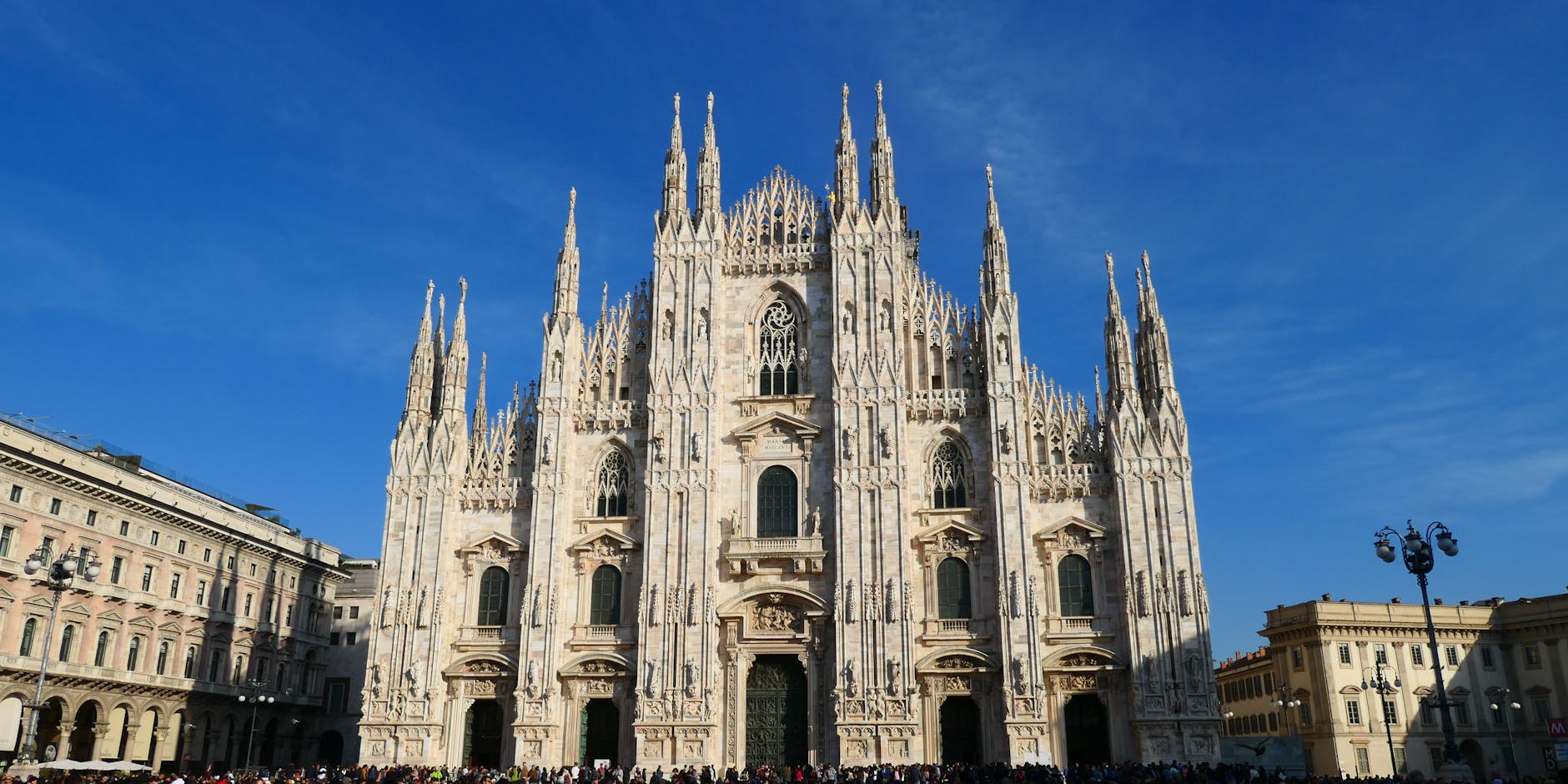
People who only change trains in Milan often leave thinking it is a grey business city with one great cathedral. People who walk its neighbourhoods leave thinking something else entirely. Milan is a city of distinct, strongly flavoured districts, each with its own architecture, crowd and pace, packed into a centre small enough to cross on foot. Understanding how those pieces fit together is the key to a good trip, because the right base and the right wandering ground make all the difference.
Where you stay decides what you think of this city — see our honest take on whether Milan is worth visiting for why the Duomo-only visit disappoints.
For one week in April the neighbourhoods reorganise themselves into design districts — our Fuorisalone districts guide maps which is which.
From the cobbled, gallery-lined lanes of Brera to the canal towpaths of the Navigli, the art-nouveau elegance of Porta Venezia and the glass towers of Porta Nuova, the city rewards the curious. This guide maps the neighbourhoods worth your time, what each is like, and which ones suit your kind of trip.
Milan is laid out in concentric rings around the Duomo, with the historic centre at its heart and a string of characterful districts spreading outward. The key neighbourhoods are the Centro Storico, Brera, Navigli, Porta Venezia, Isola, Porta Nuova, Chinatown, Porta Romana and Città Studi, each with a distinct personality, and almost all within easy reach by metro or on foot.
This is the neighbourhoods hub of the site. It gives you the lay of the land and then links out to in-depth guides on each district, so you can drill into the ones that interest you. Pair it with our where to stay in Milan guide when you are choosing a base, and our things to do guide for what to see once you arrive. Let’s start with how the city is put together.
How Milan is laid out
Milan grew outward in rings, like the cross-section of a tree, and once you see that pattern the city makes immediate sense. At the centre sits Piazza del Duomo and the historic core. Around it runs the line of the old inner canals, the Cerchia dei Navigli, now a ring road but still the boundary of the true centre. Beyond that is a second ring marking the former Spanish walls, punctuated by the old city gates, the porte, whose names live on in the districts around them: Porta Venezia, Porta Romana, Porta Genova and the rest.
Almost everything a visitor wants lies within or just beyond these rings, and the excellent metro stitches them together so you are rarely more than a short ride from the next district. Distances are modest: you can walk from the Duomo to Brera in ten minutes, to the Navigli in twenty-five. For getting between the further-flung areas, our Milan transport guide explains the metro, trams and passes; in practice you will walk far more than you expect.
Milan’s neighbourhoods at a glance
Here is the quick comparison before we go district by district. Use it to spot the areas that match the trip you have in mind, then follow the links into the detailed guides.
| Neighbourhood | Character | Best for |
|---|---|---|
| Centro Storico | Grand, historic, central | First-timers, sightseeing, luxury shopping |
| Brera | Elegant, artsy, romantic | Art, wine bars, strolling, date nights |
| Navigli | Lively, canal-side, social | Aperitivo, nightlife, markets |
| Porta Venezia | Diverse, elegant, open | Food, LGBTQ+ scene, architecture |
| Isola | Hip, creative, local | Design, cocktails, a younger crowd |
| Porta Nuova | Modern, glossy, vertical | Skyscrapers, shopping, photos |
| Chinatown (Sarpi) | Bustling, multicultural | Asian food, casual eating |
| Porta Romana | Residential, local, rising | Living like a local, contemporary art |
| Città Studi | Youthful, everyday | Student life, budget eats |
Centro Storico and the Duomo
The historic centre is where every visit begins, and rightly so. This is the home of the Duomo, the mighty Gothic cathedral whose rooftop terraces give the best view in the city, and of the Galleria Vittorio Emanuele II, the glorious glass-roofed arcade beside it. A few minutes away stand La Scala opera house and the Sforza Castle, while the streets in between hold grand palazzi, churches and the smartest shops.
This is also where you will find the Quadrilatero d’Oro, the golden rectangle of streets that forms one of the world’s great luxury-shopping districts. The centre is polished, busy and expensive, but it is unmissable, and it puts you within walking distance of almost everything. For the detail, see our Duomo guide, our piece on the Galleria Vittorio Emanuele II, and our attractions guide for the wider sweep of central sights.
Brera: the artists’ quarter
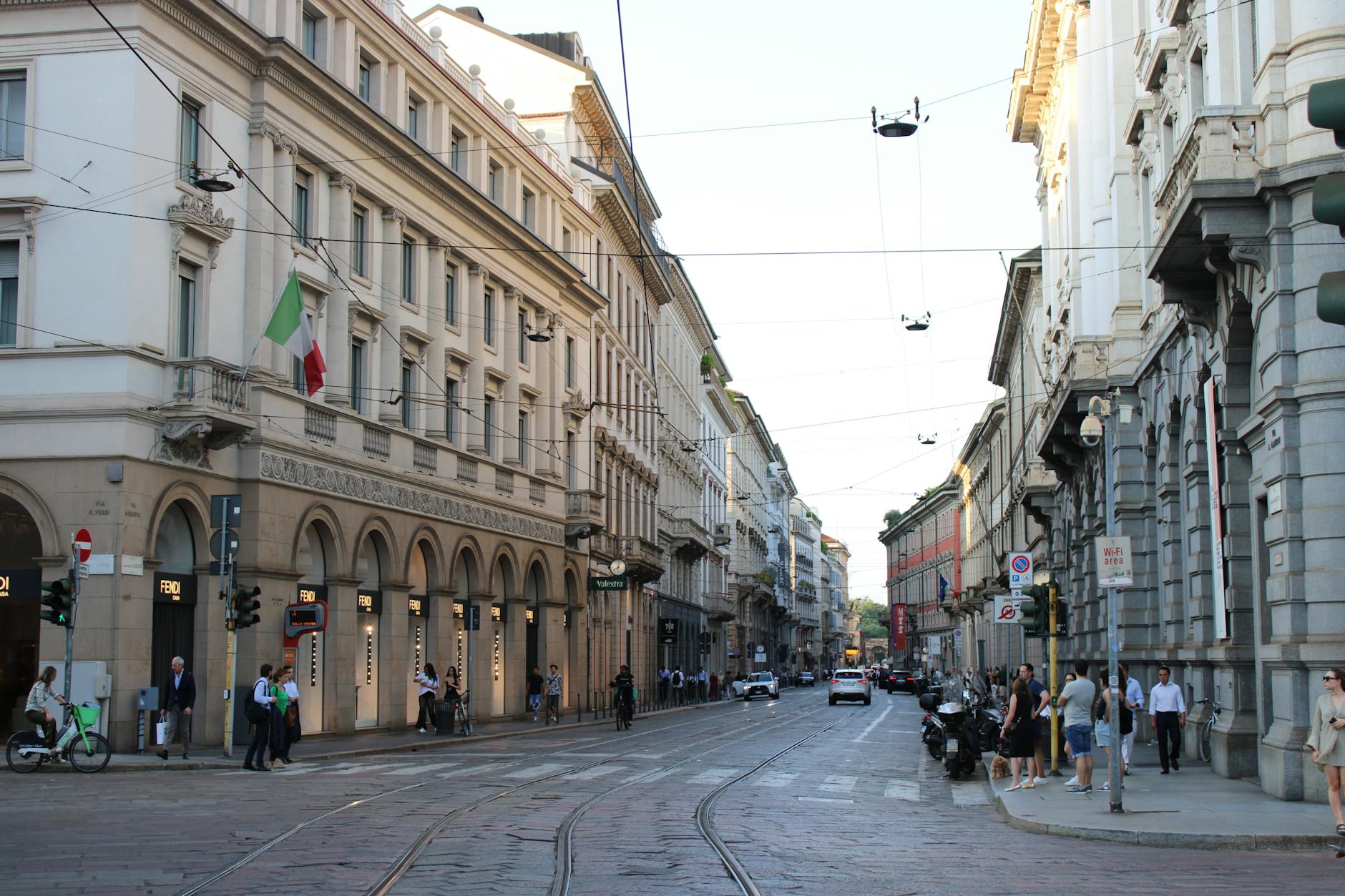
Just north of the centre, Brera is the city’s most romantic district and a favourite for an afternoon’s wander. Its narrow cobbled streets, antique shops, ivy-clad façades and tucked-away trattorias have a village feel that the rest of central Milan lacks. At its heart is the Pinacoteca di Brera, one of Italy’s finest art galleries, and the fine-arts academy whose students give the area its bohemian edge.
By day Brera is for galleries, boutiques and long lunches; by evening it becomes one of the loveliest places in Milan for a glass of wine. It is elegant and a little pricey, but the atmosphere is worth it. Our Brera neighbourhood guide covers what to see, where to eat and the best spots for a drink, and the district features heavily in our romantic things to do guide.
Navigli: the canal district
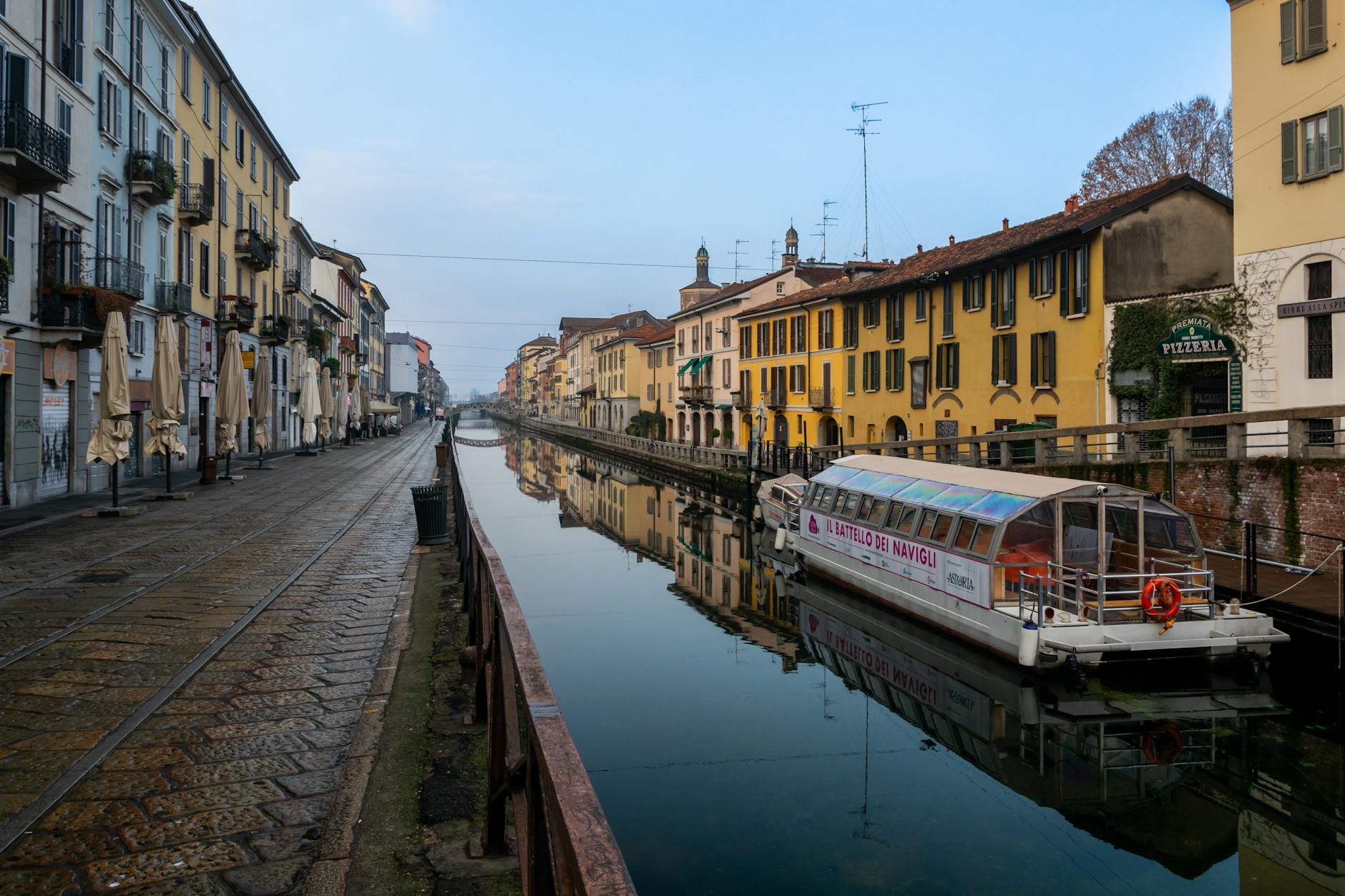
South-west of the centre, the Navigli is the most distinctive corner of Milan, built around two surviving canals once part of a network that linked the city to the rivers and lakes. The Naviglio Grande and Naviglio Pavese are lined with bars, restaurants and workshops, and the towpaths come alive at aperitivo hour, making this the social heart of the city after dark.
By day it is quieter and good for browsing antiques, vintage shops and the monthly canal-side market; by night it is the go-to for drinks and dinner. It can get crowded and a touch touristy at weekends, but the energy is hard to resist. Our Navigli neighbourhood guide has the full picture, and for the after-dark scene see our Milan nightlife guide and aperitivo guide.
Porta Venezia: diverse, elegant and open
East of the centre, Porta Venezia is one of Milan’s most interesting districts and one of its most welcoming. It boasts some of the city’s best Liberty-style, art-nouveau architecture, sits beside the leafy public gardens, and is home to a vibrant, multicultural community, with excellent Eritrean and Ethiopian restaurants among many others. It is also the centre of Milan’s LGBTQ+ life, with an open, easygoing atmosphere day and night.
The mix of grand buildings, green space, great food and a relaxed crowd makes it a rewarding area to explore and a good-value place to eat. It is well connected by metro and within walking distance of the centre. Our Porta Venezia neighbourhood guide goes deeper, and the area’s bars feature in our nightlife coverage too.
Isola: hip and creative
North of the centre, cut off for years by the railway tracks that gave it its name, the “island”, Isola was once a working-class district and is now one of Milan’s coolest. Reconnected to the city by the Porta Nuova development next door, it has kept a distinctly local, creative feel, with independent boutiques, craft-cocktail bars, street art and a young, design-minded crowd.
It sits in striking contrast to the glossy towers on its doorstep, and the juxtaposition is part of its appeal. Come for an unpretentious aperitivo, browse the small shops, and enjoy a neighbourhood that feels lived-in rather than staged. Our Isola neighbourhood guide rounds up the best of it, and it pairs naturally with the modern sights of Porta Nuova next door.
Porta Nuova and Corso Como: the modern skyline
If you want to see how dramatically Milan has changed this century, head to Porta Nuova. This is the city’s new business district, a cluster of gleaming skyscrapers around Piazza Gae Aulenti that includes the famous Bosco Verticale, the “vertical forest” towers clad in thousands of trees and shrubs. It is a popular spot for photos, with fountains, terraces and a sweep of contemporary architecture.
Connected to it by the pedestrian strip of Corso Como, a hub of bars, clubs and concept stores, the area is glossy, dressy and a centre of nightlife. By day it is for modern architecture and shopping; by night for cocktails and clubs. Our Porta Nuova neighbourhood guide covers it in full, and its design-store culture connects to our wider shopping guide.
Chinatown and Via Paolo Sarpi
Centred on the pedestrianised Via Paolo Sarpi, Milan’s Chinatown is the oldest in Italy and a lively, rewarding place to eat. What began as a community of silk and leather traders a century ago is now a buzzing strip of restaurants, bubble-tea bars, bakeries and shops, drawing Milanese from across the city for some of the best and best-value Asian food around.
It is an easy, atmospheric add-on to a visit to the nearby castle or Sempione park, and a great antidote to a run of heavy Italian meals. Come hungry and graze your way along the street. Our Chinatown neighbourhood guide has the rundown, and for more on the city’s eating scene see our Milan food guide and street food guide.
Porta Romana: local and on the rise
South of the centre, Porta Romana is a largely residential district that gives you a feel for everyday Milanese life away from the tourist trail. It has handsome streets, good local restaurants and bars, and a growing arts profile anchored by the Fondazione Prada, the contemporary-art complex that has become a magnet for design lovers. The area has drawn fresh attention in recent years as the site of major redevelopment.
It is a good choice if you want to stay somewhere calmer and more local while remaining a short metro ride from the action. Our Porta Romana neighbourhood guide explains what to see and where to eat, and the district’s contemporary-art scene complements the classics covered in our museums guide.
Città Studi: the student quarter
East of the centre, Città Studi is exactly what its name suggests: the university quarter, home to much of the Politecnico and the science faculties of the state university, and to the energy of a large student population. It is not a sightseeing district, but it is a genuine, affordable slice of working Milan, with cheap eats, lively bars and an unpolished, everyday charm.
If you are travelling on a budget or simply want to see how young Milan lives, it is worth a look, and rooms here can be cheaper than in the centre. Our Città Studi neighbourhood guide has the detail, and budget travellers will find more tips in our budget Milan guide. Students in particular should see our student guide to Milan, which covers discounts, transport and the cheapest ways to live here for a term.
Other areas worth knowing
A few more districts round out the picture. The Ticinese quarter, around the Colonne di San Lorenzo and the Basilica of Sant’Eustorgio, is a young, lively area that flows into the Navigli and fills with students drinking on the steps on warm nights. Parco Sempione, the big central park behind the Sforza Castle, gives the centre its green lung and the Arco della Pace its triumphal arch.
To the west, the Tortona district around Porta Genova is the city’s design hub, a former industrial zone now full of studios, showrooms and the buzz of Design Week each spring. And out beyond the centre, CityLife is a striking modern quarter of curving skyscrapers by famous architects, with a shopping district and parkland. None of these has its own guide yet, but all reward a detour, and several feature in our hidden gems guide and photography spots guide.
Which neighbourhood should you stay in?
Your choice of base shapes the whole trip. First-time visitors who want everything on the doorstep should look at the Centro Storico, accepting higher prices for the convenience. For atmosphere with a calmer evening, Brera and Porta Venezia are lovely. If nightlife is the priority, the Navigli or Porta Nuova put you in the thick of it, while Isola and Porta Romana offer a more local feel a short ride out.
Budget travellers will find better value the further from the Duomo they look, especially around Città Studi and the area near the central station, as long as there is a metro stop nearby. Our dedicated where to stay for first-timers guide and the main where to stay in Milan guide weigh up all the areas and the best hotels in each.
Best neighbourhoods for each kind of trip
To pull it together, here is the shortcut by interest. For art and culture, Brera and the centre lead, with Porta Romana for the contemporary scene. For food, Porta Venezia and Chinatown are standouts, while the whole city eats well; see our best restaurants guide. For nightlife, the Navigli, Porta Nuova and Porta Venezia top the list. For shopping, the Quadrilatero d’Oro in the centre is the luxury heart, detailed in our fashion district guide.
For a local, lived-in feel, Isola, Porta Romana and Città Studi deliver. For romance, Brera and the Navigli at dusk are hard to beat. And for families, the green space of Sempione and Porta Venezia’s gardens help; our things to do with kids guide has more. Match the district to your priorities and Milan opens up far beyond its cathedral.
A neighbourhood-hopping walking route
The most enjoyable way to understand Milan is to string a few districts together on foot, and the city’s compact centre makes that easy. A classic route starts at the Duomo, where you take in the cathedral and the Galleria, then walks north through the smart streets of the Quadrilatero into Brera for a coffee among the galleries and antique shops. From there it is a short stroll to the Sforza Castle and Parco Sempione for some green.
In the afternoon, hop on the metro down to the Navigli, browse the canal-side shops, and settle in for an aperitivo as the towpaths fill up. If you still have energy, swing east another evening to Porta Venezia for dinner among its art-nouveau streets. That loop alone shows you four very different faces of the city in a day. For ready-made plans that build on this, see our one day in Milan guide and the longer routes in our itineraries guide, and bring a camera for the spots in our photography guide.
Tourist Milan versus local Milan
It helps to know which districts are firmly on the tourist trail and which are everyday Milan, because mixing the two gives the best trip. The Centro Storico, the Quadrilatero and the busiest stretches of the Navigli are where visitors concentrate, and they are busy, polished and pricier as a result. They are also genuinely worth seeing, so do not skip them.
But to feel the real rhythm of the city, spend time in the less-visited quarters: eat where the students do in Città Studi, browse the independent shops of Isola, take an evening in residential Porta Romana, or graze along the counters of Chinatown. Prices fall, the crowds thin and the experience deepens. Our hidden gems guide points to the quieter corners, our free things to do guide shows how much costs nothing, and our budget guide ties the savings together.
Are Milan’s neighbourhoods safe?
Milan is a safe city to explore by day and night across the districts visitors use, and there are no real no-go areas in the centre. The main thing to watch is pickpocketing, which is most common in crowded tourist spots: around the Duomo, on packed metro lines and trams, and on the busiest weekend stretches of the Navigli. Keep your bag closed and your phone secure in those places and you will be fine.
The area immediately around the Centrale railway station can feel a little rough late at night, as big-city station districts often do, but it is well used and served by plenty of transport. Use ordinary common sense, stick to licensed white taxis or booked rides in the small hours, and you can enjoy every neighbourhood with confidence. Our Milan travel tips guide covers safety, scams and etiquette in full.
Frequently asked questions
What is the best neighbourhood to stay in Milan?
For first-timers, the Centro Storico around the Duomo is the most convenient, putting the main sights and shopping within walking distance. Brera and Porta Venezia offer charm with a calmer evening, the Navigli suits nightlife lovers, and Città Studi or the station area give better value. Match the area to your priorities and budget.
What is the trendiest neighbourhood in Milan?
Isola is widely seen as Milan’s coolest district, a former working-class area turned hub of craft cocktails, independent design and street art, with a young creative crowd. Porta Nuova next door brings the glossy, modern side, while Porta Romana and the Tortona design zone are also firmly on the rise. Each has its own flavour of cool.
Is Milan a walkable city?
Yes, central Milan is very walkable. The historic core is compact, and you can walk from the Duomo to Brera in about ten minutes or to the Navigli in twenty-five. An excellent metro and tram network covers longer hops between districts. Most visitors end up walking far more than they expect, which is the best way to feel the city.
Which area of Milan has the best nightlife?
The Navigli canal district is the most popular for aperitivo and bar-hopping, while Porta Nuova and Corso Como hold the glossier clubs. Porta Venezia anchors the LGBTQ+ scene and the Colonne di San Lorenzo in Ticinese draws a young, casual crowd. Each offers a different mood, so pick the area that fits the night you want.
What is the Quadrilatero d’Oro?
The Quadrilatero d’Oro, or “golden rectangle”, is Milan’s luxury-shopping district in the Centro Storico, bounded by Via Montenapoleone, Via della Spiga and neighbouring streets. It is home to the flagship boutiques of the world’s leading fashion houses and is a spectacle to stroll even if you are only window-shopping. It sits a short walk from the Duomo.
Final thoughts
Milan is not one city but a dozen small ones stitched together, and the visitors who enjoy it most are the ones who pick a couple of neighbourhoods and let themselves wander. See the Duomo and the Galleria, of course, but give yourself an afternoon in Brera, an evening on the Navigli and a meal in Porta Venezia or Chinatown, and you will come away with a far richer sense of the place. Use the district guides linked above to go deeper into whichever corners call to you.