Porta Venezia Milan is the neighborhood I send friends to when they tell me three days in Milan feels like too much Duomo and not enough actual city. Walk fifteen minutes northeast of the cathedral and the architecture shifts: floral majolica tiles on Casa Galimberti, wrought-iron balconies dripping with concrete cherubs, an Eritrean cafe pumping out the smell of berbere next to a queer wine bar flying a Pride flag the size of a bedsheet. The Porta Venezia district doesn’t try to be charming. It just is, and most tourists skip it because the guidebooks bury it on page 180.
I’ve spent enough Saturday afternoons here to have opinions about which Liberty facade photographs best at 4 PM (Casa Galimberti, west light), which Eritrean place actually serves zighinì the way an Eritrean grandmother would (Warsà, since 1991), and why Bar Basso still matters in 2026 even though the Negroni Sbagliato has been TikTok’d to death. This is my guide to the Porta Venezia neighborhood — what to see, where to eat, and how to spend an afternoon that will probably end up being the part of your Milan trip you talk about most.
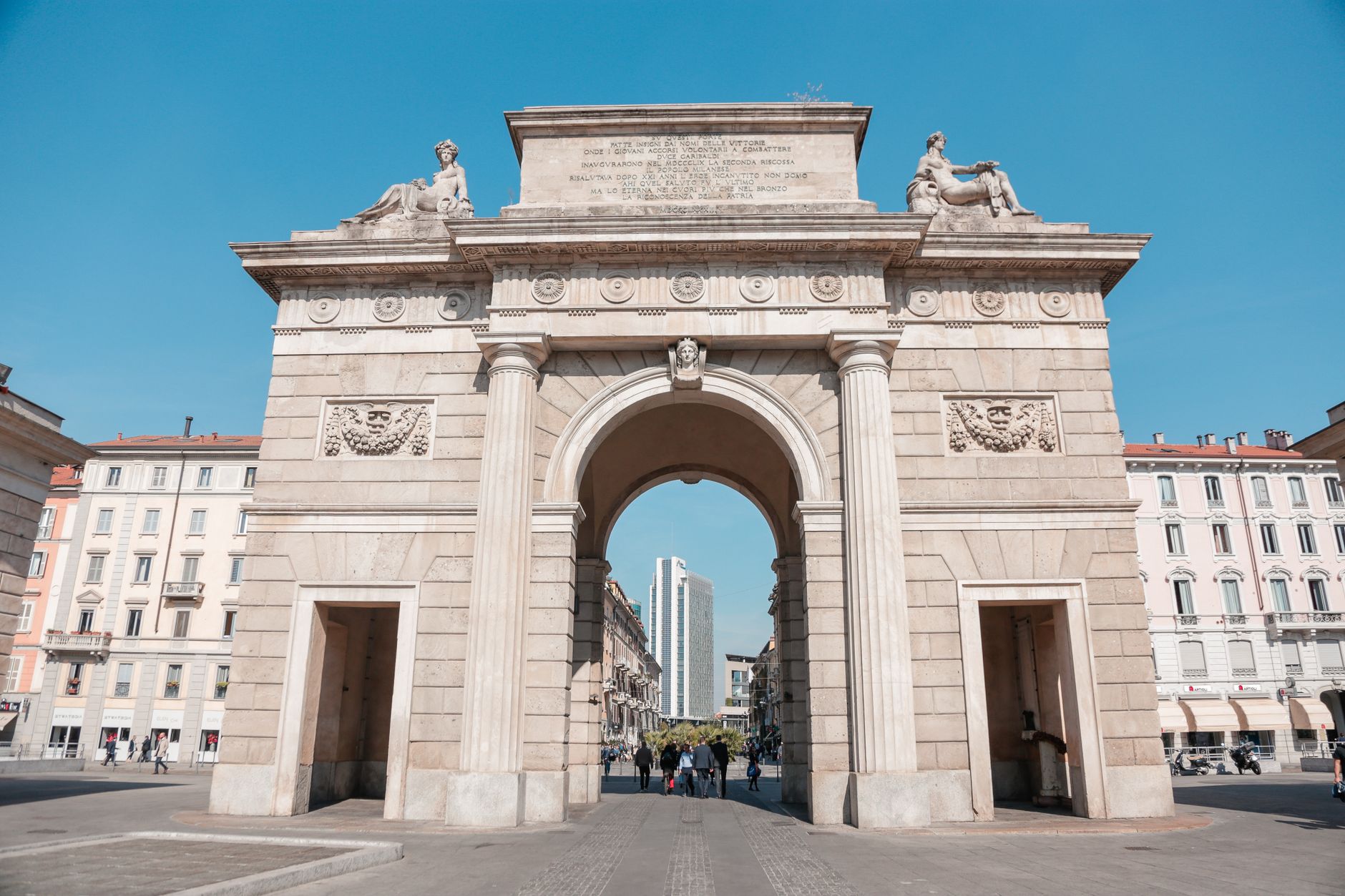
Why Porta Venezia is worth your afternoon
Three reasons, in order. First, the architecture: Porta Venezia holds Milan’s densest concentration of Liberty (Italian Art Nouveau) buildings, a brief, weird style that flared up between 1903 and 1913 before the city moved on. You can see the whole movement in a six-block walk. Second, the food: this is “Little Asmara,” home to Italy’s deepest Eritrean and Ethiopian community, with restaurants that have been serving injera since before most Milan food bloggers were born. Third, the energy. Porta Venezia has been the center of Milan’s LGBTQ+ life since the 1980s, and in 2020 Time Out ranked it the 35th coolest neighborhood in the world — the only Italian district on the list.
It also has the city’s oldest public park, a Natural History Museum that opened in 1838, and Bar Basso, where a Venetian bartender accidentally invented the Negroni Sbagliato in 1972 by reaching for the wrong bottle. If your idea of Milan is the Duomo, the Last Supper, and a quick spritz in Navigli, Porta Venezia is the corrective. It’s where Milanesi actually live.
Getting to Porta Venezia
The easiest way in is Metro M1 (red line), Porta Venezia stop. The station is decorated with a permanent rainbow flag and dumps you out at the southwest corner of Giardini Indro Montanelli, which is exactly where you want to be. From the Duomo it’s three stops, about six minutes. A single ATM ticket is €2.20 and works for 90 minutes including transfers.
If you’d rather see something on the way, tram 9 runs from Stazione Garibaldi past Porta Venezia and continues south — it’s the slow scenic option, and the historic orange trams still rattle through here. Walking from the Duomo takes about 25 minutes along Corso Vittorio Emanuele II and then up Corso Venezia, which is itself a parade of palazzi worth slowing down for. I usually walk one way and metro back.
For onward connections: M1 from Porta Venezia goes straight to Cairoli for Sforzesco/Chinatown in eight minutes, and tram 5 will get you to Isola in about fifteen. The full Milan transport guide has the ticket details.
A perfect Porta Venezia afternoon, hour by hour
Here’s the route I do with visiting friends. It’s calibrated for a Saturday or Sunday, starts after lunch, and ends with a cocktail.
- 1:30 PM — Coffee and a maritozzo at Pavé (Via Felice Casati 27, just south of the park). Sit at the counter.
- 2:00 PM — Walk to Casa Galimberti, Via Malpighi 3. Photograph the facade. Cross to Casa Guazzoni, also on Via Malpighi. The two buildings face each other diagonally.
- 2:45 PM — Liberty loop: Via Pisacane, Via Cappuccini, Via Melzo. Roughly twenty minutes of slow looking.
- 3:30 PM — Villa Necchi Campiglio (Via Mozart 14). Buy the €15 ticket, do the audio guide, allow 75 minutes.
- 5:00 PM — Giardini Indro Montanelli. Walk the gravel paths to the Planetarium and the Natural History Museum exterior. Sit by the pond.
- 6:30 PM — Aperitivo at Bar Basso, Via Plinio 39. Order the Negroni Sbagliato. It’s €10.
- 8:00 PM — Dinner at Warsà or Asmara Cafè for zighinì on injera.
That’s about six and a half hours of structured wandering with built-in sitting time. Adjust freely.
What to see in Porta Venezia
-
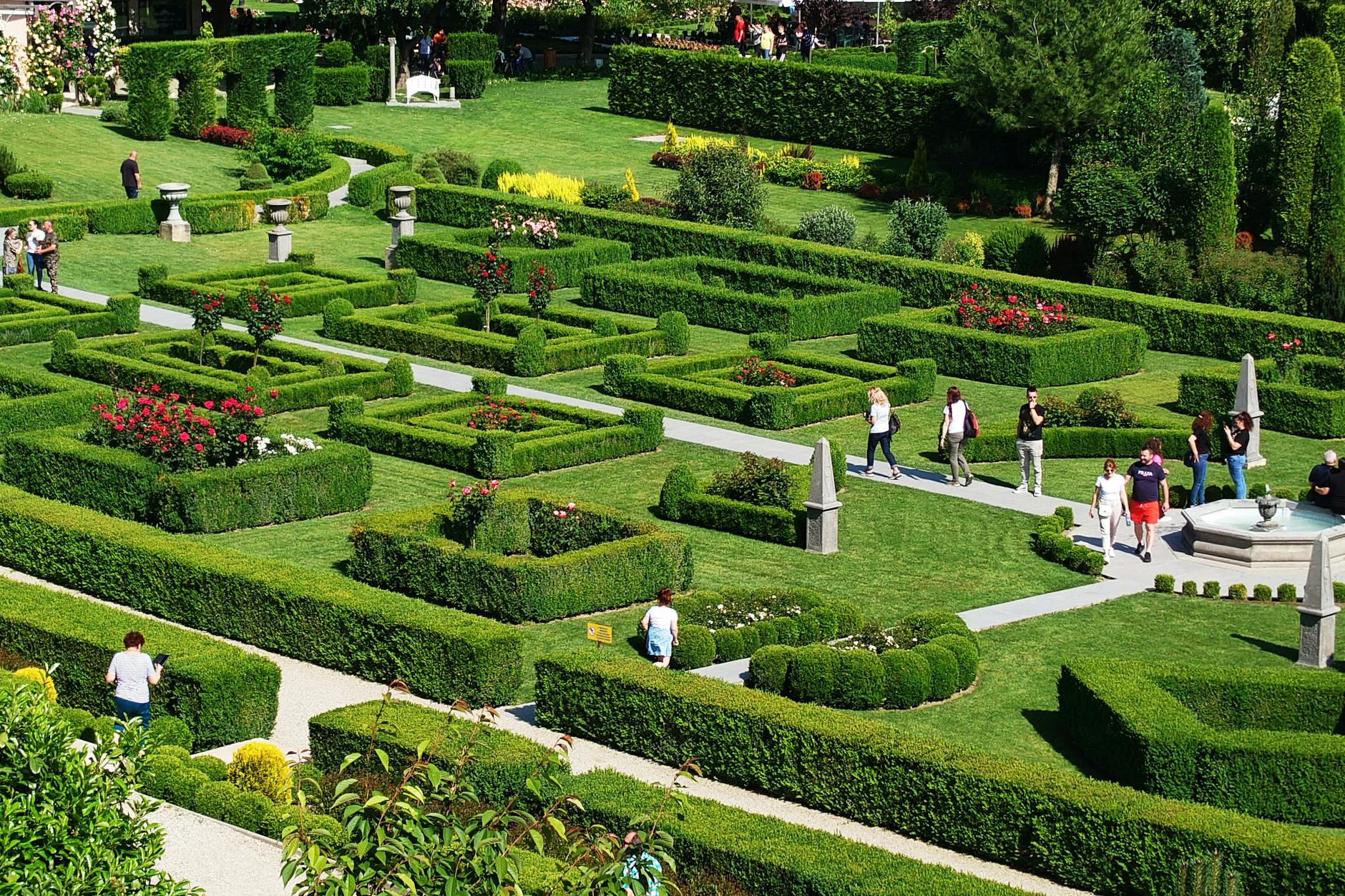
Giardini Pubblici Indro Montanelli — Milan’s first public park, opened in 1784, renamed in 2002 after the journalist. The Milanesi just call them i giardini di Porta Venezia. Free, open dawn to dusk. Inside the park sit two of the city’s better small museums: the Museo Civico di Storia Naturale (Natural History Museum), founded in 1838 and housed in a Neo-Romanesque pile from 1893 with terracotta detailing by Giovanni Ceruti — €5 entry, closed Mondays — and the Ulrico Hoepli Planetarium, designed by Piero Portaluppi in 1929 and donated by the publisher Hoepli, where shows run on weekends in Italian and occasionally English. Even if you skip the interiors, the park is the green lung of the Porta Venezia area and worth thirty minutes of doing nothing.
-
Casa Galimberti, Via Malpighi 3 — The single most photographed Liberty building in Milan, built by Giovanni Battista Bossi between 1903 and 1905. The facade is almost entirely covered in painted majolica tiles depicting male and female figures interlaced with flowers, leaves, and branches. It’s a working apartment building — people live behind those tiles — so you can only see the outside, but the outside is the point. Best light is mid-to-late afternoon when the sun hits it head-on from the west.
-
Casa Guazzoni, Via Malpighi 12 — Bossi designed this one too, between 1904 and 1906, and finished restoration wrapped in 2023. Instead of majolica he used decorated concrete: cherubs, female heads, vines and leaves climbing up to the windows above the pharmacy on the ground floor. The wrought-iron balconies are some of the best in the city. Stand on the opposite side of the street to take it in.
-
Villa Necchi Campiglio, Via Mozart 14 — A 1930s villa designed by Piero Portaluppi for the Necchi-Campiglio sisters, heiresses to a sewing-machine fortune. Donated to FAI (the Italian National Trust), restored, opened to the public in 2008. The interiors are a frozen tableau of upper-middle-class Milan between the wars: a heated indoor swimming pool (one of the first in the city), a tennis court, walnut paneling, a phone in every room. Luca Guadagnino filmed I Am Love here. Tickets €15, reduced €9, free for FAI members. Open Wednesday to Sunday, 10–6, last entry 5. This is the place I drag people who say they don’t like house museums.
-
Casa Museo Boschi-Di Stefano, Via Jan 15 — An apartment-museum, ten minutes’ walk northeast, holding the private collection of Antonio Boschi and Marieda Di Stefano: about 300 works on display, from a collection of roughly 2,000, of 20th-century Italian art by Fontana, de Chirico, Morandi, Sironi, and Boccioni hung in the rooms where the couple actually lived. Free. Closed Mondays. Tiny, quiet, and almost no one knows it’s there. One of the best things on my Milan museums list.
-
The Liberty walk — If you only have an hour, do this loop. Start at Casa Galimberti (Malpighi 3). Walk down Via Malpighi to Casa Guazzoni (12). Continue south to Corso Venezia and turn right; on the left you’ll see Palazzo Castiglioni at Corso Venezia 47, built by Giuseppe Sommaruga in 1903 — the first Liberty building in Milan, the one that started the whole thing. Loop back via Via Melzo and Via Cappuccini, where smaller Liberty apartment houses line both sides. The whole walk is about 1.5 kilometers and ends near where you started. Bring a phone or a real camera.
Where to eat in Porta Venezia
Porta Venezia is one of the best eating neighborhoods in Milan precisely because it isn’t trying to be. Five places I send people to, with what to order and what it costs.
-
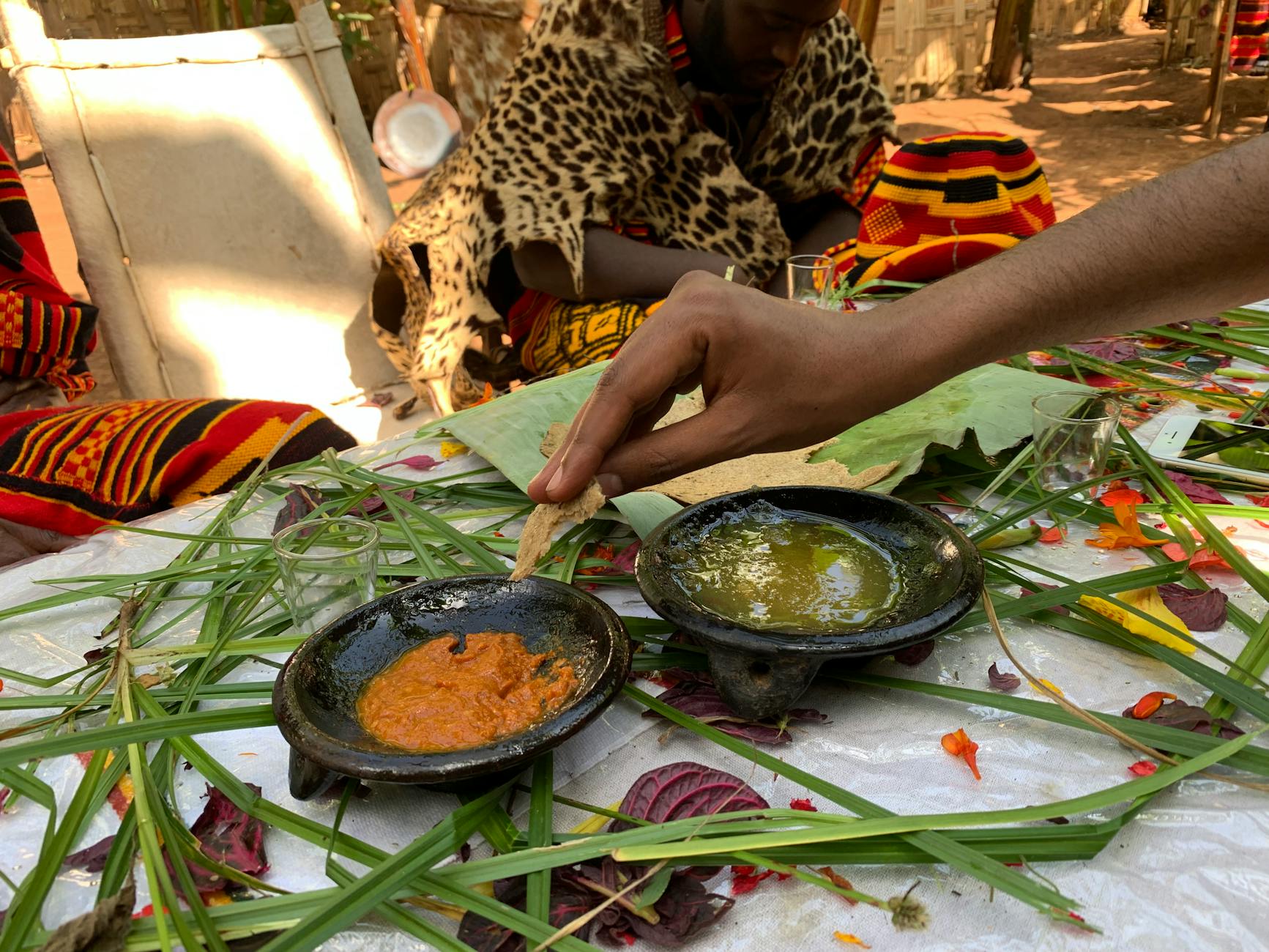
Warsà — Via Melzo 16. Open since 1991, the senior Eritrean restaurant in Milan and the one Eritreans themselves go to. Order the zighinì (slow-cooked beef stew, deeply spiced with berbere) served on a sheet of injera, with sides of lentils and collards. €14–18 a plate. You eat with your right hand, tearing pieces of injera to scoop the stew. Vegetarian version available and excellent. Book ahead on Friday and Saturday.
-
Asmara Cafè — Via Lazzaro Palazzi 5. Named for Eritrea’s capital. Friendlier, more casual than Warsà, good for lunch. The cotoletta di Asmara (an Eritrean take on a Milanese cutlet) is a quiet menu hero. Plates €10–15.
-
Ristorante Injera — Via Lecco 1. The newer option, and the one that’s gone viral on Instagram. Mixed platter for two (misto Injera) is €28 and feeds you generously. Low prices for Milan, big portions, decent natural-wine list.
-
Bar Basso — Via Plinio 39. Not really Porta Venezia proper — it sits right on the border with Città Studi — but you cannot write about this neighborhood and skip it. This is where Mirko Stocchetto poured Brut Prosecco into a Negroni instead of gin in 1972 and accidentally invented the Negroni Sbagliato. They serve it in a goblet the size of a small fishbowl. €10. Open since 1947 at this location. The red neon sign outside is a landmark. Go around 6:30 PM, get a table outside if the weather allows.
-
Pavé — Via Felice Casati 27. The best bakery in the Porta Venezia neighborhood. Croissants €1.80, maritozzo con la panna €3.50, espresso at the counter €1.30. Crowded on weekend mornings — go early or after 11. Better breakfast than 90% of what tourists are paying €8 for around the Duomo. Worth a mention on any Milan food guide.
-
Bun Burger — Corso di Porta Venezia 14. For when someone in your group is hangry and refuses Eritrean. Decent Italian-style smashed burger, €11–14, fast service.
Practical tips
A few things I’ve learned from hauling friends through here.
- Best Liberty walking route: Start at Porta Venezia metro, exit toward Corso Venezia, walk north to Palazzo Castiglioni (Corso Venezia 47), backtrack and cut east on Via Salvini to reach Via Malpighi. Hit Casa Galimberti and Casa Guazzoni, then wander Via Melzo and Via Cappuccini. End at Bar Basso. Total: 2 km, 90 minutes with photo stops.
- Photography times: Casa Galimberti faces northwest — best between 3 and 5 PM in summer, 1–3 PM in winter. Casa Guazzoni faces northeast and looks best in the morning. The park photographs well in golden hour with the museum’s terracotta glowing.
- Most museums close Mondays: Natural History Museum, Villa Necchi, Casa Museo Boschi-Di Stefano — all shut Monday. Plan accordingly.
- The Eritrean places get busy after 8 PM on weekends. If you don’t want to wait, book or aim for 7:30.
- Cash isn’t required anywhere I’ve listed; cards work fine, including at Warsà and Asmara.
- ATM tap-and-go works at metro turnstiles — no need to hunt for a ticket machine if you have a contactless card.
Best time to visit Porta Venezia
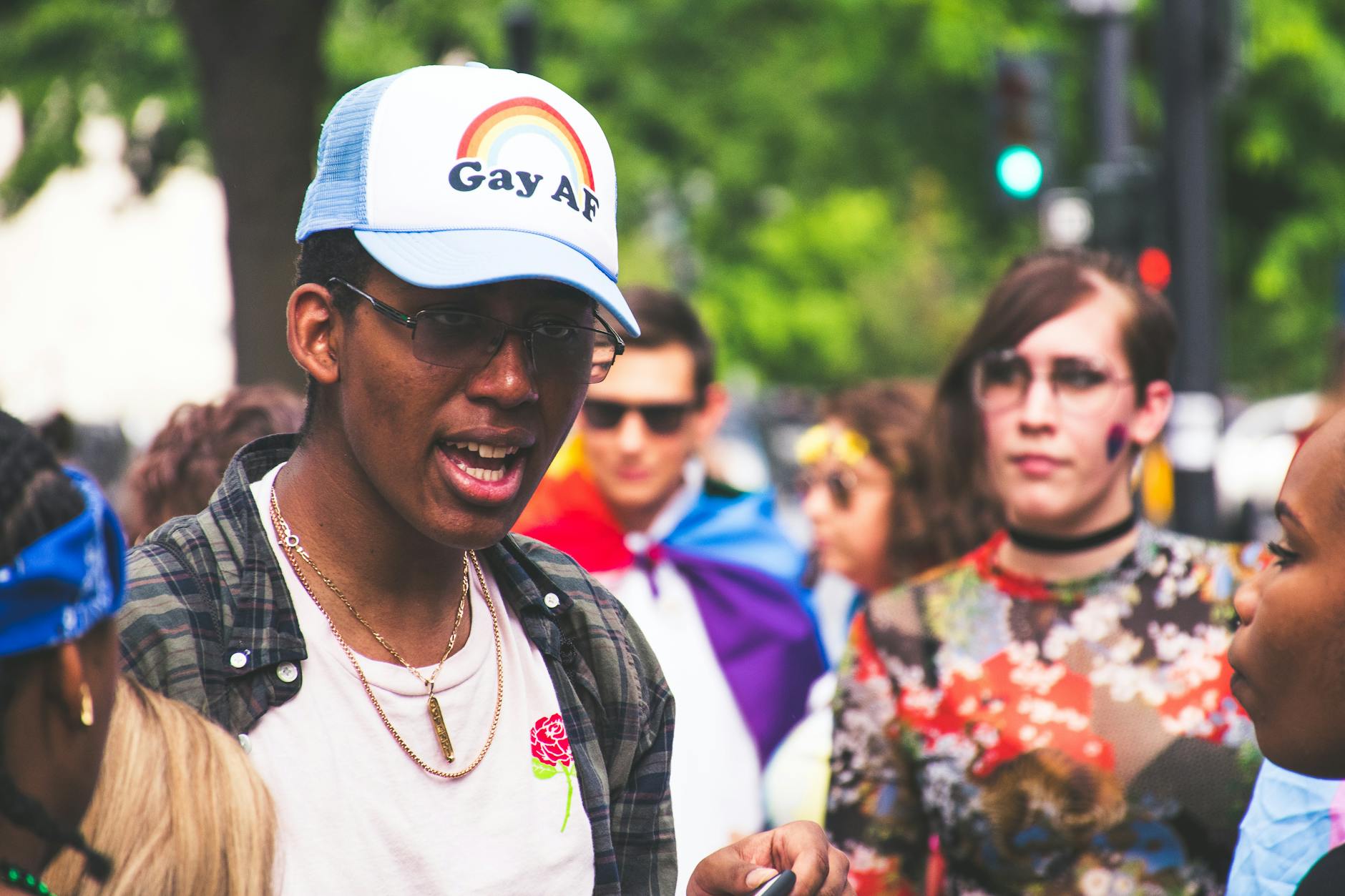
If you can plan around a date, plan around Milano Pride. In 2026, Milano Pride runs June 21–28, with the main parade on Saturday June 28 at 4 PM, departing from Piazza Repubblica and ending at Arco della Pace. The party concentrates in Porta Venezia for the full week — the “Pride Square” festival takes over three piazzas in the neighborhood from roughly June 24–26 with talks, music, drag, and political programming. It’s the biggest LGBT+ parade in Italy and the neighborhood is at its absolute best.
Outside Pride week, the best time is a sunny weekend afternoon in spring or early autumn. The park fills with families, the cafe terraces on Via Lecco and Via Tadino spread onto the sidewalks, and the Liberty facades catch the kind of slanted light that makes the majolica come alive. Avoid August, when half of Milan is at the sea and a third of the restaurants are shut, and avoid pouring rain — the walking route depends on actually looking at buildings.
Winter has its own appeal: fewer tourists at Villa Necchi, no queues at the planetarium, and Bar Basso is even better when it’s cold outside and you’re inside with a hot drink. Christmas markets pop up in the gardens in December.
Where to stay in Porta Venezia
Porta Venezia is one of the smarter neighborhoods to base yourself in Milan. You’re three metro stops from the Duomo but you wake up in a real neighborhood with bakeries, parks, and life that isn’t manufactured for tourists. Prices are usually 20–30% below the central historic zone for equivalent rooms.
Look for hotels along Corso Buenos Aires (Europe’s longest shopping street, 1.5 km running from the Bastioni north to Piazzale Loreto) or on the quieter side streets like Via Tadino, Via Casati, and Via Lazzaro Palazzi. The Hotel Manin sits right on the southwest edge of the park; smaller boutique options like Senato Hotel and Casa Mia Milano work well for mid-range. Apartment rentals are plentiful in the Porta Venezia neighborhood and tend to be better value than equivalent units in Brera or Porta Nuova. For a broader breakdown of neighborhoods to base in, see my where to stay in Milan guide.
If you’d rather stay somewhere greener and quieter and commute in, Porta Romana is a short tram ride south and has similar prices.
Porta Venezia FAQ
Is Porta Venezia safe at night?
Yes. It’s one of the busiest, most walked neighborhoods in Milan, with bar and restaurant traffic until 1 or 2 AM on weekends. The main precaution is the usual one: watch your phone and bag on the metro and around the station at peak commuter times. I walk home from Bar Basso to my friends’ apartment off Corso Buenos Aires all the time and have never had an issue.
How long should I spend in Porta Venezia?
A focused afternoon (four hours) covers the Liberty walk, the park, and one museum. A full day (eight hours) adds Villa Necchi, Casa Museo Boschi-Di Stefano, dinner, and a Bar Basso nightcap. If you’re staying in the neighborhood, you’ll pass through it constantly anyway.
What’s the closest metro stop to Casa Galimberti?
M1 Porta Venezia, about four minutes’ walk. Exit toward Corso Buenos Aires, walk one block north, turn right onto Via Malpighi.
Is Villa Necchi Campiglio worth the €15?
If you have any interest in 20th-century design, architecture, or Italian cinema, yes — it’s one of the best small museums in Milan. If you’re not interested in any of those, skip it and spend the time in the park.
Is Porta Venezia a gay neighborhood?
It’s the gay neighborhood of Milan and has been since the 1980s. Via Lecco and Via Melzo hold most of the historic LGBTQ+ venues, including L’Elefante (long-running neighborhood bar on Via Melzo) and Mono Bar on Via Lecco. The neighborhood is welcoming and the rainbow flag at Porta Venezia metro is permanent. Pride week in late June is the peak.
How does Porta Venezia compare to other Milan neighborhoods?
It’s more residential and architecturally dense than Navigli, less polished than Brera, and more interesting food-wise than Porta Nuova. Closest comparison is probably Isola for the lived-in feel, but Porta Venezia has the Liberty architecture and the park, which Isola doesn’t. See my full Milan neighborhoods guide for the side-by-side.
Final thoughts
The reason I keep coming back to Porta Venezia is that it does something most Milan neighborhoods don’t: it actually layers. The Liberty buildings sit next to Eritrean cafes that sit next to gay bars that sit next to a park that’s been there since the 18th century, and none of it feels curated or themed. It’s just a part of the city where different histories piled on top of each other and nobody bothered to flatten them out.
Plan an afternoon. Bring a camera. Eat the zighinì. Order the Negroni Sbagliato at Bar Basso and let the bartender pour the Prosecco the way Stocchetto did it the first time, accidentally and forever. If you only have time for one Milan neighborhood beyond the Duomo and you’ve already done the standard hits, make it this one. And if you want the wider picture of what else this city does well, my Milan attractions guide ties it all together.
Related Milan guides
Keep planning with our other Milan neighborhoods guide resources: