The Last Supper Milan: Tickets, Tips & Booking Guide (2026)
I’ve talked friends out of skipping the Last Supper Milan tickets queue exactly once, and I regret it — they got into Milan on a Saturday morning without a reservation and spent the whole afternoon staring at “sold out” pages while I was sitting in the refectory of Santa Maria delle Grazie watching Philip lean forward in disbelief. Leonardo’s Cenacolo Vinciano is the single hardest cultural reservation in Italy, harder than the Uffizi at Easter, harder than the Vatican on a Wednesday. Only 40 people enter every 15 minutes, the museum releases tickets in three-month tranches that vanish within hours, and there is no walk-up window. This guide walks through exactly how to get inside, what €15 actually buys you, what the room looks like once the climate-controlled doors hiss shut behind you, and what to do with the rest of the afternoon when the 15 minutes are up.
Why The Last Supper is unlike any other Da Vinci experience
You can stand a foot away from the Mona Lisa in the Louvre — well, twelve feet, behind a crowd six deep — and the whole encounter takes about ninety seconds. The Last Supper is the opposite. The painting is 460 by 880 centimetres of plaster on the north wall of a Dominican dining hall, so large it reorganises your sense of scale the moment you walk in. Leonardo painted it between 1495 and 1498 using an experimental dry-plaster technique he invented to give himself time to fuss over details — and which started flaking within twenty years of completion. That fragility is why you don’t just walk up. The room is sealed, dehumidified, and timed.
What you’re seeing is also not a fresco in the technical sense. Real frescoes — pigment applied to wet plaster, like Michelangelo’s Sistine ceiling — bond chemically to the wall. Leonardo wanted to glaze and layer like an oil painter, so he sealed the wall and painted on top. The painting has been restored seven times. The most recent restoration, finished in 1999, took 21 years and stripped away centuries of overpainting to expose what survived of Leonardo’s hand. Roughly 20% of what you see is still his pigment. The rest is conservation. Knowing that does not diminish the experience — it sharpens it.
How to book Last Supper Milan tickets — official, third-party, last-minute
Three paths exist, and they are not equal.
Path one — the official site. Go to lastsupper.shop (the consumer-facing arm of the Cenacolo Vinciano museum’s ticketing). This is the cheapest route and the one that gets you ticket-only entry. Tickets release in three-month blocks, on the third Wednesday of the second month before the period, at 12:00 Rome time. For May through August 2026, tickets went on sale March 24. For September through December, watch for late June. Maximum five tickets per booking. Set a calendar alarm; the system has been known to queue thousands of people simultaneously and the popular slots evaporate within an hour.
Path two — guided tours via Tiqets, GetYourGuide, or Viator. The museum doesn’t allow third-party resellers to sell ticket-only access, but it does allocate seats to licensed tour operators. These tours cost €60 to €95 depending on whether they include the Duomo or a walking element, and they’re often available three to four weeks out when official tickets have been gone for months. If you read this on a Tuesday and you’re flying to Milan on Friday, this is your route.
Path three — last-minute releases. Every Wednesday at 12:00 Rome time, the official site dumps a small batch of tickets for the following week. Cancellations and group no-shows feed this pool. I’ve grabbed slots this way twice. You need to be at your laptop at 11:55, refresh at 12:00:00, and accept whatever time you’re offered. There are no same-day walk-ups. None. Anyone who tells you otherwise is sending you on a wasted tram ride.
If you’re stacking this with other reservations, my Milan itineraries guide sequences the bookings so you’re not trying to claim Duomo rooftop slots and Cenacolo slots in the same hour.
Ticket prices and what’s actually included in 2026
Here is the entire fee schedule as it stands for 2026:
- Standard adult: €15 (this is €13 admission plus a €2 mandatory reservation fee).
- EU/EEA citizens 18–25: €2. You must present a passport or national ID at collection that proves both age and EU/EEA citizenship. A driver’s licence is not enough.
- Under 18: Free, but you still need a reserved time slot ticket. Children with no booking will be turned away — there is no walk-in for kids either.
- Official guided tour supplement: €3.50 added on top of the ticket, museum-run, conducted by an art historian, available in English, Italian, French, German, or Spanish. These slots are almost as hard to grab as the standard ones.
- First Sunday of the month: Free entry for everyone. Tickets release the preceding Wednesday at 12:00 Rome time and disappear in about two minutes. Be online, be ready, or skip it.
Third-party combined tours that bundle the Last Supper with a Duomo skip-the-line and a walking tour run €65 to €120. Pure guided Last Supper tours from Tiqets and GetYourGuide sit at €55 to €75. There is no audio guide rental on site; the official site streams a free audio commentary you can play on your phone (bring earbuds — speakers are not allowed inside).
What the 15 minutes actually looks like
Your ticket says, for instance, 11:00. That is when you enter the painting room. You arrive at the museum entrance on Piazza Santa Maria delle Grazie 2 at 10:30 — half an hour early is non-negotiable for ID check and security screening. Late arrivals forfeit the slot with no refund and no rebooking. I once watched a German couple show up at 11:02 for an 11:00 ticket and lose €30 in front of the desk clerk. He was sympathetic. He still couldn’t help them.
Security is airport-style: bag scan, metal detector. Large backpacks and umbrellas go into free lockers. Then your group of 35 to 40 is funnelled into a sequence of three small antechambers, each with sealed doors that open and close behind you. These rooms are dehumidifiers — they strip moisture from your clothes and breath before you reach the painting. Each chamber takes 60 to 90 seconds. By the third door, your ears pop slightly. Then the final door slides open and you’re in the refectory.
The room is long, vaulted, and surprisingly bright. The painting is on the north wall, behind a low railing. You have 15 minutes — actually 15, not 12 with a buffer — and then a staff member announces in three languages that the next group is coming. Phones out for silent reading is fine. Photos are forbidden. Speaking is allowed but everyone whispers anyway.
Getting there: Santa Maria delle Grazie location and arrival logistics
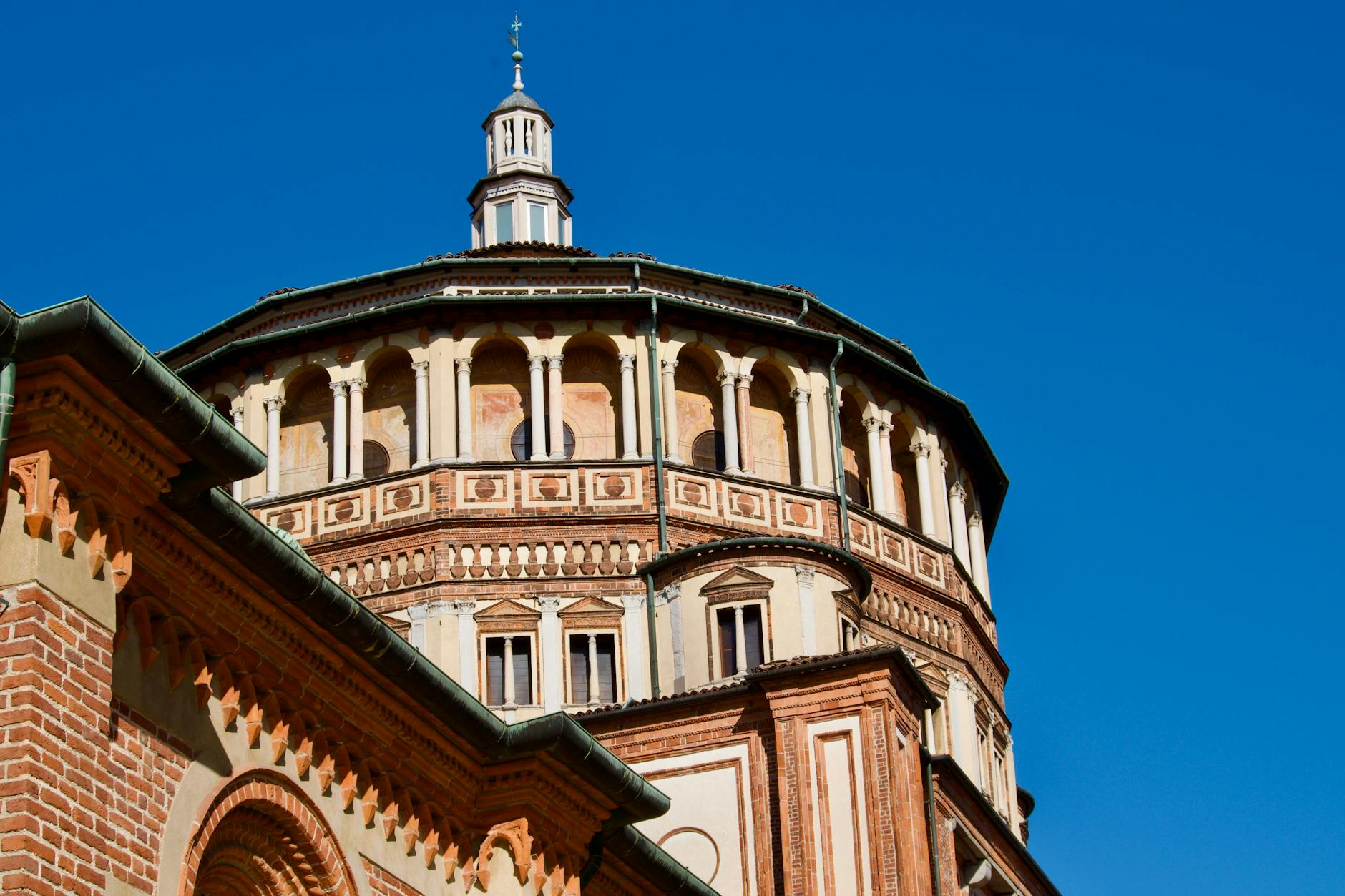
The basilica sits on Corso Magenta in the Magenta-San Vittore district, about 1.4 km west of the Duomo. The closest metro stop is Conciliazione on the M1 (red line), 450 metres from the entrance — a 5- to 6-minute walk. From Conciliazione, exit toward Corso Magenta, turn east, and the dome is visible within two blocks.
Second option: Cadorna, which serves M1, M2, and the suburban rail network. Cadorna is 650 metres from the basilica, an 8-minute walk along Via Boccaccio. If you’re coming in from Malpensa airport on the Malpensa Express, Cadorna is your station — the timing works neatly because the express train deposits you 12 minutes’ walk from the museum.
Tram 16 stops directly in front of the church at the Santa Maria delle Grazie tram stop. From Piazza Duomo, the 16 takes 11 minutes. Walking from the Duomo through the Via Dante pedestrian zone takes about 20 minutes and is honestly the nicest approach if the weather cooperates. For airport connections and tram lines, my Milan transport guide covers ticket types and validation rules.
Arrive at the museum entrance (it’s a separate door from the church entrance — look for the modern glass vestibule to the left of the church facade) by your reservation time minus 30 minutes. There’s a small café inside the entry vestibule serving espresso and bottled water; the bathrooms are on this level and there are none inside the painting room.
What you’ll see in the refectory — a numbered guide to the room
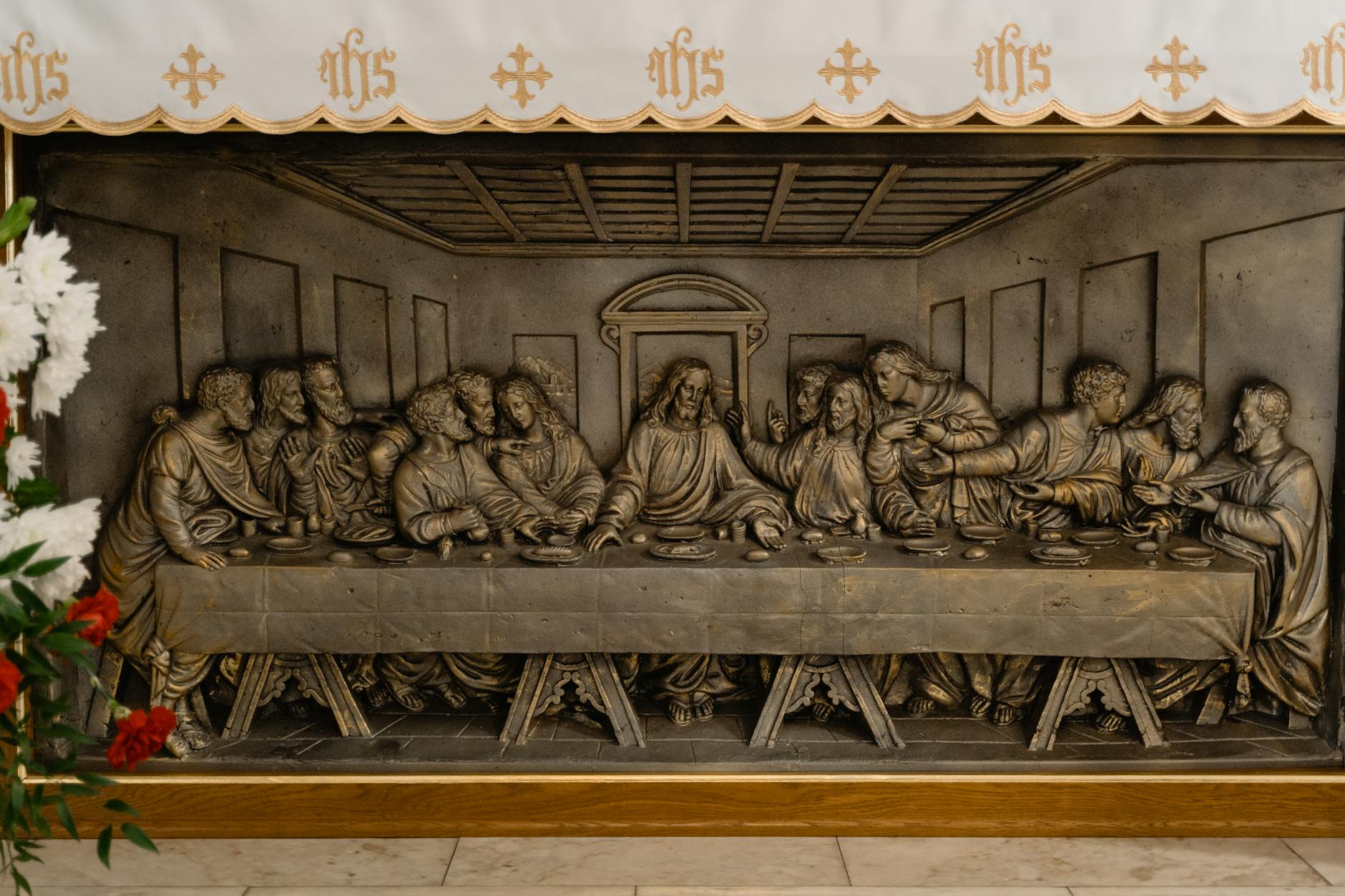
- The composition. Thirteen men at one long table, Christ centred, the disciples in four groups of three on either side. Leonardo painted the moment immediately after Christ announces “one of you will betray me.” The disciples react. That single sentence of narrative is the entire psychological engine of the painting.
- The perspective. Every vanishing line in the architecture points to Christ’s right temple. The painted room appears to extend the refectory itself — the side walls and ceiling coffers are drawn so the painting reads as a continuation of the actual dining hall. Stand back six metres and the illusion locks into place.
- The hand groupings. Look at hands before faces. Peter holds a knife (foreshadowing his ear-slicing moment in Gethsemane). Judas, third from Christ’s right, clutches a small bag — the silver. Thomas points upward, doubting. John leans away. Hands tell the story Leonardo couldn’t fit into expressions alone.
- The food. Eels with orange slices on the table — a Lombard delicacy in Leonardo’s time, not a traditional Passover meal. The bread rolls scattered along the cloth follow the same vanishing-point geometry as the architecture.
- The missing feet. A 17th-century friar cut a doorway through the bottom centre of the painting to shortcut between the kitchen and the refectory, removing Christ’s feet. You can still see the arched cut, now bricked in but visible as a darker rectangle.
- Montorfano’s Crucifixion on the opposite (south) wall. Almost everyone forgets to turn around. Giovanni Donato da Montorfano painted a 50-square-metre Crucifixion in true fresco in 1495, two years before Leonardo finished his Last Supper. Because Montorfano used proper fresco technique, his painting is in better physical condition than Leonardo’s — though restoration is ongoing through 2026. Leonardo himself added portraits of the Sforza dukes (Ludovico, Beatrice, and their two children) to the bottom corners of Montorfano’s wall in oil, and those portraits have entirely vanished. Faint shadows are still discernible if you know where to look — lower left and lower right.
- The damage map. Bring your eye close (within the railing limit) and you can read the painting’s history in its surface: cracks where the plaster contracted, lighter patches where Napoleon’s troops billeted here in 1796 used the wall for target practice, a hairline scar where Allied bombing in 1943 collapsed half the roof — sandbags saved the painting itself.
If Renaissance painting on plaster is becoming a theme for your trip, the Milan churches to visit roundup covers Sant’Ambrogio, San Maurizio (the so-called “Sistine Chapel of Milan”), and a few others where you can see frescoes without the timed-entry stress.
Where to eat in the neighborhood
The blocks around Santa Maria delle Grazie are residential-elegant — apartment buildings, design studios, a few embassies — and the dining options skew toward old-school Milanese and one or two newer spots. Five I rotate through:
- Trattoria del Pescatore — Via Atto Vannucci 5, about 12 minutes’ walk south. Sicilian seafood in a basement room that hasn’t changed since the 1970s. The spaghetti with sea urchin is €22 and worth every cent. Lunch only on weekdays.
- La Brisa — Via Brisa 15, eight minutes east toward the Duomo. A garden courtyard, white tablecloths, slow service, Milanese-Tuscan cooking. The pork shoulder slow-cooked in milk is the dish to order; €28. Reservations essential.
- Pavé Break — Via Carducci 19, four minutes from the basilica. Counter service, sourdough sandwiches, excellent coffee, pastries that the Pavé bakery has been refining since 2013. Sandwich plus coffee €11. Ideal pre-visit fuel.
- Osteria del Treno — Via San Gregorio 46, a tram ride east near the central station. Worth it if you’re already heading that way. A cooperative-run osteria with €15 lunch menus heavy on Lombard staples — risotto Milanese, ossobuco, cotoletta.
- Bar Magenta — Via Carducci 13, the corner spot in the Magenta district. Coffee from 7am, aperitivo from 6pm. The €10 spritz comes with a generous spread of olives, focaccia, and small plates. Not a destination restaurant — a neighbourhood institution.
Practical tips that have saved me grief
- The 30-minute rule is real. The website says 20 minutes early; the staff enforce 30. Arrive earlier than that and you can sit in the small museum bookshop area, which is climate-controlled and has decent coffee.
- No photos. None. Phones can be out, but cameras are confiscated at security if you try to bring a DSLR. There’s no “discreet photo” workaround — staff watch the room actively and have escorted people out mid-visit. Buy the official book in the gift shop on the way out (€18) for proper reproductions.
- Bring photo ID. The name on your booking must match the ID. They check. If you booked under your maiden name and your passport shows your married name, bring both documents or you will be refused entry.
- Miss your slot, miss the visit. Refunds are not issued for no-shows or late arrivals. Rebooking is theoretically possible if there is availability the same day, but in practice the day is sold out so the answer is no. Cancellations are accepted up to 48 hours in advance with a partial refund.
- Storage. Free lockers for bags larger than a tote. No food or drink inside the chambers or refectory.
- Wheelchair access. Full accessibility from the entrance through to the painting room. Notify the museum at booking so they can plan the door sequence.
- Children. Under-six is doable if they’re calm; the dehumidifying chambers can spook toddlers because of the door noise. School-age and up usually find the painting genuinely interesting once they know the betrayal story.
Best time slots: weekday morning vs weekend, season
The museum is open Tuesday through Sunday, 8:15 to 19:00 (last entry 18:45). Closed Mondays, January 1, May 1, December 25. My ranked preferences:
- Tuesday or Wednesday, 9:30 to 11:00. Smallest groups (often 30 rather than 40), staff are fresh, the morning light through the high windows is even. This is the slot to book.
- Tuesday or Wednesday, 17:00 to 18:30. Second best — late slots are less popular, sometimes available a few days out, and the artificial lighting is consistent.
- Saturday or Sunday, anytime. Crowded, queues at security, groups always at capacity, but if it’s your only window, take it.
- Avoid: 11:30 to 13:30 weekdays — coach tours cluster here. School-group season (October to May) sees occasional larger student bookings.
Seasonally: April–June and September–October are the busiest months for tickets. November, January (after Epiphany), and February are easier. Italian August empties Milan of locals and is paradoxically harder than expected because tourists fill the gap.
Combine with nearby attractions
The Last Supper visit takes 90 minutes including arrival buffer. Build the rest of the day around it:
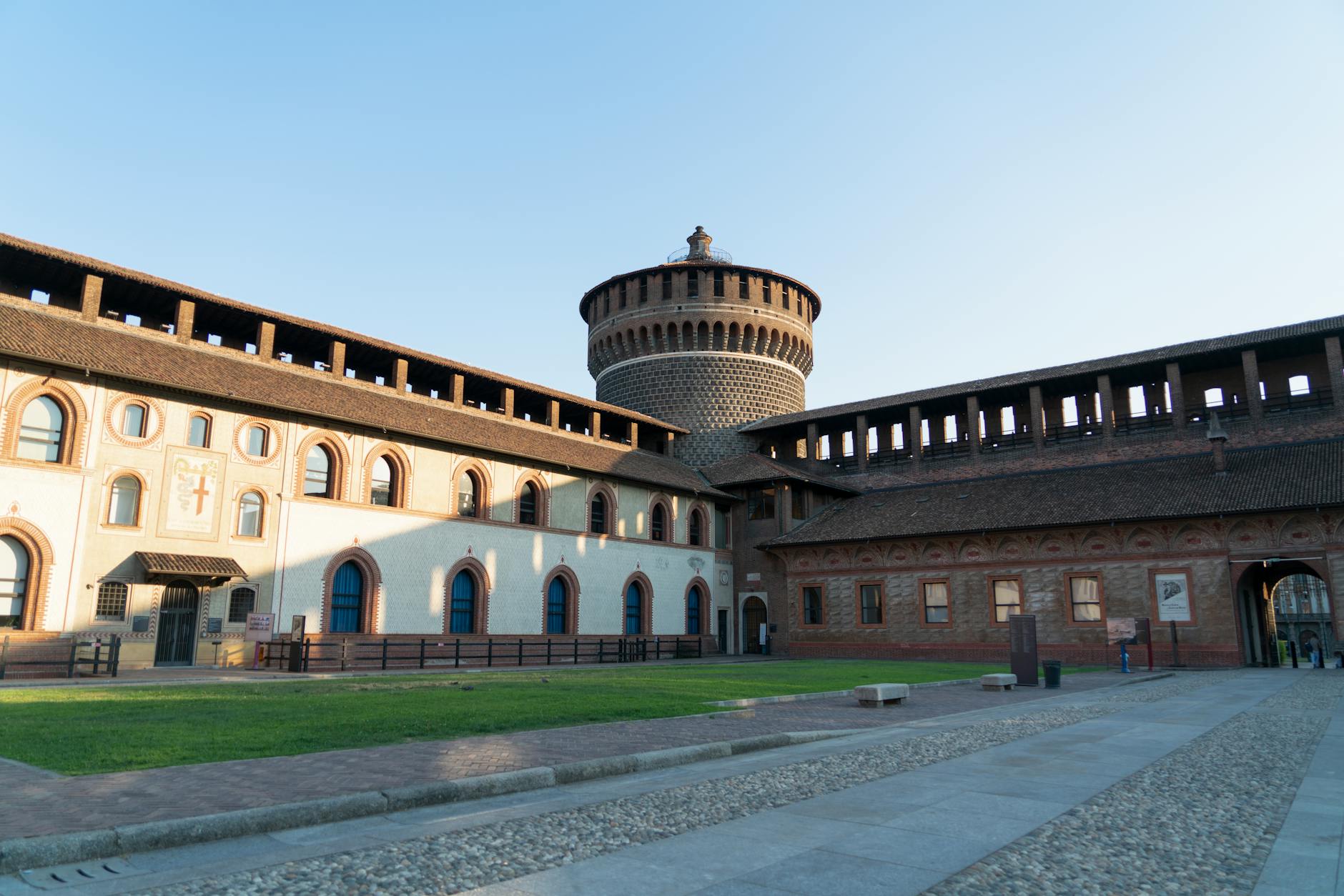
- Castello Sforzesco sits 900 metres east of the basilica — a 12-minute walk through Parco Sempione. The castle’s Pinacoteca holds Michelangelo’s last sculpture, the unfinished Rondanini Pietà. Free Tuesdays after 14:00. My Castello Sforzesco guide covers the museum complex.
- Sant’Ambrogio Basilica is 700 metres south, a 9-minute walk. Founded by St. Ambrose in 379 AD, it’s the oldest church in Milan and the prototype for Lombard Romanesque. Free entry, open daily.
- Duomo is 1.4 km east, 18 minutes on foot. Pair an afternoon Last Supper slot with morning Duomo rooftop access, or vice versa. The Milan Duomo guide covers rooftop ticket tiers, which themselves require advance booking in 2026.
- La Scala is 1.7 km east. Backstage tours run hourly and last 45 minutes — see the La Scala Milan guide for the booking quirks.
- Bosco Verticale in Porta Nuova is a 20-minute metro ride if you want a contemporary palate-cleanse after the Renaissance morning. Details in the Bosco Verticale guide.
For a complete one-day plan that pairs the Last Supper with the Duomo and an aperitivo finish, see Milan in one day. If you’re staying longer, the things to do in Milan roundup and the Milan museums guide cover the city’s deeper layers.
FAQ
How far in advance should I book Last Supper Milan tickets?
For visits in peak season (April through October), book the day tickets release — typically two months before the start of the relevant three-month block. For May–August 2026, that was March 24, 2026 at noon Rome time. For November to early March, you can often find tickets two to four weeks out. The single biggest mistake I see is travellers assuming they can book a week before — almost never works without paying €60+ for a guided tour.
Is the Last Supper in Milan worth the trouble?
Yes, with one caveat. If you’ve never seen any Renaissance painting in person and don’t care about art history, 15 minutes of staring at a faded mural may feel anticlimactic. If you have any interest in the period, the experience of standing in the actual refectory — the same hall where Dominican friars ate while Leonardo worked above them — is genuinely affecting. The scale is what surprises everyone. Reproductions flatten it into a magazine image. The wall is enormous.
Tour or ticket-only — which is better?
For first-time visitors, a guided tour is worth the extra €40 to €50. The 15 minutes inside go faster than you think and a guide who decodes the gestures, the perspective, and the restoration history before you enter changes what you see. For repeat visitors or art-history readers who’ve done the homework, ticket-only is fine and cheaper. The official museum tour at €3.50 supplement is the sweet spot if you can grab it.
Can I see the Last Supper without a reservation?
No. There is no walk-up entry, no day-of ticket counter, no waiting list at the door. Every visitor — including infants — must hold a reserved time-slot ticket. Don’t show up hoping. People do, and they leave disappointed.
What if my tickets are sold out on the official site?
Check Wednesday at 12:00 Rome time for the weekly drop of next-week tickets. If that fails, book a guided tour through Tiqets, GetYourGuide, or Viator — these operators have allocated seats that bypass the public booking queue. Expect €55 to €95. Avoid “private listings” on resale sites; the museum requires name-matching ID, and transferred tickets get rejected at the door.
How long does the entire visit take?
About 90 minutes door to door: 30 minutes early arrival, 5 minutes security and dehumidifying chambers, 15 minutes in the refectory, 20 to 30 minutes in the small museum, bookshop, and the basilica next door (worth the detour — Bramante’s apse is a separate architectural attraction). Block out two hours from your day.
Final thoughts
The Last Supper visit is the kind of cultural pilgrimage that demands more planning than the actual encounter — two months of booking strategy for 15 minutes in a quiet room. That ratio sounds absurd until you’re in the refectory and the door seals behind you and the painting is suddenly fifteen feet in front of you and nothing else is in the room except 35 strangers holding their breath. The frustration of booking dissolves immediately. Plan for the standard adult €15 ticket through lastsupper.shop, set a calendar alarm for the next release window, pair the visit with a morning at Castello Sforzesco or Sant’Ambrogio, and eat well in the Magenta district afterward. For deeper context on what else fills the city around this single, fragile wall, the Milan attractions guide is the place to keep reading.