This is a Milan student travel guide for the kind of student trip where you’re sleeping in a hostel near Centrale, eating €5 lunches, and trying to see the Last Supper without paying full freight — not a how-to on signing your Erasmus housing contract. If you’re already enrolled at Bocconi or Politecnico, you know more about codice fiscale paperwork than I do. What I can help with is the four or seven or twenty-one days you’ve got in the city as a visiting student, and how to make €40 a day cover food, transport, and a real museum or two. Milan looks expensive from outside. It is not, if you know where to flash an ID.
There is a dedicated student rate for the April furniture fair, which makes it one of the better value days out in the city — see our Salone del Mobile guide.
Most of what makes Milan affordable for students is invisible from the standard guidebook. The €15 Last Supper ticket drops to €2 with an EU passport and a date of birth between 2001 and 2008. The Pinacoteca di Brera, which would cost a normal adult €15, costs the same €2 if you’re 18–25 and EU. The Museo del Novecento — Italy’s best 20th-century art collection, perched right on Piazza del Duomo — is free for under-25s, full stop, no student card required. These are not obscure deals. They’re posted on the museum websites in Italian, half-translated, and most travelers never see them. This guide is built around what I actually use and verify when friends visit, plus what I’d tell my own younger sibling if they were spending a week here on a tight budget.
Which student IDs actually unlock discounts in Milan
There are three cards in play, and they don’t do the same things. Understanding which one to flash at which counter saves you both money and the small humiliation of being told “no, signora, questa non vale”.
The ISIC card (International Student Identity Card) is the global standard — roughly €18 in most countries, valid one year, issued against proof of full-time enrollment. In Milan it gets you 5–10% off FlixBus, discounts on Trenitalia in some fare classes, and small percentages off chain restaurants and select attractions. It’s worth having if you’re traveling more broadly across Europe. For Milan alone, it’s not the heavy hitter.
Your EU national ID or EU passport is the real key. Italian state museums (the ones run by the Ministry of Culture) offer the famous tariffa ridotta — a reduced €2 ticket — to all EU and EEA citizens aged 18–25. That includes the Pinacoteca di Brera, the Cenacolo Vinciano (Last Supper), and Castello Sforzesco’s state-run portions. Under-18s of any nationality get in free to state museums, which is one of the better-kept secrets if you’re traveling with a younger sibling. Non-EU students don’t get the €2 rate. You pay adult prices unless the specific museum has its own student discount.
Your university ID (the actual plastic card from your home institution) covers a third category: privately run museums, university museums, and some discount partnerships. Triennale Milano, the Museo del Novecento (free anyway under 25), and several private galleries accept a foreign university ID for student rates. Carry it. Show it first. If they say no, switch to ISIC or passport.
A practical move: keep all three in your wallet for the week. The cost-benefit on the ISIC card swings positive if you’re planning even one FlixBus trip across the Alps. For Milan-only visitors, your passport is doing the heavy lifting.
Free museums for under-18s and EU students under 25
If you assemble your week around the museums that are free or near-free for your age bracket, you can see most of what matters in Milan for under €15 in admissions total. The list, verified for 2026:
- Museo del Novecento — Free for under-25s of any nationality, every day. The collection includes Boccioni’s Forme uniche della continuità nello spazio and a Picasso, and the top-floor window framing the Duomo is the best free photograph in Milan.
- Pirelli HangarBicocca — Always free for everyone. Contemporary art in a converted industrial hall, with Anselm Kiefer’s Sette Palazzi Celesti as the permanent draw. Take the M5 lilac line to Bicocca.
- MUDEC (Museum of Cultures) — Permanent collection is free; you only pay for temporary shows. Worth the tram out to Tortona.
- Pinacoteca di Brera — €2 for EU citizens 18–25, free for under-18s, free for everyone on the first Sunday of the month (Domenica al Museo).
- Cenacolo Vinciano (The Last Supper) — €2 for EU 18–25, free under 18. The catch is reservations. Tickets release three months in advance on quarterly Wednesdays at noon Italian time, and the cheap student slots vanish in minutes. Set a calendar reminder.
- Civic museums (Castello Sforzesco’s interior museums, Museo Archeologico, GAM, Casa Manzoni) — Free entry on the first and third Tuesday of each month from 14:00 onwards, plus the first Sunday morning. The free Tuesday afternoon slot is the underrated one — fewer crowds than Sunday.
The umbrella program to know is Domenica al Museo, the national initiative that opens all state museums for free on the first Sunday of every month. In Milan that means Brera, the Cenacolo (still requires reservation), and Palazzo Reale’s permanent rooms. Plan one Sunday around it.
For a deeper breakdown of what’s permanently free, I keep a running list at free museums and attractions in Milan — useful cross-reference when something on the official sites changes.
Student-priced rates at the marquee attractions
Some of Milan’s biggest-ticket sights aren’t free even with your passport, but the reduced rates are good enough that I’d rather pay them than skip the building. The 2026 numbers:
- Duomo di Milano — The “Duomo Pass Lift” combo (cathedral + rooftop terraces by elevator + archaeological area + museum) is €30 for adults, €15 for under-26s with valid ID. The stairs version is €20 adult, €10 reduced. I’d take the stairs both for the price and because the climb is part of the experience. Verify exact pricing the morning of — they adjust seasonally.
- The Last Supper — €15 standard, €2 for EU 18–25, free under 18 (booking fee separate, around €2). Same 15-minute viewing slot, same Santa Maria delle Grazie refectory. Book at cenacolovinciano.org the second it opens; do not pay €60 to a third-party reseller.
- Teatro alla Scala Museum — €12 adult, €8 reduced for students under 26 with ID. Includes a peek into the actual auditorium from a box, schedule permitting. Skip the guided tours, take the audio guide, save €15.
- Castello Sforzesco — Entry to the castle grounds is free. The interior museums (Pinacoteca, Egyptian Museum, Michelangelo’s Pietà Rondanini) are €5 adult, €3 reduced, and free on the Tuesday/Sunday windows above. The Pietà Rondanini alone is worth the visit — it’s the unfinished sculpture Michelangelo was carving the week he died.
- Pinacoteca Ambrosiana — €17.50 adult, €12 student under 26. This is the privately run one that holds Leonardo’s Codex Atlanticus and Caravaggio’s Basket of Fruit. Worth it once if you care about Leonardo’s notebooks.
If you’re trying to figure out whether a city pass makes sense, the short answer for students is usually no — the discounted individual tickets beat the bundles for under-26 travelers. I’ve worked through the math in detail at are Milan city passes worth it.
The best student neighborhoods to walk through
Milan has three areas where the student population shapes the streetscape, and each is worth at least an afternoon even if you’re not staying nearby.
Città Studi is the engineering quarter — Politecnico’s main campus, plus the science faculties of Statale. The streets between Piazza Leonardo da Vinci and Via Pacini are a buffet of €4 kebab places, €1 espresso bars, and 24-hour photocopy shops. Saturday afternoons it empties out; Tuesday at 13:00 the bars overflow onto the sidewalk. I’ve written more on this neighborhood at the Città Studi guide — it doesn’t get on tourist maps, which is precisely why you should walk through it.
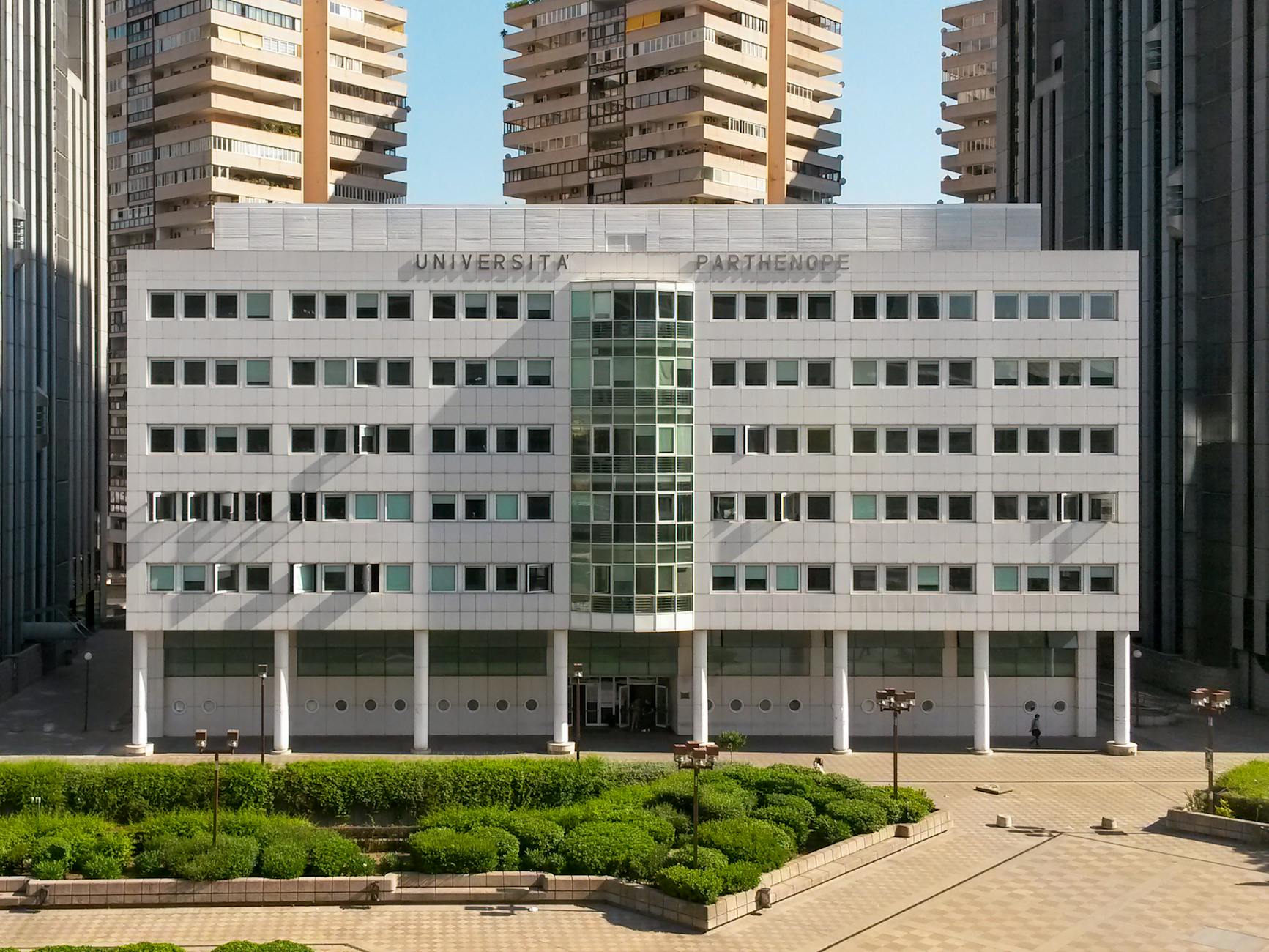
Bocconi area sits south of the center, between Porta Romana and Porta Ticinese. The campus itself — modernist concrete and glass, with a free public sports park (Parco Ravizza) attached — is open to walk through. The streets around it tip more upmarket than Città Studi (this is where the international finance students live), but you’ll still find cheap panzerotti at Luini-style joints and decent €6 pizza al taglio. The Fondazione Prada is a 15-minute walk east; student rate is €10.
Lambrate is the wild card — northeast Milan, originally a Fiat factory district, now a mix of art studios, design-school annexes, and immigrant-owned restaurants where €8 buys a full plate of biryani or pho. The neighborhood comes alive during Salone del Mobile in April, but at any time of year it’s the best place in Milan to eat ethnic food cheaply. Take the M2 green line to Lambrate FS.
Where to eat in Milan on a student budget
Food is where student travel in Milan either succeeds or hemorrhages money. Three rules: never eat dinner in the immediate Duomo radius, never order a coffee while seated unless you’ve checked the table-service surcharge, and learn the word tavola calda (literally “hot table” — a self-service hot lunch counter, usually under €10).
For lunch, the cheapest legit option is the university mensa. If you can show a foreign university ID — even an ISIC — the EduCatt-run mensas at Cattolica (Largo Gemelli) and CIDIS at Statale will sometimes serve you at the external rate, which is around €7.50 for a first course, second course, side, water, and dessert. The Politecnico mensa at Leonardo campus is stricter; you usually need an active Polimi credential. Worth trying.
Outside the mensa system:
- Spontini — Milan’s local pizza-by-the-slice chain. A thick slab of margherita is around €4.50. Branches at Via Spontini, Corso Buenos Aires, and a half-dozen other locations.
- Luini — The 100-year-old panzerotto shop behind the Duomo. A fried, stuffed half-moon of dough for €3.50. Queue moves fast.
- Princi — Bakery chain, slightly fancier, but a focaccia slice and a coffee runs under €6.
- Esselunga ready meals — The supermarket’s prepared-food counter has €5 lasagna trays, €4 cotoletta-and-potatoes, and €2 yogurts. The Esselunga at Viale Piave is open until 22:00.
- Kebab row on Via Padova — €5–6 buys a full kebab plate. The neighborhood is solid; ignore anyone who warns you off it.
The full deep-dive on cheap eating, including the late-night options near the universities, is at cheap eats in Milan.
Aperitivo as dinner: the €10 strategy that actually works
This is the move that defines student dining in Milan. Aperitivo is the early-evening tradition — roughly 18:30 to 21:00 — where you pay €8 to €12 for a drink and get unrestricted access to a buffet. At the right bar, the buffet is dinner: pasta, focaccia, cheese, cured meats, sometimes risotto. One drink, one plate (or two, no one is counting), and you’ve eaten for under €10.
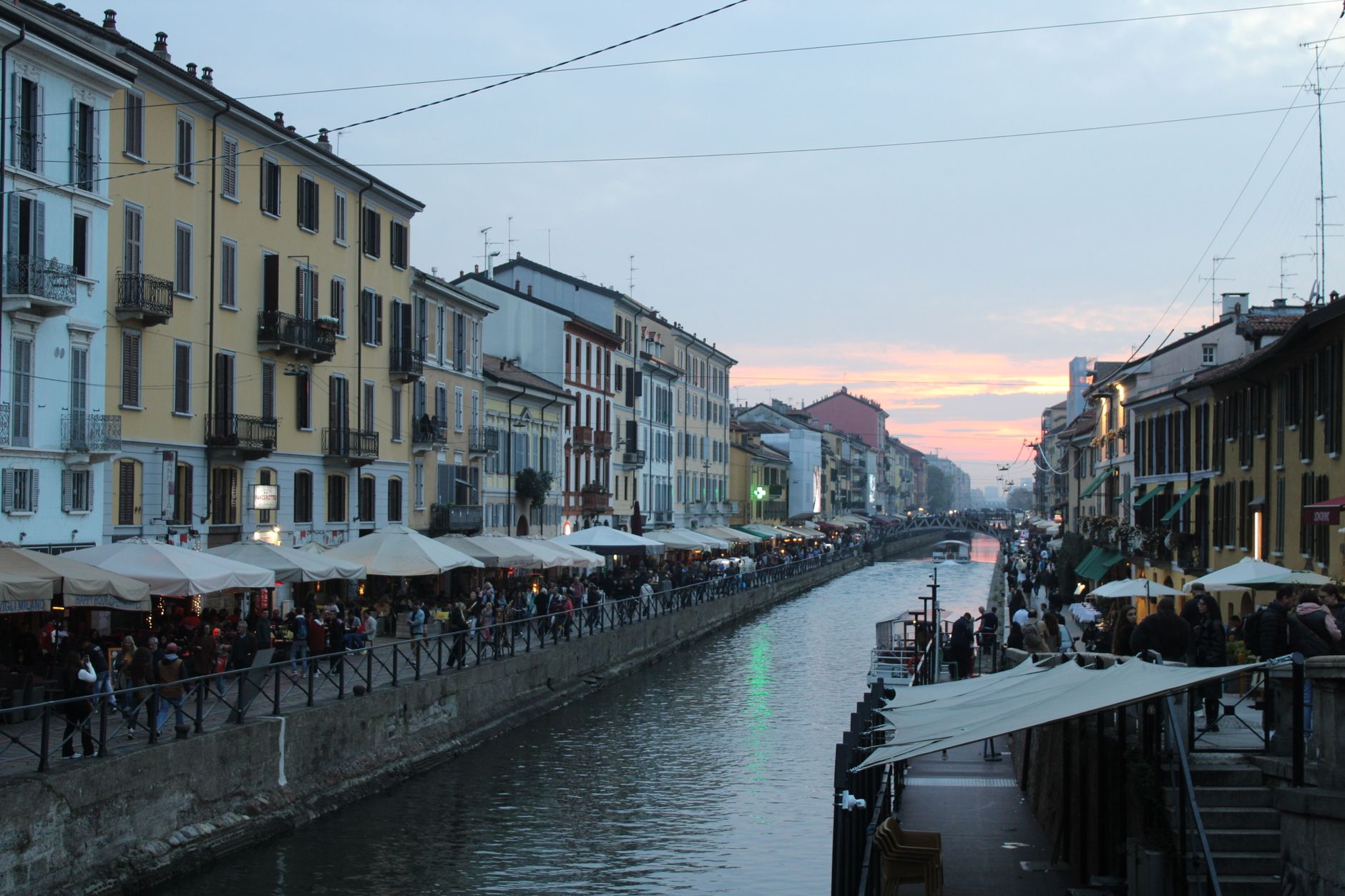
The Navigli district along the canals is the spiritual home of aperitivo and the most reliable for student-friendly prices. A few that have held up:
- Madeira (Ripa di Porta Ticinese) — €8 weekdays, full buffet, slightly chaotic crowd. The bar most likely to make a student trip feel like a real night out.
- Mag Cafè (Ripa di Porta Ticinese 43) — €10–12, better cocktails, smaller stuzzichini spread. Worth it once for the atmosphere.
- Bond (along the Naviglio Grande) — €10, dependable buffet, less of a scene.
- La Ringhiera — One of the biggest buffets on the canal. Get there at 18:30 before the hot dishes vanish.
Outside Navigli, Isola has a younger Erasmus crowd, and the bars around Porta Venezia (especially along Via Lecco) skew gay-friendly and affordable. I’ve kept a working list at the best happy hour and aperitivo deals in Milan.
The thing nobody tells you: most bars expect you to keep buying drinks if you stay past 21:00, and the polite move is to leave once you’ve finished your one. Don’t camp.
Student-friendly nightlife: where the Erasmus crowd goes
Milan’s clubs are aggressive about door prices — €20–25 covers are normal — but the workarounds are real if you know the rhythm.
Tuesdays in Navigli are the unofficial student night. Bars along the Naviglio Grande run €5 drink specials, and the streets fill with Bocconi and Cattolica students who can’t go out on weekends because of Wednesday classes. No cover at most bars; you queue for drinks rather than entry.
Free entry before midnight is the standard student hack. Most clubs — including Old Fashion in Sempione Park, Magazzini Generali in Porta Romana, and Hollywood in Corso Como — let you in free if you arrive before 00:00, often with a drink-purchase obligation. The Italian Erasmus networks (ESN Milan, Erasmus Place) post guest-list links on Instagram for specific Thursdays; getting on the list cuts entry to free or €10 with a drink.
University-affiliated nights rotate. The festa Bocconi at various clubs, the Politecnico engineering parties at Tunnel near Centrale, and Cattolica’s events at venues around Sant’Ambrogio all run on academic-year calendars. Check the relevant Facebook groups — yes, Italian students still use Facebook for this — before you arrive.
The full nightlife breakdown, including where to go if clubs aren’t your thing, is at the Milan nightlife guide.
Getting around Milan: the €22 transport pass that changes the math
If you’re under 27 and staying more than a week, the ATM under-27 monthly pass is the single best-value purchase of your trip. €22 for a calendar month of unlimited metro, tram, and bus. That’s roughly what 12 single tickets would cost (each single is €2.20). To get it, you need to register for a personal ATM card with the under-27 profile — the card itself is €10, valid four years, then you load the €22 monthly pass on top. You can do this at the ATM Point in Duomo station, but the queue is brutal; the Cadorna and Centrale ATM Points move faster.
The catch: you’ll need an Italian codice fiscale to register, which short-term visitors usually don’t have. If you’re here for under a month, the math tips back toward single tickets or the 3-day tourist pass (€13.50) or weekly carnet. I’ve walked through every option at the Milan transport guide.
For the short trips the metro can’t reach efficiently:
- BikeMi — Milan’s bike share. Daily pass €4.50, weekly €9. The first 30 minutes of each ride are free, then a small per-half-hour fee. Works well for crossing the center.
- Bolt and Lime scooters — Both run student promotions through partnerships with ESN; check your Erasmus network for active codes. Without a promo, expect €1 to unlock plus €0.20–0.25 per minute. Use them for the last mile from the metro to your hostel; don’t ride them across town.
- Walking — The historic center is 2km across. Most of your day-to-day movement should be on foot.
Cheap day trips that work on a student budget
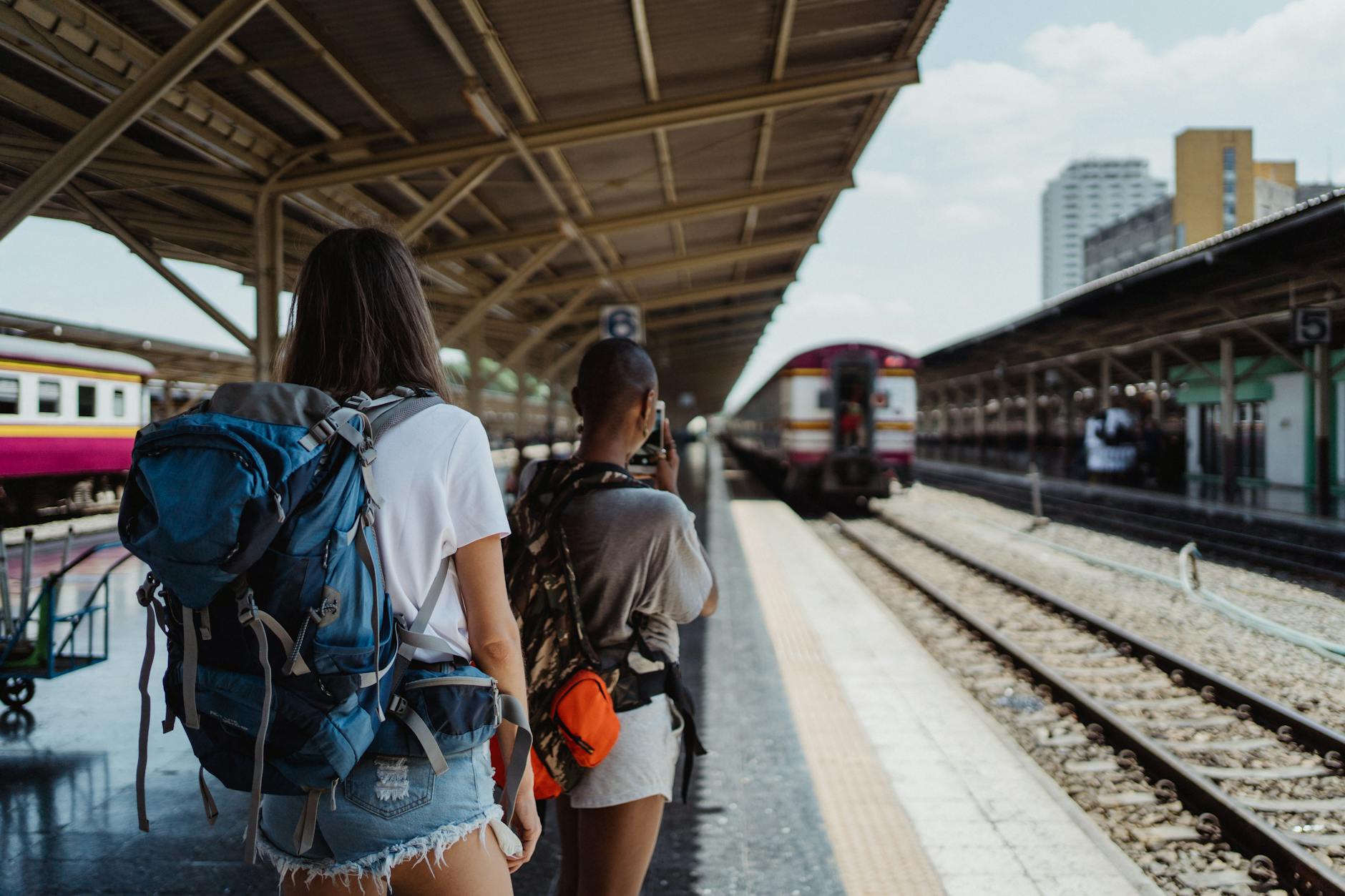
Bergamo is the day trip from Milan I keep going back to. Most travelers spend three days in Milan and treat day trips as an afterthought. They miss the better option an hour east — walled, medieval Bergamo Alta, which feels like the version of Italy you came to see, minus the cruise crowds of Cinque Terre. Trenord runs Milano Centrale to Bergamo in about 50 minutes for €5.50 on the regional service. I usually catch the 8:33.
Once you’re there, the funicular up to the walled città alta is €1.50 each way, the views from the Venetian walls are free, and lunch in the upper town runs €12 for a plate of casoncelli at a trattoria off the main square. You can do the whole day for under €25 including train, funicular, lunch, and a coffee.
Other day trips that work on a student wallet:
- Como — €4.80 one way on the regional from Milano Cadorna or Centrale, around 40 minutes. The town itself is small; the real move is the free hiking trails above Como (the Brunate funicular is €3.50, or walk up in 90 minutes). The lake is the postcard, but a swim from the public beach at Lido di Villa Olmo costs nothing.
- Pavia — €4 round trip, 25 minutes. The Certosa monastery, free entry, is one of the great unsung sights of Lombardy. Pavia itself is a riverside university town smaller than Milan and worth a walk.
- Verona — €13 each way on regional, around 90 minutes. Doable as a day trip if you start at 7 a.m. Roman arena, Romeo and Juliet kitsch, real medieval streets.
- Turin — €17 with a booked Italo or Frecciarossa promo, 1 hour. The Egyptian Museum (the second-largest collection outside Cairo) has student rates.
For broader budget planning across the whole trip, I keep a running breakdown at how much does a trip to Milan cost.
Practical tips that save students money in Milan
The small operational stuff that adds up:
- Luggage storage at Milano Centrale — KiPoint, the official left-luggage at Centrale, charges €6 for the first five hours, then €1/hour up to 12 hours. Cheaper third-party storage at Stasher and Radical Storage runs €5/day total. Use one of those, then take a daypack into the city.
- Biblioteca Sormani — Milan’s public central library, free, Wi-Fi, plug sockets, beautiful 17th-century reading rooms. The unofficial best free workspace in the city if you need to handle remote-work hours during your trip. Open until 19:00 weekdays, closed Sundays. Corso di Porta Vittoria 6.
- BASE Milano — The cultural center in Tortona has a free co-working area in the front cafe. Buy a €2 espresso and stay for hours.
- Free Wi-Fi — Milan’s OpenWiFiMilano network covers most of the historic center and major parks. Sign up once with a phone number; works at all subsequent hotspots.
- Public bathrooms — Almost nonexistent in Milan. Use a museum, a McDonald’s (the Duomo branch never asks questions), or buy a €1 espresso at the bar nearest you.
- Tap water — Drinkable. Milan’s water is some of the best in northern Italy. Carry a refillable bottle and use the green vedovelle fountains in every park.
- Pharmacies — The 24-hour pharmacy at Stazione Centrale is the one to know for late-night ibuprofen runs.
If you’re still figuring out where to sleep, the cheapest legitimate hostel beds run €25–40 a night in shared dorms. The detailed accommodation breakdown is at budget accommodation tips for Milan. And the larger parent article tying all of this together is the budget Milan guide.
Frequently asked questions
Is Milan a good city for students?
Yes, with caveats. Milan has the largest student population of any Italian city — roughly 200,000 enrolled across Bocconi, Politecnico, Statale, Cattolica, IULM, and a dozen smaller institutions — and the discount infrastructure reflects that. Public transport is cheap with the under-27 pass, museums are heavily discounted for EU 18–25, and aperitivo culture lets you eat dinner for €10. The downside is rent and any non-discounted entertainment (clubs, restaurants, taxis), which run 30–40% above Rome prices. For visiting students on a short trip, the math works out well.
What discounts can students get in Milan?
The headline numbers: €2 reduced entry to state museums (Pinacoteca di Brera, Last Supper) for EU citizens 18–25, free entry under 18; €22 monthly transport pass for under 27 with ATM personal card; reduced rates of roughly 50% at major attractions like Teatro alla Scala museum, the Duomo terraces, and Castello Sforzesco interior museums; aperitivo dinners for €8–12; mensa universitaria meals around €7.50 with a student ID. Non-EU students miss out on the €2 museum rate but still qualify for most other discounts.
Where do students hang out in Milan?
Three neighborhoods dominate. Città Studi (around Politecnico, M2 Piola) is the engineering and science crowd, cheap eats, busy weekday evenings. Navigli (M2 Porta Genova) is the nightlife and aperitivo heart, mixed Italian and international student crowd. Around Bocconi (Porta Romana to Porta Ticinese) is the business school set, slightly more polished, with the best food on the southern edge of the historic center. Isola, north of Centrale, is the up-and-coming Erasmus zone with more affordable rents.
Can students use Milan public transport for free?
No — there’s no free transport for students in Milan, unlike some German or Scandinavian cities. The closest equivalent is the under-27 monthly pass at €22 (versus €39 standard), or the under-14 free travel rule for kids with a paying adult. Disabled students with appropriate documentation may qualify for free or reduced passes through ATM’s accessibility programs. For most student visitors, €22/month or €2.20 per single ticket is the operative cost.
Is Milan expensive for students compared to other Italian cities?
Milan is the most expensive city in Italy for accommodation and restaurants, but with student discounts in play it’s surprisingly competitive on cultural and transport costs. A week-long student trip on the budget end — hostel dorm, mensa lunches, aperitivo dinners, one or two paid attractions, under-27 transport pass — runs roughly €350–450 all in. The same week in Rome would cost €280–380, mostly thanks to cheaper accommodation. Florence sits in between. Milan’s advantage is the density of free and €2 museums and the under-27 transport discount, which partly offsets higher hostel prices.
Do I need to speak Italian to study or travel as a student in Milan?
For a short student trip, no — Milan is the most English-friendly city in Italy by a wide margin. Museum staff, hostel reception, restaurants in the center, and most under-40 service workers will switch to English. The exceptions are smaller trattorias in residential neighborhoods, the older ATM ticket office staff, and bureaucratic interactions (which short-term visitors avoid anyway). Learn buongiorno, grazie, il conto per favore, and the names of any dishes you want to order, and you’ll do fine.
Final thoughts
The thing I’d want a 21-year-old visiting Milan on a budget to know is that the city is far cheaper than its reputation, but the savings are gated behind small actions: pulling out an EU passport at the museum counter, booking the Last Supper three months ahead, walking to Spontini instead of sitting down at a tourist trattoria, learning that Tuesday in Navigli costs half what Saturday does. None of this is hidden — it’s just diffuse. Milan rewards students who read the fine print and punishes those who don’t.
If you’ve got the ID, the patience to book ahead, and the willingness to eat your dinner standing up at an aperitivo bar, four days here will run you maybe €200 in non-accommodation costs while showing you a city most casual visitors miss entirely. That’s the trip worth taking.