The first time I tried to do Milan in 48 hours, I made every mistake on the list: arrived Saturday at noon, didn’t book the Duomo rooftop, assumed I’d “wing” The Last Supper. I spent half of Day 1 in a ticket queue. A good 2 days in Milan itinerary is really a logistics problem disguised as a travel article — Milan rewards people who pre-book three things and ignore the rest of the guidebook noise. After roughly a dozen weekend trips here since 2019 (I live two hours away by train), this is the version I now hand to friends who text me on a Wednesday saying they’ve booked Friday-to-Sunday and have no plan.
Wondering whether two days is the right call at all? Our guide to how many days you need in Milan compares each length side by side.
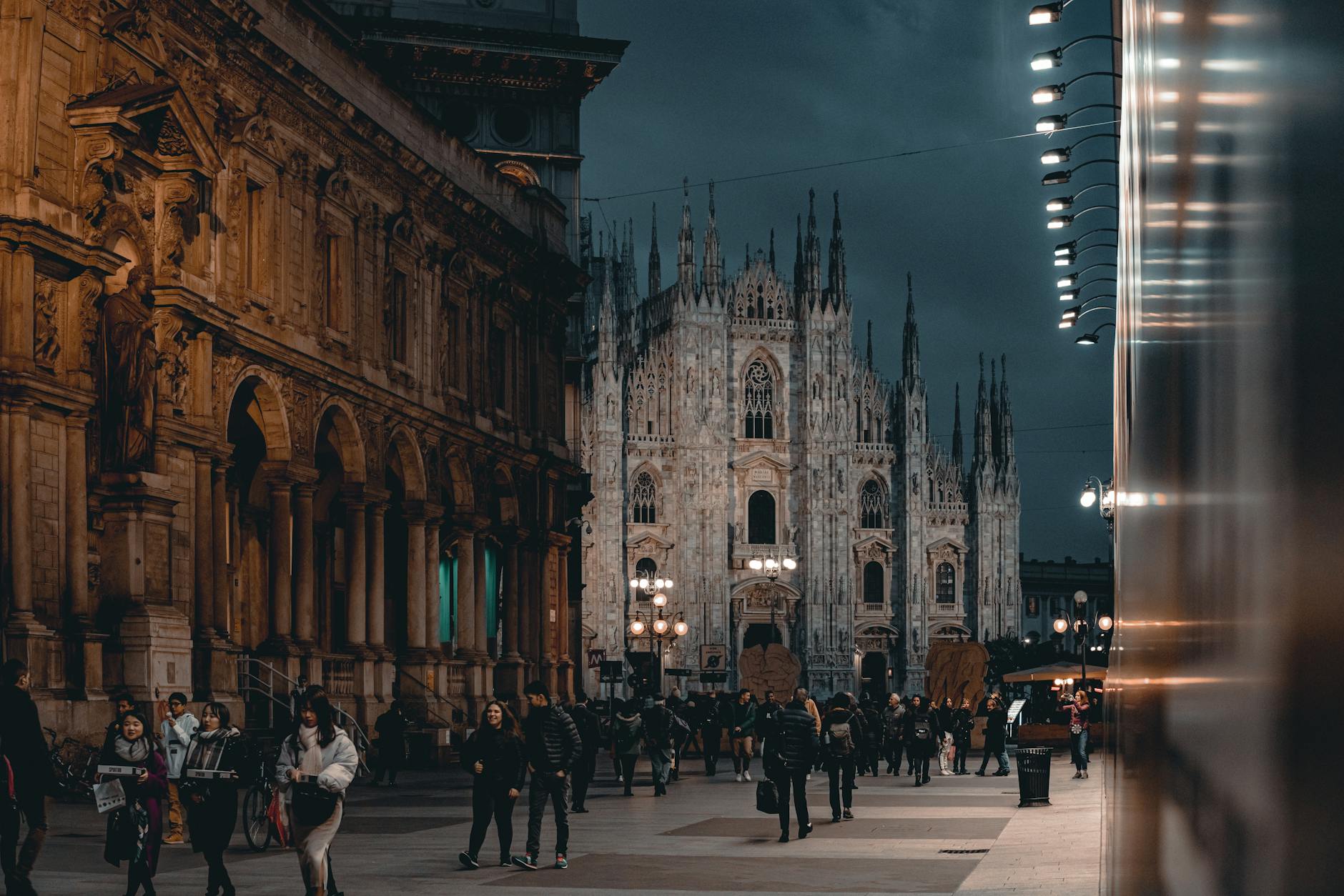
The short version: arrive Friday night, hit the Duomo rooftop at opening on Saturday, do Brera and aperitivo Saturday evening, see The Last Supper at a pre-booked Sunday morning slot, and finish along the Navigli before your train or flight out. The long version, with prices in 2026 euros, train times I actually use, and the restaurants I’d send my own parents to, is below.
Why 48 hours in Milan is enough — and what you’ll have to skip
Milan is dense in a way that flatters short trips. The Duomo, Galleria, Scala, Brera, and Sforzesco are all within a 25-minute walk of each other. You can do the essential historic core in a single well-paced day, which is more than I can say for Rome or Florence. The metro is clean, fast, and the new M4 blue line (fully operational since late 2024) finally connects Linate airport to the city center in around 12 minutes — a game-changer competitor itineraries written pre-2024 still don’t mention.
What a weekend Milan trip won’t give you: time for the Last Supper plus a serious museum afternoon plus Lake Como. You have to choose. If you want a proper day trip you should be reading our 3 days in Milan itinerary or the Milan and Lake Como itinerary instead. For a fuller week, the one-week Milan itinerary covers Bergamo, Como, Verona, and the Franciacorta wine region. With only 48 hours, I’d skip Fondazione Prada (excellent, but it eats four hours including transit), the Cimitero Monumentale (worth a full morning), and the football stadium tour at San Siro (out by 2027 anyway, before the new build).
Getting in: Friday evening arrivals from each Milan airport
Milan has three airports and they behave differently. Get this part right and Friday night is dinner; get it wrong and Friday night is a €95 taxi argument.
Malpensa (MXP): the long-haul airport, about 50 km northwest. The Malpensa Express to Milano Centrale is €15 one-way as of 2026, runs every 30 minutes from roughly 5:30 a.m. to 12:20 a.m., and takes 51 minutes. Buy from the Trenord machines or the app — don’t queue at the manned desk. If your flight lands after midnight, the night bus is €10 and takes about 90 minutes. I never bother with the Malpensa Shuttle bus during the day; the train is faster and same-priced.
Linate (LIN): the close-in city airport. As of 2024, the M4 metro line connects Linate directly to Milan in 12 minutes for €2.20 — the same as any city metro ride. Get off at San Babila for the Duomo area or Sant’Ambrogio for the western half of the city. This is the easiest airport arrival of any major European city right now, and the reason I always pay slightly more to fly LIN over MXP when I can.
Bergamo-Orio al Serio (BGY): Ryanair’s hub, about 50 km east. Take the Terravision or Orio Shuttle bus to Milano Centrale — €10, around an hour. There’s no train. For more on getting around once you arrive, see our Milan transport guide.
If you’ve flown into Centrale via Frecciarossa or Italo from elsewhere in Italy, you’re already in the city — take the M3 yellow line two stops south to Duomo, or M2 green to Cadorna for the western side. A single-ride urban ticket is €2.20; a 24-hour pass is €7.60 and worth it if you’re moving more than three times in a day.
Day 1 (Saturday): Duomo at opening, Brera by lunch, aperitivo by sunset
8:00 a.m. — Coffee on Via Torino. Skip the hotel breakfast and walk to Pasticceria Marchesi 1824 at Via Santa Maria alla Porta 11A (the original, not the Prada-owned Galleria branch). Order a cappuccino and a maritozzo standing at the bar. €3.50, and it sets the tone for the day. Italians don’t sit for breakfast and neither should you.
8:45 a.m. — Duomo rooftop, by stairs. The cathedral opens at 8:00 but the rooftop terrace opens at 9:00 — get in the queue by 8:45 with a pre-booked ticket. The €17 stairs ticket is what you want; the €23 elevator ticket saves you ten minutes and costs you the slow reveal of climbing into the spires. The full “Duomo Pass Culture” at €25 includes the cathedral interior, the archaeological area, and the museum. I’d buy this. Book on the official duomomilano.it site, not third-party resellers who mark up 40%. Full breakdown in our Milan Duomo guide.
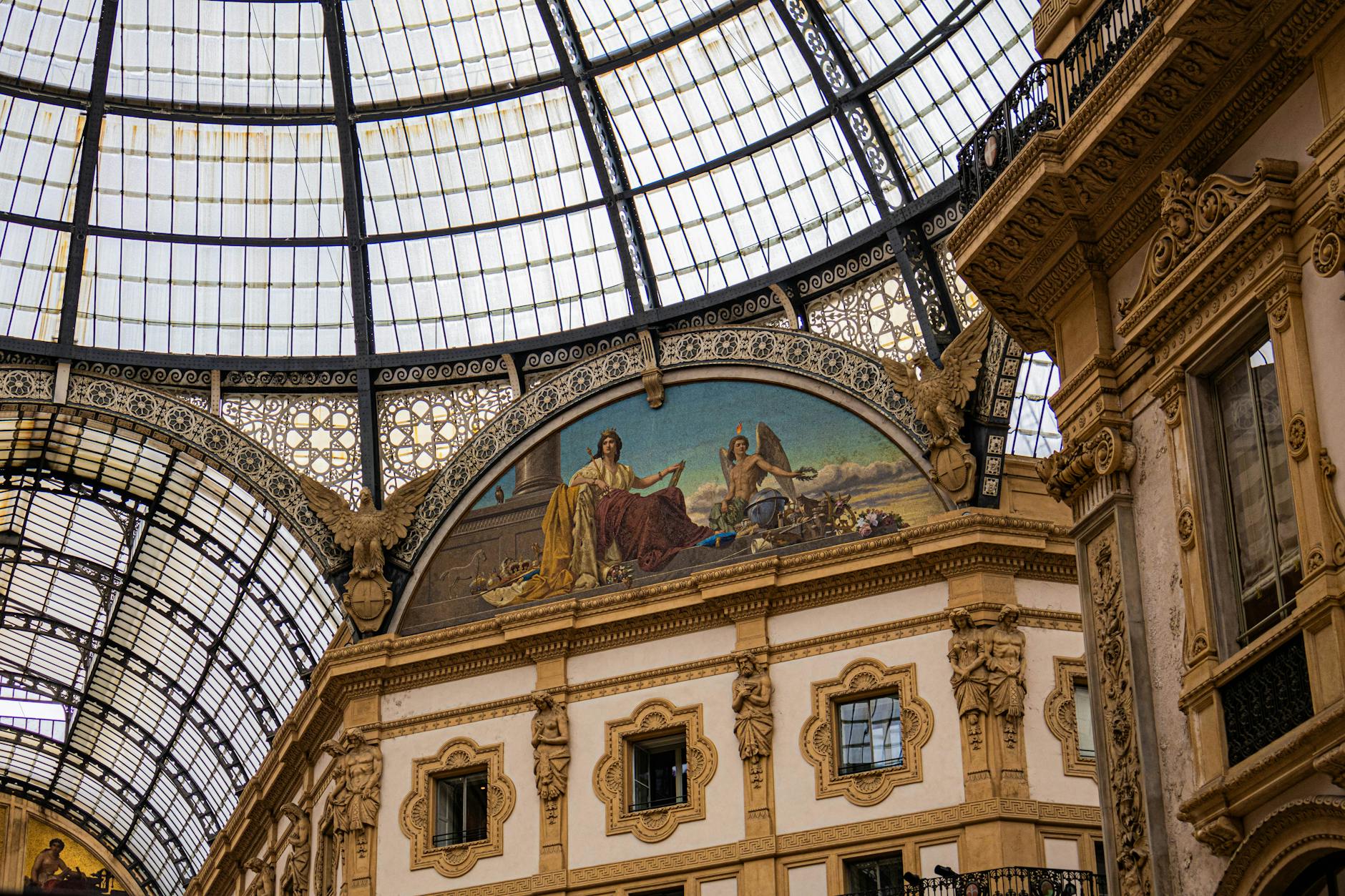
10:30 a.m. — Galleria Vittorio Emanuele II. Walk straight north from the Duomo into the Galleria. The mosaic floor under the central dome includes a bull where, by tradition, you spin your heel in the bull’s nether regions for good luck. The marble is worn into an actual divot. Yes, it’s touristy. Do it anyway. Through the Galleria you emerge into Piazza della Scala; the opera house is the surprisingly plain building on your left.
11:15 a.m. — Walk to Brera. Cut up Via Brera and you’re in the artists’ quarter within five minutes. The Pinacoteca di Brera is a serious gallery — Caravaggio’s Supper at Emmaus, Raphael’s Marriage of the Virgin, Mantegna’s foreshortened Dead Christ. €15, closed Mondays. You can do it in 75 minutes if you don’t linger; two hours is the full experience. If you’re not a museum person, skip it and just wander the cobbled streets — Brera is one of the prettiest walking neighborhoods in the city.
1:30 p.m. — Lunch. I go to Trattoria Milanese on Via Santa Marta 11. Family-run since 1933, no English menu hassle, the cotoletta alla milanese is correct — bone-in veal, pounded thin, fried in butter. Around €28 for the cotoletta with a glass of Bonarda. Cash and card both fine, book by phone the day before. The other lunch option closer to the Duomo is Luini Panzerotti at Via Santa Radegonda 16, where a fried dough pocket of mozzarella and tomato is €4. There’s always a queue and it moves fast.
3:30 p.m. — Castello Sforzesco and Parco Sempione. Walk west fifteen minutes. The castle grounds are free; the museums inside cost €5 and include Michelangelo’s last unfinished Pietà Rondanini, which is genuinely affecting and a good antidote if Brera’s masterpieces left you full. Walk through into Parco Sempione, Milan’s central park. If your feet are done, sit by the fountain. If they aren’t, walk to the Arco della Pace at the far end — it’s a Napoleonic triumphal arch with cafés around the base. Good place to sit with a Campari Spritz (€8) and let the afternoon turn.
6:30 p.m. — Aperitivo in Brera or Porta Nuova. The classic Milan ritual: you pay €10–15 for a drink and the bar lays out a buffet of small dishes you graze on. Two drinks and aperitivo plates are dinner. My pick in Brera is N’Ombra de Vin at Via San Marco 2, a wine bar in an old monastery refectory. For a more dramatic skyline option, head one metro stop north on M3 to Repubblica and walk into the Porta Nuova district — Ceresio 7 on the rooftop above the DSquared2 offices is showy and expensive (€20 cocktails) but the view of the Bosco Verticale towers is the best in the city. More aperitivo options in our Milan aperitivo guide.
9:00 p.m. — Dinner or skip it. If you actually grazed at aperitivo, you don’t need a sit-down dinner. If you do, my recommendation is below in the eating section. Bed early. Sunday morning starts at 8:30.
Day 2 (Sunday): Last Supper at 9, Navigli by lunch, train out by 5
8:30 a.m. — Breakfast then walk. Coffee and brioche at any neighborhood bar (€2.50). Walk or take the M1 red line one stop from Cairoli to Conciliazione.
9:15 a.m. — The Last Supper at Santa Maria delle Grazie. This is the booking that breaks people’s trips. You must reserve weeks ahead — three weeks minimum in low season, two months in summer — through the official cenacolovinciano.org site. The slot is exactly 15 minutes, only 35 people inside the refectory, and the €15 ticket is non-refundable. Arrive at the entrance on Piazza Santa Maria delle Grazie 20 minutes before your slot to check in. If you couldn’t get a ticket, don’t despair — last-minute slots sometimes appear on the website Sunday morning around 7:00 a.m. CET when no-shows are released, but you have to refresh constantly. Full booking strategy on our Last Supper tickets page.
The painting itself: it is fading, the colors are muted, the conservation lighting is dim, and the room temperature is climate-controlled. People are sometimes underwhelmed because they expect Sistine Chapel saturation. What you’re actually looking at is the structural geometry of the composition — the lines of the room converge on Christ’s right temple — and the recognition that Leonardo painted directly onto dry plaster instead of fresh, which is why it started disintegrating within his lifetime. Knowing that going in changes the experience.
10:30 a.m. — Walk through the Magenta district. Walk south down Via Carducci, take a right onto Corso Magenta. This is one of Milan’s wealthier residential corridors and a more authentic Sunday-morning slice than the Duomo area. Stop at the Basilica di Sant’Ambrogio — fourth-century Romanesque, the patron saint’s church, and free to enter. Twenty minutes inside and you’ve seen something most weekend visitors miss entirely.
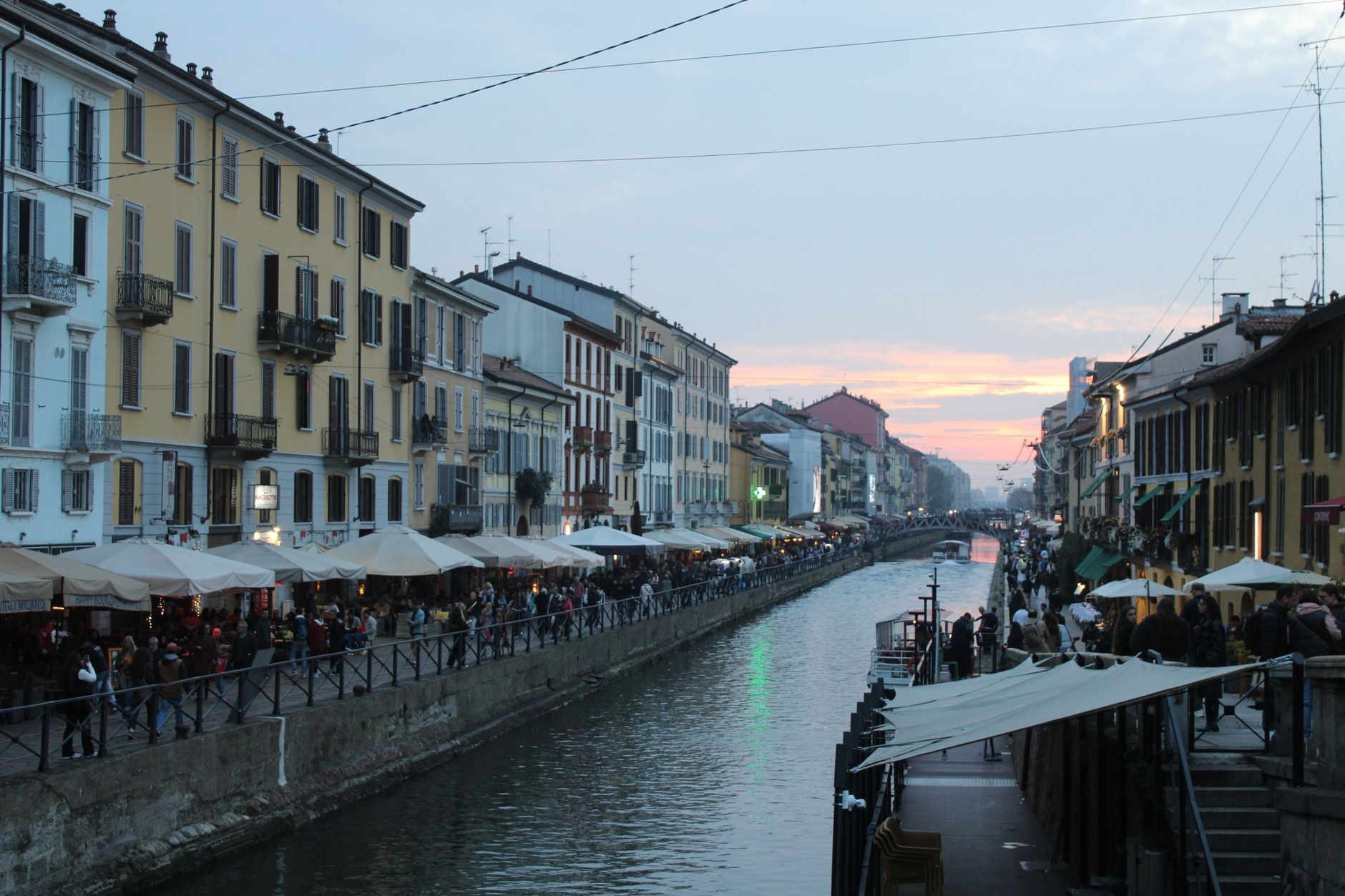
12:15 p.m. — Lunch on the Navigli. Take tram 14 or walk 25 minutes south to the Naviglio Grande, the canal district. On the second Sunday of every month there’s a long-running antiques market along the canal that’s actually worth browsing if your timing lines up. For lunch, El Brellin at Alzaia Naviglio Grande 14 does proper Milanese cuisine — risotto giallo, ossobuco — in a former 17th-century washhouse. Mains €18–24. Outdoor canalside seating in good weather.
2:30 p.m. — Coffee and slow wander. The Navigli is the area to do nothing well. Walk the towpath along the canal, peek into the artisan workshops in the courtyard at Vicolo dei Lavandai (the historic open-air washhouse), and finish with a coffee or gelato at Gelateria Marghera if you’re willing to walk twenty minutes west, or Cioccolato Italiani if you want to stay close. The pistachio is real Bronte pistachio at both.
4:30 p.m. — Back to the hotel, then transit out. Whether you’re heading to Malpensa, Linate, or onward by train, give yourself buffer. The M2 green line connects Navigli (Porta Genova stop) directly to Milano Centrale in 10 minutes. From there it’s the Malpensa Express, the Italo or Frecciarossa to Rome/Florence/Venice, or a transfer to M3 for the central neighborhoods.
Where to eat — five places I actually return to
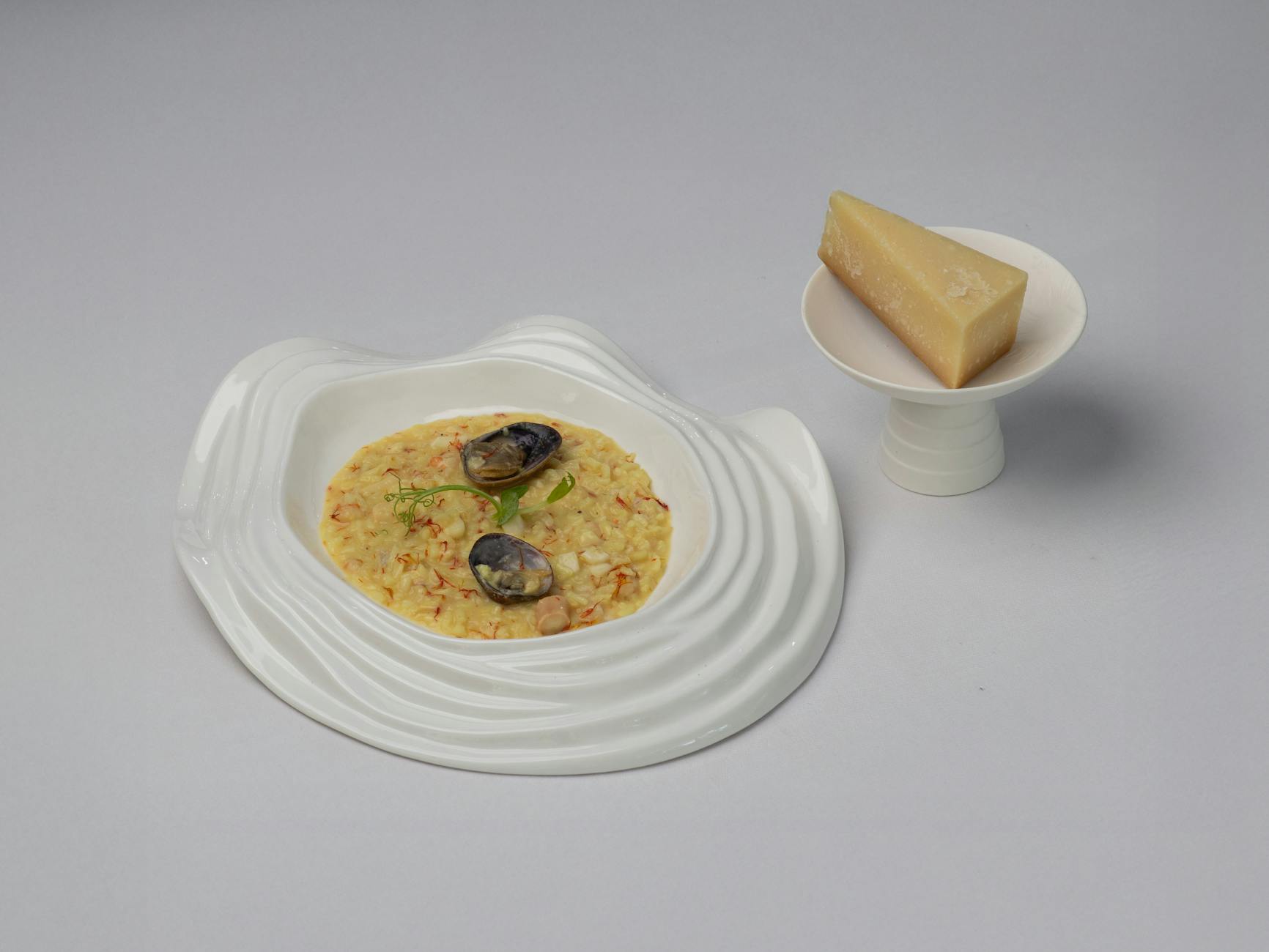
Milan’s food scene is more interesting than its reputation. The classics are the classics — risotto alla milanese, cotoletta, ossobuco, panettone — and there’s enough modern cooking that you don’t have to eat the same dishes twice in a weekend. Full breakdown in our Milan food guide.
- Trattoria Milanese (Via Santa Marta 11, Cinque Vie) — the cotoletta benchmark, family-run since 1933, around €40 per person with wine. Book ahead.
- Ratanà (Via Gaetano de Castillia 28, Porta Nuova) — chef Cesare Battisti’s revival of traditional Milanese cooking. The risotto giallo with bone marrow is the order. Mains €22–32. Smart booking essential.
- Trippa (Via Giorgio Vasari 1, Porta Romana) — offal-forward, the kind of restaurant Milan does better than anywhere in Italy. The fried lampredotto sandwich at lunch is €14. Dinner needs a reservation two-plus weeks out.
- Pavé (Via Felice Casati 27, Porta Venezia) — bakery for breakfast, brunch, and pastries. The croissants are objectively the best in Milan and they sell out by 11.
- Bar Basso (Via Plinio 39, Loreto) — not for food but for cocktails; this is where the Negroni Sbagliato was invented in 1972. Order one (€10) and you’re drinking it where it began. Late-night, open till 1:15 a.m.
Practical tips that save your 48-hour Milan trip
- Pre-book three things, in this order of importance: The Last Supper (3+ weeks ahead), the Duomo rooftop (any time but skips the line), and Saturday dinner anywhere good. Everything else can be improvised.
- Get the ATM Milano app for metro tickets. Tap your phone at the gates. The €7.60 24-hour pass usually pays off if you’re using transit more than three times.
- Sundays close some things, open others. Most museums are open Sunday; the Pinacoteca di Brera is closed Mondays. Smaller shops and family restaurants close all day Sunday. The Last Supper is closed Mondays.
- Cash is increasingly unnecessary. Tap-to-pay works everywhere including the metro. Carry €30 in cash for small bars and the antiques market.
- Tipping is not expected. Round up the bill or leave a euro coin for excellent service. The €2–3 coperto (cover charge) on restaurant bills is not a tip; it’s a per-person table fee.
- Drink standing at the bar. A cappuccino at the bar is €1.50; the same cappuccino at the table is €4. This is law, not custom.
- Watch for pickpockets on M1 and M3 near Duomo and at Milano Centrale. They work in pairs and target distracted tourists. Front pocket, hand on phone.
- August is dead. Half the family restaurants close for two to three weeks. This is the only month where weekend Milan trips are genuinely worse than they should be.
Best time of year to do a weekend Milan trip
The sweet spots are mid-April through mid-June, then mid-September through early November. May and October specifically are ideal — 18–24°C, low humidity, long evenings perfect for aperitivo outside. June is excellent but starts getting humid by month’s end. November is hit-or-miss with fog but cheaper hotels and Christmas-market energy by the third week.
Avoid: mid-July through August (hot, humid, half the city is shut), the first week of any major Fashion Week (February and September — hotel prices triple), and Salone del Mobile design week in mid-April, where every hotel under €400 is gone six months ahead. December has its own logic — see our Milan winter itinerary. For warm-weather trips, the Milan summer itinerary covers the heat-survival angle.
The best weekends specifically: any non-holiday weekend in May, late September, or the second-to-fourth weekends of October. Sundays are good in Milan because the city empties of business travelers and locals come out to the parks and the Navigli.
Where to base yourself for a 2-day Milan plan
For 48 hours, location matters more than amenities. You want walking distance to the Duomo or one metro stop away. The four neighborhoods I’d actually choose:
- Duomo / Cinque Vie: Most central, expensive, and walkable to everything. Best for first-timers who don’t want to think about transit.
- Brera: Prettier, slightly quieter, a 10-minute walk from the Duomo. My personal pick for a romantic weekend.
- Porta Nuova / Garibaldi: Newer, glassier, near Milano Centrale for early flights. Good if you’ve seen Milan before.
- Navigli: Cheaper, livelier at night, slightly further from the historic core. Best if you want the evening scene at your doorstep.
Sample hotels at three price points (May 2026 rates for a Saturday night, double room):
- Budget (€120–180): Hotel Mythos near Milano Centrale, or Babila Hostel private rooms in San Babila. Both clean, both near the metro, both unsexy.
- Mid-range (€220–350): Room Mate Giulia directly next to the Galleria, or Senato Hotel in the fashion quadrilateral. The Giulia is the better deal for the location.
- Splurge (€500+): Mandarin Oriental on Via Andegari, Bulgari Hotel tucked in a private garden between Brera and the Quadrilatero, or the historic Grand Hotel et de Milan on Via Manzoni where Verdi lived for 27 years.
More detail in our where to stay in Milan breakdown.
Frequently asked questions
Is 2 days in Milan really enough?
For the historic core — Duomo, Galleria, Scala, Brera, Sforzesco, Navigli, and The Last Supper — yes, comfortably. For Milan plus a day trip to Como, Bergamo, or Lake Maggiore, no. You’d need three or four days. A weekend Milan trip works because the city is dense and walkable; it doesn’t work if you want to add anything beyond the urban core.
Can I see The Last Supper without booking ahead?
Usually not. Tickets release roughly three months in advance and the desirable weekend slots sell out within hours. Same-day “last-minute returns” do appear on the official site but you have to be online refreshing at 7:00 a.m. CET. The reliable alternative is booking a guided tour that includes Last Supper access — these tours get their own ticket allocation, cost €70–95 versus €15 for the standalone ticket, but you get the booking certainty plus an art-historian guide.
Which is better for 48 hours, Milan or Rome?
For a first-ever Italy trip, Rome. For a return visit, a fashion-and-design tilt, or as a long-weekend escape from northern Europe, Milan. Milan rewards short stays; Rome punishes them. Also, Milan’s two airports plus high-speed rail connection make it cheaper to reach from most of Europe.
Do I need to speak Italian for a weekend in Milan?
No. Milan is the most international Italian city and service staff at any restaurant catering to visitors will speak adequate English. Learning the words for thank you (grazie), please (per favore), and the bill (il conto) covers 90% of social interaction.
What’s the one thing first-time visitors get wrong?
Trying to fit in too much. People plan Milan + Como + outlet shopping + a Last Supper detour and end up doing none of it well. Pick the historic core, do it slowly, eat two real meals, and add one extra thing only if Day 2 leaves you energy to spare.
Is the Duomo rooftop worth it or is the view from inside the cathedral enough?
The rooftop is the only attraction in Milan I’d call genuinely unmissable. Walking among the 135 spires, with the city spread out below and the Alps visible on clear days, is structurally different from any other European cathedral experience. The €17 stairs ticket is the right call — taking the elevator skips the slow architectural reveal that makes it work.
Honest take after a dozen weekends here
Milan is the European city most likely to surprise people who arrive with low expectations. The reputation — business, fashion, expensive — undersells how warmly the historic neighborhoods actually live. Brera on a Saturday afternoon is as charming as anywhere in Italy, and the Navigli on a Sunday lunch feels lived-in in a way that Florence and Venice no longer do.
The 2 days in Milan itinerary above is the version I’d hand to a friend, not the version that’s optimized for SEO points or that hits every guidebook box. If I had to cut one thing from it, I’d cut Pinacoteca di Brera — magnificent, but a museum-heavy day eats your energy for aperitivo. If I had to add one, I’d add a half-hour at the Cimitero Monumentale, the sculpture-park cemetery north of Centrale, which is the most beautiful and least-visited place in the city.
Pre-book three things, walk more than you ride, drink standing at the bar, and don’t try to add Como. Save that for your second visit, when you’ll have figured out that 48 hours in Milan is a beginning, not a sufficient stay. For broader planning, our things to do in Milan and Milan itineraries guide cover the full range of options. If you’ve got a layover instead of a weekend, the Milan layover guide compresses this down to four to six hours. And if your Milan 2-day plan goes well — most do — you’ll be back for five. The 5 days in Milan itinerary will be waiting.