I’ll tell you what most travel writers won’t: Milan in winter is grey, sometimes foggy, often damp, and the sun checks out around 4:40 p.m. in late December. That’s the honest version. The unhonest version says the city “sparkles.” Mine doesn’t sparkle — it broods, beautifully, behind a low cloud deck. And that is exactly why Milan in winter what to do is a question worth asking properly, because the answer is different from the summer one. The summer answer is rooftops and aperitivo terraces. The winter answer is opera, museums you can finally see, plates of cassoeula that taste better at 4°C than they ever could in July, and a Christmas market tradition (Oh Bej! Oh Bej!) that locals have been running for over five hundred years. I’ve spent the last four winters here. This guide is what I actually do December through February — hour by hour, neighborhood by neighborhood, with the bad weather built in, not pretended away.
Running this itinerary in the run-up to Christmas? Check Milan in December first for the holiday closures on the 7th, 8th and 25th, which will reshape any plan built around them.
Travelling in the first weeks of the year? Milan in January covers the sales, Epiphany and the things that simply do not open until March.
What a Milan winter actually feels like on the ground
Daytime highs sit around 7–9°C in December, 6–7°C in January (the coldest month), and creep up to 9–10°C in February. Nights drop to 0–2°C and occasionally below freezing in January. The famous Milanese fog — what locals call la nebbia — has thinned in the past decade because of the urban heat island, but you’ll still get classic pea-soup mornings two or three times a week in December and January, especially out toward Linate and the ring road. By mid-morning it usually lifts. Snow happens, but rarely sticks; one or two proper snowfalls per winter is typical now, and they vanish by lunchtime.
The daylight situation matters more than the temperature. December has roughly 8 hours 50 minutes of usable light. Sunrise is around 7:50 a.m., sunset around 4:40 p.m. You’ll plan more around dusk than around weather. Sunshine averages 2–3 hours per day in December and January — when the sun does break through, drop what you’re doing and walk to the Duomo terraces. By February you get about 4 hours and the light shifts noticeably warmer.
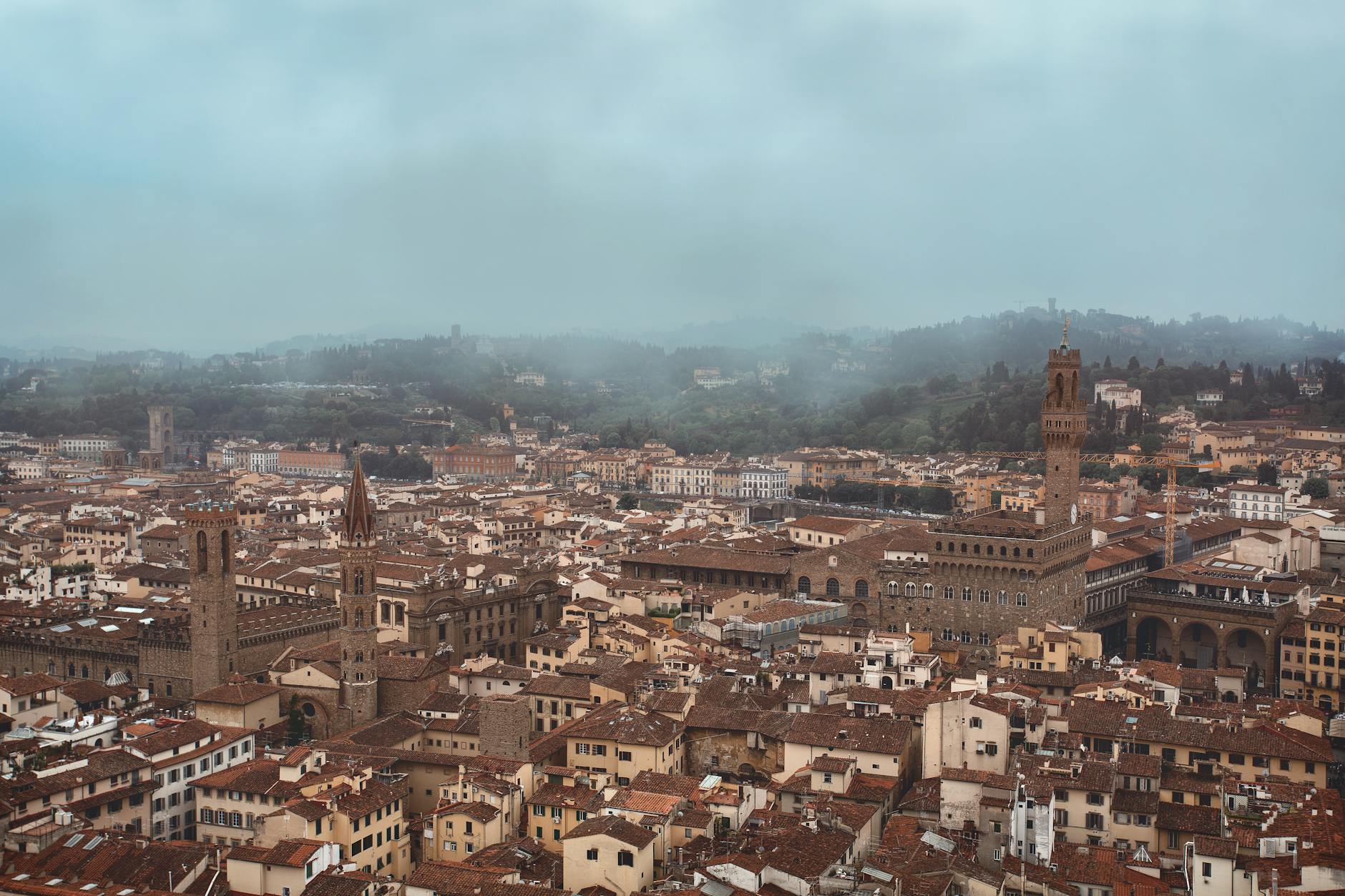
Rain is steady but not torrential — about 60–75 mm spread across each winter month. The bigger annoyance is humidity. A 4°C Milan day with 85% humidity bites through a thin coat in a way that a -5°C dry day in Vienna doesn’t. Pack accordingly (more on that below).
December in Milan — Sant’Ambrogio, La Scala, and Oh Bej! Oh Bej!
December is the most theatrical month, in every sense. The city’s calendar is built around December 7, the feast of Sant’Ambrogio, Milan’s patron saint. It’s a citywide public holiday, schools close, banks shut, and the city compresses two of its most important traditions into 48 hours: the opening night of La Scala’s opera season, and the Oh Bej! Oh Bej! Christmas market.
La Scala’s Prima della Scala on December 7 is one of Italian high culture’s biggest nights of the year — broadcast live on RAI, attended by the President of the Republic, and impossible to get into unless you booked months ago and have €2,000+ to spend. Don’t bother chasing it. Do go to La Scala any other night in December or January; you can often find restricted-view balcony seats for €15–40 if you check the box office in person at 5:30 p.m. on performance day. The Museo Teatrale alla Scala (€12) is also one of the best small museums in the city and lets you peek into a real box during quiet hours.
Oh Bej! Oh Bej! is the Christmas market locals actually go to. It wraps around Castello Sforzesco and into Parco Sempione, runs roughly December 5–8 each year, and dates back to the 16th century. Expect firunatt (strung smoked chestnuts), wrought iron, brassware, mulled wine, roasted chestnuts, candied fruit, and approximately zero of the mass-produced wooden trinkets you’d find at a German market. Go on the morning of December 8 if you can — December 7 evening is mobbed.
The bigger commercial market is in Piazza del Duomo, December 1 through January 6, with about thirty chalets selling artisan gifts and food. It’s pleasant, especially after dark when the Galleria Vittorio Emanuele II is fully lit, but it’s not where Milanese shop. For a quieter family-oriented Christmas village, the Giardini Indro Montanelli (Porta Venezia) runs from mid-November through Epiphany. If you want a longer indoor-day plan for the wet days that always happen this month, my rainy-day Milan guide covers the full backup itinerary.
January in Milan — the quiet month, sales, and Epiphany
If you want Milan to yourself, come the second week of January. The city empties between New Year’s Day and January 6 (Epifania), with restaurants closing for a few days and locals taking la settimana bianca — a ski week — in the Alps. From January 7 onward, the city snaps back to business, but tourist numbers stay low until late February. Museum lines disappear. You can walk into the Pinacoteca di Brera at 11 a.m. on a Tuesday in mid-January and have rooms to yourself. That doesn’t happen in October or April.
Two things define the month. First, Epiphany on January 6, the day La Befana (the broom-riding old woman of folklore) brings sweets to children. There’s a small parade through the center in the morning — fine if you’re nearby, not worth planning around. Second, and much more important if you came to shop: I Saldi, the official winter sales. In 2026 they begin on Saturday, January 3 and run through Monday, March 3 — a full two-month window. Discounts start at 30% and climb to 70% by mid-February. The Quadrilatero (Via Montenapoleone, Via della Spiga, Via Sant’Andrea) is where the luxury cuts are deepest in late January; Corso Buenos Aires is your stop for mid-market brands.
January 6 is a public holiday — most museums stay open but smaller shops close. From January 7 to mid-February is, in my opinion, the single best window for a 3-day Milan itinerary focused on art and food. Hotel rates drop 25–40% from December peak. I’ve stayed in 4-star places in Brera for €130 a night in late January that ask €280 in May.
February in Milan — Carnival, post-Olympic energy, fashion week
February 2026 is unusual because the city is still digesting Milano-Cortina 2026, which closed on February 22. By the time most readers visit (late February or any winter going forward), the Games are over but the legacy is visible — refurbished public spaces, the rebuilt Stazione Garibaldi area, the Olympic Village in Porta Romana being converted to student housing, and an unusual amount of multilingual signage that wasn’t there before. The next two winters will see steady follow-on tourism, so if you can come in February 2027 or 2028, the post-Olympic infrastructure improvements (transit upgrades especially) will still feel fresh while crowds normalize.
Carnevale Ambrosiano is the local quirk worth knowing. Milan follows the Ambrosian rite, not the Roman one, which means Carnival here runs four days longer than everywhere else in Italy. In 2026 it culminated on Saturday, February 21 — well after Venice’s Carnival had wrapped. Costumed children parade through the center on Carnival Saturday, confetti carpets the cobblestones, and bakeries pile their windows with chiacchiere (fried sweet pastry strips dusted with powdered sugar) and tortelli alla milanese. It’s understated next to Venice but the lack of tourist pressure is the point.
Milan Fashion Week Fall/Winter ran February 24 through March 2, 2026, and follows roughly the same window each year. Hotel prices spike around the Quadrilatero and Porta Nuova during that week — book Brera or Navigli if you’re traveling in that window for non-fashion reasons. If you are coming for fashion, that’s its own animal and a separate guide.
A 3-day winter Milan trip, hour by hour
This is what I’d do with three days, weighted toward indoor anchors so a foggy or rainy day doesn’t blow up the plan. It assumes a Tuesday–Thursday arrival, which dodges weekend museum crowds.
Day 1 — Center, Duomo, La Scala area
8:30 a.m. Coffee and brioche con crema at Marchesi 1824 in the Galleria — pastel green and rose interior, opens at 7:30, costs €4 at the bar and €12 at a table. Sit at the bar.
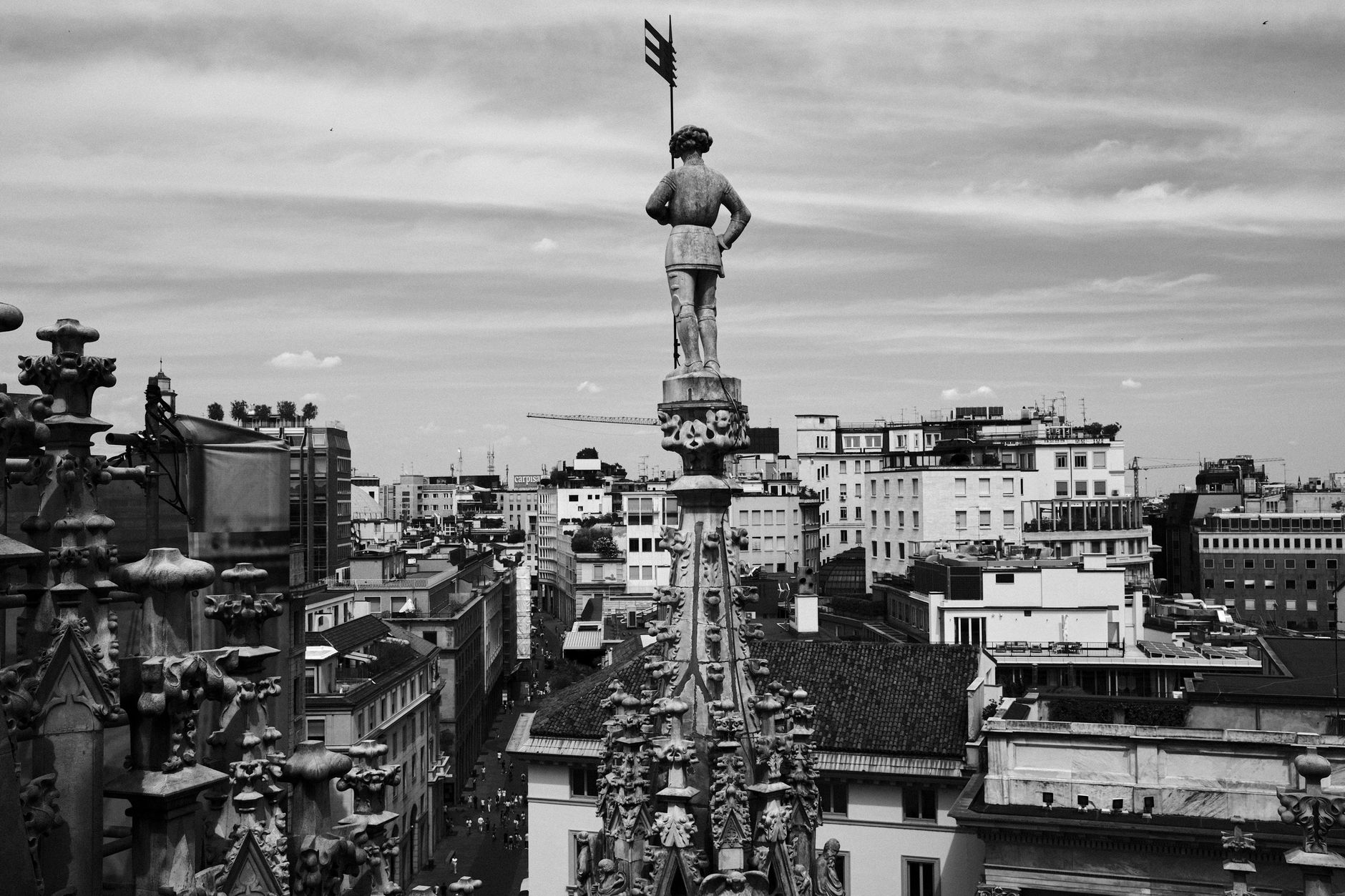
9:00 a.m. Duomo entry (€10 cathedral only, €17 with rooftop terraces). Book online for a 9:00 or 9:15 slot. The rooftop is the right move even in winter — fewer than 100 people up there in January, and on a clear day you can see the Alps from the highest gallery. Allow 90 minutes for cathedral plus rooftop.
11:00 a.m. Museo del Novecento (€10) right on Piazza del Duomo. Italian 20th-century art, a Modigliani, a Boccioni, and a window seat by the spiral ramp that frames the Duomo’s spires straight into your camera. Two hours.
1:30 p.m. Lunch at Trattoria Milanese (Via Santa Marta 11) — risotto alla milanese with osso buco, €28 with a glass of Barbera. Book a day ahead even in January.
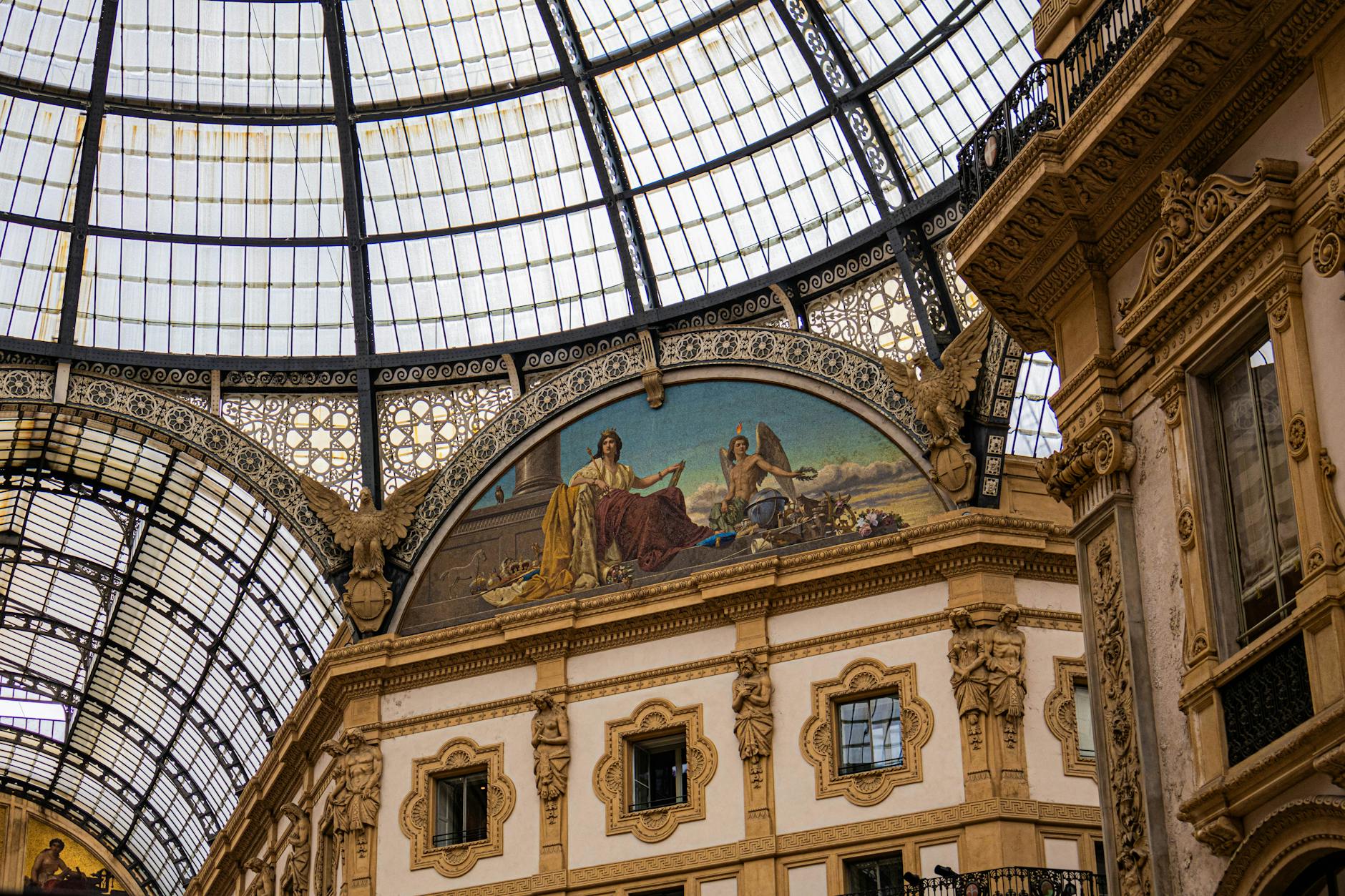
3:30 p.m. Galleria Vittorio Emanuele II walk, then Via Manzoni up to La Scala. Museo Teatrale alla Scala (€12) for an hour. If there’s a performance that night and you didn’t pre-book, line up at the box office at 5:30 for restricted-view tickets.
6:30 p.m. Aperitivo at Bar Basso (Via Plinio 39) — inventor of the Negroni Sbagliato, €10 a glass, salty snacks included. A 15-minute tram from center on the 9.
8:30 p.m. Dinner or opera, depending on the day.
Day 2 — Brera, Castello, Sforzesco-area museums
9:30 a.m. Pinacoteca di Brera (€15). Mantegna’s Dead Christ, Raphael’s Marriage of the Virgin, Caravaggio’s Supper at Emmaus. Three hours, easy. Café in the courtyard for an espresso break halfway through.
1:00 p.m. Lunch in Brera — Latteria San Marco if you can get a table (cash only, 11 seats, lunch 12:30–2:30), otherwise Osteria di Brera.
3:00 p.m. Walk to Castello Sforzesco. Free to enter the courtyards; €5 combined ticket for the museums inside, including Michelangelo’s Rondanini Pietà — his last work, unfinished, alone in a vaulted room. This is one of those experiences where January’s emptiness is the gift.
5:00 p.m. Parco Sempione and Arco della Pace as the sun drops. If it’s December and Oh Bej! is on, this is exactly where you want to be at dusk.
7:30 p.m. Dinner at Ratanà (Via Gaetano de Castillia 28) in Porta Nuova for modernized Milanese — Cesare Battisti’s risotto, around €70 a head with wine.
Day 3 — Last Supper, Navigli, slower pace
9:00 a.m. The Cenacolo (Last Supper) at Santa Maria delle Grazie. You must book weeks ahead — €15, 15-minute slots, 35 people maximum. There is no walk-up option, ever. If you didn’t book, skip it and go to the Museo Poldi Pezzoli (€14) instead, which is a vastly underrated house-museum.
10:30 a.m. Sant’Ambrogio basilica, four blocks from Santa Maria delle Grazie. 4th-century, free entry, the crypt holds the patron saint himself.
12:30 p.m. Navigli for lunch. El Brellin or Al Pont de Ferr if you want to spend more; otherwise a panino at De Santis on Corso Magenta on the walk over.
3:00 p.m. If sun: walk both Naviglio Grande and Pavese, antique market territory. If rain: Fondazione Prada (€15, ten minutes by metro to Lodi T.I.B.B.) for contemporary art in Rem Koolhaas’s renovated distillery — Bar Luce alone is worth the trip.
6:00 p.m. Late aperitivo on Naviglio Grande — Mag Cafè or Rita’s — then dinner wherever you’ve still got energy. If you have a fourth day, my condensed 2-day Milan plan compresses Days 1 and 2 efficiently, and my 5-day version adds Lake Como and Bergamo without rushing.
Foggy and rainy day options that actually work
Here is what I learned the hard way: most “rainy day” lists for Milan recycle the same Duomo–Galleria–Brera triangle. That’s fine the first time. After that, your second-tier indoor list matters more.
- Museo Bagatti Valsecchi (€12, Via Gesù 5) — two brothers built a 19th-century pastiche Renaissance palazzo, lived in it, and left it as a museum. Two hours.
- Villa Necchi Campiglio (FAI property, €15) — 1930s rationalist villa with the first private heated pool in Milan. Use the audio guide. The garden café is excellent.
- Hangar Bicocca (free, north of city, metro M5) — Anselm Kiefer’s Seven Heavenly Palaces in a former locomotive factory.
- QC Termemilano (€59 weekday, Porta Romana) — hot pools inside the old Spanish walls, including outdoor pools that work better in winter than summer because the contrast is the whole point. Book online, arrive at 10 a.m.
- Bagni Misteriosi in winter mode — open-air pool transformed into an ice rink December through February. €13, rentals included.
- Cimitero Monumentale — yes, in winter, in mist. The most extraordinary cemetery in Italy, free entry, two hours minimum. Maps at the gate.
For more options when the weather genuinely turns, my Milan museums guide covers thirty-plus venues by neighborhood and price.
Five places to eat warming Milanese food in winter
Winter is the season Milanese cuisine was built for. Lombard food is butter, rice, marrow, pork, cabbage, polenta — not the bright tomato-based stuff people imagine when they say “Italian food.” Five spots I send people to:
- Trattoria Madonnina (Via Gentilino 6, Porta Genova) — cassoeula (pork rib and savoy cabbage stew) for €18, served only October through March. Rustic, paper tablecloths, no English menu. Book ahead.
- Trattoria Masuelli San Marco (Viale Umbria 80, Porta Romana) — family-run since 1921, the place for risotto al salto (yesterday’s saffron risotto pressed into a crispy disc, €16). Closed Sundays and Mondays.
- Al Garghet (Via Selvanesco 36, southern outskirts) — a 30-minute tram ride out, but the busecca (tripe in tomato and white bean broth) is the version your grandmother would have made if your grandmother had been Milanese. €15.
- Osteria Conchetta (Via Conchetta 8, Navigli) — ossobuco con risotto allo zafferano done with bone marrow you’ll think about for weeks, €26.
- Antica Trattoria della Pesa (Viale Pasubio 10, Porta Garibaldi) — opened 1880, served Ho Chi Minh when he worked in Milan as a young man (there’s a plaque), and still cooks polenta e bruscitt (slow-stewed beef in red wine over polenta, €24) properly.
For the broader food landscape, my traditional Milanese food guide walks through every signature dish and where to find the best version of each. For the early evening ritual, the Milan aperitivo guide covers the indoor winter spots specifically.
What to wear and pack for a winter Milan trip
Pack for damp cold, not dry cold. The wind in Milan is mild compared to Chicago or Berlin, but the humidity sneaks in. My winter Milan packing list, refined over four years:
- A medium-weight wool or down coat that hits mid-thigh — not knee-length unless you don’t mind tram steps catching it.
- Waterproof leather boots with proper tread. Cobblestone-plus-rain is genuinely slippery. Trainers are a mistake in December.
- A scarf you can wrap twice. Italians wear scarves indoors at restaurants until the food arrives. You will too.
- Layers underneath — merino base, light sweater, coat. The Duomo terraces are 5°C colder than street level. Museums are sometimes overheated to 22°C and you’ll be peeling layers off.
- A compact umbrella, not a long one — Milanese street vendors sell €5 umbrellas the moment it drizzles, but they’re flimsy.
- Gloves with touchscreen fingertips. You will be navigating on your phone constantly.
- One smart-casual outfit. La Scala has a dress code (no jeans, no trainers, jacket preferred). Most fine dining expects the same. Milan is the most appearance-conscious city in Italy and you’ll feel it instantly.
Skip: heavy ski parkas (overkill), sandals (obvious), sun hats (December has 2 hours of sun). Bring: a power bank — cold drains phone batteries faster than you’d expect.
Neighborhoods to stay in when the weather is cold
In summer, location-to-water is the optimization. In winter, location-to-transit and walkability matter more, because you’ll lose interest in 25-minute walks once it gets dark at 4:40.
- Brera — best winter neighborhood overall. Cobblestone streets, galleries, half the restaurants you want walking distance, and three metro lines within ten minutes. Hotels: Bulgari (€700+), Hotel Milano Scala (€220 in January), Antica Locanda Solferino (€160).
- Quadrilatero / San Babila — central, sterile after 8 p.m. but unbeatable for Duomo access and shopping during sales.
- Porta Nuova / Garibaldi — modern, well-heated hotels, the post-Olympic improvements concentrated here. Good if it’s your first Milan trip and you want a base near Stazione Garibaldi for day trips.
- Navigli — atmospheric in winter, the canal mist is unique, but it’s a metro hop from museums. Worth it if you came for food and nightlife more than art.
- Porta Romana — emerging, near QC Termemilano and Fondazione Prada, hotel value strong in January.
Avoid Milano Centrale immediate area for accommodation in winter — convenient for trains but the late-evening atmosphere is bleaker than it needs to be. My where to stay in Milan guide breaks out specific hotels by budget and season.
Day trips that hold up in winter (and the ones to skip)
This is where winter planning diverges most from summer. The two big lake destinations and the seasonal-tourist towns require sober evaluation.
Worth doing in winter:
- Bergamo Alta — the walled medieval upper town, 50 minutes on the regional train from Centrale (€5.50), funicular up. Winter quiet is the best version. Lunch at Da Mimmo or Ol Giopì e la Margì.
- Como town — yes, in winter. The town itself is alive year-round, the lakefront promenade is gorgeous in mist, the Duomo is one of the most underrated in Italy, and you skip the cruise-ship summer chaos. Boat services run reduced winter schedules; check Navigazione Laghi. My Milan to Lake Como itinerary has the winter version laid out.
- Pavia — 30 minutes south, the Certosa di Pavia is a 14th-century charterhouse most Milan visitors never see. Cold inside the church (no heating in winter), so dress warm.
- Verona — 75 minutes by Frecciarossa. Arena, Roman ruins, and the city’s Bardolino e Soave wine bars feel right in cold weather.
- Stresa / Lake Maggiore — only if you’re willing to commit a full day; Borromean islands run a reduced winter ferry, and Isola Bella’s gardens are closed but the palace stays open.
Skip in winter:
- Bellagio — half the businesses close November through March. Save it for May or September.
- Cinque Terre — too far for a day trip from Milan year-round, and the cliff paths are wet and slippery in winter.
- Sirmione on Lake Garda — fine if you specifically want the thermal baths at Aquaria, otherwise much of the peninsula shuts down.
If you want to compare seasons honestly, my Milan summer itinerary shows what flips in June through August, and the best time to visit Milan overview lays out all twelve months side by side.
Practical tips most guides leave out
Last Supper bookings: open three months ahead, sell out within 48 hours. Set a calendar reminder. Third-party tour bookings cost €60–80 but they have inventory the official site doesn’t.
Museum reservations in winter: Pinacoteca di Brera, Palazzo Reale temporary exhibits, and Fondazione Prada all let you walk up in January and February without a booking on weekdays. Save the booking fees. December weekends are different — book then.
Fog and Malpensa flights: dense fog at MXP causes delays maybe 4–6 days a year, almost all in December and January. If your flight is at 7 a.m., the Malpensa Express first train leaves Cadorna at 4:27 a.m. — taxi is faster but €110. Build a buffer day either side if you have a tight onward connection.
Linate vs Malpensa in winter: Linate is closer (15 minutes by metro M4, new since 2022) and gets less fog because it’s lower-lying near the city. If you can choose between European flights into either, Linate beats Malpensa in winter every time.
Christmas and New Year closures: December 25 and January 1 — almost everything except Duomo and major churches closes. December 26 (Santo Stefano) — major museums open, restaurants hit-or-miss. December 7 (Sant’Ambrogio) — public holiday, museums open, most shops closed.
Tram lines worth knowing: the heritage tram 1 (orange wooden Ventotto cars from the 1920s) loops past most of the historic center. Use it in winter — it’s heated, it’s slow, it’s a moving museum, and at €2.20 a ride it’s the best deal in town.
Frequently asked questions
Is Milan worth visiting in winter?
Yes, especially if you care about museums, opera, food, or shopping. The big advantage of a winter Milan trip is that you get the cultural depth without the queues and at lower hotel prices. The trade-off is short daylight and damp weather. If you’d prioritize outdoor terraces and the lakes at full swing, come in May or September instead.
How many days do I need in Milan in winter?
Three days is the sweet spot. You can see the Duomo, La Scala, Brera, Castello, the Last Supper, and have one day for either Bergamo or Como. With two days, drop the day trip. With five, add both a lake day and a slow second-tier museums day. The full Milan itineraries guide compares all four durations.
Does it snow in Milan?
Occasionally. One or two snowfalls per winter is typical, mostly in January, usually melting within hours. Heavy snow that sticks for days happens maybe once every three or four years now. Don’t plan around it, but if it happens during your trip, drop everything and walk to the Duomo at first light.
What’s the cheapest winter month?
Mid-January through mid-February. Hotels can be 30–40% below their April rates. Avoid the weeks around Christmas, New Year, and Fashion Week (late February), when prices spike.
Can I do Lake Como as a day trip in winter?
Como town yes, full lake circuit no. Boat schedules are reduced and Bellagio is mostly shuttered. Take the train to Como S. Giovanni, walk the lakefront, visit the Duomo, eat lunch, take the funicular to Brunate for the view. Be back at the station by 5 p.m. — sunset is early.
What about the Milano-Cortina 2026 Olympic legacy?
The Games closed in February 2026, so when you visit you’ll see the after-effects, not active venues. The most visible legacy: the renovated Stazione Garibaldi area, upgraded M4 and M5 metro frequencies, the converted Olympic Village in Porta Romana (now student housing), and improved English signage citywide. Winter sports tourism into Lombardy is expected to stay elevated through 2028.
Final thoughts on a winter Milan trip
Milan in winter is the version of the city that locals actually use. The summer city — terraces, aperitivo on the rooftops, gelato by the canals — is the one Instagram sells you. The winter city is the one with a 600-year-old cathedral whose terraces you can have largely to yourself at 9 a.m. on a Tuesday in January, the one where Mantegna’s Dead Christ sits at the end of a Pinacoteca gallery with no other visitors in the room, the one where a plate of cassoeula at €18 in a trattoria with paper tablecloths tells you more about Lombardy than any guidebook will. The fog isn’t a problem to be planned around; it’s part of the texture. The 4:40 sunset isn’t a constraint; it’s the cue to find a wine bar.
If you’re still deciding between Milan December January February versus a warmer European city break, here’s the way I’d frame it: any city sells itself in June. The cities worth visiting in February are the ones with substance underneath the season. Milan is one of them. Bring the right coat, book the Last Supper now, and let the city show you what it does when it doesn’t have to perform for tourists.