The best one week Milan itinerary is not a frantic dash from Milan to Venice to Florence to Rome. It is seven days using a single Milan hotel room as your base, the train network as your car, and northern Italy’s three good lakes plus one culture city as your day trips. You sleep in the same bed every night. You unpack once. You skip the 4-hour transfer days that murder most Italian holidays. And you still see the Duomo, Lake Como, Bergamo Alta, Verona or Lake Garda, the Last Supper, Fondazione Prada, and enough aperitivo spritzes to ruin your liver. I have done this exact loop with friends, with my mother, and solo. It works. Here is the version I would book tomorrow.
The Venice leg is the easy part: our guide to the Milan to Venice train explains the fares and the booking window that halves them.
Why a week using Milan as a base beats criss-crossing Italy
Milan is the rail capital of northern Italy. From Milano Centrale and Porta Garibaldi you can reach Como (40 minutes), Bergamo (50 minutes), Verona (1h12 on the Frecciarossa), Lake Garda’s Desenzano (1 hour), Varenna on Lake Como (1 hour), Turin (1 hour), and Lake Maggiore’s Stresa (1 hour). Genoa and the Ligurian coast are 1h30. Bologna is 1 hour by high-speed. There is no other Italian city with this radius of fast, cheap trains, and the regional fares are absurdly low compared to anywhere in northern Europe.
The standard travel-blog mistake is to chase Venice, Florence, and Rome inside seven days. That itinerary costs you three half-days to hotel check-ins and luggage drags, and you arrive in each city already exhausted. A 7 days in Milan plan flips the math: every morning you walk down to the same espresso bar, every evening you come home to the same neighborhood, and your day trips are all 50-90 minute train rides. If you want a longer culture city loop later, do it on a different trip. For now, see the north properly.
If you are still deciding between trip lengths, I have a 2-day Milan itinerary, a 3-day version, and a 5-day version. Seven days is the first length where you can genuinely include two lakes plus a culture day trip without rushing.
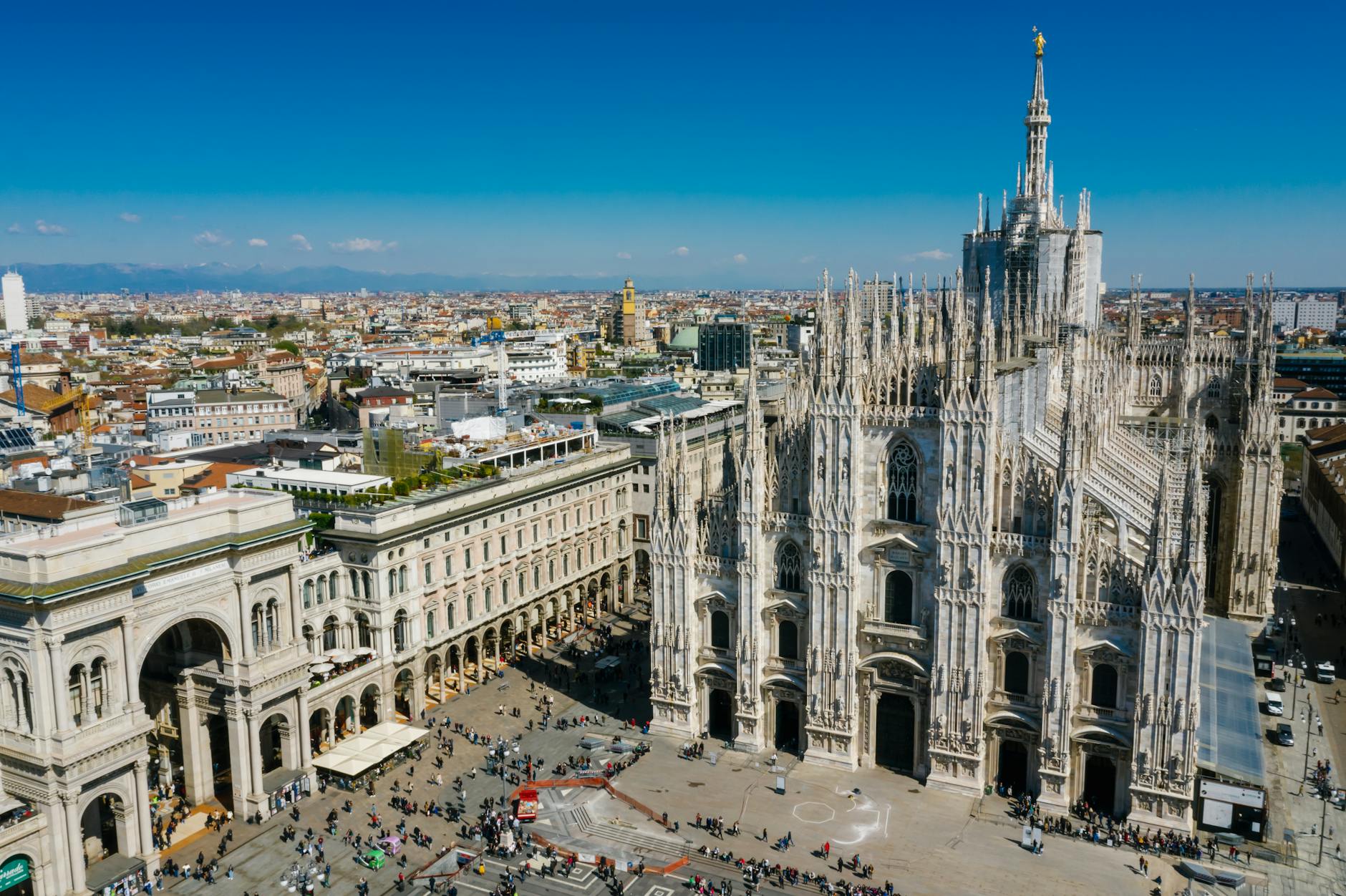
Day 1 — Arrival, Duomo, Galleria, your first aperitivo
Most international flights into Malpensa (MXP) or Linate (LIN) land mid-morning. From Malpensa, take the Malpensa Express to Cadorna or Centrale (€13, 50 minutes, every 30 minutes). From Linate, the M4 metro reaches the city center in under 15 minutes (€2.20). Drop your bag, do not nap, and walk to Piazza del Duomo by lunch.
Pre-book your Duomo and rooftop combo ticket online before you arrive — the rooftop “lift” ticket runs around €20 and you will want the elevator the first time, not the 250 steps. Spend 90 minutes inside the cathedral and on the roof. Then cross to the Galleria Vittorio Emanuele II, walk through, do the heel-on-the-bull spin in the mosaic floor if you must, and exit into Piazza della Scala. The opera house is across the square; you can usually get the museum-only ticket on the day for €12.
Late afternoon, walk fifteen minutes west to Brera or south to Navigli for your first aperitivo. A proper Milanese aperitivo is a €10-14 spritz or Negroni Sbagliato plus an unlimited buffet of arancini, pasta, focaccia, and cured meats. Do not eat dinner afterward. You will not be hungry. This is the entire point. Bed early — tomorrow is a long one.
Day 2 — Brera, Castello Sforzesco, the Last Supper, Navigli at night
Start at the Pinacoteca di Brera at opening (€15, 8:30 AM). Two hours is plenty unless you are a Caravaggio completist. Walk south through Brera’s quiet streets — Via Fiori Chiari is the prettiest — to Castello Sforzesco. The castle’s grounds are free; the museum complex inside is €10 and holds Michelangelo’s unfinished Rondanini Pietà. Skip the rest of the castle museums on a first visit unless you have a specific interest.
Lunch around Via San Maurilio or Corso Magenta. You need to be at Santa Maria delle Grazie by your timed Last Supper slot — and the slot is the entire bottleneck of this day. Tickets release in batches roughly two months before the date on the official cenacolovinciano.org site, often selling out within the hour. They cost €15 plus a €2 booking fee. If you missed the window, an authorized tour with skip-the-line access runs €45-65 and is worth it; do not show up hoping for walk-up. You get exactly 15 minutes in the room.
Afternoon: tram 2 or 14 down to Navigli. Walk the canal banks from Porta Genova to Darsena. By 7 PM the aperitivo crowd takes over. My usual spot is Rita on Via Angelo Fumagalli — €12 cocktails, very small, the bartender takes the drinks seriously. For something newer, try Mag Café on the Naviglio Grande. If you want a sit-down dinner instead of aperitivo-as-meal, book Al Pont de Ferr — old-school osteria, classic risotto alla milanese around €18.
Day 3 — Lake Como: Varenna, Bellagio, and the right ferry strategy
This is where most travelers blow the day, so read carefully. Do not go to Como city. Go to Varenna. The Trenord regional train from Milano Centrale to Varenna-Esino runs roughly every hour and takes 1h00-1h15 (€7.40 second class). Catch the 8:20 or 9:20. You arrive into a tiny lakefront station, walk five minutes down to the pier, and you are already in the prettiest village on the lake.
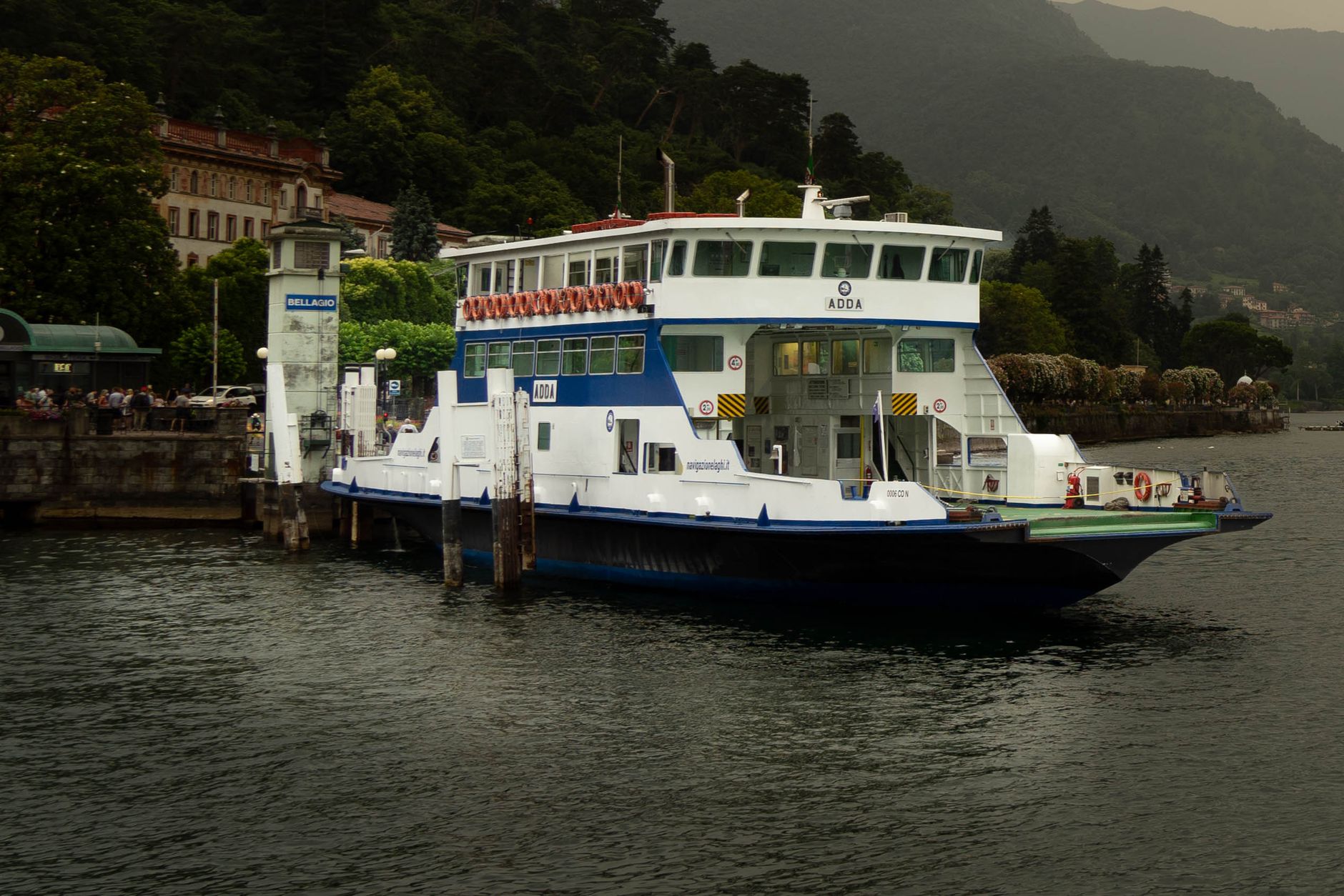
From Varenna, the ferry (navigazione laghi) to Bellagio runs every 20-30 minutes and costs about €5.20 each way. The crossing takes 15 minutes. Spend the morning in Varenna — climb to Castello di Vezio for the view, walk the Passeggiata degli Innamorati along the lake — then ferry to Bellagio for lunch and an afternoon wander. For lunch in Bellagio I like Aperitivo et Al on Salita Serbelloni; antipasti boards around €18, lake view, no fuss.
If you have energy, the late ferry over to Menaggio adds a third village and the ferry crossings themselves are half the pleasure. Back to Varenna for the 17:20 or 18:20 train to Milan; you are home by dinner. Full breakdown in my Milan and Lake Como itinerary and the focused Lake Como day trip from Milan guide.
Day 4 — Bergamo Alta: the day trip nobody talks about enough
Bergamo is the day trip from Milan I keep going back to. Most travelers spend three days in Milan and treat day trips as an afterthought. They miss the better option an hour east — walled, medieval Bergamo Alta, which feels like the version of Italy you came to see, minus the cruise crowds of Cinque Terre. Trenitalia runs Milano Centrale to Bergamo in about 50 minutes for €5.50 on the regional service. I usually catch the 8:33.
From Bergamo station, take bus 1 (€1.30, 10 minutes) to the lower funicular. The funicular up to Città Alta costs €1.30 and takes three minutes. Step out and you are on Piazza Mercato delle Scarpe inside the 16th-century Venetian walls. Walk Via Gombito to Piazza Vecchia, climb the Campanone for €5, visit the Cappella Colleoni (free, but ten minutes of your life that you will not regret), and find lunch.
What to eat: casoncelli alla bergamasca — local stuffed pasta with sage butter and pancetta — and polenta taragna. Da Mimmo on Via Colleoni does both well; €18-22 for primo plus a glass of Valcalepio. For something gentler on the wallet, Circolino in Città Alta does a €14 lunch menu in a former convent courtyard. Save room for a polenta e osei, the bizarre yellow marzipan cake shaped like little birds; you buy it by weight at Forno Tresoldi.
Afternoon: walk the walls. The full circuit of the Mura Veneziane is about 6 km and the views west toward Milan and north toward the Alps are the best in Lombardy. Back to the funicular by 17:00, train home by 18:00. The full deep-dive lives in my Bergamo day trip from Milan guide.
Day 5 — Verona or Lake Garda: the trade-off honestly explained
Day 5 is the genuine choice in this week in Milan plan, and the right answer depends on what you are missing from the trip so far.
Pick Verona if you want a real culture city day — a second urban center after Milan with a different temperament, Roman ruins, a working amphitheater, and proper Veneto cooking. Verona is 1h12 from Milano Centrale on the Frecciarossa (€20-40 advance, €45 same-day) or 1h50 on the regional (€13.85). Walk from Porta Nuova station to the Arena (Roman amphitheater, €12, still hosting opera in summer), Piazza delle Erbe, Castelvecchio bridge, and across the Adige to the Roman theater. Lunch at Osteria Sottocosta — gnocchi with smoked ricotta, €11. The Juliet’s balcony courtyard is a tourist trap and skippable. My Verona day trip from Milan guide has the timing.
Pick Lake Garda — specifically Sirmione — if you want a second lake day with a different character from Como. Garda is wider, hotter, more dramatic. Sirmione is a 1-hour train to Desenzano (€11.55) plus a 15-minute bus 026 or ferry across the peninsula. The town sits on a thin spit jutting two kilometers into the lake, with the Scaligero castle at the entrance and Roman ruins at the tip (Grotte di Catullo, €8). Lunch at Trattoria La Speranzina; lake-trout primo around €18. My Lake Garda day trip from Milan covers the ferry and bus permutations.
My honest opinion: if it is your first time in Italy, choose Verona. If you have done a culture city before and the weather is good, choose Garda. Either way, you are home in Milan by 19:00.
Day 6 — Deep Milan: Fondazione Prada, Cimitero Monumentale, design district
By Day 6 you have done the postcard Milan. Now do the real one. Start at Fondazione Prada in the southeast, near Lodi T.I.B.B. metro (M3). Entry €15. Allow 2-3 hours for the OMA-designed campus, the gold-leafed haunted house (Torre Hood building), the rotating exhibitions, and lunch at Bar Luce — a Wes Anderson-designed café where a cappuccino costs €2 and the jukebox actually works. This is the Milan you came for but did not know existed.
Mid-afternoon, M3 back into the center, then M5 north to Monumentale. The Cimitero Monumentale is an open-air sculpture museum disguised as a graveyard. Two hours, free entry, and the most surprising 90 minutes of your week. Bring a pin of the Bernocchi family mausoleum (a stone spiral pyramid). Afterward, walk east into the Isola district and then south into Porta Nuova for the Bosco Verticale residential towers and Piazza Gae Aulenti, Milan’s new financial-district plaza.
For markets, the Mercato di Viale Papiniano on Saturday mornings is the local non-tourist market — fish, produce, cheap clothes, no English. The Fiera di Sinigaglia along the Naviglio Grande on Saturdays is the vintage/antique market. Pick one based on which day your Day 6 falls.
Evening: dinner in the design district around Via Tortona or in Porta Romana. Trippa on Via Giorgio Vasari, no reservations except by phone, the offal-and-vegetable cooking that won the Michelin Bib Gourmand — primi €14-18, the kind of meal you tell people about for a year.
Day 7 — Slow day, shopping, aperitivo crawl, flight home
The last day depends on your flight. If you fly out late evening, you have a full day. If you fly midday, treat this as a buffer.
Morning options: the Quadrilatero d’Oro (Via Montenapoleone, Via della Spiga) for fashion window-shopping; the Museo del Novecento in Piazza del Duomo for 20th-century Italian art and the Futurists (€10, top floor has the best Duomo view in the city for free if you only do the café); or 10 Corso Como, the concept store that started the trend, for browsing and a long lunch in their courtyard.
If it is your last Milan afternoon and you want to eat well one final time, do an aperitivo crawl rather than a long lunch. Start at Bar Basso in Porta Venezia (the inventor of the Negroni Sbagliato, €10), tram to Camparino in Galleria for a proper Campari spritz at the source (€12, stand at the bar — sitting outside costs €18), then end at N’Ombra de Vin in Brera for natural wine and a small plate. Three drinks, three neighborhoods, three hours, and a perfect goodbye to the city.
Linate is 15 minutes by M4 metro. Malpensa is 50 minutes by Malpensa Express from Centrale or Cadorna. Build in 2.5 hours for international flights. If you have a long layover on arrival or departure, my Milan layover guide covers what you can squeeze in.
Where to eat across the week — five spots I send people to
- Ratanà (Isola, near Porta Nuova). Cesare Battisti’s modern take on Milanese classics — risotto alla milanese with bone marrow, €22. The space is a converted railway building. Book a week ahead.
- Trippa (Porta Romana, Via Giorgio Vasari 1). Diego Rossi’s small offal-focused trattoria. Vitello tonnato €14, fried tripe €12. Phone reservations only; call exactly 30 days before.
- Pasticceria Marchesi (Via Santa Maria alla Porta 11 or inside Prada Galleria). Breakfast brioche con crema, €3 standing at the bar. The Galleria branch is more theatrical; the original is more local.
- Luini (Via Santa Radegonda, behind the Duomo). The legendary panzerotti — fried pizza dough pockets, tomato-mozzarella €3.50. There is always a line. It moves fast.
- Pavé (Via Felice Casati 27). The best maritozzo in Milan and a serious morning coffee. €5 for a maritozzo and cappuccino. The croissants laminated with miso are weirder than they sound and worth ordering.
Where to stay — the right neighborhood plus three hotels by budget
Stay in or adjacent to the Duomo–Brera–Porta Venezia triangle. Specifically, target Brera, Porta Venezia, or the streets between Duomo and Centrale. Avoid Centrale’s immediate ring (rough at night, soulless by day) and avoid anything labeled “near Malpensa” (you will be 50 minutes from everything).
- Budget (€90-140/night): Hotel Berna, two blocks from Centrale. Quiet rooms, free aperitivo in the lobby bar 6-8 PM, breakfast included. Not luxury, but the location for the price is unbeatable.
- Mid (€180-280/night): Room Mate Giulia, directly behind the Galleria Vittorio Emanuele. You step out the door and the Duomo is 90 seconds away. Patricia Urquiola design, free in-room minibar (yes, free), late checkout if you ask politely.
- Splurge (€450+/night): Senato Hotel Milano, Via Senato 22 in the Quadrilatero. Internal courtyard pool, generous rooms, the best breakfast spread in the city. Or for the icon version, the Mandarin Oriental on Via Andegari — Michelin two-star Seta restaurant on premises.
For a fuller breakdown of neighborhoods, including which streets are quietest and which to avoid in summer, see my where to stay in Milan guide.
Transport strategy — passes, Trenord, Trenitalia, day trip math
Milan’s city transport is run by ATM. A single ride is €2.20 and is valid 90 minutes including transfers. Buy a 3-day tourist pass for €13 if you plan more than two days of heavy metro use. The Milano Card (€11.50 for 24h, €19.50 for 48h, €23 for 72h) bundles transport with museum discounts; the math works if you visit two or more paying museums.
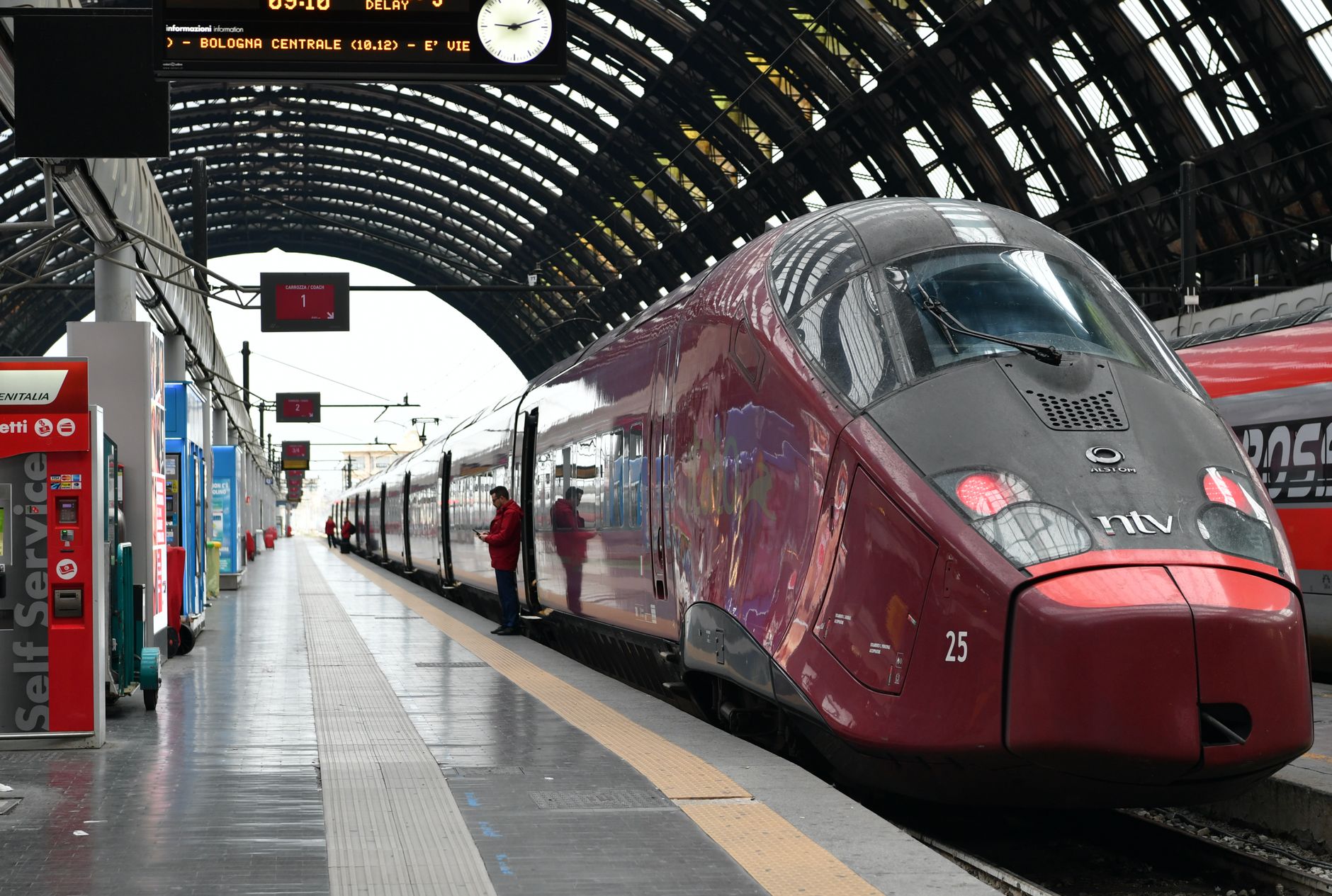
For day trips: regional trains within Lombardy (Como, Bergamo, Varenna, Lake Garda’s Desenzano) run on Trenord. Buy at the machine in Centrale or via the Trenord app. Always validate paper tickets at the green machines on the platform before boarding regional trains — a missed validation is a €50 fine and they do check.
Verona requires Trenitalia and you should book the Frecciarossa 7-10 days ahead to get the €19.90 advance fares. Use the Trenitalia app, not third-party resellers. For Milan’s broader transport setup (airports, taxis, scooter rentals, e-bike share) the Milan transport guide has the practical details.
Approximate Milan one week trip transport budget per person, return fares, second class: Como (Varenna) €15, Bergamo €11, Verona €40 (Frecciarossa) or €28 (regional), Lake Garda €23. Plus €13 for the 3-day city pass. Total around €110 for the week, give or take a Frecciarossa upgrade.
Practical tips: laundry, weather, the small stuff that makes the week work
- Laundry: Wash Self-Service Lavanderia on Via Vigevano (Navigli) and on Via Marcello (Centrale area) — €4.50 wash, €4 dry, takes 90 minutes. Plan your laundry mid-week so socks dry on a hotel chair overnight.
- Weather and packing: Milan and the lakes share a humid continental climate. April and October are 12-20°C with possible rain. June-August is 25-33°C and increasingly hot; pack a refillable water bottle (most fountains in Milan run free, cold, drinkable water). November-February runs 0-10°C with foggy mornings. Layers always.
- Cash vs card: Contactless works everywhere now, including buses and metro turnstiles via Apple Pay/Google Pay. Carry €30 cash for tiny bars and bathroom turnstiles.
- SIM/data: If you are on a non-EU plan, grab an Iliad or Ho. SIM at any Iliad shop — €10 for 200GB for the month. Or use an eSIM through Airalo before flying in.
- Reservations to make before flying: Last Supper (60 days out), Duomo rooftop (1 week out), Trippa restaurant (30 days out, phone only), Frecciarossa to Verona (7-10 days out for the cheap fare).
- The Milan museum trick: Most civic museums are free on the first Sunday of the month. If your week includes one, swap a paid museum into that day.
- What to skip: The Sforza Castle individual museums (unless rainy), the Juliet balcony in Verona (genuine tourist trap), Como city (Varenna is the better choice every time).
The best time of year for this 7-day plan
Late April through mid-June and mid-September through October are the prime windows. The lakes are open, ferry frequency is high, daytime temperatures are 18-26°C, and Milan’s outdoor aperitivo culture is in full swing without the August furnace. Hotels in these months run 20-30% higher than winter but the trip works at its best.
July and August are hot — Milan regularly hits 33°C with humidity — and locals leave the city for the whole of August, meaning many neighborhood restaurants close for two to three weeks (chiuso per ferie). The lakes and Verona stay busy, but Milan itself feels half-shuttered. My Milan summer itinerary works around this.
November to February is the underrated season. The lakes go quiet (some hotels close), but Milan turns into a brilliant indoor city — opera season at La Scala, the Christmas markets, Oh Bej Oh Bej fair around Sant’Ambrogio, and panettone everywhere. Day trips trim to Bergamo and Verona; Lake Como still works on clear winter days. Full plan in my Milan winter itinerary.
March and early April are gamble months — you might catch perfect 18°C sun or three days of cold rain. For broader itinerary structures by trip length and season, the Milan itineraries guide compares the options.
Frequently asked questions
Is a week in Milan too much? Will I get bored?
No, because half of this one week Milan itinerary is day trips. You sleep in Milan, but you spend three full days outside it. Even pure-Milan days (Day 1, 2, 6, 7) are different neighborhoods with different food and different museums. The complaint that “Milan is boring” comes from people who only saw the Duomo.
Do I need to rent a car for this itinerary?
No, and you should not. Every destination here is reachable by train in 50-75 minutes, parking in Milan is a nightmare (€35-45 per day in central garages), and ZTL zones will ticket you €90 if you accidentally drive into the wrong street. Day trips by train are faster than driving in nearly every case.
Can I add Venice to this week?
Venice is 2h25 from Milan by Frecciarossa. You can do a one-day raid (out 7:00, back 21:00) but it would replace, not add to, one of the existing days. If Venice is a must-see, swap it for Day 5 instead of Verona/Garda. Otherwise, save it for a separate trip — it deserves two nights.
Is Lake Como better than Lake Garda for a day trip from Milan?
For first-time visitors, yes — Como (specifically Varenna and Bellagio) has the iconic look, easier ferry navigation, and a faster train. Garda is bigger, hotter, less Instagram-saturated, and better if you want swimming and Roman ruins. For full breakdowns try the day trips from Milan overview.
How much will this whole week cost?
Per person, sharing a mid-range hotel room: flights aside, budget €1,400-1,800. That breaks down roughly as €700-900 hotel (7 nights), €110 transport, €300-400 food, €100-150 museums and attractions, €100-150 buffer. Solo travelers add about €350 for the single-room supplement.
Can I do this itinerary with kids?
Yes, with edits. Swap Brera (Day 2) for an extra ferry ride on Como. The Castello Sforzesco grounds are great for running around. Fondazione Prada’s gold tower fascinates kids. Skip the Last Supper (15 minutes silent in a dim room is rough on under-10s) and use that slot for the Museo della Scienza e Tecnologia, which has actual submarines.
Final thoughts
The travel-industry pitch for a first Italian trip almost always pushes you to do four cities in seven days. The math has never worked. You spend 30% of your time on transfers and the other 70% half-tired. What works — for first-timers, repeat visitors, families, solo travelers, couples on a long weekend extended into a week — is anchoring in one good city with a great train station and letting the country come to you. Milan, against its old reputation as the soulless business stop on the way to Venice, is exactly that anchor. Seven days, one bed, three lakes, one culture city, the best cathedral in Italy, a Wes Anderson café, and an aperitivo habit you will try to recreate at home and fail at. That is the trip. Book it.