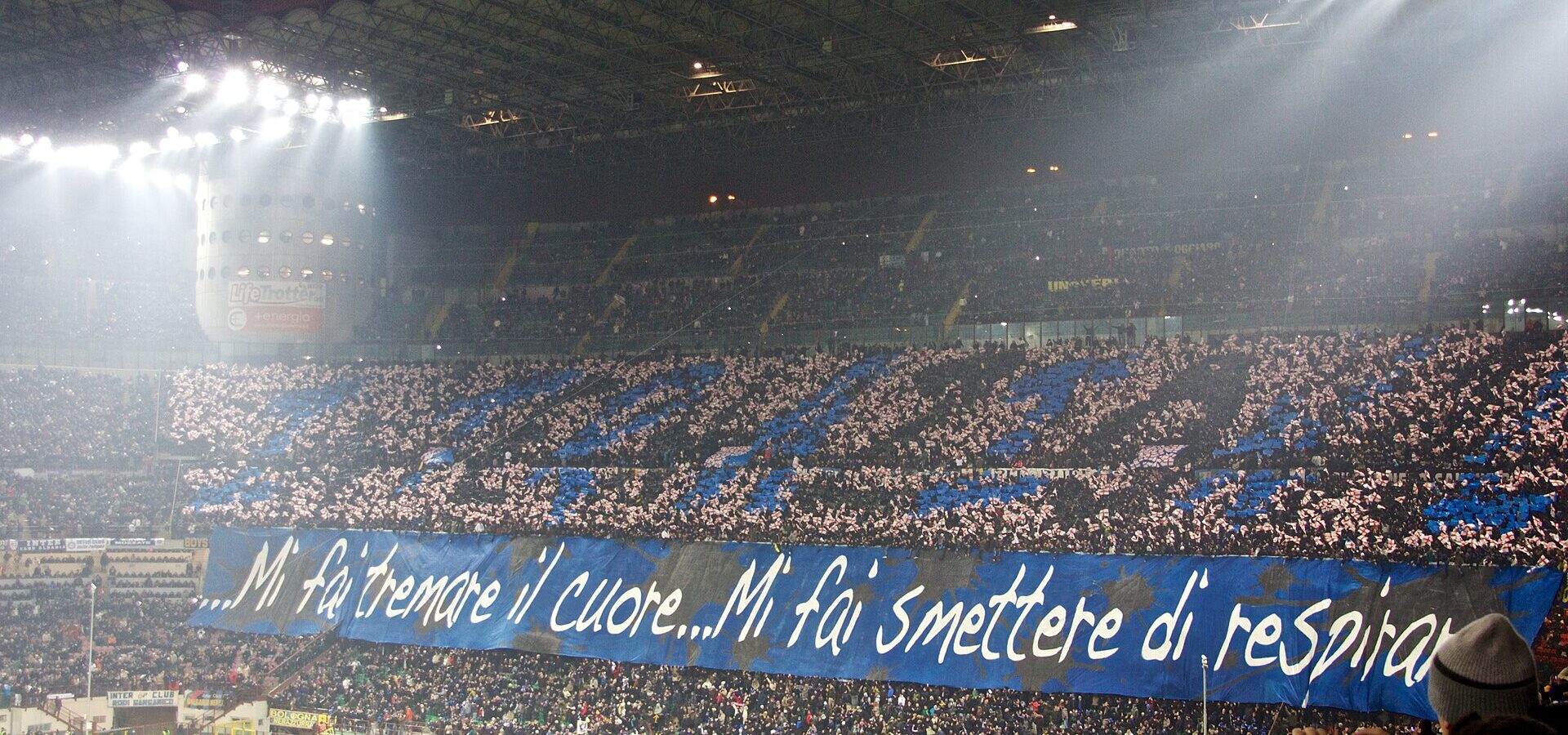
Inter’s fan card lasts six years and costs fifteen euros. Milan’s lasts four and costs twenty. That sounds like trivia until you realise it is the clearest signal of how differently the two clubs that share San Siro treat the people trying to get into it — and that if you turn up expecting Inter’s ticketing to work like Milan’s, you will find yourself locked out of exactly the sales phase you needed.
Buy Inter Milan tickets from inter.it and nowhere else, using a free account on the club’s site. Every ticket is personalised: it carries the name of the person using it, and matching photo ID is checked at the turnstile, which is why tickets from general resale marketplaces do not work. For an ordinary league match, general sale is comfortably enough and there is usually availability in the week of the game. For a big fixture, you want the €15 Tessera Siamo Noi — valid six years — plus an INTERISTA loyalty subscription, because those unlock the earlier sales phases that absorb the good seats before the public window opens. Aim for the secondo anello: the Curva Nord is the atmosphere but it is largely locked up by season-ticket holders.
Below: the sales phases in order, what the cards actually do, where to sit, and the specific ways visitors get caught out.
Where to buy
The official website
Inter sells directly through inter.it, and this is the route to use. It is the cheapest, it produces a properly personalised ticket, and it is the only channel where the club can fix a problem for you.
Create your account before tickets go on sale, not during. Verifying an email address while an on-sale queue is moving is a good way to watch the sector you wanted disappear.
Official partners and sales points
The club works with authorised ticketing networks and physical sales points in Italy, and the Inter store in the city centre is a straightforward option if you are already in town and decide on the spur of the moment. Anything the club itself lists as an official channel is safe.
What to avoid
General ticket-resale marketplaces. The tickets on them may be entirely genuine, but they carry the original purchaser’s name, and Italian regulations require the name on the ticket to match the ID of the person presenting it. You will be stopped at the turnstile. This is not an occasional problem — it is the single most common way visiting fans lose money on Serie A.
The test is simple: if a seller cannot explain the mechanism by which your name ends up on the ticket, there is no mechanism.
Siamo Noi and INTERISTA: what each one does
Inter runs two overlapping things, and the difference matters.
Tessera Siamo Noi
- €15, excluding a shipping fee, and valid for six years.
- Required if you want to buy a season ticket, and required for the away section when Inter play away.
- Gives the ability to buy in advance for the biggest matches.
- Apply through the club’s site. Usefully, you can start using the Siamo Noi number to buy while you wait for the physical card to arrive — so a late application is not automatically wasted.
INTERISTA
The club’s loyalty programme, and the piece most visitors miss. To reach the early sales phases you need to be subscribed to INTERISTA and to have your Siamo Noi or Inter Club card correctly associated with your profile on inter.it.
That association step is the one that goes wrong. Buying the card is not enough on its own; if it is not linked to the account you are buying from, the system treats you as a member of the general public and the presale window will simply not appear.
Inter Club
The official supporters’ club network. Inter Club members get their own sales phase, separate from Siamo Noi holders. For a visitor this is generally not worth pursuing unless you have a genuine local connection.
The sales phases, in order
- Season-ticket holders — and the window in which they can release seats they will not use.
- Inter Club members and Siamo Noi cardholders, in their own phases.
- A sponsor presale — Mastercard holders frequently get an exclusive window, which is a genuinely useful and widely overlooked route for a visitor who happens to hold the right card.
- General sale to everyone else.
For a standard league fixture, general sale is more than adequate and tickets remain available close to the match. For the derby, Juventus, Napoli or a Champions League knockout tie, the earlier phases can take most of what you would actually want to sit in.
Note also that Serie A confirms kick-off times for television relatively late, sometimes only four to six weeks ahead, and tickets can go on sale before the time is fixed. Book flexible travel if a specific match is the reason for the trip.
Where to sit
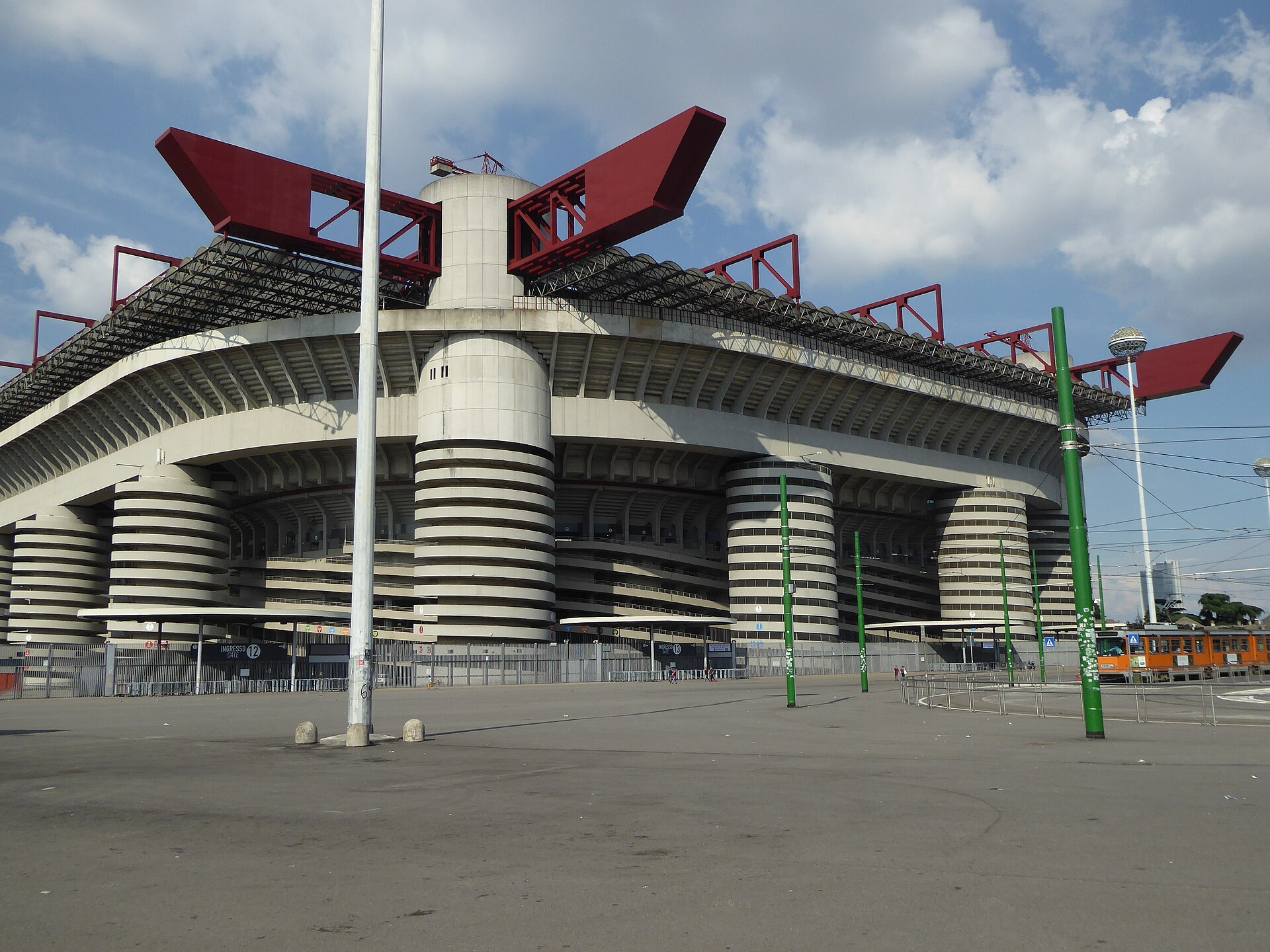
San Siro is the same building whoever is at home, but the ends swap allegiance. For an Inter match, the Curva Nord is the home ultras’ end; the Curva Sud is Milan’s. The two long sides are the Tribuna Rossa and Tribuna Arancio, and each section splits into primo, secondo and terzo anello.
- Curva Nord — the best atmosphere in the ground and the hardest to get into, because it is dominated by season-ticket holders. When tickets do surface they are the cheapest in the stadium. You will stand throughout, you will be behind flags, and you will not see all of the football.
- Secondo anello — my recommendation, and not just because of the view. The middle tier has both the best sightlines in the ground and the easiest availability for someone buying in general sale, which is a rare combination. You get the Curva Nord’s choreography laid out in front of you rather than being inside it.
- Terzo anello — the steep upper deck built for Italia ’90. Cheap, high, exposed, and superb for reading the shape of a match. Bring a coat between November and March; it is markedly colder up there.
- Primo anello — closest to the pitch, more expensive, and with flatter sightlines from the front rows than you might expect.
- Hospitality — the club sells premium packages with catering and a seat in the main stand. Comfortable and quiet.
Prices are set by fixture category, so the same seat costs very different amounts depending on who Inter are playing. Broadly, the upper ring at an ordinary league match sits in the low tens of euros, the middle tier somewhere in the fifties to nineties, and a derby or a European knockout tie substantially more across every sector. Use the club’s own price list for your match rather than any general figure — including these.
The name and ID rule
Identical in substance to every Serie A ground, and worth spelling out because it is where trips fail.
- Each ticket carries the name of the person who will use it, entered at the point of purchase. Buying four tickets means entering four real names.
- Photo ID is checked at the turnstile. Visitors should bring a passport. The names must match.
- Enter names exactly as the passport shows them, including middle names where the passport carries them.
- There is an official change-of-name process if plans shift, run through the club’s platform with a deadline before the match. Use it rather than handing a ticket to a friend.
- Children need identity documents too.
None of this is discretionary. It comes from Italian public-order law around football matches, and stewards apply it because they are required to.
Getting to the ground
M5 lilac metro to San Siro Stadio, the line’s terminus, on a €2.20 urban ticket; change onto the M5 at Garibaldi FS from the M2 or at Lotto from the M1. Tram 16 is the slower and considerably more pleasant route from the centre. The whole network is covered in our Milan metro guide.
Arrive early. Turnstiles open around two hours before kick-off, security for 75,000 people is not quick, and the metro afterwards is a serious crush — walking twenty minutes to Lotto is often faster than queueing at San Siro Stadio.
Matchday transport in full, including the fastest way out, is in our getting to San Siro guide.
How Inter’s ticketing differs from Milan’s
Both clubs play in the same stadium under the same national rules, but the routes in are not the same, and if you are choosing whichever match falls on your dates it is worth knowing where they diverge.
- The card. Inter’s Siamo Noi is €15 for six years. Milan’s Cuore Rossonero is €20 for four. Inter’s is better value and also does more — it is required for season tickets and away sections, not merely a queue position.
- The extra step. Inter layers a loyalty programme, INTERISTA, on top of the card, and you need the card associated with your profile for the presales to appear. Milan’s route is simpler: an account plus the card.
- Sponsor presales. Inter frequently runs a Mastercard-exclusive window. If you hold one, that can be the easiest way into a high-demand fixture without buying anything at all.
- The home end. Curva Nord for Inter, Curva Sud for Milan — and Inter’s is more thoroughly locked up by season-ticket holders, so a visitor’s realistic target is the second ring.
The equivalent walkthrough for the other half of the city is our AC Milan tickets guide.
Which fixture to pick
If your dates are flexible and you simply want to see Inter at San Siro, the fixture you choose changes both the price and the experience more than the seat does.
- A midweek Champions League group match is the sweet spot. European nights at San Siro have a different quality — floodlights, anthem, both rings full — and against unglamorous opposition the tickets are far easier and cheaper than the equivalent domestic occasion.
- A weekend league match against a mid-table side is the easy option: available in general sale, reasonably priced, and a proper Serie A crowd. The atmosphere can be flat if the game is, which is the trade.
- Juventus, Napoli, Milan or a Champions League knockout tie is the full experience and the hardest ticket. Plan several weeks out, get the card, and have a bar in reserve.
- A Coppa Italia tie is the underrated one — cheap, quiet, often with a rotated side, and the easiest way into San Siro if the building itself is what you came for.
Planning a first Inter match from scratch
In order, roughly six weeks out:
- Find the fixture on the club site, and check whether the kick-off time is confirmed or still provisional.
- Create the inter.it account, and if the match is a big one, buy the Siamo Noi card and associate it with the profile. Do this now, not on the day tickets drop.
- Note the sales phase dates, which the club publishes per match. Set a reminder for the phase you actually qualify for.
- Buy, entering everyone’s passport names. Aim for secondo anello, Rossa or Arancio, towards a corner.
- Book flexible travel if the kick-off time is not yet fixed.
- On the day, eat in the city, take the M5 out with ninety minutes to spare, and carry your passport.
That sequence is more process than most football trips need and it is the reason Italian matches are cheaper than the equivalent elsewhere: the friction keeps the prices honest.
Practical notes for the day
- Passport. The most common reason people miss kick-off.
- Travel light. Large bags are not permitted and there is no cloakroom worth relying on.
- Forty minutes early is the minimum; ninety is comfortable and gives you time to walk round the outside.
- Eat before you go. The concourse catering is poor and the queues long. Our Milan food guide will do you better.
- Download the ticket in advance — mobile data around a full San Siro is unreliable.
- Neutral clothing or blue and black, never the away team’s colours outside the away section.
If you cannot get in
Two decent fallbacks. The San Siro stadium tour costs €31, runs daily (the Museum&Tour opens at 09:30 and closes at 17:00 from November to March and 18:00 from April to October), takes in the dressing rooms, tunnel, pitchside and the museum — and covers both clubs, so it is not a Milan-only experience. It does not run on matchdays or the day before a Champions League match.
Or watch it in a bar. A big Inter match in a neighbourhood bar in Isola, Navigli or Porta Romana is a genuinely good night, and the crowd will be more expressive than the tribuna. Our best bars in Milan guide is a starting point, though for football you want the unpretentious places rather than the cocktail rooms.
Frequently asked questions
How much are Inter Milan tickets?
It depends entirely on the opponent, because Serie A prices by fixture category. The upper ring at an ordinary league match runs in the low tens of euros, the second ring in the fifties to nineties, and big matches cost considerably more everywhere. Check the club’s price list for your specific game.
Where do I buy Inter tickets officially?
Through inter.it, using an account on the club’s own site, plus the authorised sales points and stores the club lists. Those are the safe channels; general resale marketplaces are not.
What is the Tessera Siamo Noi and do I need it?
Inter’s fan card: €15 excluding shipping, valid six years. You need it for a season ticket and for away sections, and it gives advance purchase on big matches. For an ordinary league fixture bought in general sale, you do not need it.
What is INTERISTA?
The club’s loyalty programme. Early sales phases require an INTERISTA subscription with your Siamo Noi or Inter Club card properly associated with your inter.it profile — that association step is the one people forget, and without it the presale simply will not show.
Do Inter tickets have to be in my name?
Yes. Every ticket is personalised and photo ID is checked at the gate. If you buy for a group, you enter each attendee’s real name at purchase and each of them brings matching ID.
Can I get into the Curva Nord?
Rarely, as a visitor. It is heavily taken by season-ticket holders and what is released goes fast. The realistic and, frankly, better option for a first visit is the second ring, where you can see the choreography rather than being buried in it.
Can I buy Inter tickets on the day?
For low-category fixtures there is often something available, but you will still need to give your name and show ID, so it is not a walk-up in the usual sense. Buying online in the week before is easier.
Is it cheaper to watch Inter or AC Milan?
Broadly the same — the same stadium, the same category pricing model, and the price is driven by the opponent rather than by which club is at home. Inter’s fan card is the cheaper of the two if you are buying one.
What happens if the fixture is rescheduled?
Tickets normally stay valid for the new date and time. The risk sits with your travel arrangements, not with the ticket, which is why flexible flights are worth the small premium when a specific match is the point of the trip.
Final thoughts
Inter’s system rewards a small amount of preparation and punishes none at all. Set up the account, and if the match matters buy the Siamo Noi card early enough to associate it with your profile properly — fifteen euros spread over six years is not a decision that needs agonising over.
Then aim for the second ring, take your passport, arrive early and eat first. A Champions League night at San Siro with the Curva Nord holding up a full-tier display is one of the great sights in European football, and it is available to anyone prepared to spend ten minutes reading the sales phases before booking a flight.
The wider picture — both clubs, the stadium’s contested future and what else there is to watch in the city — is in our football in Milan guide.
And for the one fixture where all of this gets much harder, see our Derby della Madonnina guide.