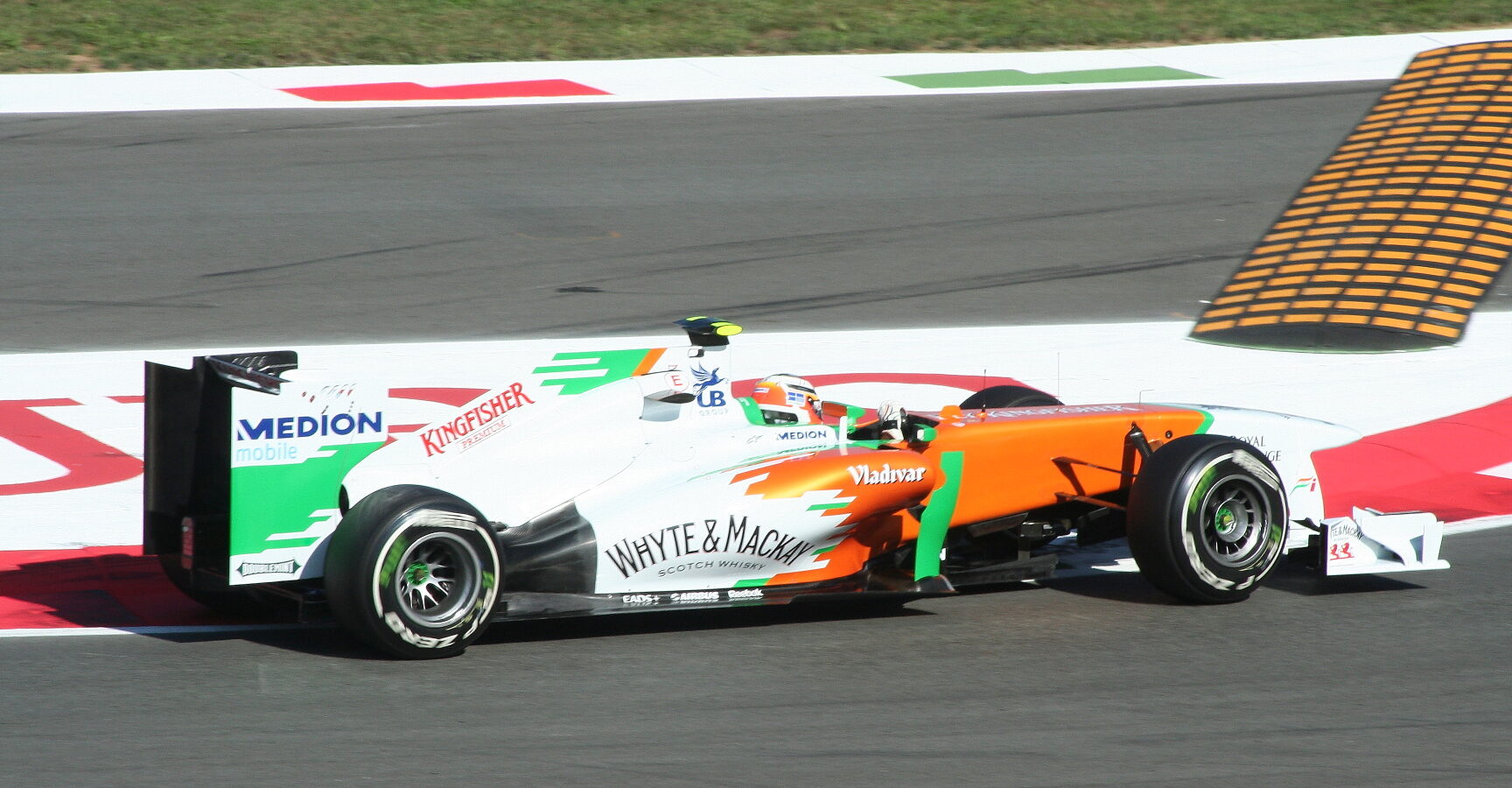
Monza is fifteen kilometres from Milan and nine minutes from Milano Centrale by direct train, which makes the Italian Grand Prix easy to attend as a commuter. Half the paddock stays in Milan and travels out each morning. So should you.
The Italian Grand Prix Monza weekend runs Friday to Sunday, and the 2027 edition is on 3–5 September 2027 at the Autodromo Nazionale Monza. Tickets are sold by the circuit itself through monzanet.it and its ticketing partner TicketOne, as a single day or as a three-day subscription; general sale for 2027 opened at noon on 24 September 2026. On the official 2027 price list, adult weekend grandstand seats run from €219 to €1,614, with the Parabolica grandstand 22 at €888, while general admission — the prato, standing on grass banks inside the park — is €126 and is the ticket I would buy for a first visit. Base yourself in Milan, not Monza: the direct train from Milano Centrale takes about nine minutes and costs a few euros, and Milan has far more hotels and restaurants.
What follows is how the weekend actually works from a Milan base: the ticket types and what each is worth, how to get there and back on race day, what to bring, and the parts of the experience nobody tells you about until you are standing in the park at seven in the morning.
Why Monza is different
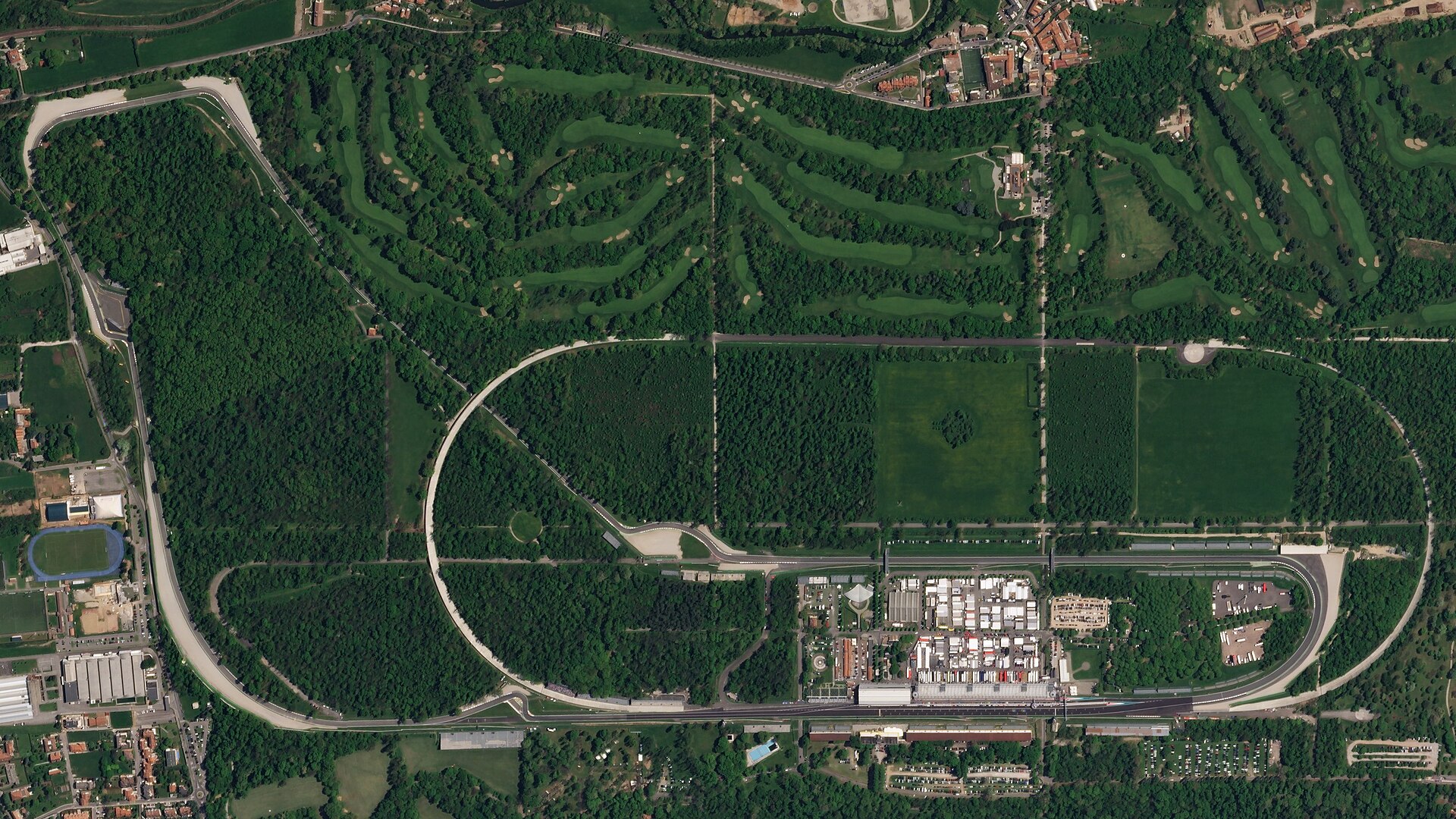
The Autodromo Nazionale Monza opened in 1922, which makes it one of the oldest purpose-built circuits still in use, and it has hosted the Italian Grand Prix in every world championship year since 1950 except 1980. The layout is 5.793 km of long straights joined by a handful of heavy braking zones — eleven corners in total, which is very few — and teams run very low downforce to make the most of it. It is the fastest circuit on the calendar by average lap speed. Italians call it the Tempio della Velocità, the temple of speed, and for once the marketing is accurate.
The other thing that makes it different is the setting. The circuit sits inside the Parco di Monza, one of the largest walled parks in Europe, laid out around a Habsburg royal villa. The circuit runs through woodland, and a general admission ticket puts you on the grass banks. The historic banked oval built in 1955 — the Sopraelevata, with banking that reaches an 80% gradient, about 38.7 degrees — still stands in the woods. How much of the park you can reach depends on your ticket sector, and the circuit publishes the access details nearer the event. There is no other race weekend anywhere that feels like this.
The crowd
The tifosi make Monza. On Sunday, if a Ferrari does anything at all, the noise is startling. It is partisan in a way that some people find wearing — if your driver is not in red you will hear about it — but it is also the reason the race is worth travelling for rather than watching at home. After the chequered flag, the crowd is let onto the track and walks down to the podium straight, which is an experience worth staying for even if you have no particular allegiance.
When the race is
The Italian Grand Prix has traditionally been an early-September fixture, and 2027 keeps it there: Friday 3 to Sunday 5 September 2027. The weekend follows the standard modern format — two practice sessions on Friday, a third practice and qualifying on Saturday, the race on Sunday afternoon — unless the round is designated a sprint weekend, in which case Friday and Saturday change shape. F1 confirms sprint rounds when it publishes the season calendar, so check before you assume Friday is a quiet day.
Support races fill the rest of the timetable. Formula 2 and Formula 3 run practice, qualifying and sprint races on Friday and Saturday, with their feature races on Sunday morning before the Grand Prix, and the Porsche Supercup and various Italian championships fill out the weekend. On a general admission ticket the Friday and Saturday are often the better value: the park is far less crowded, you can move between viewing spots, and the cars are on track almost continuously.
Tickets
Where to buy
Buy from the circuit. monzanet.it is the Autodromo’s own site and it sells through TicketOne; Formula 1’s own website also sells official tickets for the round. Everything else — travel companies, package sellers, secondary marketplaces — is buying from those channels and adding a margin, sometimes a very large one.
General sale for 2027 opened at noon on 24 September 2026. That is characteristic of how Monza works — tickets go on sale roughly a year ahead, immediately after the previous year’s race, and the cheap grandstands go first. If you are reading this with a specific year in mind, the practical advice is to buy as early as you reasonably can and to check the official price list rather than any figure quoted second-hand, including the ones below.
General admission (prato)
The cheapest ticket by a wide margin, and the one I would recommend for a first Italian Grand Prix Monza weekend. It gets you into the park with no allocated seat, and you find a spot on the grass banks and earth mounds that line much of the circuit. The advantages are real: you can move around all day, you get several completely different views of the cars, and you are under trees when the September sun is at its worst.
The disadvantages are equally real. You need to arrive early, especially on Sunday, and the circuit’s own event information gives the gate times. You will stand or sit on the ground all day. Sightlines vary from excellent to hopeless depending where you end up, and you will see much less of the race than a grandstand ticket gives you, because you cannot see a screen from most of the banks. Bring a small folding stool if you can carry one; plenty of people do.
Grandstands
Monza’s grandstands are lettered and numbered, and they are not equal. Broadly:
- Main straight stands (the ones opposite the pits) give you the start, the pit stops, the podium and the big screens. They are the most expensive and the most atmospheric, and they are where the wall of red sits.
- First chicane (Variante del Rettifilo) stands look at the heaviest braking zone on the lap and the place where overtaking — and contact — actually happens. My pick if the main straight is out of budget.
- Parabolica / Curva Alboreto stands, at the long final corner, are the connoisseur’s choice and priced accordingly. You see cars at their most delicate and you get a long, sustained view rather than a flash.
- Lesmo and Ascari stands are cheaper, quieter, and give a genuine sense of speed, but you are a long walk from the paddock end of the park and further from the food.
The official 2027 adult weekend price list runs from €219 for the cheapest grandstand area (Junior Interna) to €1,614 for Centrale 1, with the Parabolica grandstand 22 at €888. The circuit publishes an official price list each year, and that is the only number to plan against.
Hospitality and the Paddock Club
F1’s Paddock Club and the circuit’s own hospitality packages exist and cost four figures per person. They buy you air conditioning, food, a pit lane walk and a guaranteed good seat. Whether that is worth roughly ten times a general admission ticket depends entirely on what you came for. My honest view: at most circuits hospitality is a substantial upgrade, but at Monza a large part of the appeal is the park, the crowd and the trees, and you experience less of all three from a glass box. Spend the difference on three days instead of one.
Getting from Milan to Monza
This is the part that makes Monza easy, and it is why almost nobody who knows the race stays in Monza itself.
By train
Trenord runs frequent regional services from Milano Centrale to Monza — a direct journey of about nine minutes, with around 38 trains a day and the first departure at 05:25. Check the return timetable for your date on trenord.it. The fare is a few euros; Monza falls inside the STIBM integrated zone system that covers Milan and the Monza e Brianza area, so the price depends on how many zones you cross rather than on the operator. Buy at the machine or in the Trenord app, and validate if you have a paper ticket.
Trains also run from Milano Porta Garibaldi, which is often the better station if you are staying north of the centre. On race weekend Trenord adds extra services and the trains are heaving — expect to stand, and expect the platform at Monza to be a slow shuffle at both ends of the day. Our guide to trains from Milan covers ticket types and how the regional network works.
From Monza station to the circuit
The Autodromo is inside the Parco di Monza, some way out from Monza railway station. On event days there are also shuttle buses from the station towards the circuit gates, and local bus services run in the same direction; check the circuit’s own event information for the current arrangements, because the shuttle routes and the gate assignments change from year to year with the security plan.
Whichever you choose, look up which gate your ticket uses before you set off. The park is large, the perimeter is long, and walking to the wrong entrance can add half an hour in the sun.
By car
Possible, and rarely worth it. There is paid parking around the park, it sells out, and the roads into Monza on Sunday morning are the reason people miss the start. If you are already driving in Italy, our guide to renting a car in Milan explains the ZTL and Area C rules that catch visitors out; for this particular weekend, leave the car at the hotel.
From the airports
If you are flying in on the Friday, the cleanest route is Malpensa Express to Milano Centrale (51 minutes, €15) and then the regional train straight out to Monza. From Linate, take the M4 to San Babila, the M1 or M2 across to Centrale, then the train. From Bergamo, the coach to Centrale takes 50 to 60 minutes before you start. Our airport transfers guide compares all of them properly.
Where to stay
Stay in Milan. Monza is a pleasant town, but it has far fewer hotels than Milan, and rooms are in demand for the Grand Prix; Milan has hundreds of hotels, and even at race-weekend prices the choice is far better. Anywhere within reach of Centrale or Porta Garibaldi is ideal, because that is where the trains leave from — our guides to hotels near Milano Centrale and where to stay in Milan cover the options by neighbourhood.
Book early anyway. Milan hotel prices rise for the Grand Prix even though the race is in another town, and early September also catches the end of the summer season and the start of the trade fair calendar at Rho.
What to bring
- Ear protection. Modern F1 cars are quieter than they were, but the support races are not, and a full day trackside is a lot of noise. Foam plugs are enough; proper defenders are better for children.
- Sun protection and a hat. Early September in Lombardy regularly hits the high twenties and the general admission banks are only partly shaded. Our Milan packing list covers the season.
- A refillable water bottle. There are fountains in the park. Buying water all day at circuit prices is a needless expense.
- Cash for the food stalls, though cards are widely accepted now. The panini and porchetta trucks in the park are considerably better than typical circuit catering, and cheaper.
- A small folding stool if you are on general admission. Check the circuit’s prohibited-items list first, since bag size limits and what counts as a permitted seat are set each year.
- A poncho. Monza gets thunderstorms in September and there is very little cover.
Doing it on a budget
A Friday general admission ticket is a low-cost way into a Formula 1 weekend, and the circuit’s official price list includes a Friday general-admission category. You get two practice sessions, the support races, an almost empty park and the freedom to walk the whole circuit, for a small fraction of a Sunday grandstand seat. Add a €3 train fare and a picnic from a Milan supermarket and you have a Formula 1 day out for less than a decent dinner. If money is the constraint rather than the day of the week, that is the trip to take — and our budget Milan guide covers keeping the rest of the trip cheap.
Visiting Monza when there is no race
The circuit is open to visitors for most of the year and the park around it is a public park, free to walk into. You can see the pit straight, walk up to the derelict banking, and on many days there is club racing, testing or a track day going on. The royal villa and its gardens are worth an hour on their own, and the town of Monza has a proper cathedral with the Iron Crown of Lombardy in it.
The town, the villa, the park and the circuit make a straightforward day out even in the eleven months when there is no Grand Prix — see our Monza day trip guide.
Frequently asked questions
When is the Italian Grand Prix at Monza?
Early September, traditionally. The 2027 race weekend is 3–5 September 2027. Confirm against the official F1 calendar when you book, since the calendar is published a year ahead and occasionally shifts.
Can I do the Italian Grand Prix as a day trip from Milan?
Yes, easily, and most visitors should. The train takes under fifteen minutes, runs frequently from early morning until late at night, and costs a few euros. Leaving Milan around 06:30 on Sunday for a mid-afternoon race is comfortable; leaving at 09:00 is not.
Is general admission worth it, or should I buy a grandstand?
General admission for Friday and Saturday, a grandstand for Sunday, if the budget stretches to both. On race day the grandstands give you the start, the screens and a guaranteed view; on the practice days the freedom to roam is worth far more than a fixed seat. If you can only buy one ticket for one day, buy Sunday and buy a seat.
How early should I arrive on race day?
Arrive early, and check the gate times in the circuit’s event information. For a grandstand seat you have more latitude, but the walk from the station and the security queues both take longer than you think — plan to be inside the park two and a half hours before the race, and use the time to watch the support races.
Is there a track invasion after the race?
Yes. Once the session is declared over, the crowd is released onto the circuit and walks to the podium straight. It is one of the best things about Monza, and it means the exit from the park is spread over an hour or two instead of happening all at once — another reason not to rush for the train.
What else is on in Milan that weekend?
Early September is a good week in the city generally: the weather is still warm, the summer closures are over and the cultural season is starting up. Our Milan events calendar covers what else falls in the same window, and the Serie A season is under way, so a match at San Siro on the Saturday evening is a realistic addition to the weekend.
Final thoughts
The Italian Grand Prix Monza weekend is one of the most accessible races in Formula 1 for a visitor without a large budget, because the circuit is a short suburban train ride from a major city, the cheapest ticket is good, and the setting — a hundred-year-old track through a walled royal park, with a historic banked oval in the woods — does not exist anywhere else. Buy early, buy general admission for the Friday at least, stay in Milan, and take an early train on Sunday morning (check trenord.it for the timetable). The rest looks after itself.