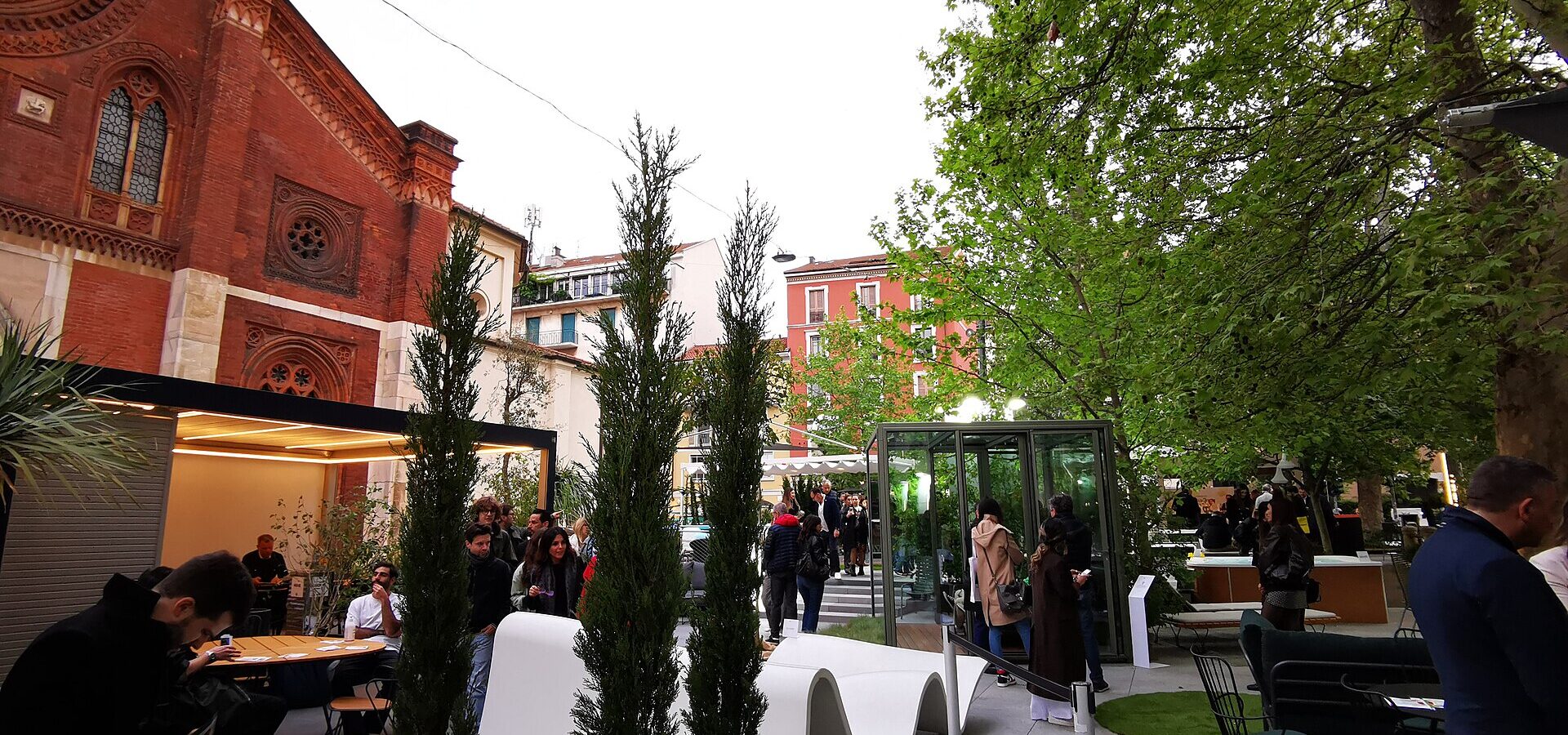
The best part of Milan Design Week costs nothing, has no ticket, no timetable and no single organiser, and takes place in courtyards that are locked for the other fifty-one weeks of the year. The Fuorisalone is the reason people who do not work in furniture come to Milan in April — and the reason they come back.
The Fuorisalone is the free, city-wide half of Milan Design Week — several thousand exhibitions, installations and showroom openings running alongside the ticketed Salone del Mobile at Rho. It is organised by district, and the districts have distinct personalities: Brera is central, prestigious and impossibly crowded; Tortona is big brand installations in old factories; Isola is independent designers and the most enjoyable to walk; 5VIE is craft and collectible design in the historic centre; Alcova is a curated show in venues chosen for each edition and is often the highlight; Porta Venezia and Durini are the quieter permanent showroom quarters. Plan one or at most two districts a day, start at 10:00 rather than midday, and do not try to cross the city more than once between them. Nobody sees a meaningful fraction of it, and that is fine.
What follows is each district in turn — what it does, who it suits, when to go — and then three worked routes that do not involve spending half the day underground on the M2.
How the Fuorisalone works
There is no central authority. Individual districts are run by their own associations, brands book their own venues, magazines and institutions curate their own programmes, and the whole thing is aggregated loosely on the Fuorisalone.it platform, which publishes the year’s map and event listings a few weeks before the fair. That platform is the only current source worth consulting — venues change annually, and any guide that gives you a fixed list of addresses is describing last year.
Almost everything is free and unticketed. A growing minority of events use free timed registration, and those tend to be the ones with an hour-long queue if you have not booked. Opening hours vary by event, so check the programme for the ones you want.
The essential skill is triage. There are well over a thousand events. You will see perhaps twenty in a day and eight of them will be forgettable. Choosing a district and walking it properly, following whatever looks interesting, beats working through a list.
Brera Design District
What it is: a central district built around Via Brera. It has a large concentration of permanent design showrooms (217 were listed for its 2026 programme), so during Design Week you are seeing the year’s collections in the spaces they were designed to be sold in, alongside installations in historic courtyards, palazzi and exhibition spaces.
Who it suits: anyone who wants the polished, high-production version of the week. The big Italian furniture houses, the fashion brands doing design projects, the car manufacturers with a serious budget.
The problem: crowds. Brera gets very busy as the day goes on, and the headline installations draw queues. It is beautiful and it is exhausting in equal measure.
When to go: from opening until 12:30, or after 19:00 when the crowd thins into the bars. Our Brera guide covers the district the rest of the year, when you can actually walk down Via Fiori Chiari.
Tortona Design Week
What it is: the converted industrial quarter west of the centre, around Via Tortona and Via Savona, a few minutes from Porta Genova. Superstudio, a former factory, and the surrounding venues host exhibitions and immersive installations by international brands, built inside large former industrial spaces.
Who it suits: people who want spectacle. The installations here are built inside large former industrial spaces, and stepping into one is quite an experience.
The honest caveat: Tortona has drifted commercial. A significant number of the installations are brand activations first and design projects second, and long-time attendees have been grumbling about it for a decade. Some years it is superb; some years it is a series of very expensive advertisements. Read the programme before committing a day.
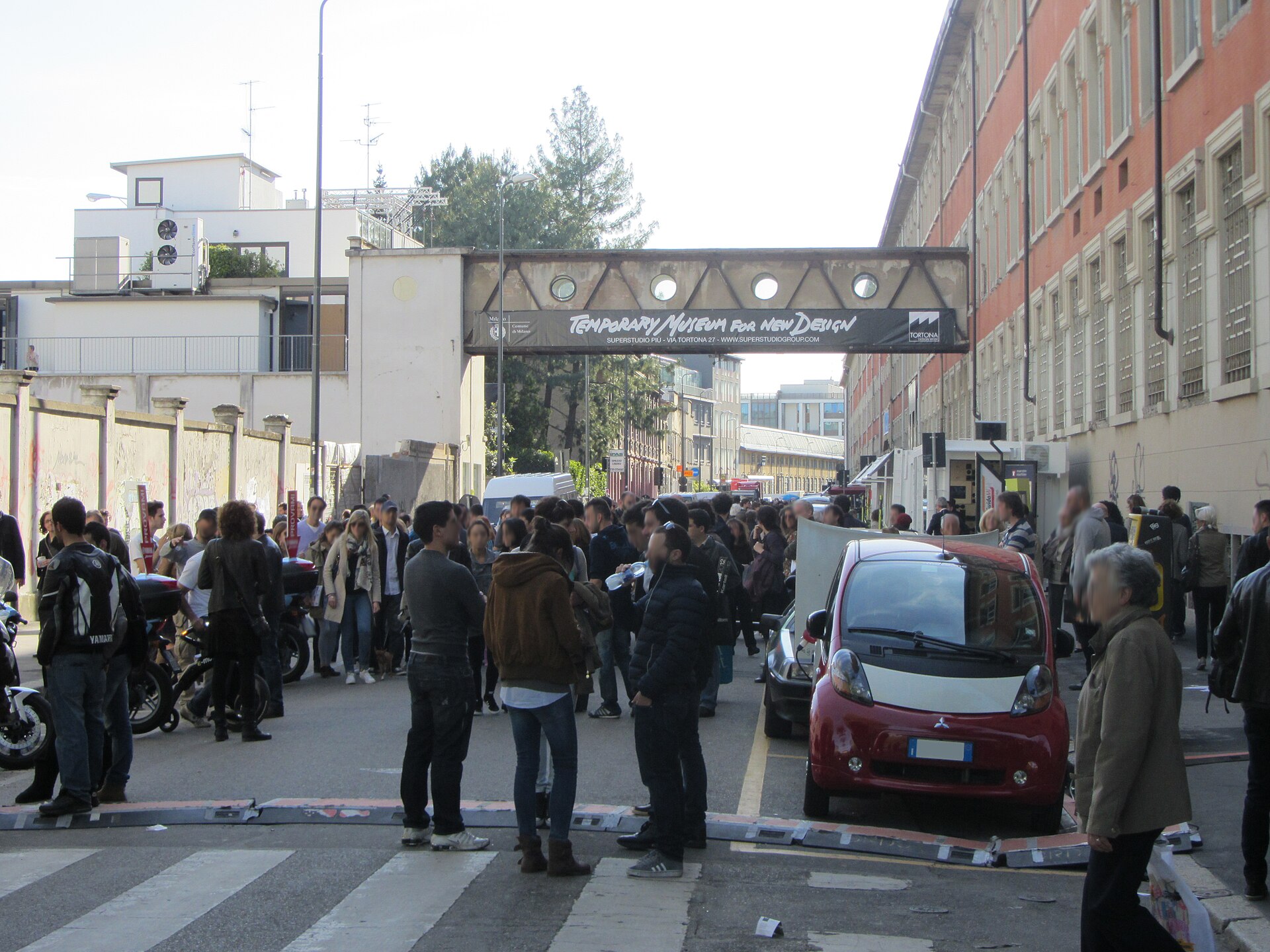
When to go: mornings. Tortona is a long thin district and walking it end to end takes a couple of hours without stopping.
Isola Design Festival
What it is: the district north of Porta Garibaldi, under the Bosco Verticale towers, given over to independent designers, collectives, students and small studios. The work is shown in shops, bars, courtyards and studio spaces rather than grand venues, and the person standing next to the piece is usually the person who made it.
Who it suits: almost everybody, and it is a sensible first stop for anyone doing the Fuorisalone for the first time. The work is more experimental and more sustainability-minded than the big districts, the crowds are manageable, and Isola is a real neighbourhood with ordinary life going on around the exhibitions.
When to go: any time, and stay for the evening — the bars around Via Borsieri and Piazza Minniti are the best of any Fuorisalone district. Our Isola guide and our piece on the Bosco Verticale cover the area properly.
5VIE Design Week
What it is: a historic part of the city centre, between the Duomo, Sant’Ambrogio and the remains of the Roman imperial palace. 5VIE is the district for craft, materials research, collectible design and one-off pieces, shown in antique dealers, artisan workshops, deconsecrated churches and private apartments.
Who it suits: anyone tiring of brand activations. This is the most curated and least commercial of the major districts, and the work rewards slow looking. It is also the district where the buildings themselves are most interesting, which for a first-time visitor to Milan is a substantial bonus.
When to go: afternoons, and fold it into a normal sightseeing day — it is centrally placed, so it combines easily with the Duomo or the Ambrosiana.
Alcova
What it is: a curated exhibition of independent and experimental design, staged each year in an abandoned or unusual building. Over the years it has occupied a former panettone factory, a disused military hospital, a slaughterhouse and a cluster of decaying villas. The setting is not a backdrop — it is half the point, and the contrast between crumbling plaster and precise contemporary objects is what people remember.
Who it suits: anyone who wants the single most memorable thing in the week, and has half a day to give it.
The two things to know: Alcova sits away from the other districts, which means a metro or shuttle-bus ride and a half-day commitment rather than an hour. And the location changes with each edition — the 2026 show used the former Baggio Military Hospital and Villa Pestarini, a private residence. Check the current year’s venues before you plan around it.
The other districts
Porta Venezia Design District
Centred on Corso Buenos Aires and the Liberty-era streets around it, with a strong showing from lighting and bathroom brands whose permanent showrooms are here. Considerably calmer than Brera, and a good option for a late afternoon. Our Porta Venezia guide covers the neighbourhood.
Durini Design District
Via Durini and the surrounding streets east of the Duomo are Milan’s permanent furniture showroom quarter — Cassina, B&B Italia, Molteni and the rest have their flagships here all year. During Design Week they open late and put on events, and the density is high. It is the most efficient district to walk if you specifically want to see furniture rather than installations.
Università Statale
Not a district but a single venue: the courtyards of the historic university building in the centre, which host INTERNI’s Design Week installations. Entry was free in 2026, it is central, always worth an hour, and easily combined with 5VIE.
Dropcity
A more recent addition, occupying the tunnels and vaults beneath Milano Centrale — a permanent architecture and design centre that programmes heavily during Design Week. The space itself is remarkable and unlike anything else on the circuit. Convenient if you are staying near the station; check the current programme, as it is still finding its shape.
Triennale Milano
The city’s design museum, in Parco Sempione, with its own Design Week programme on top of a permanent collection and temporary exhibitions. It charges admission, unlike most of the Fuorisalone, and it is worth visiting in any month of the year.
NoLo, Porta Romana and the fringe
Several outer neighbourhoods now run their own small district programmes. They are local, uncrowded, cheap to reach and hit and miss. Worth a detour if you are staying nearby, not worth a special journey unless something specific catches your eye.
What the districts have in common, and where they differ
After a few editions you start to notice that the districts are not really competing versions of the same thing. They occupy different points on two axes: how much money is behind the work, and how finished it is.
Brera, Tortona and Durini sit at the well-funded, highly finished end. What you see there is a product, photographed and lit and ready to sell, presented by a company with a marketing department. It is polished, it is often beautiful, and it very rarely surprises you, because surprising people is not what a launch is for.
Isola, 5VIE and Alcova sit at the other end. The budgets are smaller, the finish is rougher, a decent proportion of what is on show is a prototype that will never be manufactured, and the person who made it is standing three feet away wanting to talk about it. That is where the ideas are, and it is why those three districts keep appearing at the top of everyone’s list despite having a fraction of the money behind them.
Neither end is the right answer on its own. A day in Brera followed by a day in Isola tells you more about the state of design than two days in either. What you should avoid is spending the whole week at one end of the axis and concluding that Design Week is either a trade show or a student exhibition — it is both, and the gap between them is the interesting part.
Timing across the week
The districts also peak at different points. Tuesday and Wednesday are the professional days: the press previews happen, the brands present, and the crowds in Brera and Tortona are industry rather than public. Thursday and Friday are the sweet spot for a visitor — everything is open, the initial rush has gone and the general public has not yet arrived. Saturday is the worst day everywhere, because the Salone opens to the public and the whole of Milan comes out as well. Sunday is quieter than Saturday and several venues start dismantling.
If you have any flexibility at all, come Wednesday to Friday and leave on the Saturday morning.
Three routes that work
One day, central, no metro
10:00 Brera, working north from Via Pontaccio through the courtyards. 13:00 lunch near Via Solferino. 14:30 Università Statale, fifteen minutes’ walk south. 16:30 5VIE, another fifteen minutes west. 19:00 aperitivo around Sant’Ambrogio or the Colonne. About 8 km on foot and you will have seen the central half of the Fuorisalone without setting foot on a train.
Two days, the full spread
- Day one: the central route above.
- Day two: Tortona from opening (M2 to Porta Genova), lunch there, then across to Isola in the afternoon (M2 to Garibaldi, walk), staying for the evening. Two districts, one transfer.
Three days, including Alcova
As above, plus a third day given over to Alcova in the morning — allow for the journey, wherever it is that year — and Porta Venezia or Durini in the afternoon on the way back in. If you would rather do the trade fair, substitute a day at Rho: our Salone del Mobile guide covers which days you can get in.
Practical advice
- Start at 10:00. The first two hours are the only quiet ones anywhere.
- Register in advance for the two or three events you genuinely care about. Everything else, walk in.
- Do not cross the city more than once a day. The metro is at capacity and the transfers eat an hour each way once you count the walk at both ends.
- Consider bikes. Milan is flat, and cycling can be convenient between venues once you have worked out the actual route. Our cycling in Milan guide covers the schemes.
- Book dinner before you fly. Every restaurant in central Milan is full from Tuesday to Saturday. Our best restaurants guide is the place to start, and our aperitivo guide covers the alternative.
- Expect free drinks. A great many showrooms serve prosecco from late afternoon. This is a legitimate and long-standing way to conduct the evening, and it is how a lot of business gets done.
- Shoes. Fifteen to twenty kilometres a day on cobbles. Nothing else on this list matters as much.
Frequently asked questions
Is the Fuorisalone free?
Almost entirely, yes. The district programmes, the showroom openings and the courtyard installations are free and unticketed. A few venues use free timed registration, and museum-type venues such as the Triennale charge their normal admission. The Salone del Mobile at Rho is a separate, ticketed fair, and access to individual Fuorisalone events varies, so check each event’s page.
Do I need to book anything for the Fuorisalone?
Only the handful of events that use timed entry, plus your restaurant tables and your hotel. Everything else you walk into.
Which Fuorisalone district is best?
Isola for a first visit and for the best all-round day; 5VIE if you care about craft and materials; Brera if you want the polished flagship version and can tolerate crowds; Alcova if you want the one thing you will still be describing in a year. Tortona is the wildcard, superb in a good year.
How many districts can I do in a day?
Two, honestly, and one if you want to enjoy it. Each district rewards a slow walk, and crossing between them eats into the day, so plan your route between the specific venues you want.
When is the Fuorisalone 2027?
The Fuorisalone runs 12–18 April 2027, alongside the Salone del Mobile’s 13–18 April. Our Milan Design Week guide covers how the whole week is structured.
Can I go to the Fuorisalone with children?
Yes, and it works better than the trade fair does — walk-through installations, outdoor courtyards, nothing to buy and nothing to queue for if you avoid the headline venues. Isola and 5VIE are the easiest districts with a pushchair; Brera in the afternoon is not.
What if I only have one afternoon?
Università Statale then 5VIE, or Brera on its own if you can start before midday. Both are central, both are free, and neither requires a journey.
Final thoughts
The Fuorisalone is a city-wide design programme and it is completely unmanageable, which is the whole charm of it. Do not try to see it. Pick a district, walk it slowly, go into whatever has an open door, take the free prosecco, and let the schedule go. The people having the best week in Milan every April are not the ones working through a list of five hundred venues — they are the ones who found one courtyard in Isola at six in the evening and stayed there.