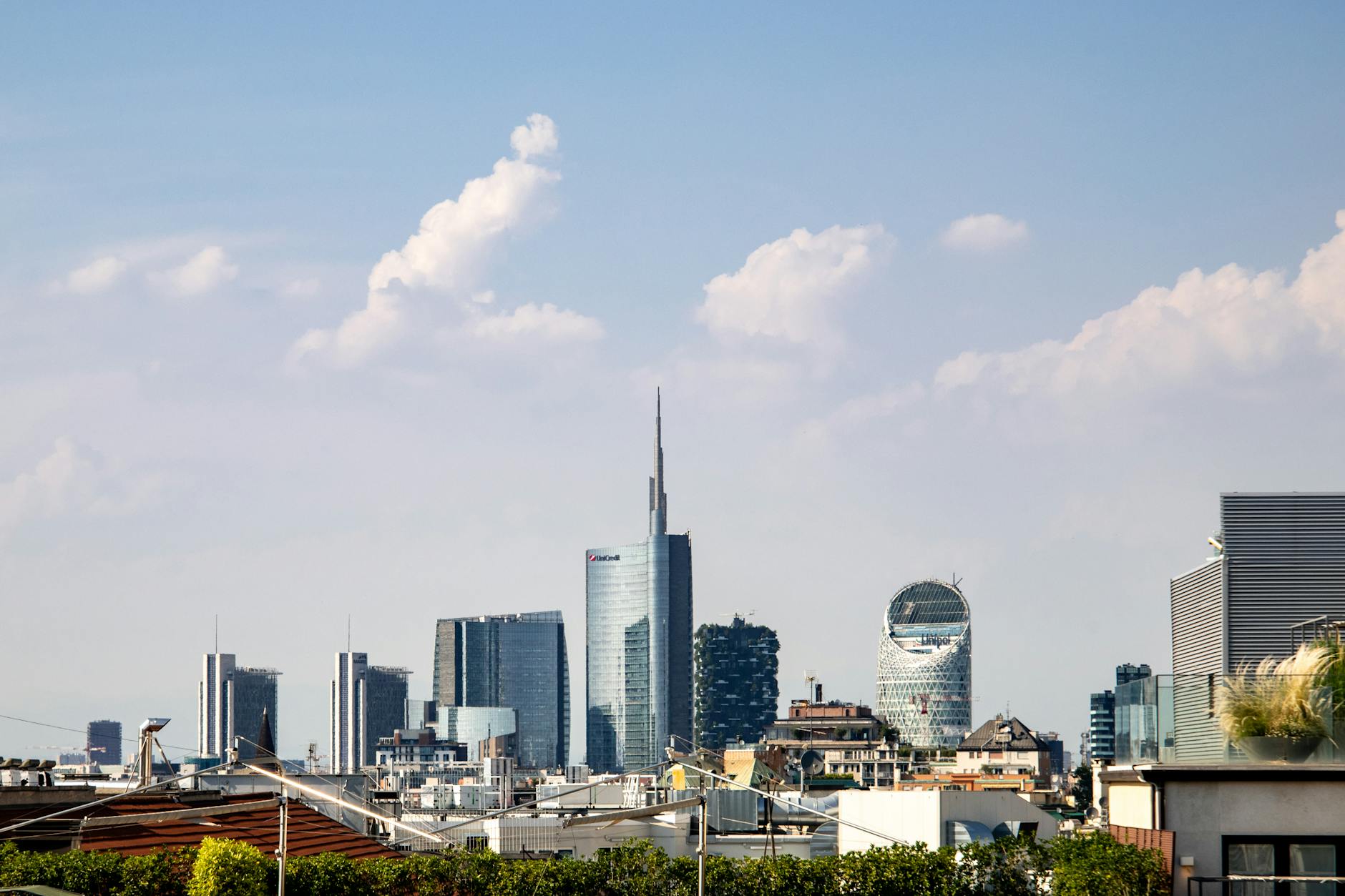
Milan is Italy’s major business destination, and a business trip is the normal reason to be there. Rome has the government and the tourists, Florence has the art, Venice has the problem of too many people wanting to see it — and Milan has the banks, the fashion houses, the design studios, the advertising agencies, the pharmaceutical head offices and roughly a quarter of Italy’s economic output squeezed into a metropolitan area you can cross by metro in half an hour. It is also the one Italian city where turning up in a crumpled suit will be noticed and quietly held against you.
Milan business travel works best out of Linate, not Malpensa — it is twelve minutes from San Babila on the M4 metro for €2.20, and if your flight is intra-European you should be paying the small premium to use it. Stay in Porta Nuova or Porta Garibaldi if your meetings are with banks, consultancies or tech; near Milano Centrale if you are catching a Frecciarossa to Rome or Turin the next morning; near the Duomo if your diary is scattered and you want to walk. Check the trade-fair calendar before you book anything — during Salone del Mobile in April and EICMA in November, hotel rates in this city double or triple and availability disappears months ahead. Meetings run to time, lunch is a legitimate venue for business, dinner does not start before 20:00, and nobody senior is at their desk in the middle of August.
What follows is the practical version: airports, hotels by district, moving around, the etiquette that is genuinely different from London or New York, and the weeks of the year you should simply refuse to travel.
Fly into Linate if you possibly can
Milan has three airports, and the choice matters far more on a two-day work trip than on a week’s holiday, because on a work trip the transfer is a straight deduction from your working day.
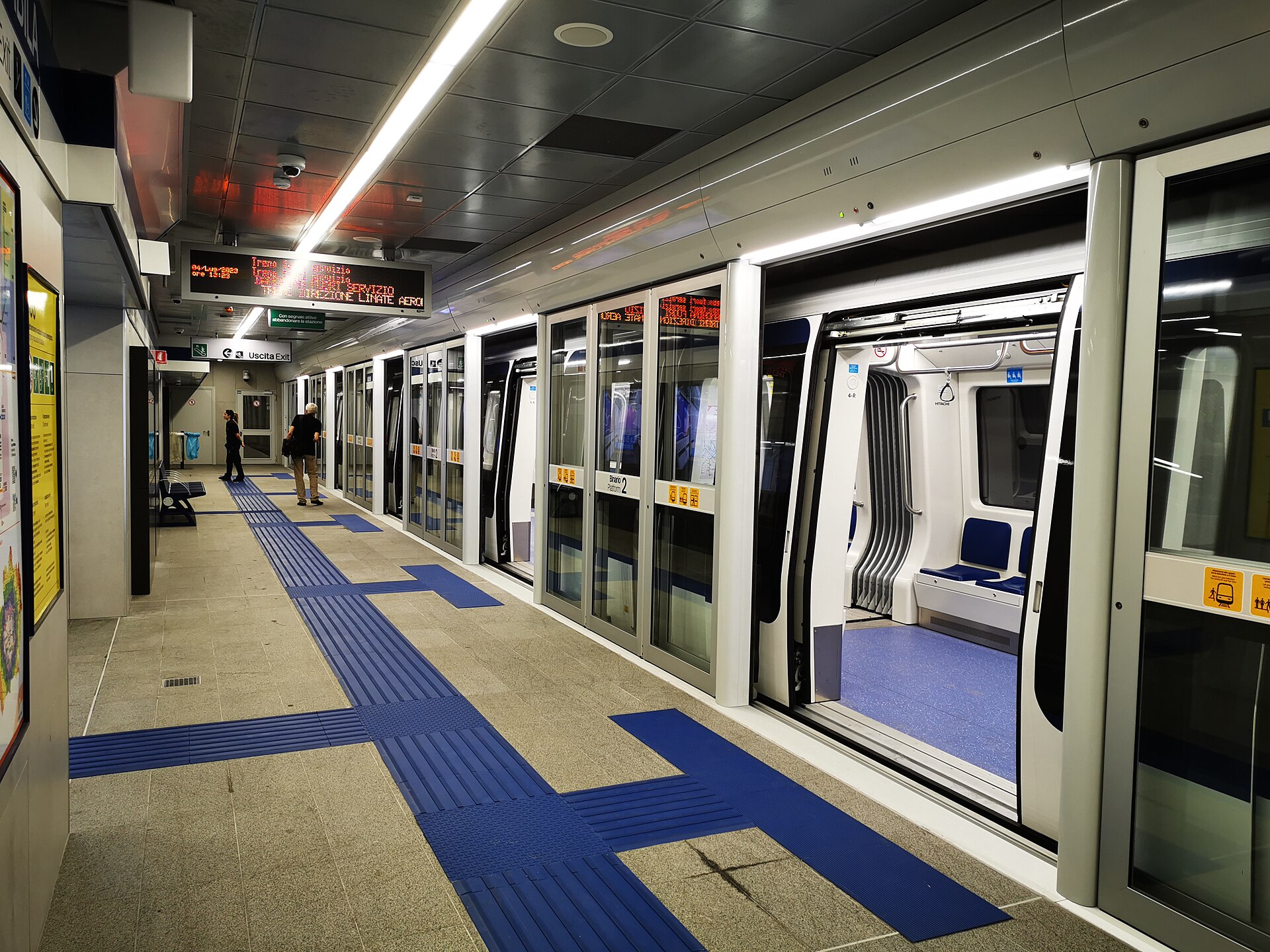
Linate (LIN) is the closest airport to the centre and popular with business travellers. It is small, it sits about eight kilometres east of the centre, and since the M4 blue line opened it has become a very easy arrival. The station is directly beneath arrivals, no shuttle, step-free throughout, and it is twelve minutes to San Babila on a €2.20 urban ticket. A taxi costs more and, depending on traffic, can be slower. Linate handled about 11.1 million passengers in 2025, overwhelmingly on short-haul European routes, and it is where the Rome, Paris, Frankfurt and London shuttles land.
Malpensa (MXP) is the long-haul airport — around 31 million passengers in 2025 and growing fast — and if you are flying in from outside Europe you have no choice. It is 50 km northwest. The Malpensa Express takes 51 minutes to Centrale or 37 to Cadorna for about €15, four trains an hour, and it is comfortably the right answer; the official flat-rate taxi is €114 and takes about the same time on a good day and considerably longer on a bad one. A free shuttle links Terminal 1 and Terminal 2 around the clock, roughly every 15 minutes.
Bergamo (BGY) is about 45 km the other way, a low-cost airport with a coach link. It is fine for a leisure weekend and wrong for business: the Terravision shuttle to Milano Centrale takes about 50 minutes, with one-way fares from €5, and the whole experience begins with standing in a coach bay. If someone is booking you through Bergamo to save €40, that decision was made without pricing your time.
Our full breakdown of the options and their real door-to-door costs is in the Milan airport transfers guide, with dedicated pages for Linate and the Malpensa Express.
Where to stay, by what you are actually doing
Milan’s business geography is unusually legible, which makes hotel choice easier here than in most cities. Pick the district that matches your diary rather than the one with the best photographs.
Porta Nuova and Porta Garibaldi — finance, consultancy, tech
The towers around Piazza Gae Aulenti are where Unicredit, a long list of consultancies and most of the international firms with a Milan office have ended up. It is a district redeveloped in phases from 2005, over about a decade, and it feels more like Rotterdam than Italy, which some visitors hate and business travellers generally love: the hotels are new, the lifts work, the wifi is real, and you can walk to a meeting in eight minutes without arriving damp. Porta Garibaldi station puts you on the M2 and M5 and on regional and high-speed rail. Our Porta Nuova guide has the lay of the land.
Milano Centrale — if you are moving on by train
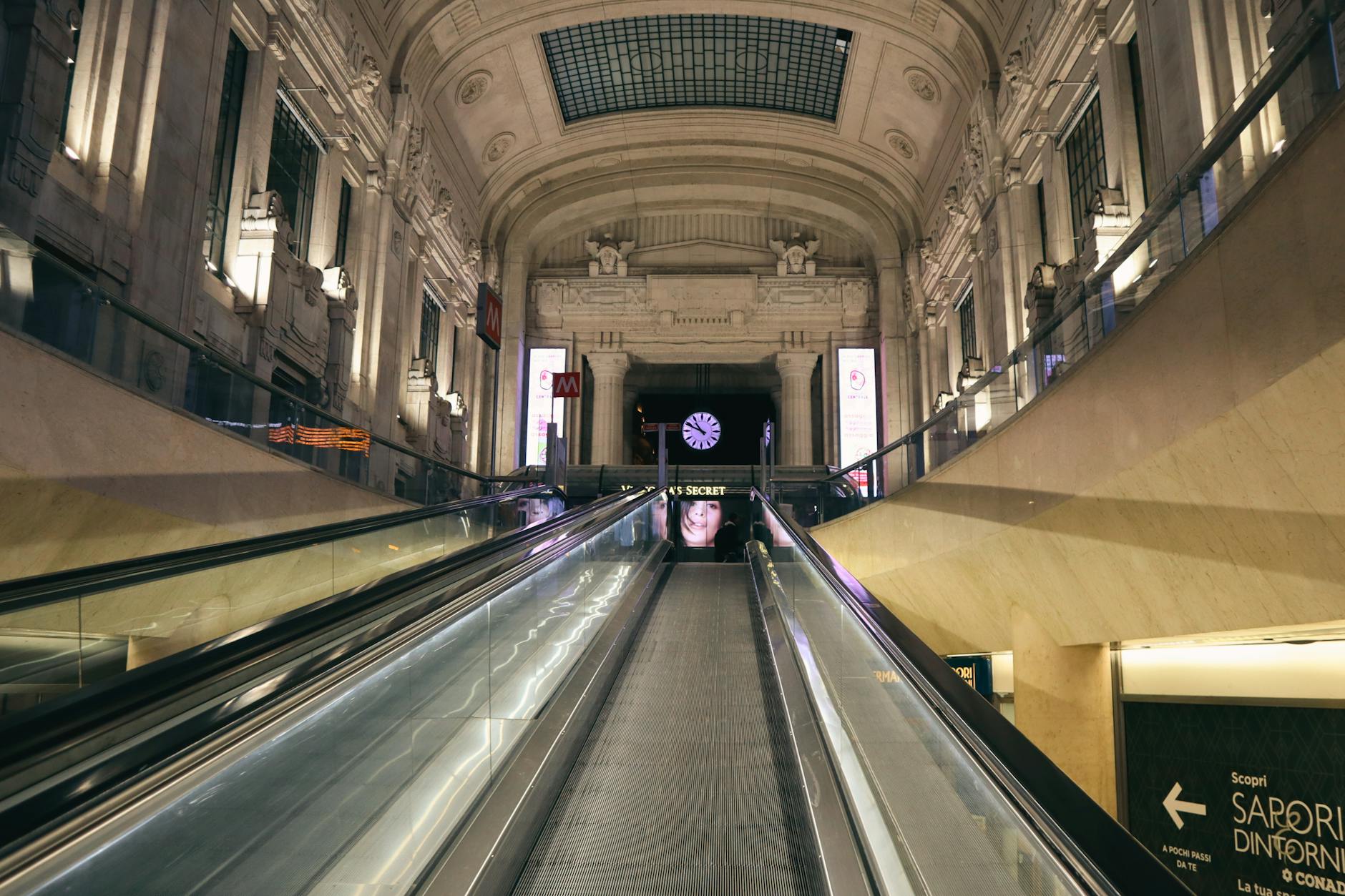
Unromantic, superbly connected, and the right answer if your trip also takes in Rome, Bologna, Turin or Florence. Frecciarossa reaches Turin in about an hour, Bologna in an hour, Florence in around an hour and three-quarters and Rome in a little under three — consistently faster than flying once you count the airport at both ends. The immediate streets east of the station are the scruffiest part of central Milan and the hotel prices reflect it; a couple of blocks west, towards Repubblica, is noticeably better for not much more money. See hotels near Milano Centrale.
Duomo and the centre — scattered diaries and client dinners
More expensive, and worth it when your meetings are spread across the city or you are the one hosting. From San Babila or Montenapoleone you are within walking distance of the fashion houses, the law firms on the ring and every restaurant you might want to book. The luxury hotels here are genuinely excellent and priced accordingly; our where to stay in Milan guide compares the districts properly.
Rho Fiera — only during a fair
If your entire trip is a trade fair at Rho, staying near the fairground rather than in the city is a defensible trade-off: the M1 red line runs from the Duomo to Rho Fieramilano without a change, though trains fill up at peak hours during Salone. Our Fiera Milano Rho visitor guide covers the site, the entrances and the parking.
The weeks not to travel — and the ones to plan around
This is the single most valuable thing on this page, and the thing most people booking a Milan trip from abroad get wrong.
- Salone del Mobile, 13–18 April 2027, and Fuorisalone, 12–18 April. Around half a million visitors. Hotel rates rise by a factor of two to four, apartments vanish, restaurants are fully booked and taxis stop appearing. If your meeting is not connected to the fair, move it. If it is, book in the autumn beforehand. See our Milan Design Week guide.
- Fashion weeks — menswear in mid-January, womenswear in late February, menswear again in June, womenswear in mid-to-late September. Less citywide than Salone but brutal for hotels in the Quadrilatero and Brera.
- EICMA, early November. The motorcycle show at Rho fills the northwestern hotels and adds a rush hour to the M1.
- August. Italian corporate life shuts down around Ferragosto on the 15th, and a large share of independent restaurants close for two or three weeks. You can absolutely get a hotel room cheaply; you cannot get a decision made.
- Early and late December. Sant’Ambrogio on 7 December is a local holiday in Milan, so check individual opening hours, and the 8th is a national holiday right behind it. Between then and Epiphany, expect thin diaries.
The reliable windows are roughly late January to mid-March, the back half of May, and mid-September through October — when the city is working, the weather is decent and the hotel market is sane.
Getting around during a working day
Use the metro. Milan’s is among the best pieces of Italian public infrastructure: five lines, a flat €2.20 urban ticket valid for 90 minutes, and contactless tap-in at the gates. A day ticket pays for itself from about the fourth journey. Our Milan metro guide has the detail.
Taxis are white, metered, and cannot be hailed reliably in the street — you find a rank or you use an app. The base fare is €4.10 on a weekday daytime and €7.90 at night, with the night rate running 21:00–06:00. The Uber app can also book you a licensed taxi in Milan. More in our guide to taxis and ride-sharing.
Do not hire a car. Area C, the central congestion charge, is €7.50 a day from 07:30 to 19:30 on weekdays; Area B is a separate low-emission zone covering nearly the whole city; both are camera-enforced; and the fines run from roughly €80 to €335 and land on your employer’s leasing company months later. There is no meeting in central Milan that is easier to reach by car.
Meeting etiquette that is actually different
Milan is the least stereotypically Italian city in Italy in business terms, and northern European visitors are usually surprised by how brisk it is. A few things do genuinely differ.
- Dress properly. This is the point visitors most underestimate. Milan is a fashion city and appearance is read as competence. Good shoes, a jacket, nothing creased. Business casual here is a notch smarter than business casual in Amsterdam or Berlin.
- Be on time, and expect a soft start. Arrive punctually; the meeting will begin five or ten minutes late over coffee and small talk, and cutting that short to get to the agenda reads as rude rather than efficient.
- Use titles. Dottore and Dottoressa for anyone with a degree, Ingegnere for engineers, Avvocato for lawyers. Use Lei, the formal you, until you are invited to do otherwise. Our Italian phrases page covers the basics.
- Lunch is a real venue for business. A 13:00 lunch running to 14:30 is normal and productive. Dinner is a different animal: it starts at 20:00 or 20:30, is largely social, and pushing hard on commercial terms across it is a misread of the room.
- Aperitivo is the useful middle ground. An 18:30 drink in Brera or Navigli is where relationships get built in this city. Our aperitivo guide explains how it works — take the invitation.
- Coffee is fast. An espresso at the bar is over in a minute or two, and you drink it standing. Ordering a cappuccino after eleven in the morning marks you out. Nobody will say anything. They will notice.
- Tipping is minimal. Rounding up is fine; fifteen per cent is not expected and looks strange. See tipping etiquette.
Working from Milan — connectivity and desks
Hotel wifi in the business districts is generally good. Hotel wifi in a converted palazzo near the Duomo often is not, because eighteenth-century walls are hostile to routers. If you are here for more than a couple of days, a local eSIM or prepaid SIM is cheap insurance — the detail is in our SIM card and wifi guide.
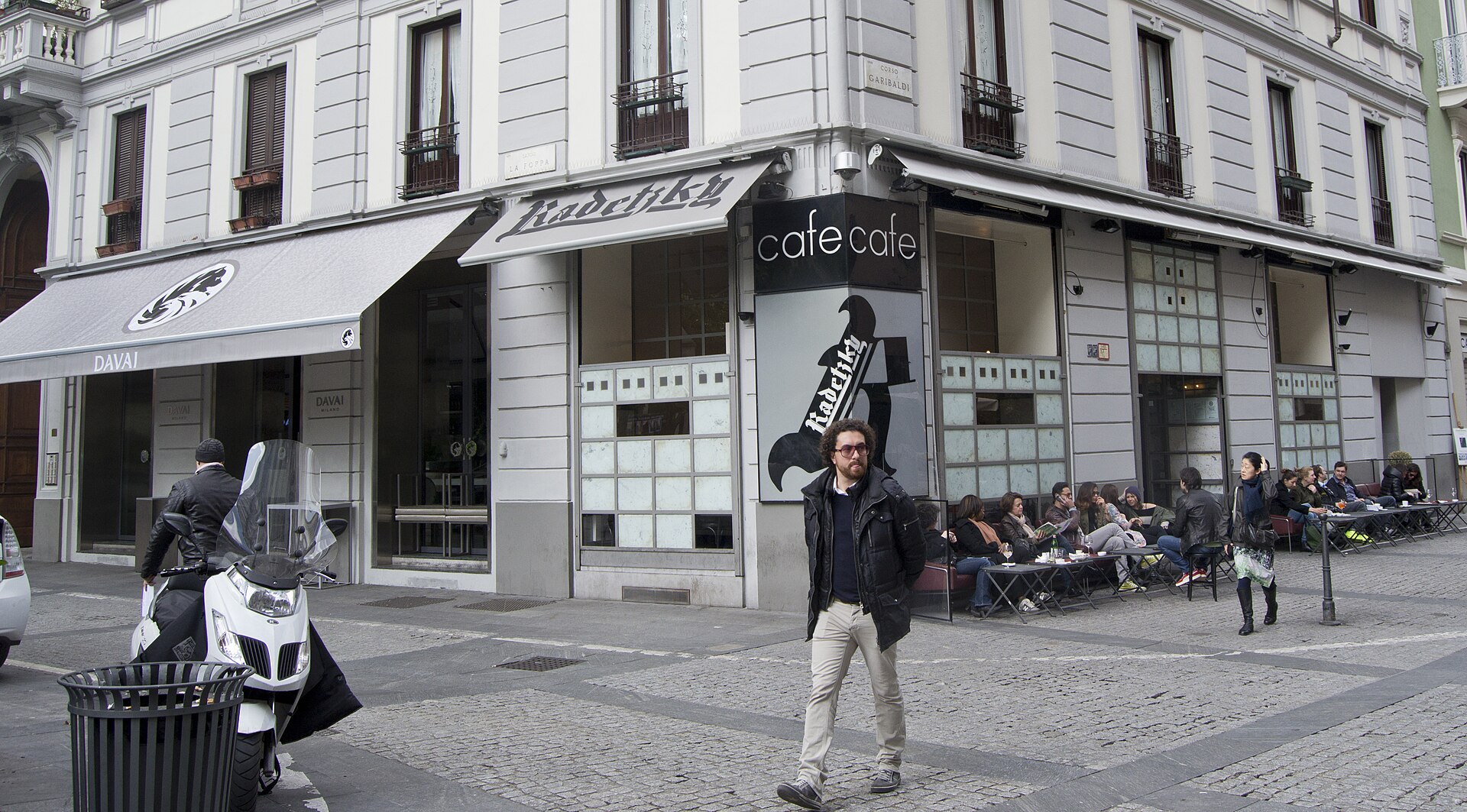
For desk space, Milan has a real coworking market rather than a token one. Copernico runs several large sites, including the building on Via Copernico near Centrale; Talent Garden has its campus in the Calabiana area south of the centre; and there are international operators inside the Porta Nuova towers. Day passes are normally bookable online, but prices move around, so check on the day rather than trusting a figure you read somewhere. If you only need two hours and a plug, the cafés around Porta Venezia and Isola are far more laptop-tolerant than those in the tourist centre, where you will get a look.
If you are staying longer than a normal business trip, our Milan digital nomad guide goes deeper on long-stay apartments, contracts and residency admin.
Costs, expenses and what things actually run to
A realistic day rate for a mid-level trip outside fair weeks: €180–300 for a decent four-star room, €25–45 for a proper sit-down lunch, €60–100 a head for a client dinner in a good restaurant without going mad, €7 for a metro day ticket, and €15 each way from Malpensa or €2.20 from Linate. During Salone, take the room number and multiply it by three.
Two things worth knowing on expenses. Ask for a fattura rather than a scontrino if your finance team needs a proper VAT invoice — you have to request it at the point of payment and you will need the company VAT number to hand. And card acceptance is now essentially universal, including in taxis, where the driver is legally obliged to take a card whatever the condition of the machine might suggest.
If you get an evening free
Milan rewards a spare two hours more than its reputation suggests. The Duomo rooftop terraces stay open into the evening and are the best thirty minutes in the city; the Galleria and Piazza della Scala are five minutes from most central hotels; Brera at aperitivo hour is genuinely lovely rather than merely photogenic. If you have a longer gap, the restaurants worth booking and our one day in Milan route will both fill it better than the hotel bar. And if your flight leaves you a long stretch at the end, the layover guide sets out exactly how much city fits into the time you have.
Frequently asked questions
Which Milan airport is best for business?
Linate, without much argument, if your route serves it. It is twelve minutes from San Babila on the M4 for €2.20, small enough to clear in fifteen minutes, and it carries most of the intra-European business routes. Malpensa is unavoidable for long-haul and perfectly workable with the Malpensa Express. Bergamo is a false economy on a work trip.
Do I need to speak Italian for business in Milan?
No. English is the working language in finance, consultancy, tech, fashion and design, and international meetings are routinely held in it. But opening in Italian, using titles correctly and thanking people properly is noticed and appreciated — and in manufacturing or family-owned firms outside the city centre, English is considerably less reliable.
When should I avoid scheduling meetings in Milan?
The middle two weeks of August, when the country stops; Design Week in April, when the city is physically full; the days around Sant’Ambrogio on 7 December; and the Christmas-to-Epiphany stretch. Fashion weeks in January, February, June and September affect hotel prices rather than the availability of people.
Is Milan expensive for business travel?
Milan is not cheap, but hotels are the main cost and the only volatile one — a room that is €200 in October can be €600 during Salone. The metro at €2.20 a ride is close to a rounding error on an expense claim.
How far in advance should I book a hotel in Milan?
Three to four weeks is comfortable for an ordinary week. For April’s Design Week, six months ahead is not paranoid; for fashion weeks and EICMA, two to three months. Rates in this city are driven almost entirely by the fair calendar rather than by season.
Can I get from Milan to Rome and back in a day for a meeting?
Yes, and Italians do it constantly. Frecciarossa runs Milano Centrale to Roma Termini in a little under three hours on its non-stop trains. A 07:00 out and a 19:00 back gives you a full working day in Rome and is far less punishing than the equivalent pair of flights.
Final thoughts
Milan is an easy city to work in and a slightly cold one to arrive in blind. The transport is excellent, the meetings run to time, English will carry you through almost every room you are likely to be in, and the metro means you are never more than half an hour from anywhere that matters. What catches people out is almost never the language — it is the calendar. Book around the fairs, do not try to do anything useful in August, dress a notch better than you would at home, and say yes to the aperitivo. Get those four things right and Milan business travel is genuinely straightforward.