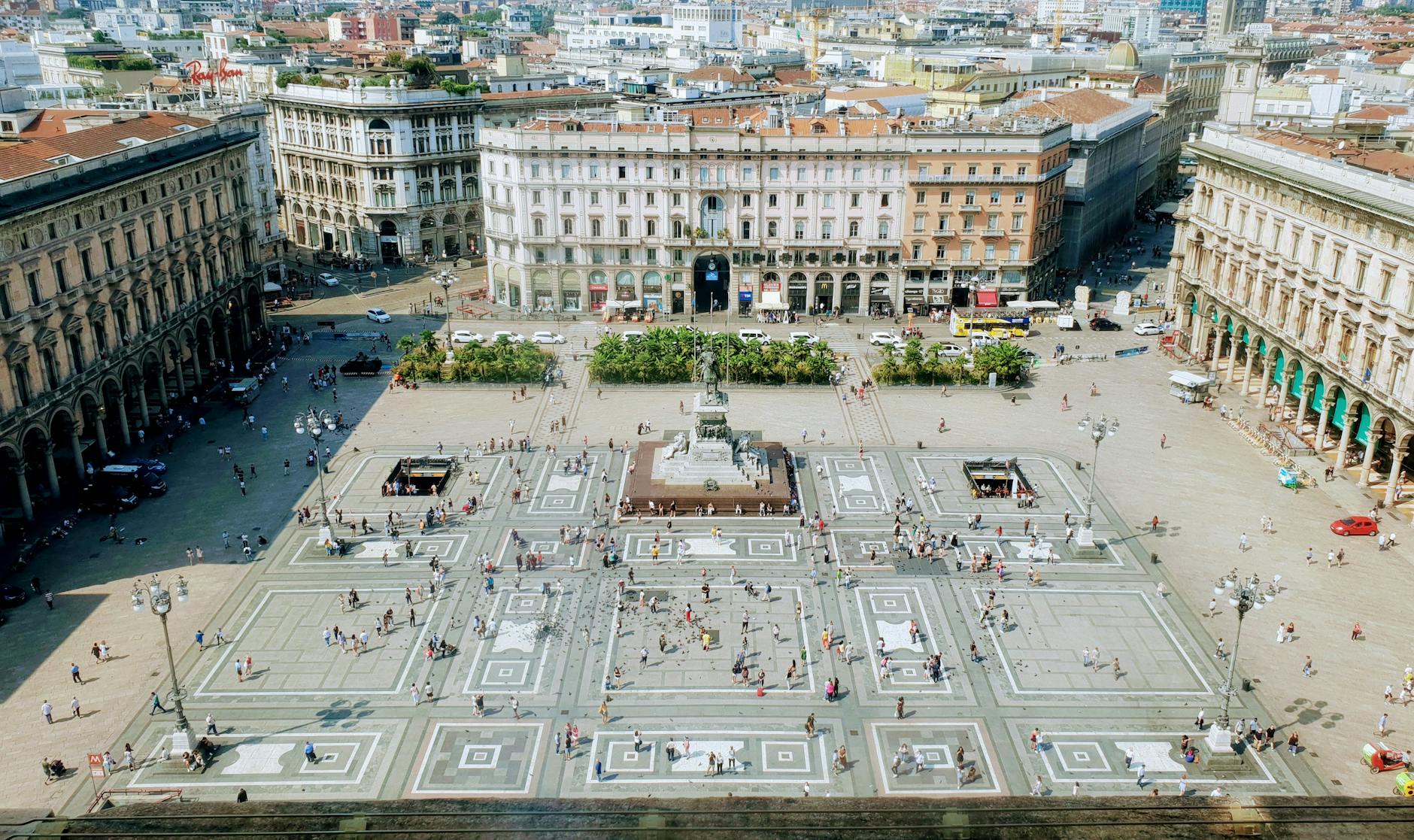
Most Milanese under 40 speak workable English, especially in hotels, restaurants and shops near the Duomo, Brera and Porta Nuova. But the right italian phrases for tourists — even badly pronounced — completely change how locals treat you. Start with buongiorno the second you walk into a bar, shop or taxi, and you have already done 80% of what is needed. Skip it and ask a question straight in English, and you will still get an answer, but it will be the answer reserved for someone who did not bother. I have lived in Milan long enough to watch the same scene play out a thousand times: the tourist who opens with three Italian words gets the recommended dish, the better table, the small discount on the leather wallet. The one who does not, does not.
This is a Milan-specific phrasebook, not a generic Italy one. The italian phrases for milan that actually matter at an aperitivo bar in Navigli are different from what a guidebook for Rome will tell you. Milan moves faster, the coffee bars are busier at 7:45 a.m., and the dialect words you will overhear — schiscetta, pirla, dané — are pure Lombard. I have grouped these by situation, not alphabetically, because that is how you will actually need them. Roughly 60 phrases, all the ones I use weekly, with pronunciation hints in parentheses and the cultural footnotes a textbook will not give you.
Pronunciation cheat sheet — five rules that fix 90% of mistakes
Italian is phonetic, which is the good news. Once you accept five rules, you can read any word on a menu and be understood. The bad news: English speakers default to soft, slurred vowels, and Italian vowels are pure and sharp.
- Vowels are always the same sound. a = ah (as in “father”), e = eh (as in “bed”), i = ee (as in “see”), o = oh (as in “go”), u = oo (as in “boot”). Never reduce them to the lazy English schwa.
- Double consonants are held. caffè is “kahf-feh,” with a tiny pause on the f. pizza is “peet-tsah,” not “peet-zah.” Skip the double and the word changes meaning — pena (pity) vs penna (pen).
- C and G are hard before a, o, u and soft before e, i. caffè = “kahf-feh.” cena (dinner) = “cheh-nah.” gusto = “goos-toh.” gelato = “jeh-lah-toh.”
- Special clusters. ch = k (so Chianti is “kee-AHN-tee”). gh = hard g (spaghetti = “spah-GHET-tee”). gli = lyee (famiglia = “fah-MEEL-yah”). gn = ny (gnocchi = “NYOH-kee”). z = ts or dz (grazie = “GRAHT-syeh,” zero = “DZEH-roh”).
- Stress usually falls on the second-to-last syllable. Unless there is an accent mark on the final vowel (caffè, città), which forces the stress there.
That is it. If you nail just the vowels and the hard-c rule, baristas will stop switching to English mid-sentence.
Greetings and basic politeness — the register matters more than the words
Italian is a formal-versus-informal language. Using ciao to a shopkeeper over 50 is the equivalent of slapping a stranger on the back in English. Use it with friends, people clearly your age in casual settings, and children. Otherwise, default to the time-of-day greeting.
- Buongiorno (bwon-JOR-noh) — good morning / hello. Used from waking until roughly 4 p.m., sometimes 5. Universal, safe, formal-friendly.
- Buonasera (bwoh-nah-SEH-rah) — good evening. Kicks in around 4–5 p.m. and runs until you go to bed. Use it walking into a restaurant at 7 p.m.
- Buonanotte (bwoh-nah-NOHT-teh) — good night, but only as a farewell, when someone is going to sleep. Do not use it to greet a hotel receptionist at 11 p.m. — that is still buonasera.
- Ciao (chow) — hi/bye, informal both ways. Fine with friends, the staff at a bar where you are a regular, anyone under 25 in a casual setting. Do not lead with it.
- Salve (SAHL-veh) — neutral hello, neither formal nor casual. A useful hedge if you cannot read the situation.
- Arrivederci (ar-ree-veh-DEHR-chee) — formal goodbye. ArrivederLa is even more formal; almost no tourist needs it.
- Per favore (pehr fah-VOH-reh) — please. Tack onto every request.
- Grazie (GRAHT-syeh) — thank you. Grazie mille = a thousand thanks.
- Prego (PREH-goh) — you are welcome / go ahead / please come in / here you are. A Swiss-army-knife word. The barista hands you your coffee and says prego. You hold a door and gesture prego. Someone thanks you, you respond prego.
- Scusi (SKOO-zee) — excuse me, formal (to get attention or apologize lightly). Scusa is the informal version. Use scusi with strangers.
- Mi dispiace (mee dees-PYAH-cheh) — I am sorry, for when something is actually your fault.
For a deeper look at how Milanese formality plays out in everyday situations, my Milan travel tips guide covers the small rituals — eye contact at the bar, never sitting at an unbought café table — that pair with these words.
Five phrases that earn you respect immediately
If you only memorize five sentences, make it these. Each one signals “I understand how this works” in a single beat, and the response you get back will be measurably warmer.
- Buongiorno, un caffè per favore. (bwon-JOR-noh, oon kahf-FEH pehr fah-VOH-reh) — “Good morning, a coffee please.” The opening line at any coffee bar in Milan. Greeting + order + politeness in seven words.
- Il conto, per favore. (eel KOHN-toh pehr fah-VOH-reh) — “The bill, please.” Italian waiters will never bring it unprompted; sitting and waiting for it is the rookie move that wastes 25 minutes of your evening.
- Mi scusi, parla inglese? (mee SKOO-zee, PAR-lah een-GLEH-zeh) — “Excuse me, do you speak English?” The polite ask. Almost everyone says yes, and they appreciate that you did not assume.
- Posso pagare con carta? (POHS-soh pah-GAH-reh kon KAR-tah) — “Can I pay by card?” Milan is mostly contactless now, but small bars and old-school trattorie sometimes still want cash. Asking first avoids the awkward shuffle.
- Grazie mille, buona giornata. (GRAHT-syeh MEEL-leh, BWOH-nah jor-NAH-tah) — “Thanks a lot, have a good day.” The exit line. Or buona serata in the evening. You will be remembered.
Coffee bar phrases — the choreography matters as much as the words
Ordering coffee in Milan is its own ritual. A few rules first: it is un caffè, not un espresso — Italians do not say “espresso” because all coffee is espresso by default. There are two prices, al banco (standing at the counter, the cheap price, usually €1.20–€1.50) and al tavolo (sitting at a table, sometimes triple). At the busy commuter bars near Centrale and Cadorna, you may need to pay at the cashier first, get a receipt (lo scontrino), then slide it to the barista with a small coin as a tip.
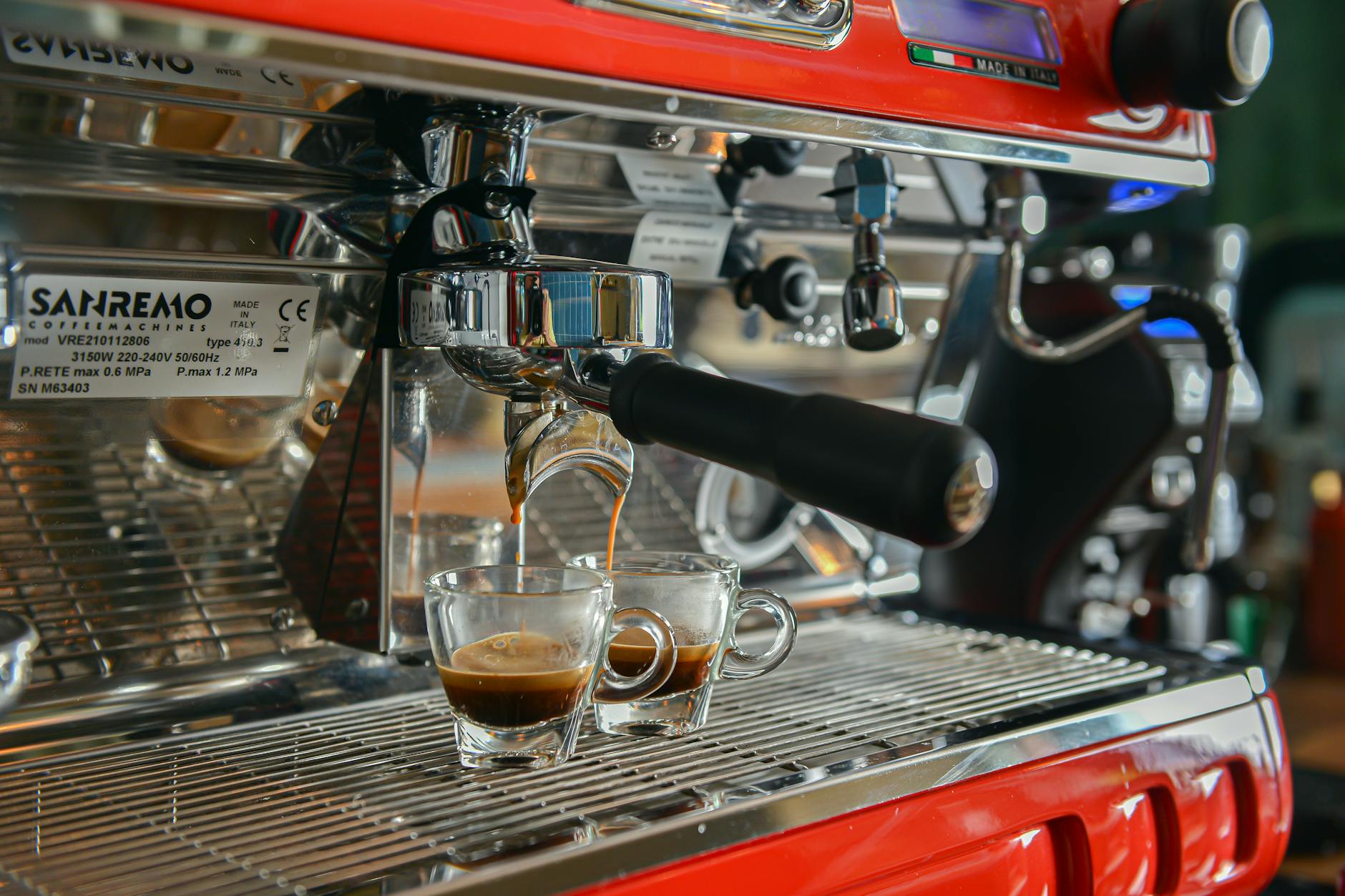
- Un caffè (oon kahf-FEH) — an espresso, the default.
- Un caffè macchiato (mahk-KYAH-toh) — espresso “stained” with a drop of steamed milk.
- Un caffè lungo (LOON-goh) — espresso pulled with more water, slightly weaker.
- Un caffè ristretto (rees-TRET-toh) — a shorter, more concentrated pull.
- Un caffè corretto (kor-RET-toh) — espresso “corrected” with a splash of grappa or sambuca. Acceptable at 8 a.m. in winter; this is Milan.
- Un caffè decaffeinato (deh-kah-fay-NAH-toh) — decaf. Often just called un deca (DEH-kah).
- Un cappuccino (kah-poo-CHEE-noh) — espresso with steamed milk. Only before 11 a.m. if you do not want a raised eyebrow.
- Un marocchino (mah-rok-KEE-noh) — a small Milanese specialty: espresso, cocoa powder, milk foam in a tiny glass. Order it; it is the city’s gift to coffee.
- Una brioche (BREE-osh) or un cornetto (kor-NET-toh) — the croissant-style pastry. In Milan it is usually brioche; in Rome cornetto.
- Al banco (al BAHN-koh) — at the counter. Al tavolo (al TAH-voh-loh) — at a table.
- Pago prima o dopo? (PAH-goh PREE-mah oh DOH-poh) — “Do I pay before or after?” Settles the cashier-first question.
The full ritual lives in my Milan coffee guide, including which historic bars near the Duomo are worth the table price.
Restaurant phrases — from door to bill
Italian restaurants run on a structure: antipasto, primo (pasta or rice), secondo (meat or fish) with contorno (side), then dolce. You do not have to order all of it — getting a primo and a secondo is plenty — but understanding the structure saves confusion when the waiter asks what comes next.
- Un tavolo per due, per favore. (oon TAH-voh-loh pehr DOO-eh) — “A table for two, please.”
- Abbiamo una prenotazione a nome di… (ab-BYAH-moh OO-nah preh-noh-tah-TSYOH-neh ah NOH-meh dee) — “We have a reservation under the name…”
- Il menù, per favore. (eel meh-NOO) — “The menu, please.”
- Che cosa ci consiglia? (keh KOH-zah chee kon-SEEL-yah) — “What do you recommend?” The single most valuable restaurant question; you will get the dish the kitchen is proud of.
- Qual è il piatto del giorno? (kwahl eh eel PYAHT-toh del JOR-noh) — “What is the dish of the day?”
- Cosa c’è dentro? (KOH-zah cheh DEN-troh) — “What is in it?” For when the menu reads like a haiku.
- Sono celiaco / celiaca. (SOH-noh cheh-LEE-ah-koh / cheh-LEE-ah-kah) — “I am coeliac.” Use the second form if you are female. Italian restaurants take this seriously.
- Sono vegetariano / vegetariana. (veh-jeh-tah-RYAH-noh / -nah) — “I am vegetarian.” Vegano / vegana for vegan.
- Sono allergico / allergica a… (al-LEHR-jee-koh) — “I am allergic to…”
- Una bottiglia d’acqua, naturale / frizzante. (BOHT-teel-yah DAHK-kwah, nah-too-RAH-leh / freet-TSAHN-teh) — “A bottle of water, still / sparkling.” You will be asked. There is no free tap water in restaurants; the bottle is €2–€4.
- Un quarto / un mezzo / un litro di vino della casa. (KWAR-toh / MED-dzoh / LEE-troh) — “A quarter / half / litre of house wine.”
- Il conto, per favore. — “The bill, please.” Repeated because you will use it every meal.
- È compreso il coperto? (eh kom-PREH-zoh eel koh-PEHR-toh) — “Is the cover charge included?” Almost always yes; this just confirms there is no hidden line.
- Buonissimo, complimenti al cuoco. (bwoh-NEES-see-moh, kom-plee-MEN-tee al KWOH-koh) — “Excellent, compliments to the chef.” Earns you a smile and sometimes a free limoncello.
For where to actually use these, see the best restaurants in Milan shortlist and the Milan food guide for the dishes you should be ordering in the first place.
Aperitivo and bar phrases — the 7 p.m. ritual
Aperitivo is Milan’s signature contribution to evening life: you buy a drink (€8–€15) and the bar puts out food, sometimes just olives and chips, sometimes a full buffet. The phrases below cover ordering at the bar and asking about the food spread.
- Uno spritz, per favore. (OO-noh sprits) — “A spritz, please.” Default to Aperol unless they ask. Spritz Campari (red, bitter) and Hugo (elderflower, mint) are common variants.
- Un Negroni. (neh-GROH-nee) — gin, Campari, sweet vermouth. Strong.
- Un Negroni sbagliato. (zbal-YAH-toh) — “wrong Negroni” — prosecco instead of gin. Lighter, sparkling, invented in Milan.
- Un Americano. (ah-meh-ree-KAH-noh) — Campari, vermouth, soda. Lower alcohol, the classic pre-dinner choice.
- Una birra media / piccola. (BEER-rah MEH-dyah / PEEK-koh-lah) — a medium / small beer. Alla spina means draft.
- Un calice di vino bianco / rosso. (KAH-lee-cheh) — “A glass of white / red wine.”
- Che cosa avete da mangiare? (keh KOH-zah ah-VEH-teh dah man-JAH-reh) — “What do you have to eat?” The crucial aperitivo question — confirms whether food is included with the drink.
- È incluso nel prezzo? (eh een-KLOO-zoh nel PRET-tsoh) — “Is it included in the price?”
- Posso prendere ancora? (POHS-soh PREN-deh-reh an-KOH-rah) — “May I take more?” If there is a buffet.
- Cin cin! (cheen cheen) — “Cheers!”
The Milan aperitivo guide has the spots where the buffet is actually generous, plus the rooftop bars worth the markup.
Shopping phrases — boutiques to the Saturday market
Milan is shopping. From the Quadrilatero della Moda to the weekly market on Viale Papiniano, the phrases shift slightly — boutique staff are more formal, market vendors more playful — but the core set works everywhere.
- Quanto costa? (KWAN-toh KOHS-tah) — “How much does it cost?”
- Quanto viene in totale? (KWAN-toh VYEH-neh) — “How much in total?”
- Sto solo guardando, grazie. (stoh SOH-loh gwar-DAN-doh) — “I am just looking, thanks.” The polite force-field.
- Posso provarlo / provarla? (POHS-soh proh-VAR-loh / -lah) — “Can I try it on?” Masculine / feminine depending on the item.
- Dov’è il camerino? (doh-VEH eel kah-meh-REE-noh) — “Where is the fitting room?”
- Avete la mia taglia? (ah-VEH-teh lah MEE-ah TAHL-yah) — “Do you have my size?” (clothing). For shoes it is il mio numero.
- Ce l’avete in un’altra taglia / un altro colore? — “Do you have it in another size / colour?”
- È in saldo? (eh een SAL-doh) — “Is it on sale?” Italian sales run early January and early July.
- Fate uno sconto? (FAH-teh OO-noh SKON-toh) — “Do you give a discount?” Acceptable at markets and small leather shops, never at chain stores.
- Lo prendo. (loh PREN-doh) — “I will take it.”
- Posso avere uno scontrino? (skon-TREE-noh) — “Can I have a receipt?” Required for tax-free claims on purchases over €70.
Italian clothing sizes run 36 (XXS), 38 (XS), 40 (S), 42 (M), 44 (L), 46 (XL). A US women’s size 6 is Italian 40. Men’s shirts use the European 38–46. Shoes run 36 (US 5.5) to 43 (US 10) for women, 39 (US 6.5) to 46 (US 12) for men. Italian shoes generally run narrow.
Transit phrases — Metro, tram, train, taxi
Milan’s ATM-run Metro and tram system is excellent and largely English-signposted, but ticket machines, station staff and especially Trenitalia conductors default to Italian. These phrases get you through.
- Un biglietto, per favore. (beel-YEHT-toh) — “A ticket, please.” Default ATM ticket is €2.20 and valid 90 minutes.
- Due biglietti per… — “Two tickets to…”
- A che ora parte? (ah keh OH-rah PAR-teh) — “What time does it leave?”
- A che ora arriva? (ar-REE-vah) — “What time does it arrive?”
- Questo treno va a…? (KWES-toh TREH-noh vah ah) — “Does this train go to…?”
- Quale binario? (KWAH-leh bee-NAH-ryoh) — “Which platform?” Critical at Centrale, where platforms change at the last minute.
- Devo cambiare? (DEH-voh kam-BYAH-reh) — “Do I have to change?”
- Mi sa dire dove scendere per…? (mee sah DEE-reh DOH-veh SHEN-deh-reh) — “Can you tell me where to get off for…?”
- Un taxi, per favore. — “A taxi, please.” Milan taxis are white. Uber operates but only as the more expensive Uber Black tier.
- Mi può portare a…? (mee pwoh por-TAH-reh) — “Can you take me to…?”
- Quanto ci vuole? (kee VWOH-leh) — “How long will it take?”
- Si ferma qui, grazie. (see FEHR-mah kwee) — “Stop here, thanks.”
The full system map and ticket strategy is in the Milan transport guide.
Asking for directions without ending up at the wrong basilica
Milan’s old streets curve. Google Maps occasionally lies inside the courtyards. Asking a human is faster, and the answer tends to be specific because Italians give directions by landmarks rather than street names.
- Mi scusi, dov’è…? (doh-VEH) — “Excuse me, where is…?”
- Come si arriva a…? (KOH-meh see ar-REE-vah) — “How do I get to…?”
- È lontano? (eh lon-TAH-noh) — “Is it far?”
- È vicino? (vee-CHEE-noh) — “Is it nearby?”
- Si può andare a piedi? (see pwoh an-DAH-reh ah PYEH-dee) — “Can I walk there?”
- A sinistra (ah see-NEES-trah) — to the left. A destra (DES-trah) — to the right. Dritto or sempre dritto (DREET-toh) — straight ahead.
- Al semaforo (seh-MAH-foh-roh) — at the traffic light. All’incrocio (al-leen-KROH-choh) — at the intersection.
- Davanti a… (dah-VAN-tee) — in front of. Dietro a… (DYEH-troh) — behind. Accanto a… (ak-KAN-toh) — next to.
- Mi può indicare sulla mappa? (een-dee-KAH-reh SOOL-lah MAHP-pah) — “Can you show me on the map?” My favourite cheat — you do not need to understand the spoken directions if they point.
Emergencies and help — the phrases you hope to never need
Milan is one of the safer big cities in Europe — see my Milan safety guide — but pickpocketing on Metro Line 1 and around the Duomo is real, and you should know how to react. The EU-wide emergency number is 112; it routes to police, ambulance and fire, English-speaking operators available.
- Aiuto! (ah-YOO-toh) — “Help!”
- Chiamate la polizia! (kyah-MAH-teh lah poh-lee-TSEE-ah) — “Call the police!”
- Chiamate un’ambulanza! (oon am-boo-LAN-tsah) — “Call an ambulance!”
- Ho bisogno di aiuto. (oh bee-ZOHN-yoh dee ah-YOO-toh) — “I need help.”
- Ho perso il passaporto. (oh PEHR-soh) — “I have lost my passport.” Replace the last word with portafoglio (wallet), telefono, borsa (bag).
- Mi hanno rubato la borsa. (mee AN-noh roo-BAH-toh) — “Someone stole my bag.”
- Sto male. (stoh MAH-leh) — “I feel sick / unwell.”
- Ho bisogno di un dottore. (oon dot-TOH-reh) — “I need a doctor.”
- Dov’è la farmacia più vicina? (far-mah-CHEE-ah pyoo vee-CHEE-nah) — “Where is the nearest pharmacy?” Italian pharmacists are clinically trained and triage minor issues on the spot.
- Dov’è il pronto soccorso? (PRON-toh sok-KOR-soh) — “Where is A&E / the emergency room?”
- Non parlo bene italiano. Parla inglese? — “I do not speak Italian well. Do you speak English?”
If you have been scammed rather than physically threatened, the Milan tourist scams guide covers the bracelet hustle near the cathedral, the fake petition signature, and the taxi meter trick.
Numbers, money and percentages
- 1 uno, 2 due (DOO-eh), 3 tre, 4 quattro (KWAHT-troh), 5 cinque (CHEEN-kweh), 6 sei (say), 7 sette (SET-teh), 8 otto, 9 nove (NOH-veh), 10 dieci (DYEH-chee).
- 11 undici, 12 dodici, 15 quindici, 20 venti, 30 trenta, 50 cinquanta, 100 cento, 1000 mille.
- Compound: 21 ventuno, 22 ventidue, 35 trentacinque. Drop the final vowel before uno and otto.
- Quanto fa? (KWAN-toh fah) — “How much is it?” (informal cousin of quanto costa).
- Solo contanti? (SOH-loh kon-TAHN-tee) — “Cash only?”
- Accettate carta? (at-chet-TAH-teh KAR-tah) — “Do you accept card?”
- Mi può fare lo scontrino? — “Can I have a receipt?”
- Tenga il resto. (TEN-gah eel RES-toh) — “Keep the change.” How Italians tip — see my Milan tipping etiquette guide.
Time, days and dates
- Che ore sono? (keh OH-reh SOH-noh) — “What time is it?”
- Sono le tre. (SOH-noh leh treh) — “It is three o’clock.” (Italian uses plural with all hours except one — è l’una, “it is one.”)
- Le tre e mezza — three-thirty. Le tre e un quarto — quarter past three. Le quattro meno un quarto — quarter to four.
- Italian uses the 24-hour clock for schedules: 19:30 is diciannove e trenta.
- Oggi (OHJ-jee) — today. Domani — tomorrow. Ieri (YEH-ree) — yesterday. Adesso (ah-DES-soh) — now. Più tardi (pyoo TAR-dee) — later.
- Days: lunedì, martedì, mercoledì, giovedì, venerdì, sabato, domenica. Note: Italian weeks start on Monday.
- Months: gennaio, febbraio, marzo, aprile, maggio, giugno, luglio, agosto, settembre, ottobre, novembre, dicembre.
- A che ora apre / chiude? (AH-preh / KYOO-deh) — “What time does it open / close?” Critical because Italian shops outside the centre still take a 1–4 p.m. siesta.
Milanese dialect and slang you will actually hear
Lombard — the dialect of Milan — is technically a separate Romance language. Almost no one under 60 speaks it fluently anymore, but specific words have leaked into everyday Milanese Italian. You will hear them, especially in markets, working-class bars, and from older shopkeepers in Porta Romana or Sesto.
- Schiscetta (skee-SHET-tah) — a packed lunchbox. Brought from home, eaten at the office. A pure Milanese institution.
- Bauscia (bah-OO-shah) — a show-off, someone all talk. Affectionate or cutting depending on tone.
- Pirla (PEER-lah) — fool, idiot. Mild, almost affectionate among friends; do not call a stranger this.
- Minga (MEEN-gah) — Lombard for “not at all.” Non capisco minga = I do not understand a thing.
- Dané (dah-NEH) — money. Synonyms sghei, palanche. Standard Italian is soldi.
- Bella lì! — “Nice one!” The universal Milanese approval phrase.
- Paura (pah-OO-rah) — literally “fear,” but in Milanese slang an enthusiastic “awesome.” Un concerto paura = a killer concert.
- Bigiare (bee-JAH-reh) — to skip school or work. Pure Milan.
- Zio (TSEE-oh) — literally “uncle,” but used like “mate / bro” among young Milanese.
- Ciao bel / ciao bella — “hi handsome / hi gorgeous.” Used between friends, by older shopkeepers to younger customers, completely platonic.
You will also hear the names of Milanese specialties tossed around at the table — cotoletta (the city’s breaded veal cutlet), risotto alla milanese (saffron rice), panettone (the Christmas bread, invented here), ossobuco (braised veal shank). Knowing what they are makes ordering at a trattoria in Brera a far less mysterious experience.
Phrases to absolutely avoid — and tipping mistakes
A handful of moves mark you as a tourist who has not done any homework, and a couple are mildly offensive. Save yourself from the following.
- Do not order a cappuccino after lunch. It will not be refused, but you will get the look. Italians consider milky coffee a breakfast-only thing because of digestion. Espresso, macchiato or marocchino after a meal.
- Do not ask “What is the tip?” There is no fixed tip percentage in Italy. Service is often built into il coperto (cover charge) or implicit. Round up, leave a euro or two for a casual meal, 5–10% in a sit-down restaurant if service was good. Asking the waiter what to leave is awkward for everyone.
- Do not say ciao first to strangers, especially anyone older. Lead with buongiorno or buonasera.
- Do not use pirla or cazzo casually. The first is a mild insult, the second is the F-word equivalent and far more vulgar than English speakers assume.
- Do not call pasta “noodles” in translation — spaghetti, tagliatelle, orecchiette all have specific names and a chef will appreciate the right one.
- Do not say “sono pieno” after a meal to mean “I’m stuffed” too loudly — it is fine in context, but the Italian-equivalent overpolite version is “era buonissimo, grazie.”
- Do not pronounce bruschetta as “broo-SHET-tah.” It is “broo-SKET-tah.” The ch is hard. This one alone earns warmth from any waiter.
- Do not over-tip at a coffee bar to the point of confusion. A 10–20 cent coin on the saucer at a busy bar is the norm; €5 makes the barista uncomfortable.
Apps and tools that actually help
- Google Translate camera mode — point your phone at any menu, sign or museum placard for instant overlay translation. Download the Italian language pack offline before you fly.
- DeepL — better than Google for nuanced translation, especially long restaurant menus. Free for the volume you will use it.
- ReversoContext — gives you usage examples from real Italian texts, which is more useful than a dictionary when you are not sure if a phrase sounds natural.
- Duolingo or Mondly — for the two weeks before you travel, 15 minutes a day gets pronunciation muscle memory going.
- IT-Wallet — Italy’s digital identity app now supports tourists for some services and has an English interface.
- WhatsApp — every Italian uses it. Hotels, taxi services, restaurants confirm bookings here. Set up a local data plan via my Milan SIM card and Wi-Fi guide.
FAQ — quick answers to what people keep asking me
Do I really need to learn Italian to visit Milan?
No. Hotel staff, most restaurant staff in the centre, museum ticket sellers and Metro staff handle English well. But knowing 30–40 basic italian phrases for tourists changes the texture of the trip from “served” to “welcomed.” Even five sentences make a difference.
How is Milanese different from Roman or Florentine Italian?
Milan speaks standard Italian with a slight clipped, faster cadence and occasional dialect words leaking in. The grammar is identical. Anyone speaking textbook Italian is understood perfectly. The opposite is also true — Milanese people tend to speak clearly to outsiders, dropping local idioms.
What is the single most useful phrase to memorize?
Buongiorno. If you only learn one word, learn it and use it every single time you cross a threshold. The doorway-greeting reflex is the single biggest cultural difference between Italian and Anglo-American service interactions.
Will people switch to English on me?
Sometimes, yes — especially if your accent is heavy and they want to be efficient. Do not take it personally. You can respond in Italian even if they answer in English; both sides usually end up amused, and you will get more Italian practice.
Is it rude to use translation apps openly at restaurants?
Not at all. Waiters see it constantly and the better ones lean over to help. What is mildly rude is showing the waiter a sentence on your phone without saying anything first — open with buonasera, then show the screen.
What about hand gestures — am I going to insult someone by accident?
Almost certainly not, as a tourist. The famously offensive Italian gestures are obvious ones you would not improvise. The most useful gesture to know: the “what do you want?” pinched-fingers shake (the “ma che vuoi?” hand) is iconic but rarely used between strangers. Just talk with your hands a bit more than you would at home. It helps.
Final thoughts — pack the phrasebook in your head, not your bag
Almost nobody will judge your Italian. They will judge whether you tried. The Milanese have heard a thousand butchered buongiornos, and the only thing they care about is that you opened with one. The shopkeeper, the waiter, the conductor, the woman at the tobacconist — all of them have a slightly better day if you walk in with three words instead of one English question.
If you take nothing else from this list, take the five-phrase shortlist and the pronunciation rules. Use buongiorno and buonasera at every door. Order coffee al banco with un caffè, not “an espresso.” Say grazie twice, once when handed something and once on the way out. Ask il conto, per favore before the table goes cold. And throw in one bella lì when something pleases you. That last one is pure Milan, the kind of phrase that makes a local laugh and refill your glass.
Pair this with the Milan packing list and the general travel tips and you will arrive with the soft skills that matter more than any guidebook map. The italian phrases for tourists in this guide are not exhaustive — no list ever could be — but they are the ones I have heard used and used myself every week I have lived here. Print the five-phrase list, fold it into your wallet, and you are equipped.