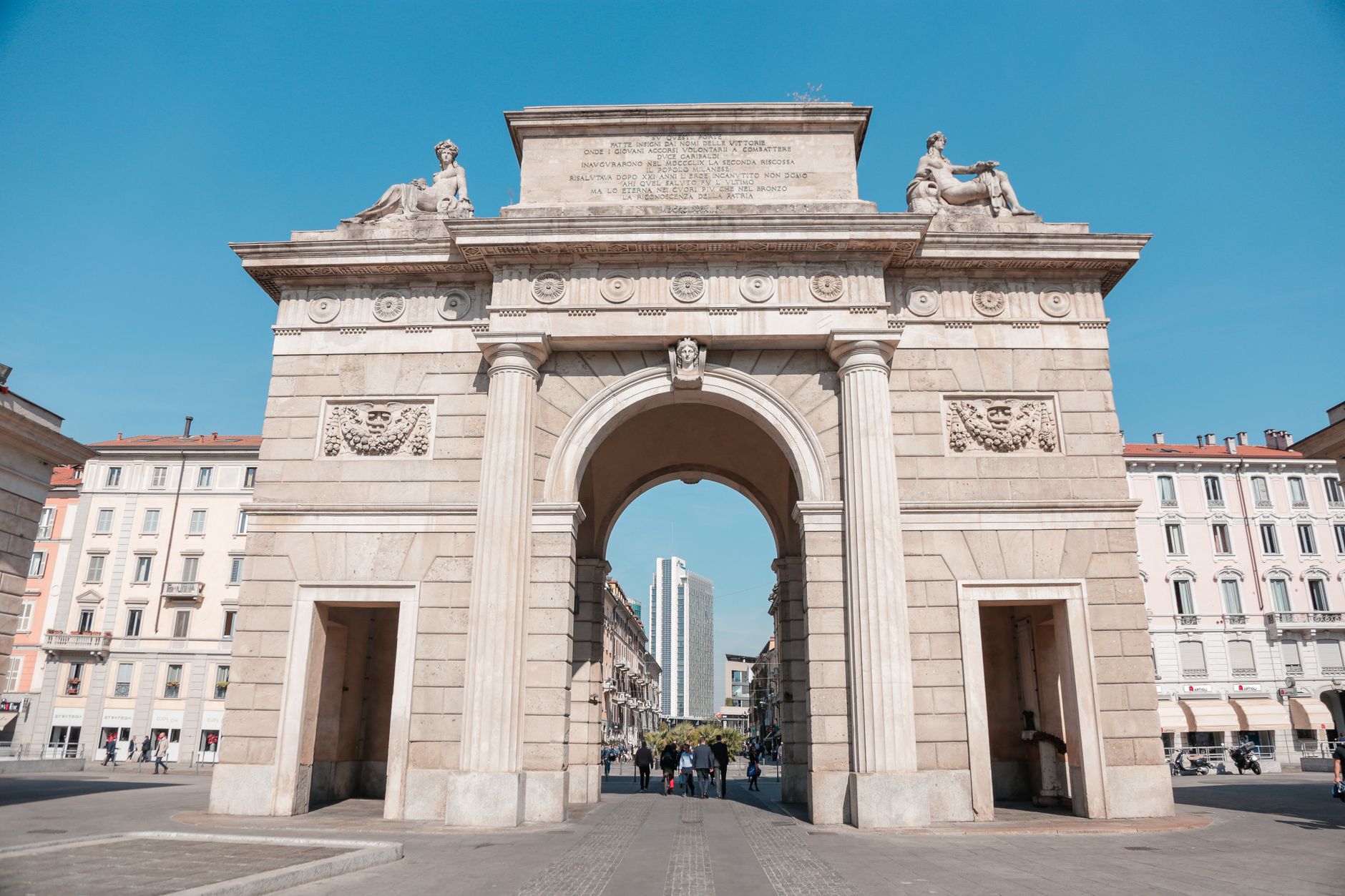
Porta Romana Milan is the walk south I take when I want the city to slow down. From Piazza Missori I follow Corso di Porta Romana for about 15 minutes, past the bookshops and the gelaterias, until the old Roman gate suddenly opens up in Piazza Medaglie d’Oro — and the road just keeps going, becoming Corso Lodi, threading south toward the railyards. Most three-day visitors stop at the Duomo and never cross this line. They miss the better half of Milan: the locals’ neighborhood where the aperitivo is cheaper, the trattorias are harder to book, and a Wes Anderson-designed cafe sits inside a former gin distillery.
I lived for a year near Corso Lodi and still come back twice a month, usually for a long lunch and a wander. This guide is what I tell friends when they ask which Milan neighborhood they should actually spend a half-day in.
Why Porta Romana is worth a half-day
The Porta Romana district sits roughly between the inner ring road and the southern edge of the city, anchored by the M3 yellow line and the broad Corso Lodi. It’s the only part of central Milan where you can stand on a residential street and not see another tourist for ten minutes. The Porta Romana area covers about 2 square kilometers of low-rise apartment buildings, neighborhood bars, and pocket parks — punctuated by Fondazione Prada, three of the city’s best trattorias, and a working-class swimming complex (Bagni Misteriosi) that doubles as a summer aperitivo bar.
What makes this part of southern Milan different from Brera or Navigli is that nothing here was designed for visitors. The bakeries open at 7. The dry cleaners are still dry cleaners. When I sit at the bar at Pasta Madre at 9 PM on a Tuesday, four of the five people next to me are speaking Milanese dialect to the owner. That’s the whole pitch.
Historically this was the gateway south — the Roman road to Rome itself left Milan through this gate, hence the name. For 600 years the arch in Piazza Medaglie d’Oro marked the line between the city and the countryside. The countryside is long gone, replaced first by 19th-century apartment buildings for railway workers and now by a mix of design studios, advertising agencies, and Bocconi University’s expanding campus. The Bocconi influence matters because it brings a 25–35 demographic into the bars that you don’t see in Brera, where the median age at aperitivo skews older and more visitor-heavy.
How to get to Porta Romana
Three good options, all under 15 minutes from the Duomo:
- M3 Porta Romana (yellow line) — the obvious choice. Two stops from Duomo, exits directly at the Porta Romana arch. €2.20 single ticket.
- M3 Lodi T.I.B.B. — one stop further south. This is the right stop for Fondazione Prada (8-minute walk east) and the Olympic Village site.
- Tram 9 — runs east-west across the top of the neighborhood. I take this from Porta Venezia when I’m coming from an aperitivo there.
- Tram 16 — connects the Duomo down through Porta Romana to the southern suburbs. Slower than the metro but you see more.
From Milano Centrale, the M3 takes 12 minutes door to door. If you’re staying near the station and want a fuller picture of Milan’s transit options, the Milan transport guide covers everything including the new contactless tap-in system that now works on every line.
The 2026 Olympics connection
This is the part of the neighborhood I get asked about most. The Milano-Cortina Winter Olympics ran from February 6 to 22, 2026, with the Paralympics following from March 6 to 15, and the athletes’ Olympic Village was built on the former Scalo Romana railyard, a 190,000-square-meter site at the southern edge of the Porta Romana district.
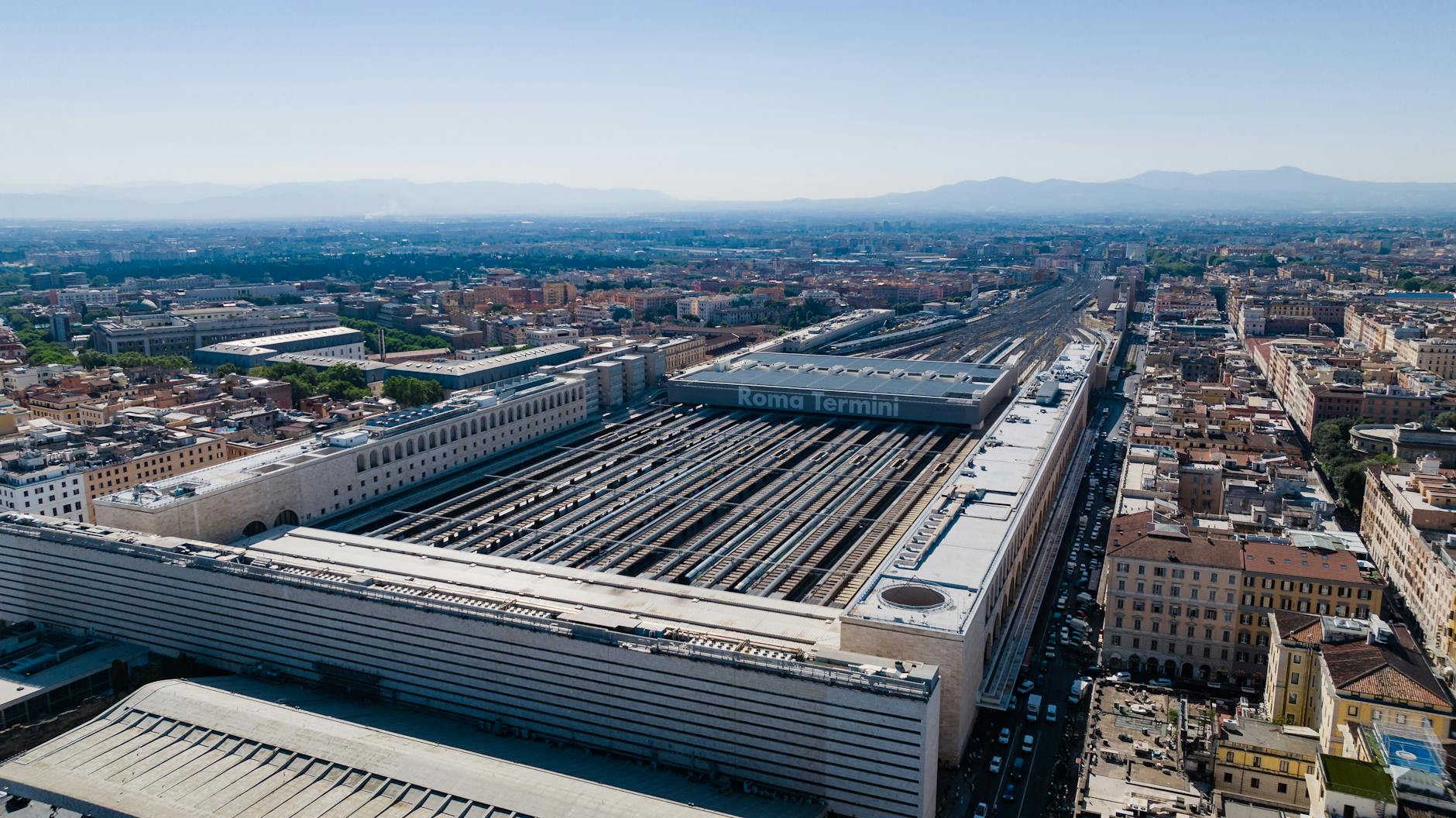
The short version: COIMA (the developer) and Skidmore, Owings & Merrill (the architects) finished construction in June 2025, a month ahead of schedule, and handed the keys to the Fondazione Milano-Cortina 2026 organizing committee on October 1, 2025. Six new residential buildings housed roughly 1,700 athletes during the Games, plus two restored historic buildings — the old Squadra Rialzo locomotive workshop and the Basilico building — that have been turned into community spaces.
Could you visit during the Games? No. The Village was closed to the public from late January through the end of March 2026 — it was a secured Olympic zone. The surrounding Porta Romana streets stayed fully open, and the neighborhood ran on Games energy for those weeks: the bars were full, the trams were packed with people in team scarves, and Fondazione Prada put on a special program tied to the Games.
After the Games, the residences became student housing — Milan’s largest single student housing project, meeting about 6% of the city’s documented shortfall. The scheme also includes community spaces (40,000 square meters of green areas, three sports courts for basketball and padel, the restored workshop building), which makes this the newest walkable part of the Porta Romana area.
A few things worth knowing about the project itself: the buildings meet NZEB (Nearly Zero Energy Building) standards, run entirely on heat pumps with no fossil fuels, and have a 1 MW rooftop solar array. They earned LEED Gold and WiredScore Platinum certifications. I’m not normally interested in real estate marketing, but the sustainability spec is genuinely best-in-class for a development this size in Italy — and it’s the template COIMA is now pitching for the larger Scali Milano regeneration of the other seven disused railyards around the city. Whether you care about architecture or not, walking the perimeter of the site gives you a clean look at what Milan is trying to become over the next decade.
The Corso Lodi walk: what the long stretch south actually looks like
I want to talk about the walk itself because the Corso Lodi corridor is the thing that most guides skip — they tell you to take the metro and miss the texture of the neighborhood. Here’s what you actually see if you walk it.
The first 400 meters south of the arch are still proper city: bakeries, tabacchi, a Pam grocery, the long stone facade of the Istituto dei Ciechi (Milan’s blind institute, founded 1840). Then around Via Lazzaro Papi the buildings drop a story and you get the first cluster of independent design shops — Bottega Ghianda for woodworking, a couple of furniture restorers, a vinyl store called Serendeepity that’s worth twenty minutes. By the time you reach Piazza Bonomelli (about 12 minutes from the arch) the road widens into the broad boulevard form it keeps all the way to the railyards. This stretch — Bonomelli south to M3 Lodi T.I.B.B. — is where most of the new restaurants have opened in the last three years. If you only have time for one walk in the Porta Romana area, do this one, on a Saturday morning when the shops are open and the cafes spill outside.
A perfect Porta Romana afternoon, by hour
This is the route I walk when friends visit. It takes about five hours with a long lunch.
- 12:00 — M3 to Porta Romana. Walk through the arch, snap a photo, head south on Corso Lodi.
- 12:30 — Long lunch at Pasta Madre or, if you booked a week ahead, Trippa. Budget 90 minutes and €40 per person with wine.
- 14:30 — Walk 15 minutes east to Fondazione Prada. Buy your €15 ticket on arrival (queue is rarely more than 10 minutes outside summer Saturdays).
- 15:00–17:00 — Wander the Fondazione. Save 20 minutes for Bar Luce, the Wes Anderson-designed cafe inside the complex.
- 17:30 — Tram or 20-minute walk back northwest to Rotonda della Besana for a quiet sit in the lawn.
- 18:30 — Aperitivo at Bagni Misteriosi (May–September) or Cantina della Vetra (year-round).
What to see in Porta Romana
- Fondazione Prada — Largo Isarco 2. Open Tuesday–Sunday 11:00–19:00, closed Mondays. €15 admission, students €12. Miuccia Prada and Rem Koolhaas turned a 1910 gin distillery into a 19,000-square-meter contemporary art campus. The gold-leafed Haunted House and the 60-meter white concrete Torre are the two buildings everyone photographs. Permanent collection includes Anish Kapoor, Louise Bourgeois, Francesco Vezzoli. Allow at least 90 minutes. Get off at M3 Lodi T.I.B.B., not Porta Romana — it’s much closer.
- Porta Romana arch — Piazza Medaglie d’Oro. Completed in 1596 to mark the marriage of Philip III of Spain (Milan was under Spanish rule then). Free, always open, ten minutes total. Don’t make a special trip — see it as you walk through.
- Bar Luce inside Fondazione Prada — Wes Anderson designed this in 2015. Pastel formica, jukebox loaded with Italian pop from 1960, two pinball machines themed to his films. Espresso €1.20 at the bar, €3.50 sitting. The pastries are real and excellent — the maritozzo con panna is €4.50 and worth it.
- Bagni Misteriosi — Via Carlo Botta 18. A 1939 outdoor public swimming pool restored in 2016, attached to the Franco Parenti Theatre. Pool open mid-May to mid-September, €12 day pass. From September to May the empty pool deck becomes one of Milan’s strangest bars. Aperitivo from 18:00, €10 cocktails.
- Rotonda della Besana — Via Enrico Besana 12. An 18th-century circular portico that originally enclosed a cemetery, now a small park with the Children’s Museum (MUBA) in the central building. Free to walk in, lovely lawn for a 20-minute sit.
- Basilica di San Lorenzo Maggiore — technically on the western edge of the Porta Romana area, 10-minute walk from the arch. 4th-century basilica with 16 Roman columns out front (the Colonne di San Lorenzo) that locals use as a meeting spot. Free entry, €2 for the chapel of Sant’Aquilino with 5th-century mosaics.
- Parco delle Basiliche / Parco Vetra — the green strip between San Lorenzo and Sant’Eustorgio. Not spectacular but a good walking corridor between the basilicas and the Navigli.
Where to eat and drink in Porta Romana
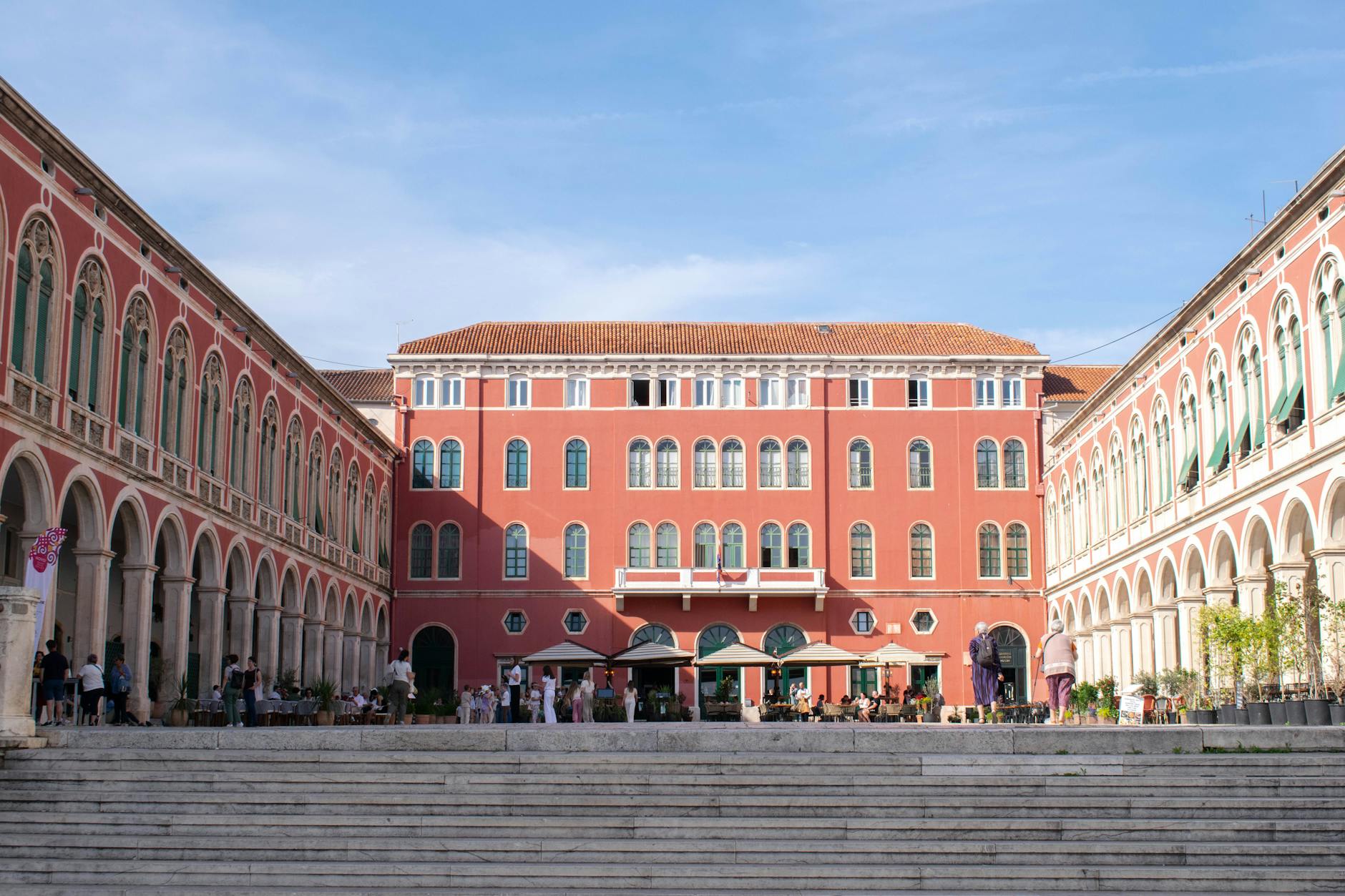
The Porta Romana district has quietly become one of Milan’s strongest dining neighborhoods. Five places I actually go back to:
- Trippa — Via Giorgio Vasari 1. Open Monday–Saturday, dinner only, 19:30–23:30. The hardest reservation in Milan. Reservations open online at midnight CET seven days in advance and are gone within minutes. Chef Diego Rossi does offal-forward Italian trattoria cooking — the namesake tripe, vitello tonnato, Milanese risotto with grilled marrow. €55–65 per person with wine. Worth the booking battle once.
- Pasta Madre — Via Bernardino Corio 8. Open Tuesday–Sunday, lunch and dinner. The neighborhood bistro I bring everyone to. House-made pasta, short rotating menu, €40 per person with a glass of wine. Reserve a few days ahead; walk-ins work at 19:30 if you smile.
- Cantina della Vetra — Via Pio IV 3, by the Colonne di San Lorenzo. Old-school Milanese trattoria with outdoor seating in the square. Cotoletta alla milanese €22, risotto allo zafferano €16. Reliable rather than exciting, but the location is unbeatable for a summer dinner.
- Ratanà — technically in Porta Nuova, but I’m including it as the upscale alternative when Trippa is booked out. Cesare Battisti’s modern Milanese cuisine, €70 per person, easier to book.
- Bar Basso — Via Plinio 39. A small caveat: this is technically in the Porta Venezia / Loreto direction, not Porta Romana proper, but it’s a 12-minute tram ride and the obvious nightcap. This is where bartender Mirko Stocchetto invented the Negroni Sbagliato in 1972 by accidentally reaching for sparkling wine instead of gin. Order it in the oversized goblet (€10). Open until 1 AM, closed Tuesdays. Founded 1947.
A couple more I cycle through when the main five are full: Dry Milano on Via Solferino does pizza-and-cocktails (technically up in Porta Nuova, but worth the trip); Officina 12 down on the Navigli for a younger crowd; and Un Posto a Milano at Cascina Cuccagna — a restored farmhouse with a courtyard that sits inside the Porta Romana boundaries and does a brilliant €15 weekday lunch. Cuccagna also runs a Saturday farmers’ market that’s worth timing a Saturday morning visit around.
For broader options across the city, the Milan food guide has a deeper list of regional specialties and where to find them.

Walking from Fondazione Prada back to the center: the route I actually use
Most visitors take the metro back from Fondazione Prada. That’s fine but you miss what is genuinely one of the better unguided walks in Milan. Here’s the 35-minute version: exit Fondazione Prada heading northwest on Via Orobia, cut across the railway footbridge, and pick up Via Lorenzini. This drops you onto Corso Lodi just south of Piazza Bonomelli — exactly where the boutique restaurants cluster. Continue north up Corso Lodi to the arch, then through the arch onto Corso di Porta Romana. At Crocetta you can stop for a gelato at Gelateria della Musica (their pistachio is the one Milanese pistachio I’d defend against anyone) and then continue 8 minutes more to Piazza Missori. Total: 35 minutes, no metro, six photo stops, two gelato options. Do this on the way back rather than the way out — you’ll want fresh legs for Fondazione Prada.
Practical tips
- Cash vs card — every restaurant and bar I’ve listed takes cards. Tap a contactless card or phone on the tram, or carry a RicaricaMi ticket as a backup, since paper tickets ended on 1 January 2026.
- Reservations — Trippa one week ahead, Pasta Madre two days ahead, everywhere else walk in.
- Walking distances — the neighborhood is bigger than it looks on a map. Porta Romana arch to Fondazione Prada is a 25-minute walk south. Take the M3 one stop to Lodi T.I.B.B. unless you specifically want the walk.
- Sundays — many trattorias close. Pasta Madre is open. Trippa is closed.
- Heat — Milan in July and August hits 35°C with high humidity. Bagni Misteriosi is the only public pool within walking distance of the center.
Aperitivo in Porta Romana: how the locals do it
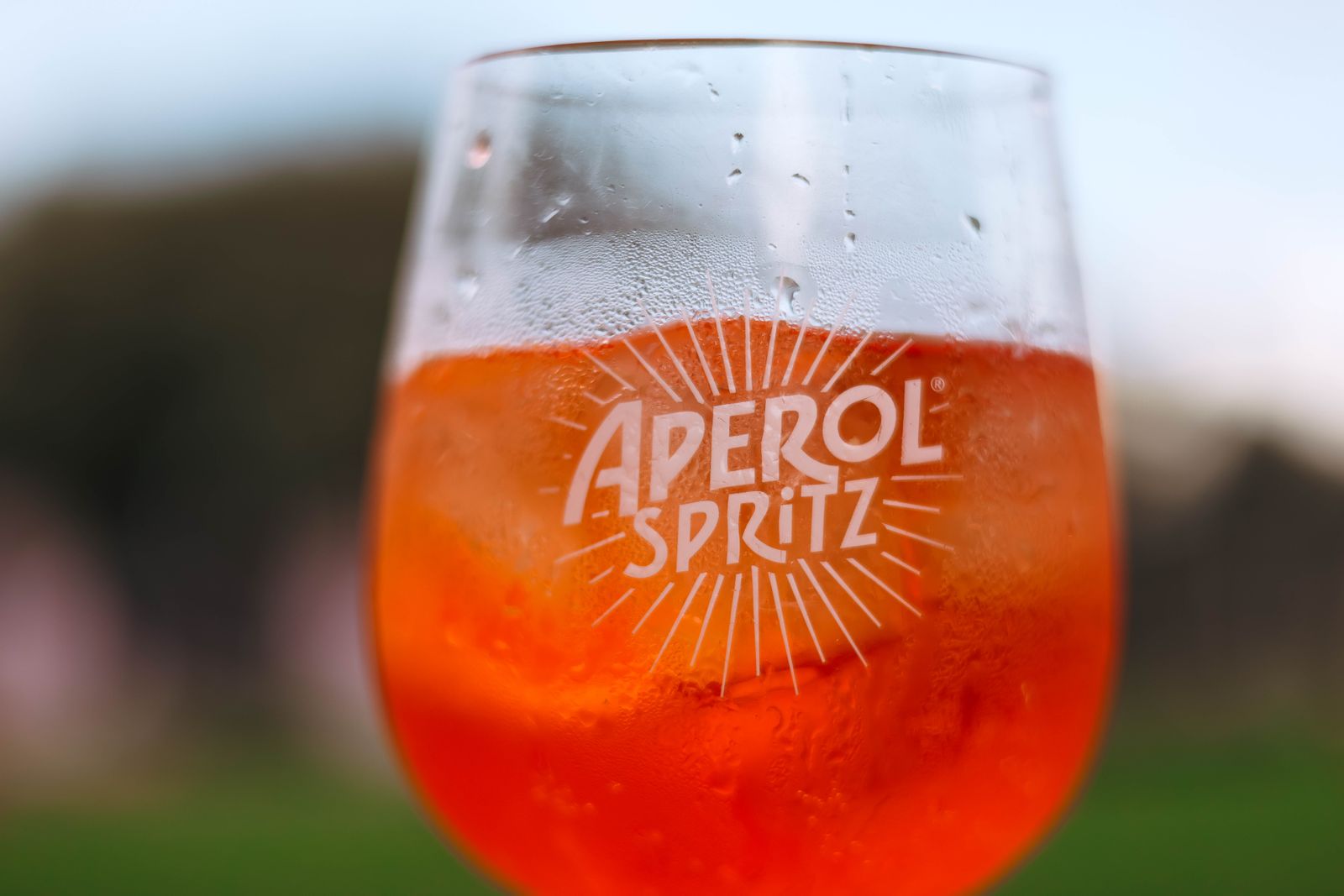
Aperitivo here looks different from the Navigli version. There’s less spectacle, fewer overloaded buffet plates, and the cocktail is the point rather than the food. Standard format: you sit down between 18:30 and 20:00, order a €9–11 cocktail (Negroni, Americano, Aperol Spritz, or — at the right places — a Negroni Sbagliato), and the bar brings small plates: olives, focaccia, sometimes a slice of pizza or a bowl of pasta. Two cocktails plus the included food is usually enough to skip dinner for €22.
My rotation: Bagni Misteriosi in summer (the pool deck), Cantina della Vetra year-round (the piazza is heated in winter), and Mag Cafè across the canal in Navigli when I want a proper craft-cocktail menu. Avoid the chain bars on the inner side of the arch — they’re fine but identical to anything you’d find in Porta Venezia at the same price.
Best time to visit Porta Romana
My honest order: May, then late September, then October. May gives you 22°C days, the Bagni Misterios
Related Milan guides
Keep planning with our other Milan neighborhoods guide resources: