Milan Duomo: Complete Visitor Guide (2026 Tickets, Rooftop & Tips)
The first time I walked into Piazza del Duomo I made the standard tourist mistake: I joined the security line without a ticket and lost forty minutes I’ll never get back. This Milan Duomo guide exists so you don’t do the same. The cathedral is the single most-visited monument in the city, the queues are real, and the difference between a great visit and a frustrating one comes down to maybe three decisions you make before you leave the hotel — which ticket, what time, and whether you take the stairs or the lift to the roof.
I’ve been up there in February sleet and August haze, on a Tuesday at 8:55 with maybe nine other people on the terraces, and on a Saturday at 13:00 with what felt like all of Lombardy. The cathedral rewards a little planning more than almost any other sight in Italy. Here’s the version of the visit I’d describe to a friend flying in tomorrow.
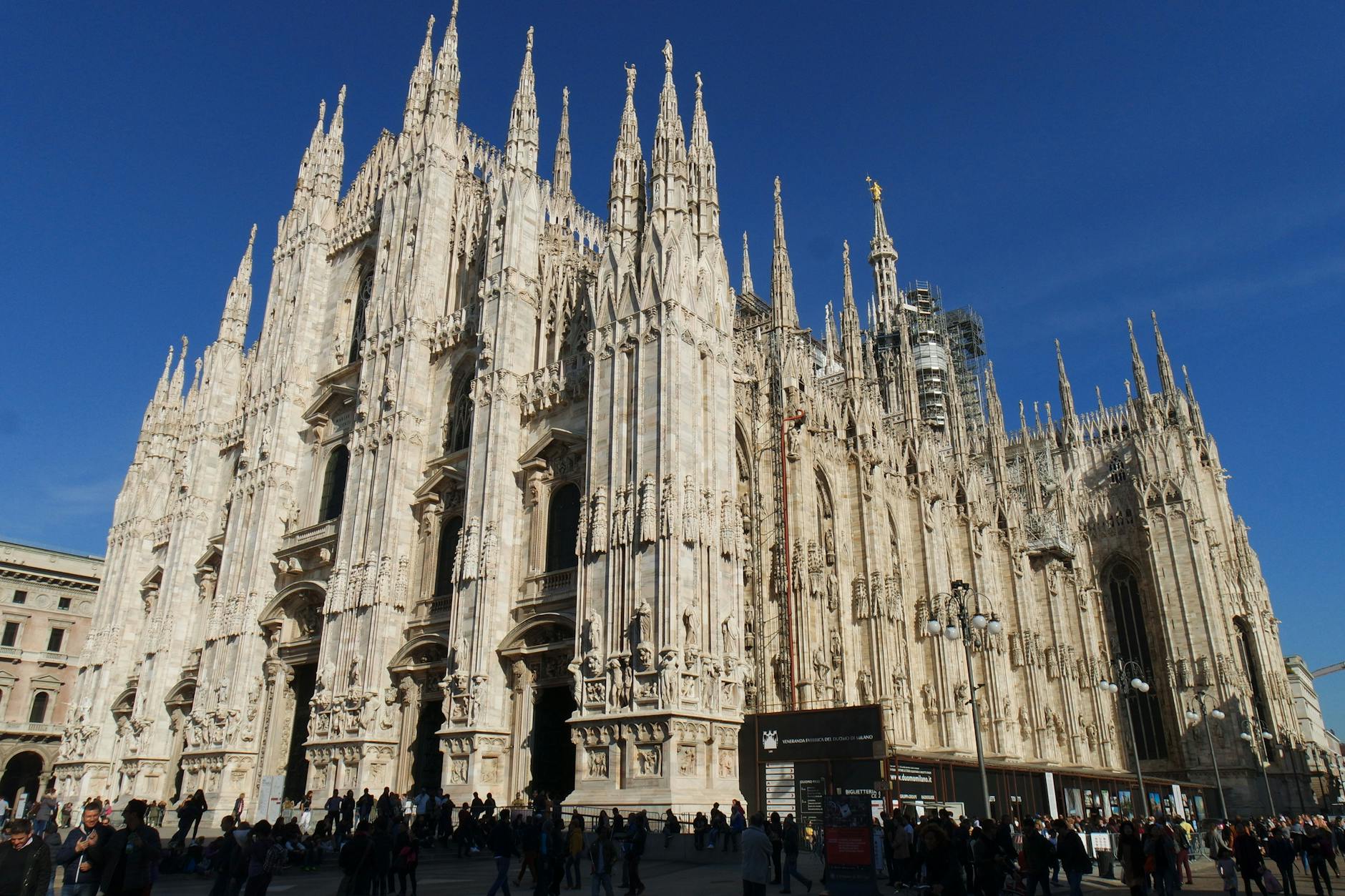
Why the Duomo is worth more than a photo stop
Most visitors give the Duomo di Milano twenty minutes — a few photos in the piazza, maybe a peek through the bronze doors, then off to the Galleria Vittorio Emanuele II for a cappuccino. That’s a waste. The cathedral took roughly 600 years to finish (works officially started in 1386 and the last gate was hung in 1965), and you can read that long argument with itself in the stonework — Gothic at the base, Baroque interventions in the chapels, neo-Gothic up top, all in pinkish-white Candoglia marble that turns gold at sunset.
What sets it apart from other European cathedrals is that you can walk on the roof. Not just step onto a viewing platform — actually wander among 135 spires and 3,400 statues for as long as you like. There is nothing else quite like it in Italy. If you only do one thing on this trip beyond The Last Supper, make it the Duomo terraces.
Tickets, prices, and how to skip the line
There are four ticket tiers worth knowing about. Prices below are the 2026 official figures from the cathedral box office; third-party resellers usually add a 15–30% markup for “skip-the-line” wording that doesn’t actually save you any time over the official site.
- Duomo + Museum — €10 adult, €5 reduced (ages 6–17). Cathedral interior, archaeological area below the church, and the Duomo Museum across the piazza. No rooftop.
- Duomo Pass Stairs — €14 adult, €7 reduced. Everything above plus the terraces via 251 steps.
- Duomo Pass Lift — €20 adult, €10 reduced. Same inclusions, elevator instead of stairs. Note: some operators sell a “Fast Track + Lift + Audioguide” combo at around €26 — fine if you want the audioguide, but the basic Lift pass already includes priority security.
- Children under 6 — free, but they still need a ticket reservation in their name to clear the gate.
Opening hours run 08:00–19:00 for the cathedral (last entry 18:10) and 09:00–19:00 for the rooftop terraces. The Duomo Museum runs 10:00–19:00, closed Wednesdays — worth flagging because plenty of people buy the combined ticket on a Wednesday and don’t realise the museum portion expires that day.
Book on the official duomomilano.it site at least 24 hours ahead. You’ll select a 15-minute entry slot. Arrive at the start of your slot, go to the security check on the south side of the cathedral (Piazza Duomo 14/A for ticket pickup if you didn’t print at home), and you’ll be inside in under ten minutes. Walk-up tickets exist at the box office on Via dell’Arcivescovado but expect a 30–60 minute queue between April and October.
One small thing the official site doesn’t shout about: a free entry to the cathedral interior only (no rooftop, no museum) is technically available for worshippers attending Mass. If you genuinely want to attend, enter via the north door — but security still does bag checks and clothing checks, so don’t treat this as a hack.
The itinerary I actually use
This is the version I send people who message me asking for two hours well spent. It assumes a weekday in shoulder season; in July you’d shift everything thirty minutes earlier.
- 08:30 — Coffee at Marchesi 1824 in the Galleria. Stand at the bar (€1.30 for an espresso instead of €6 sitting down). Five-minute walk from the cathedral.
- 08:55 — Be at the south security line with a 09:00 Duomo Pass Stairs slot. You’ll be among the first people inside.
- 09:00–09:45 — Cathedral interior. Walk the central nave first, then the right aisle to the sundial, then the apse with the three great windows. The morning light through the eastern apse glass is the reason to be here this early.
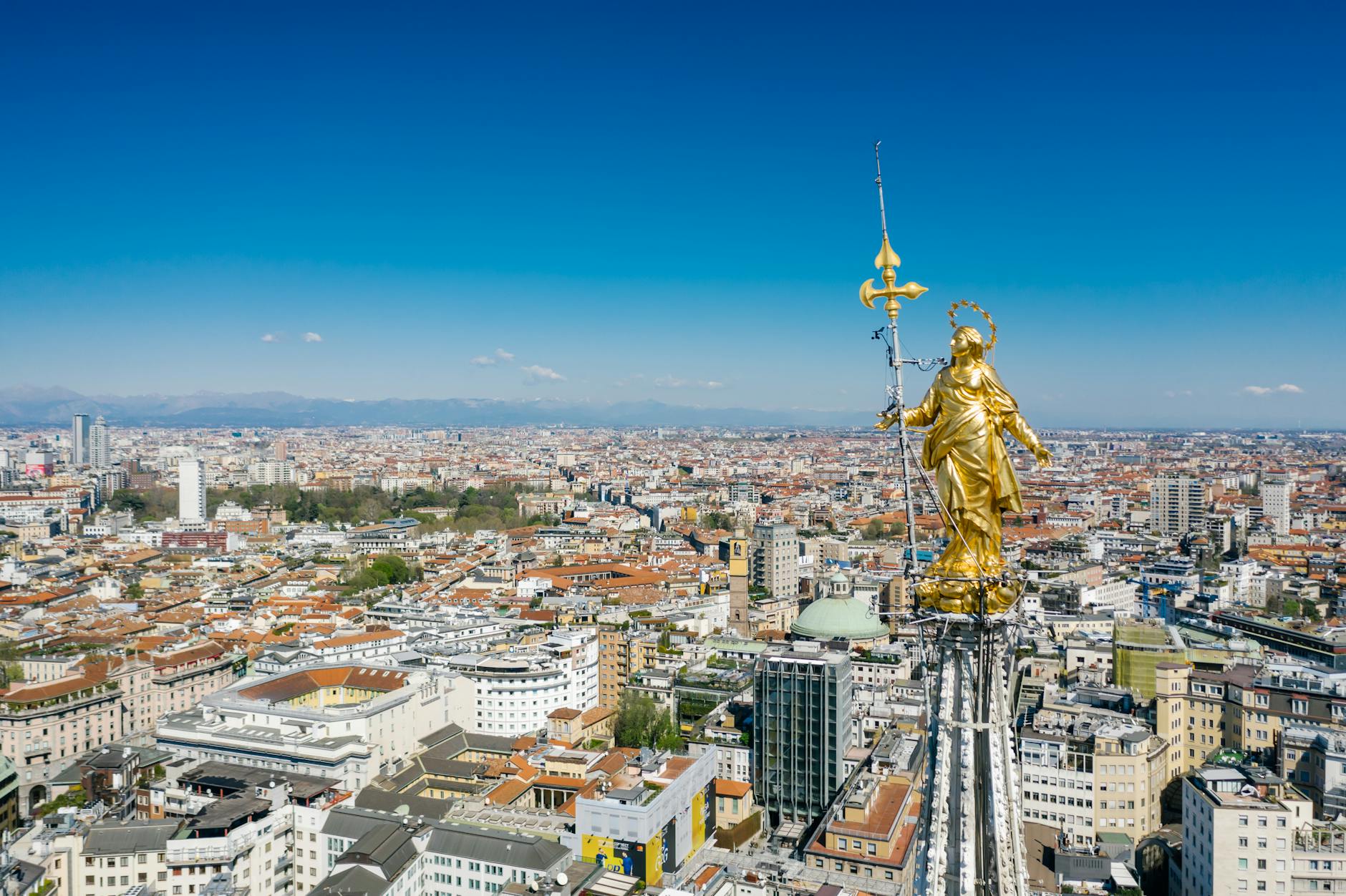
- 09:45–11:15 — Up to the roof. Take your time. Walk the perimeter, climb the secondary staircase to the highest open terrace, get close to the Madonnina.
- 11:15–11:45 — Archaeological area. Stairs down at the back of the nave. Most people skip this, which is exactly why it’s worth seeing — the foundations of the 4th-century baptistery of Saint Ambrose are right under your feet.
- 11:45–13:00 — Duomo Museum. Across the piazza in Palazzo Reale. Easier to appreciate the cathedral’s statues here, at eye level, than craning up at them from below.
- 13:15 — Lunch. Options below.
If you’re tight on time and have to cut something, drop the museum. If you only have ninety minutes total, skip the archaeology and go straight from the roof to lunch.
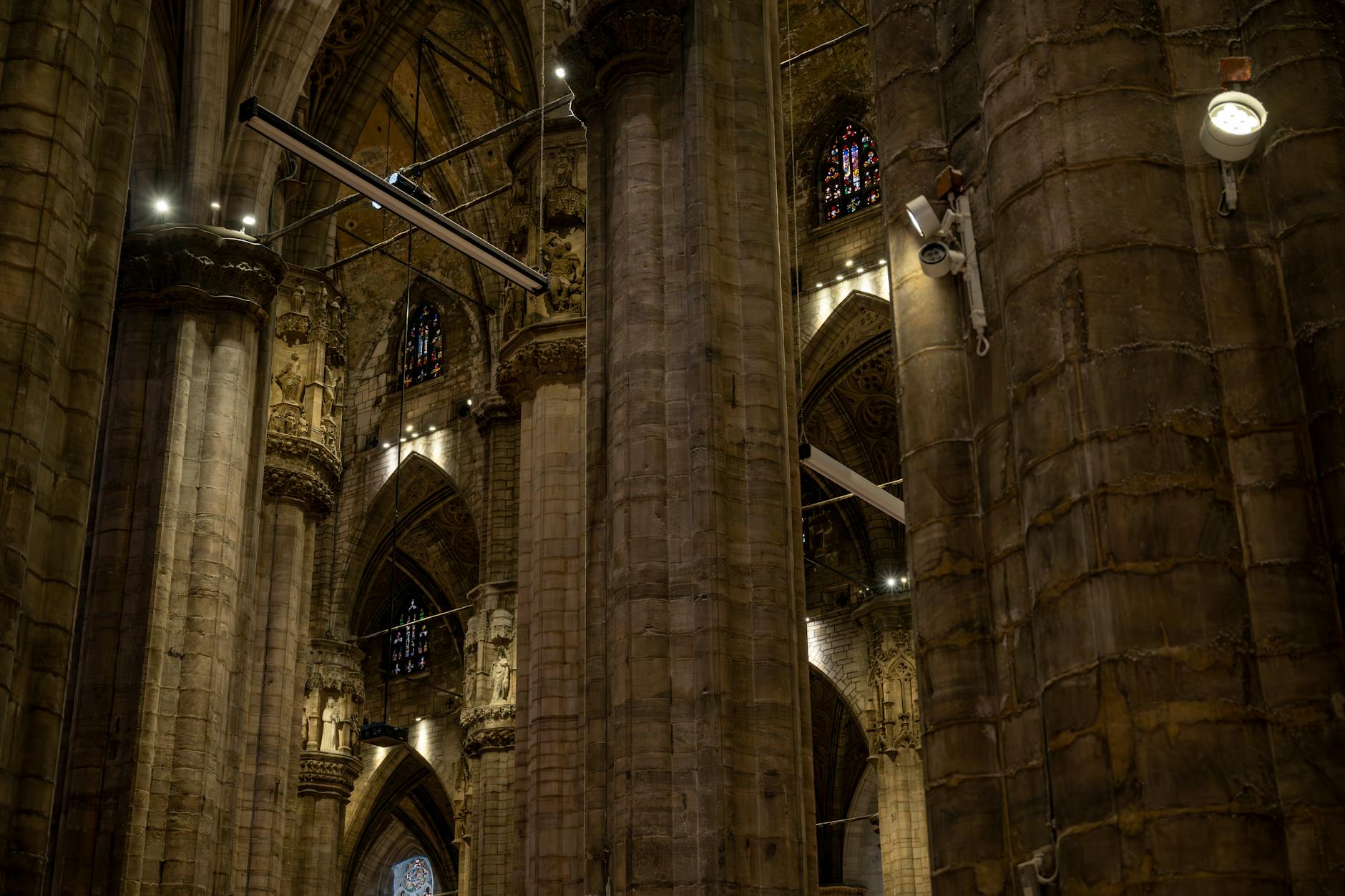
What to see inside the cathedral
-
The sundial (meridiana). Brass strip set into the floor near the main entrance, installed in 1786 by astronomers from the Brera Observatory. A small hole high in the south wall lets a beam of sunlight strike the line at solar noon, with zodiac symbols marking the months. It still works — Milan officially set its clocks by it until the 19th century. Stand on it and look up to find the pinhole; it’s not signposted well, so most visitors walk straight past.
-
The Scurolo di San Carlo. Below the high altar, accessed via marble stairs in the apse. This octagonal crypt holds the body of Carlo Borromeo, Milan’s plague-time archbishop, in a rock-crystal coffin made in 1606. He’s wearing his cardinal’s vestments and a silver mask. It is genuinely strange and quiet down here — five minutes is plenty.
-
The Madonnina (the smaller versions). Everyone knows the gilded 4.16-metre statue on the top spire. Inside, look for the small bronze and silver replicas in the chapels along the left aisle — they’re votive copies left by Milanese families over the centuries. There’s also a window in the south transept showing her at scale.
-
The stained glass of the apse. Three windows behind the altar, each over 20 metres tall, depicting the Old Testament, the life of Christ, and the Apocalypse. The southern one (Old Testament) catches the strongest morning light. If you’re inside between 09:00 and 10:30 in winter, the cast on the marble floor is the best free photograph in Milan.
-
The five organs. The cathedral has the second-largest pipe organ in Italy — 15,800 pipes spread across five separate instruments, played from a single console. If you visit during a 17:30 weekday vespers service you might catch them in use; otherwise the carved wooden cases above the altar are worth a moment on their own.
-
The “Saint Bartholomew Flayed” statue. Right transept, by Marco d’Agrate, 1562. Bartholomew was martyred by being skinned alive, and the sculptor depicted him with his own flayed skin draped over his shoulders like a stole. Anatomically precise, unsettling, and the closest the cathedral gets to a Renaissance anatomy lesson. The Latin inscription on the base translates roughly as “I was not made by Praxiteles, but by Marco d’Agrate” — vintage Lombard humblebrag.
-
The Holy Nail. High above the apse, you’ll see a small red light burning inside a niche. According to tradition, that niche contains one of the nails from the Crucifixion, brought to Milan by Sant’Ambrogio in the 4th century. Once a year, on 14 September, the archbishop is hoisted up in a wooden basket called the nivola to retrieve it for veneration. Worth knowing the story even if you’re not religious.
The rooftop — stairs versus lift, honestly
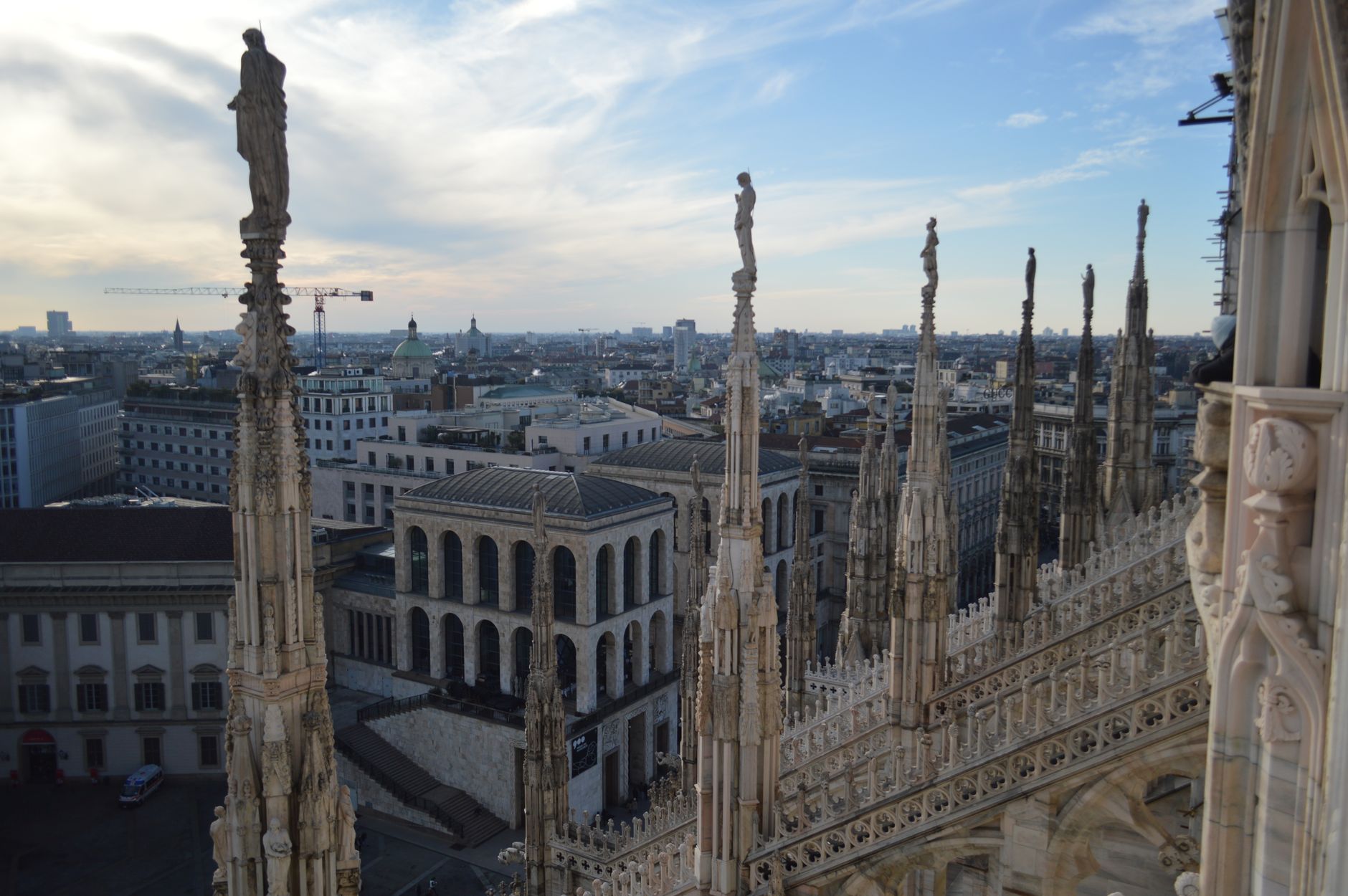
Here’s the thing no one tells you about the 251-step climb: it isn’t actually difficult. The staircase is wide, well-lit, and the steps are shallow stone treads with handrails. I’m not particularly athletic and I’ve never had to stop. It takes about four minutes at a steady pace. Save the €6 difference, take the stairs, and you also exit closer to the cathedral’s main spine of statues.
The lift is the right choice in three specific situations: you have a mobility issue, you’re travelling with very small children, or it’s the height of August and you genuinely cannot handle a warm enclosed staircase. Otherwise stairs.
What to expect once you’re up there: the lower terrace runs around the perimeter of the cathedral with broad walkways and waist-high marble parapets. From there a second, narrower staircase (about 70 more steps) takes you up the back of the roof onto the actual ridge — this is the bit with the dramatic views over Piazza del Duomo and, on a clear winter day, the snow line of the Alps in the distance.
Up close, the carving is extraordinary. Each of the 135 spires has its own saint on top; each of the thousands of figures along the buttresses is individually carved. You can get within arm’s reach of most of them. Allow at least 45 minutes — the people who tell you “20 minutes is enough” rushed and regretted it.
One practical note: there’s no bathroom on the roof and no water fountain. Use the facilities in the museum or a nearby bar before you go up.
Where to eat near the Duomo
The piazza itself is a tourist-pricing zone. Walk three minutes in any direction and the value improves dramatically.
- Luini — Via Santa Radegonda 16, sixty seconds from the north flank of the cathedral. A Milanese institution since 1888, they sell exactly one thing: panzerotti, fried half-moon pockets of dough with mozzarella and tomato. €3.50 each, eat standing in the side street. Lunch for two, including a Coke, around €10. Closed Sundays.
- Spontini — Via Santa Radegonda 11, opposite Luini. Thick-crust Milanese pizza by the slice, €6 for a generous wedge of margherita. Sit at the counter, takes ten minutes.
- Trattoria Milanese — Via Santa Marta 11, a seven-minute walk west of the Duomo in the old streets behind Via Torino. Family-run since 1933, this is where to try risotto alla milanese (the saffron one, €18) or cotoletta alla milanese (the breaded veal cutlet on the bone, €28). Lunch with wine around €40 per person. Book one day ahead.
- Giacomo Arengario — Via Guglielmo Marconi 1, on the top floor of the Museo del Novecento with a glassed-in terrace that looks straight at the cathedral’s south flank. Pasta dishes €22–€28, fish mains around €38. Lunch for the view, not the bargain. Reservation essential.
- Cracco Café — inside the Galleria, ground floor. Carlo Cracco’s casual outpost. Their panettone in season (October–January) is worth the €8 slice; coffee at the bar is €2. A reasonable way to use the Galleria without paying €25 for a sit-down sandwich.
If you want a longer rundown of the surrounding eateries, including the aperitivo spots that come alive after 18:00, the things to do in Milan overview links to a dedicated neighbourhood guide.
Practical tips that actually matter
Dress code is real and enforced. Shoulders must be covered (no tank tops, no spaghetti straps, no off-the-shoulder dresses). Knees must be covered (no short shorts, no mini skirts). This applies to the cathedral interior and the rooftop, because you enter via the same security line. They will turn you away. In summer I carry a light cotton scarf I can drape across my shoulders; men should bring a t-shirt rather than rely on a tank top.
Security is airport-style. Bags through an x-ray, metal detector for you. No knives (including small pocket knives), no large backpacks (the limit is roughly 30 litres), no tripods or selfie sticks longer than 25 cm. There is no left-luggage facility, so plan accordingly.
Photography. Permitted everywhere inside without flash. Tripods aren’t allowed. The terraces are an open photographer’s playground. The interior is dim — bring a camera that handles ISO 3200 comfortably or expect grainy phone shots.
Mass and quiet hours. Sunday morning masses (the main one is at 11:00) close the central nave to tourists. The rest of the cathedral stays open but you’ll be asked to keep silent. If you’re already inside when the bells ring 11, just stand at the back and listen — it’s not a bad experience.
Pickpockets. The piazza is one of the top three pickpocket zones in Milan, along with Centrale and Cadorna stations. Friendship-bracelet scammers will physically grab your wrist if you let them. Keep wallets in front pockets, ignore anyone who steps into your path.
Best time to visit
Day of the week matters more than season. Tuesday, Wednesday, and Thursday are noticeably quieter than the rest. Saturday and Sunday afternoon are the worst — weekend trips from across Lombardy converge on the piazza.
For time of day, two windows stand out. The first slot at 09:00 is the quietest the cathedral ever gets, and the eastern apse windows are at their best in the morning. The last entry at 18:10 in summer puts you on the roof for sunset, which is the most atmospheric moment to be up there — the marble shifts from white to peach to coral over about 25 minutes. The trade-off is that you have to leave promptly at 19:00 and the interior may already be cleared for evening Mass.
Avoid Italian public holidays unless you have no choice. Easter Monday, 25 April (Liberation Day), 1 May, 2 June, and the Catholic feast of the Immaculate Conception on 8 December all draw huge domestic crowds on top of the regular tourist flow. The week between Christmas and Epiphany is also chaotic. For a calmer trip overall, the best time to visit Milan guide breaks down each month in more detail.
Combining the Duomo with nearby sights
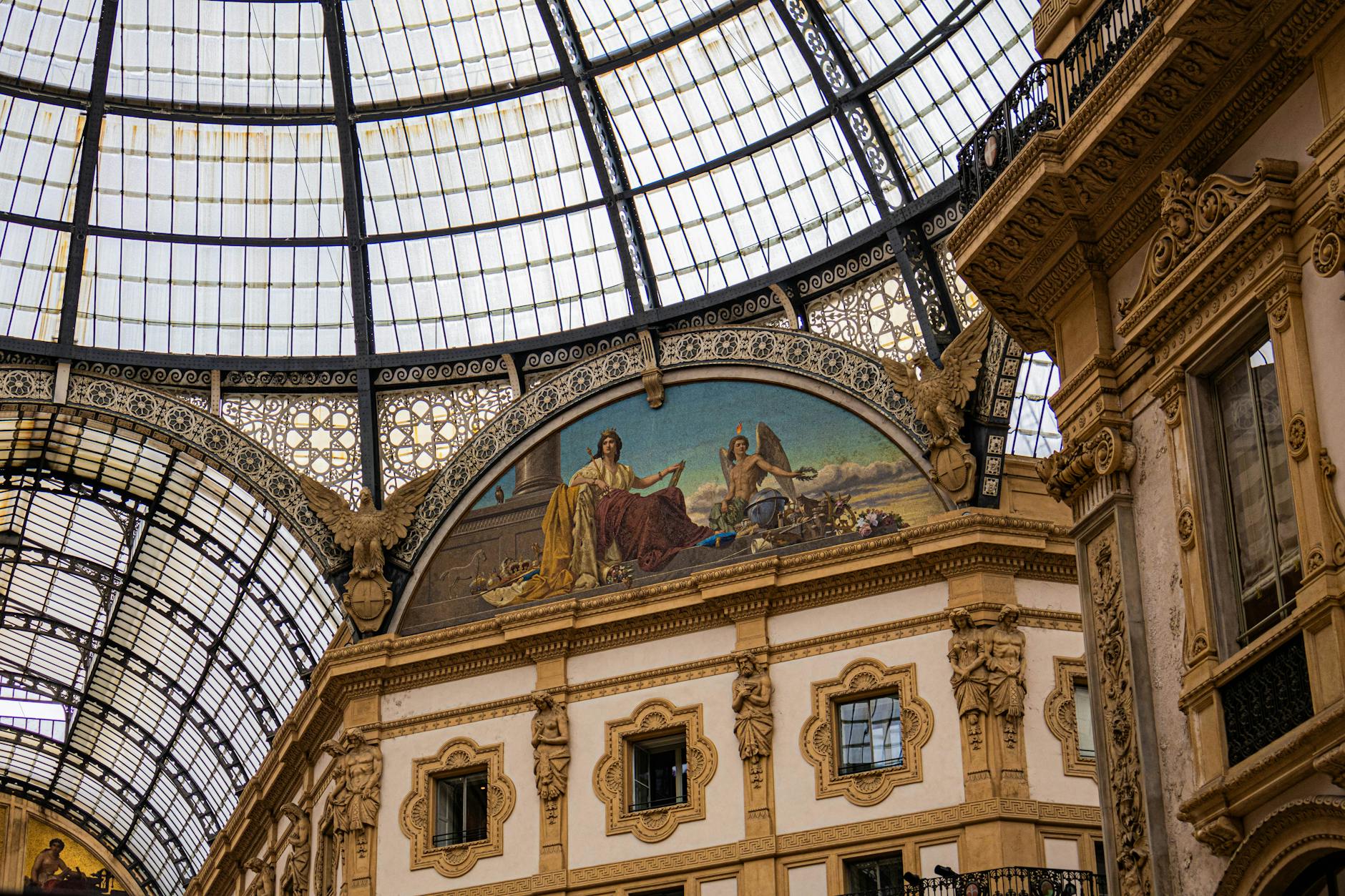
Almost everything central is within a fifteen-minute walk of the cathedral. Three combinations I’d recommend, in order of how naturally they pair with a Duomo visit:
Galleria Vittorio Emanuele II opens directly off the north side of the piazza. Allow 20–30 minutes to walk through, spin a heel on the bull mosaic for the supposed good-luck tradition, and resist the €25 cocktails at the cafés inside. It connects through to Piazza della Scala, where the opera house sits opposite the Marino Palace. La Scala’s interior costs €12 if you tour the museum and auditorium — see the La Scala guide for performance booking, which is a separate exercise.
Museo del Novecento is the modern-art gallery in the Arengario building on the south side of the piazza — you’ve already been staring at it. Italian 20th-century painting and sculpture, with a top-floor room of Lucio Fontana neon work that hangs in the window with the Duomo behind it. €10, two hours.
Castello Sforzesco is a fifteen-minute walk northwest along Via Dante. The castle courtyards are free and you can be inside Michelangelo’s last Pietà Rondanini within an hour of finishing the Duomo. Full breakdown in the Castello Sforzesco guide.
For a fuller day plan that links the Duomo with Brera and the Navigli, the Milan itineraries guide has a one-day and three-day version. If you want to skip across to other cathedrals and parish churches afterwards, the Milan churches to visit list is sorted by neighbourhood. And if you’re matching this with stadium tourism — Inter and Milan both play at San Siro — that’s a tram ride away rather than a walk.
FAQ
How long should I plan for a full Milan Duomo visit?
Two hours minimum for cathedral plus rooftop. Three hours if you add the archaeological area and the museum, which is what I’d recommend if you want a complete picture. If you only have an hour you can still do the cathedral and a quick rooftop loop, but you’ll be rushing.
Is the rooftop worth the extra money?
Yes, without hesitation. It is the single best thing you can do at the Duomo, and the €4 step up from a basic ticket to the Stairs pass is the best value upgrade in Milanese tourism. Skip the cathedral if you must; do not skip the roof.
Can I visit the Duomo for free?
The cathedral interior is technically free if you attend Mass as a worshipper — enter via the north door at service times. You won’t get the rooftop, archaeology, or museum, and clothing rules are still strictly enforced. For non-worshippers there is no free entry option.
What’s the Milan Duomo dress code in summer?
Shoulders and knees covered for everyone, regardless of weather. Carry a light scarf or shawl if you’re wearing a sleeveless top, and avoid shorts that end above the knee. They check at security and again at the cathedral door. Sandals and open shoes are fine.
Are the stairs to the roof difficult?
No. 251 wide stone steps with handrails, taken at any pace you like, with several landings if you want a breather. If you can climb four flights of stairs without distress, you can do this.
Can I bring a backpack into the Duomo?
Small daypacks yes, anything over about 30 litres no. There is no cloakroom or locker facility, so leave large luggage at your hotel or in a left-luggage office at Milano Centrale before you come. The nearest paid luggage storage is at Stazione Cadorna, ten minutes away on the M1 metro line — covered in the Milan transport guide.
Is Milan Duomo open on Christmas Day?
Yes, but only the cathedral interior, and only between Masses. The rooftop, museum, and archaeological area are closed on 25 December and 1 January. The cathedral also closes briefly on Easter Sunday afternoon and a handful of feast days — the official site publishes the annual calendar each January.
Final thoughts
The Duomo is the kind of monument you can return to ten times and still find something new — a chapel you walked past, a saint on a spire you hadn’t noticed, a different quality of light in the apse windows depending on the season. Don’t try to “tick it off” in twenty minutes between the train and lunch. Give it a real morning. Take the stairs, walk the whole perimeter of the roof, then sit in the piazza with a coffee and look back at what you just climbed.
If this is your first trip to the city, pair this Milan Duomo guide with the Milan attractions guide for the broader context and the where to stay in Milan overview if you haven’t booked a hotel yet — staying within a 15-minute walk of the cathedral changes the rhythm of the whole trip. The Duomo isn’t just a stop on your itinerary. It’s the room from which everything else in central Milan radiates outward.
