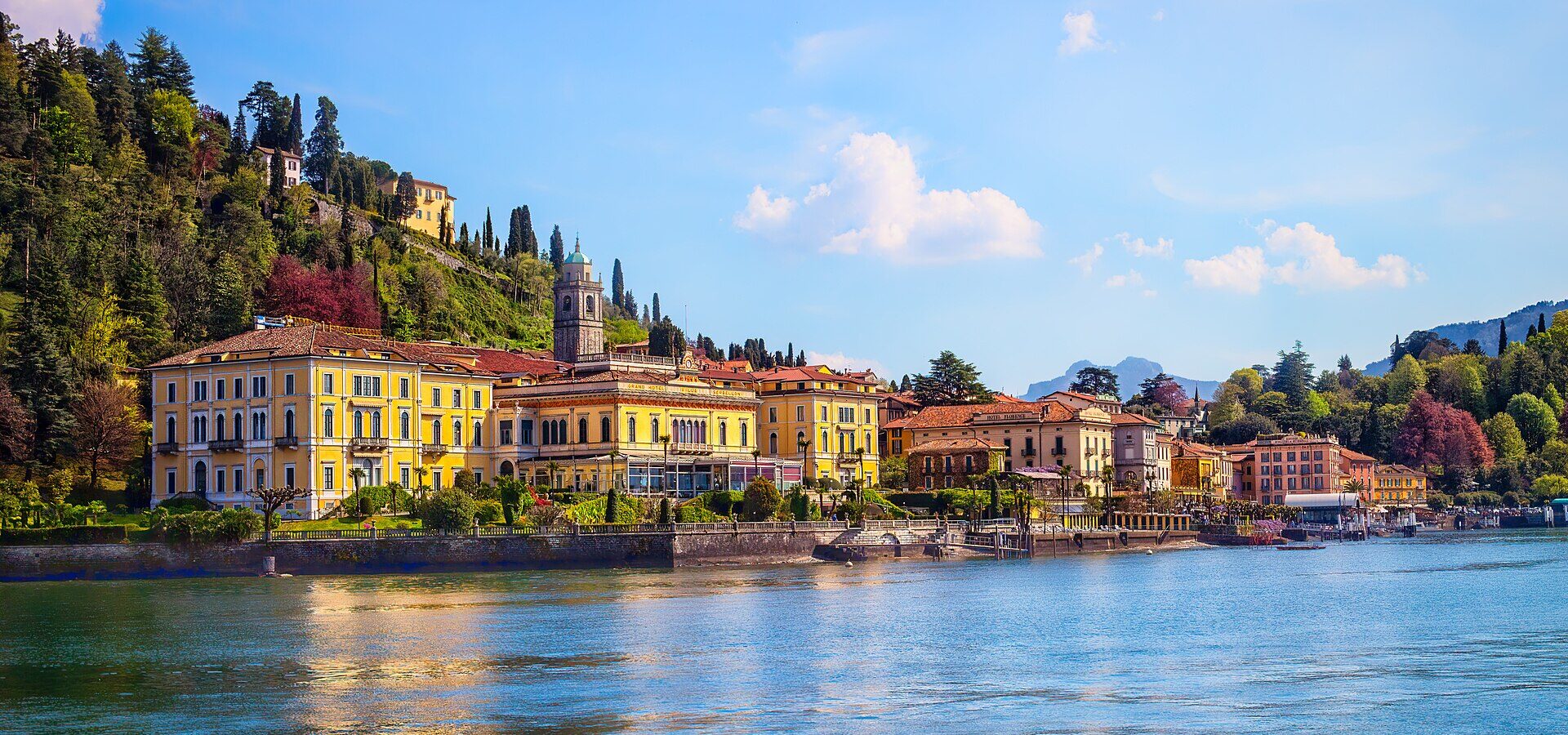
There are two Bellagios. One is a stack of ochre and terracotta houses on a green promontory, with stepped alleys, oleander and a church tower, and almost nobody in it. The other is the same place between eleven in the morning and four in the afternoon, when the coaches and the day boats land and the waterfront becomes a slow-moving queue of people photographing each other. Both are real. Which one you get is entirely a question of when you show up.
Villa Melzi is the easiest garden on the lake to reach on foot, but not the best. Our Lake Como villas and gardens guide compares it with Balbianello, Carlotta and Monastero.
Almost every Bellagio day begins and ends at the landing stage — our Lake Como ferry guide covers which boat to take, what it costs and when it stops running.
Twenty minutes across the water sits the town most people should actually stay in — the case for it is in our Varenna guide.
Everything below assumes you are heading for Bellagio Italy rather than Bellagio Nevada — and yes, the Las Vegas one was named after this, which tells you something about how thoroughly this small town has entered the global imagination.
Bellagio sits at the tip of the promontory where Lake Como’s three arms divide, which gives it the best position on the lake and views down two arms at once. It is genuinely beautiful and genuinely overcrowded, and the fix is simply to stay overnight: before 10:00 and after 18:00 it belongs to the people who live there. The three things worth your time are Villa Melzi’s gardens (around €10, late March to October), the Villa Serbelloni park by guided tour only (roughly €10–15, 90 minutes, closed November to mid-March), and the ten-minute walk to Punta Spartivento. Eat two streets uphill rather than on the waterfront. And come by ferry from Varenna — there is no railway station and no reason to arrive any other way.
Where Bellagio is, and why the position matters
Lake Como is an upside-down Y, and Bellagio occupies the exact point where the stem meets the two legs. The northern tip of that promontory is called Punta Spartivento — literally “the point that divides the wind” — and from it you look straight up the northern arm towards the Alps, with the Como arm falling away to your left and the Lecco arm to your right.
No other town on the lake has that. Varenna and Menaggio face each other across the water and see one view; Bellagio sees three. It is the reason the grand hotels are here, the reason the town has been a resort since the nineteenth century, and the reason it is busier than anywhere else on the lake.
The town itself is small — a waterfront strip of hotels and cafes, a handful of stepped alleys running uphill behind it, and a church at the top. You can walk the whole of it in twenty minutes. That compactness is exactly why the crowds feel so intense: there is not much town to absorb them.
Getting to Bellagio
Bellagio has no railway station and no motorway. Every arrival involves a boat or a narrow lakeside road, which is part of its charm and all of its logistical difficulty.
- From Varenna by ferry (the best way): 15 to 20 minutes, around €5.50, frequent all day. Varenna is on the mainline from Milano Centrale, roughly an hour, so the whole journey from Milan is about ninety minutes with one clean change.
- From Menaggio by ferry: the same crossing time and fare, from the western shore.
- From Como by hydrofoil: around 45 minutes and about €18.80. The slow boat takes over two hours and eats a day.
- By road: the C30 bus runs along the eastern shore from Como. It is slow, winding, and unpleasant with luggage.
- By car: possible, and then you have to park, which in high season is genuinely difficult and expensive.
The takeaway is simple: come from Varenna. It is faster, cheaper and better looking than every alternative, and the crossing is one of the best twenty minutes on the lake.
The full set of routes up from the city is in our Milan to Lake Como transport guide, and if you are flying in rather than starting in Milan, our Malpensa to Lake Como guide explains why the airport is on the right side of the city for the lake. Doing it all in a single day from Milan is entirely feasible — the timings are in our Lake Como day trip from Milan guide — but it is a long day, and Bellagio is the town that most rewards not rushing.

Timetables, ticket types and the two-pier trap are covered in our Lake Como ferry guide.
Note that Bellagio has more than one landing stage — the car ferry and the passenger services do not always use the same pier. Read the sign at the pier rather than trusting a map pin, particularly if you are catching a specific boat back.
The old town: what is actually there
Bellagio’s centre is a set of stepped alleyways — salite — climbing from the waterfront to the ridge. Salita Serbelloni is the famous one, and it is genuinely lovely: cobbles, arches, flowers spilling off balconies, and shops on both sides.
What is in those shops is worth being clear about. Bellagio’s historic trade was silk, and there are still legitimate silk retailers here selling scarves and ties from the Como mills, which remain among the best in the world. There is also a great deal of ordinary tourist merchandise dressed up in the same shopfronts. If silk is why you came, look for the shops that name their mill and can tell you about the weave.
At the top of the town sits the Basilica di San Giacomo, an eleventh-century Romanesque church that is free to enter, usually quiet, and a genuine relief from the waterfront on a hot afternoon. It is the oldest thing in Bellagio by several centuries and most visitors walk straight past it.
Villa Melzi and its gardens
A ten-minute walk south along the lakefront from the centre brings you to Villa Melzi, and this is the one garden in Bellagio that everyone should see.
It is gentler than the great botanical showpieces further up the lake — lawns running down to the water, a long shoreline path, a Japanese garden, classical statues among the trees, and an orangery. Admission is around €10 for adults, and it is open daily from late March to October, roughly 10:00 to 19:00.
The best time to go is late afternoon, when the day-trippers are queuing for boats and the light comes across the water into the gardens. An hour is enough; two if you sit by the water, which is the correct thing to do.
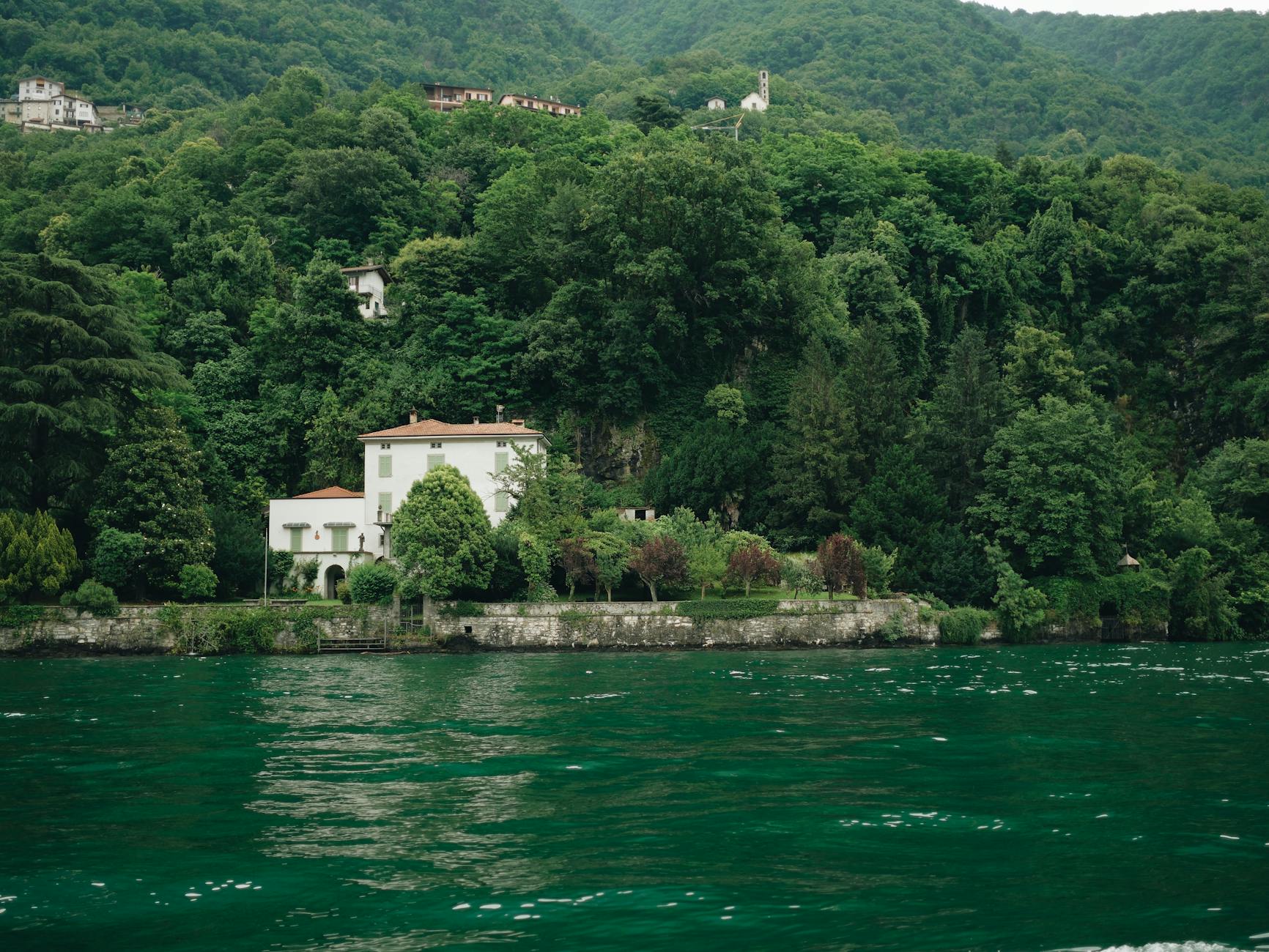
Villa Serbelloni: the park you have to book
Two things are called Villa Serbelloni in Bellagio and confusing them is a standard visitor error. One is the Grand Hotel Villa Serbelloni, the enormous yellow palace on the waterfront — a five-star hotel you can eat in but not tour. The other is the Villa Serbelloni park, up on the hill above the town, owned by the Rockefeller Foundation and run as a study centre.
The park can only be visited on a guided tour. Expect roughly €10 to €15 per person for about 90 minutes, with tours running twice daily, a minimum group size of around six and a maximum of thirty. It closes from November to mid-March.
Is it worth it? If you like gardens and history, yes — the paths climb through terraces and woodland to viewpoints over both arms of the lake that you cannot reach any other way, and the guiding is generally good. If you are in Bellagio for a few hours and have to choose, Villa Melzi is the better use of the time because you can wander it at your own pace. Book the Serbelloni tour in advance through the tourist office; turning up hopeful on the day frequently does not work.
Punta Spartivento and the quiet edges
The single best free thing in Bellagio is the walk to Punta Spartivento, ten minutes north from the centre along a level path. At the end there is a small park, a little harbour, a bar and a view straight up the lake to the mountains with both arms opening on either side. It costs nothing, it is rarely crowded even in August, and it is the view that explains the whole town.
Two more places most visitors never find:
- Pescallo — a tiny fishing hamlet on the eastern side of the promontory, ten minutes’ walk over the ridge from the centre. A handful of boats, a jetty, one or two places to eat, and the Lecco arm laid out in front of you. It is what Bellagio looked like before the hotels.
- Loppia — just beyond Villa Melzi to the south, with an old harbour and a church, and almost always empty.
Both take a quarter of an hour to reach and both feel like a different town. If the waterfront has worn you down, walk to one of them.
Eating in Bellagio
Let me be direct, because this is where Bellagio most often disappoints. The restaurants along the waterfront charge for the position, and a substantial number of them cook accordingly — competent, unmemorable food at prices that would be steep in Milan. You are paying for the terrace, and the terrace is genuinely lovely, so it is not a swindle. Just know what the transaction is.
The better move is to climb. Two or three streets up the salite, and in the lanes behind the church, are places that serve the same lake cooking to people who are not in a hurry and are not going to be replaced by another boatload at two o’clock. Look for risotto con pesce persico — perch fried in butter and sage over risotto, the signature dish of the lake — and for lavarello, the local whitefish. Missoltini, sun-dried and pressed shad, is the properly traditional order and is an acquired taste worth acquiring once.
Practical notes: book dinner in high season, because the town is small; lunch on the waterfront is more defensible than dinner, since you are paying for the daytime view; and a coffee standing at the bar costs the same €1.20 or so it costs anywhere in Italy, which makes it the best value in Bellagio by a wide margin.
Where to stay, and whether you should
Yes, you should — if the budget allows, one night in Bellagio transforms the place. The evening, after the last day boats leave, is when the town becomes the thing in the photographs.
- Luxury — the grand nineteenth-century hotels on the waterfront, with lake-view rooms running well into the hundreds a night in season. They are the real thing, and priced like it.
- Mid-range — small hotels and B&Bs in the old town and up the hill. Better value, often with a view from somewhere in the building if not from your room. Book months ahead for June to September.
- Cheaper — stay in Varenna or Menaggio and come over for the evening. The last ferries back are earlier than you would like, so check them before you order dessert.
We compare the two head to head in Bellagio vs Varenna: where to stay.
Town-by-town options across the whole lake are in our where to stay on Lake Como guide.
Beating the crowds: the timing that actually works
This is the most useful section in this guide, so here it is plainly.
- Before 10:00 — the town is quiet, the light on the waterfront is at its best, and the shops are opening. This is the Bellagio worth seeing.
- 11:00 to 16:00 — peak. Coach groups, day boats from Como, and cruise excursions all land in this window. Salita Serbelloni becomes single file.
- After 18:00 — the last of the day boats have gone and the town empties dramatically. Dinner and the evening passeggiata are excellent.
If you are day-tripping and cannot control your arrival time, the counter-move is to leave the centre. Go to Villa Melzi, walk to Punta Spartivento, or cross the ridge to Pescallo, and come back to the waterfront at five when the pressure has dropped. Season helps too: April, May, late September and October are all substantially calmer than July and August without losing much weather.
Is Bellagio worth it? The honest verdict
Yes — with one condition. Bellagio visited as a two-hour stop in the middle of a busy August day is a genuinely underwhelming experience, and a lot of people go home having had exactly that. It is small, it is crowded, the shops are touristy and the waterfront restaurants are expensive. If that is your entire exposure, you will not understand what the fuss is about.
Bellagio stayed in overnight, or visited early, or explored beyond the two main streets, is one of the loveliest small towns in Italy. The position is extraordinary, Villa Melzi is beautiful, Punta Spartivento is free and unforgettable, and the town at eight in the evening in May, with the light going and the ferries crossing, is worth the trip on its own.
If you have limited time on the lake and want a base rather than a visit, I would still point most people at Varenna — it is easier to reach, cheaper and quieter. But Bellagio is the one you come to see.
The case for the other side of the water is in our Varenna guide.
Frequently asked questions
How do I get to Bellagio from Milan?
Train from Milano Centrale to Varenna-Esino, about an hour, then the ferry across, 15 to 20 minutes for around €5.50. Roughly ninety minutes in total with one change. There is no railway station in Bellagio.
How long do you need in Bellagio?
Half a day covers the old town, Villa Melzi and Punta Spartivento. An overnight stay is much better, because the town is at its best before 10:00 and after 18:00.
Is Bellagio worth visiting?
Yes, provided you avoid the 11:00 to 16:00 crush or escape the centre during it. Visited only in that window in high season, it can feel like a crowded shopping street with a view.
Can you visit Villa Serbelloni?
The park, yes — by guided tour only, around €10 to €15 for about 90 minutes, twice daily, with a minimum group size and closed from November to mid-March. Book ahead. The Grand Hotel Villa Serbelloni is a separate thing entirely and is not open for tours.
Which is better, Bellagio or Varenna?
Bellagio has the better position and the better views; Varenna is easier to reach, quieter and cheaper. For a base, Varenna. For the sight itself, Bellagio.
Is Bellagio expensive?
The hotels and the waterfront restaurants are, yes. The ferries, Villa Melzi, the walks and anything eaten two streets uphill are not.
Can you swim in Bellagio?
There is a lido on the eastern side of the promontory and swimming spots around Pescallo and Loppia. The centre itself is harbour and jetty rather than beach.
Does George Clooney live in Bellagio?
No — the house is at Laglio, on the western shore of the Como arm, it is not open to the public and it cannot usefully be seen from the water. Boat tours that promise it are selling you a distant look at a gate.
Final thoughts
Bellagio has been a resort for two hundred years and it has the confidence of a place that knows exactly what it is. It does not need you to like it, and in the middle of an August afternoon it will not try very hard to make you. Turn up early, or stay the night, and it becomes something else entirely.
Do the three things — Villa Melzi, Punta Spartivento, dinner uphill — and skip the shopping unless you genuinely want silk. Then take the ferry back across to Varenna in the last of the light, which is the part you will actually remember. The wider picture is in our Lake Como travel guide, and if you are fitting this into a city trip, our Milan and Lake Como itinerary puts the two together.