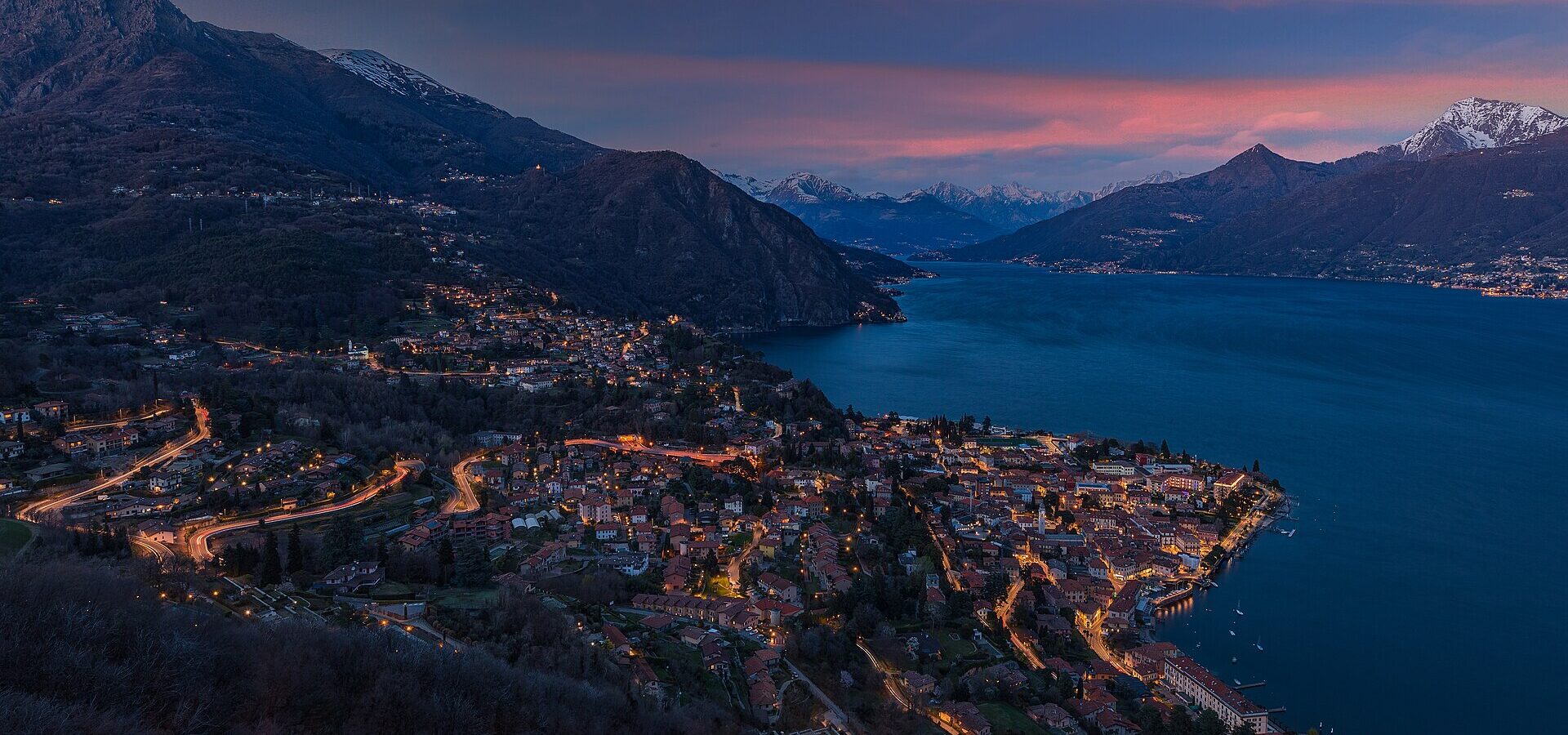
There is no bridge across Lake Como. Not one, along fifty kilometres of water, and that single fact decides more about your holiday than any hotel review will. Book on the wrong shore and the twenty-minute view across the water becomes a ninety-minute drive, or a ferry you have to catch by 21:40 or sleep in the car.
Stay in Varenna if you are arriving by train from Milan, Menaggio if you want the same lake for less money and flatter ground, Bellagio if the hotel is the point of the trip, and Como town if you want a real city with restaurants open in November. Avoid basing yourself at the northern end unless you are there for watersports, and think hard before choosing Lecco, which is a working town with a lake attached rather than a resort. For a first trip of three or four nights, Varenna is the highest-percentage choice, and it has been my answer to this question for years.
What follows is a town-by-town breakdown with the trade-offs stated plainly, because “which is prettiest” is the wrong question and everyone asks it anyway.
Start here: the two questions that decide it
How are you arriving? If the answer is a train from Milan, you want the eastern shore, because that is where the railway runs — Varenna, Bellano, Colico. If the answer is a car from the west or a flight into Malpensa, the western shore and Como make far more sense, and our Malpensa to Lake Como guide covers that route. If the answer is a hire car you intend to use daily, note that parking at the mid-lake is genuinely difficult and expensive in season.
How many nights? One or two nights means you should stay where the scenery is, at the mid-lake, and accept the price. Five nights or more means the case for value and variety strengthens, and Menaggio or Como start to look much better than they do on paper.
The towns, compared
Varenna — the best all-round choice
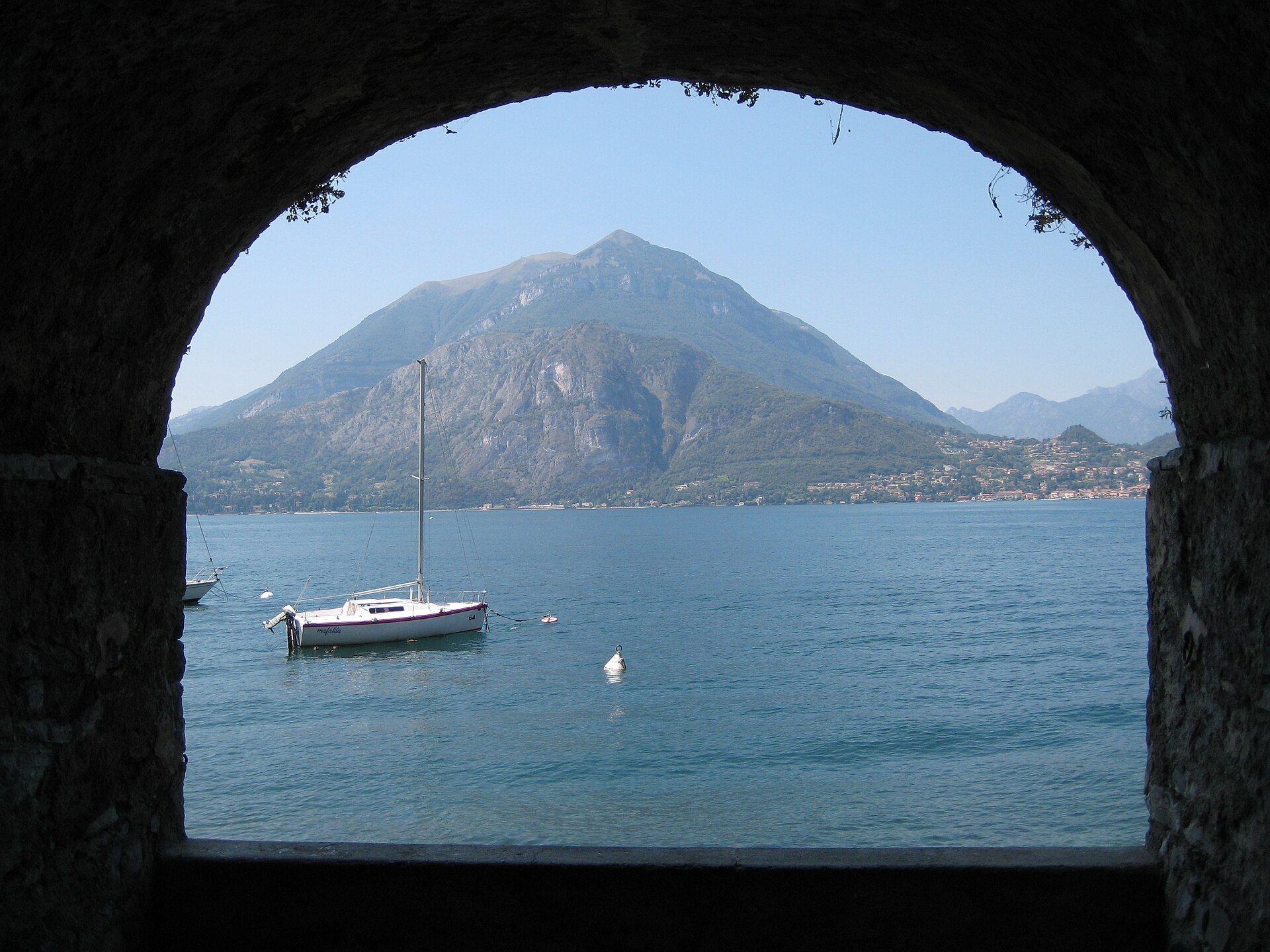
Best for: first-timers, train arrivals, couples, anyone who wants a quiet evening.
Varenna has the one thing no other mid-lake town has: a mainline railway station, about an hour from Milano Centrale with no changes. It also has the Passerella waterside walkway, two villa gardens, swimming off the rocks, and a genuine village atmosphere after six in the evening when the day boats stop.
Accommodation splits into converted villas at the top — Villa Cipressi lets you sleep inside its own gardens — small hotels around the harbour in the middle, and rooms near the station and up in Perledo at the bottom, which is the only real budget tier at the mid-lake. Beds are genuinely few, so June to September needs booking months out.
The catch: it is small. A dozen restaurants, no supermarket worth the name, no nightlife, and the station is a proper hill above the town. Detail in our Varenna guide.
Bellagio — the splurge
Best for: special occasions, one or two nights, anyone arriving by car from the west.
The famous one, on the tip of the promontory, looking down both southern arms at once. Bellagio has the grand nineteenth-century hotels, the best position on the lake and the most dramatic arrival, and after the day boats leave it becomes the town in the photographs rather than a shuffling crowd.
It is also the most expensive place on the lake to sleep and eat, it has no railway station, and if your hotel is up in the old town you are carrying cases up stepped lanes. The mid-range is decent but carries a name premium; there is no meaningful budget tier.
The catch: you are paying roughly 20–30% more than Varenna for equivalent quality. Whether that buys enough is exactly the argument we have out in Bellagio or Varenna, and the town itself is in our Bellagio guide.
Menaggio — the value pick nobody considers
Best for: longer stays, families, walkers, anyone on a budget who still wants the mid-lake.
Menaggio is on the western shore, completes the ferry triangle with Bellagio and Varenna, and costs noticeably less than either. It is also flat, which after two days of Bellagio’s steps is not a small thing, and it has a proper lakefront promenade, a lido, a supermarket, and the C110 bus down to Como and up towards the Swiss border.
The town has a small historic centre, a good hostel as well as hotels and apartments, and it is the obvious base for walking — the paths up towards Monte Grona and the Sentiero delle Quattro Valli start here.
The catch: it is less pretty than the famous two and it knows it. Nobody puts Menaggio on a postcard. If the point of your trip is to wake up somewhere beautiful, this is not it; if the point is to be well-placed and not overpay, it is the best decision on this page.
The whole western shore is covered in our Menaggio, Tremezzo and Lenno guide.
Tremezzo, Cadenabbia and Lenno — the villa strip
Best for: garden lovers, and anyone who wants a grand hotel without Bellagio’s crowds.
This stretch of the western shore holds Villa Carlotta and Villa del Balbianello, which are two of the four gardens actually worth paying for on this lake — see our villas and gardens guide. Tremezzo has one of the lake’s genuinely famous grand hotels directly opposite Bellagio, so you get the Bellagio view without being in Bellagio, which is a trick worth knowing.
It is quieter than the famous two, well served by boat and the C110 bus, and prices sit slightly below Bellagio’s.
The catch: it is strung out along a main road rather than gathered into a town, so “the centre” is a vaguer concept than you would like, and crossing the SS340 on foot at some points is unpleasant.
Como town — the city option
Best for: first or last nights, winter trips, people who want restaurants and shops, budget travellers.
Como is a real city: a Gothic cathedral, a silk industry, a hospital, a university, restaurants that are open on a Tuesday in February and priced for locals. It is the cheapest place on the lake to sleep and eat, and it is around 40 minutes by train from Milano Centrale, which makes it the easy option for a short trip or a night either side of a flight.
The catch, and it is a serious one: Como sits at the bottom of the south-western leg, two hours by slow boat from the mid-lake scenery or around €17 and 45 minutes each way by hydrofoil. As a base for ferry-hopping it is poor. Full detail in our Como town guide.
Cernobbio — grand, and close to Como
Best for: luxury travellers who also want to get to Milan easily.
Just north of Como on the western shore, Cernobbio is where Villa d’Este is — a working five-star hotel rather than a visitable villa. The town is handsome, the lakefront is lovely, and you are close enough to Como for the train. Prices at the top end are as high as anywhere on the lake, and the mid-range is thin.
Lecco and the eastern leg — think carefully
Best for: hikers, climbers, and travellers who want low prices above all.
Lecco is a proper town at the bottom of the south-eastern arm, with a rail link to Milan and dramatic mountains behind it. It is markedly cheaper than everywhere above, and it is the base for serious walking in the Grigne.
The catch: it is not a resort, the ferry connections from the Lecco arm are thinner than on the rest of the lake, and the classic Lake Como scenery is well to the north. Choose it deliberately, for the mountains, not as a cheap substitute for the mid-lake.
The northern lake — Domaso, Gravedona, Colico
Best for: windsurfing, kitesurfing, campsites, families wanting space and a beach.
The top of the lake is wider, windier and much cheaper. It has real beaches, campsites, watersports schools and a completely different atmosphere — less Grand Tour, more summer holiday. Colico is on the railway.
The catch: you are an hour or more from the famous mid-lake towns, and the postcard scenery is behind you. Excellent for a week with children and a windsurf board; wrong for a three-night trip built around villas and ferries.
The option nobody puts in a hotel guide: don’t stay on the lake at all
This will not suit everyone, but it is the right answer more often than the travel industry admits. If your trip is mostly about Milan — the Duomo, the Last Supper, the shopping, the food — and Lake Como is one day of it, then stay in Milan and come up for the day.
The maths is straightforward. Milan has thousands of hotel rooms at every price, competing with each other; the mid-lake has a few hundred, competing with nobody. A room in Milan in high season costs a fraction of the mid-lake equivalent, and the train to Varenna takes an hour. You lose the evening on the water, which is genuinely the best part of Lake Como — but you keep several hundred euros and you gain a city with restaurants that do not all close at ten.
My rule: one day on the lake, stay in Milan. Two days or more, move up and stay by the water. The day-trip version is timed out in our Lake Como day trip from Milan guide.
What you will actually pay
Rates on this lake move violently with the season, so bands are more useful than numbers. Broadly, for a double room in a decent mid-range place:
- Bellagio is the benchmark and the most expensive of the practical bases.
- Varenna runs roughly a fifth below it, with a genuine budget option up at Perledo.
- Tremezzo and Cadenabbia sit slightly under Bellagio, with the grand hotels as expensive as anything.
- Menaggio comes in meaningfully below Varenna, and has hostel and apartment options the mid-lake villages lack.
- Como town is the cheapest of the useful bases, often by a wide margin, with the most choice at every level.
- Lecco and the northern lake are cheaper again, and you are paying for that in travel time.
Peak is late June to early September, with a second spike over Easter and the first fortnight of May when the gardens flower. November to March is very cheap and much of the lake is shut. The sweet spot for value is late September and early October: warm water, open restaurants, half the crowd.
Types of place, and which to book
- Grand historic hotels — Bellagio, Tremezzo, Cernobbio. Genuinely the real thing, with the gardens and the terraces, and priced accordingly. Worth one night of a trip if the budget stretches; exhausting for a week.
- Converted villas — Varenna and the western shore. Often the best value at the upper-middle, because you get the setting without the full grand-hotel apparatus.
- Small family hotels — everywhere. The backbone of the lake, and where most people should be looking. Ask specifically about the view: “lake view” can mean a sliver seen sideways from a balcony.
- Apartments — strongest in Menaggio, Como and the northern lake. Sensible for families and for stays over four nights, particularly given how few supermarkets the small towns have.
- Agriturismi and rooms above the shore — considerably cheaper, often with the best views of all, and dependent on a car or a steep walk. Check the gradient on a map before booking.
Booking, and the things people get wrong
- Book early for the mid-lake. Varenna and Bellagio have very few beds between them. June to September fills months ahead and late availability is expensive rather than cheap.
- Check the walk from the pier or the station, and check whether it is uphill. Nobody publishes gradient, and both towns have plenty of it.
- Check the last ferry if you plan to eat on the other shore. This is the single most common way an evening goes wrong.
- Do not assume parking. Mid-lake hotel parking is limited, often off-site and often charged. If you have a car, ask before booking rather than after.
- Watch the shoulder-season closures. A hotel being open in November does not mean the restaurants, villas or boats around it are.
- Ignore “5 minutes from the lake” without a map. On this shoreline, five minutes can be five minutes of steps.
Where to stay for your particular trip
- Three nights, first visit, by train: Varenna.
- One special night: Bellagio, or a grand hotel at Tremezzo looking back at it.
- A week with children: Menaggio, or the northern lake if beaches and watersports matter more than villas.
- Tight budget: Como town, or Perledo above Varenna.
- Walking holiday: Menaggio for the lake paths, Lecco for the serious mountains.
- Flying into Malpensa with one night before an early flight: Como, on the direct shuttle.
- Visiting in winter: Como, and only Como. Everywhere else largely closes.
- Combining with Milan: Varenna or Como, both an easy train from Centrale — the whole trip is stitched together in our Milan and Lake Como itinerary.
Reading a listing properly
Three phrases do a lot of work on this lake, and all three are worth interrogating before you pay.
“Lake view.” Unregulated, and used generously. It can mean a full balcony over the water, or a diagonal glimpse from the corner of a window above a car park. Look at the photographs taken from the room rather than of it, and if there are none, ask.
“Central.” In a village of four hundred metres, everything is central. What matters is not distance but gradient and steps, and neither appears in a listing. Drop the address into a satellite map and look at the contour of the street.
“Free parking.” On the mid-lake this frequently means a handful of spaces on a first-come basis, or a lot several hundred metres away up a hill. If you are driving, ask how many spaces there are and whether they are reserved.
One more, specific to the shoulder season: a property being open in late October or March tells you nothing about whether its restaurant, the villa next door or the boat you were counting on will be. Check those separately, because a beautiful hotel in a shut town is a long evening.
Frequently asked questions
Where is the best place to stay on Lake Como for a first visit?
Varenna, for most people. Direct train from Milan, easy walk down to the town, fair prices, swimming off the rocks and the postcard view of Bellagio from your own waterfront. Bellagio is the better single sight; Varenna is the better base.
Is it better to stay in Como or Bellagio?
Bellagio, if you have come for the lake. Como is a far better town, much cheaper and easier to reach, but it is two hours by slow boat from the scenery. Stay in Como for a city break with a lake attached, not for a lake holiday.
How many nights do you need on Lake Como?
Three is comfortable: one for the mid-lake triangle, one for two villa gardens, one loose. Two works if you are efficient. A week is enjoyable but you will start taking the boat for something to do, which is not the worst problem to have.
Do I need a car on Lake Como?
No, and for the mid-lake you are better off without one. Parking is scarce and costly, the lakeside roads are narrow, and the ferries plus the trains and the C110 bus cover everything most visitors want. A car earns its keep only if you are staying up in the hills or at the northern end.
Which side of Lake Como is better to stay on?
The eastern shore has the railway, so it is easier if you are coming from Milan without a car. The western shore has the villas, the main road and the bus. The mid-lake triangle links both in twenty minutes, so the choice matters less than the arrival logistics do.
When should I book?
For June to September at the mid-lake, three to six months ahead. For May, early — the garden season fills faster than people expect. For the shoulder months, a few weeks is usually fine.
Is Lake Como expensive?
The mid-lake towns are, yes, comparable with the more expensive parts of the Italian lakes. Como, Menaggio, Lecco and the northern lake are considerably less so, and a stay in one of those with day trips to the mid-lake is the standard way to have this holiday without the standard bill.
Final thoughts
Most people asking where to stay on Lake Como are really asking how to have the picture they have seen without paying Bellagio prices for it. The honest answer is that you can: stay in Varenna and the view of Bellagio is yours from the waterfront every evening for nothing, or stay in Menaggio and pay less again for the same twenty-minute ferry ride.
Book early, check whether your hotel is at the top or the bottom of the hill, and know the last boat back. Beyond that, there is no wrong answer at the mid-lake — only differently priced ones.
The full destination guide is our Lake Como travel guide, the boats are in the ferry guide, and if you are only here for a day, start with the Lake Como day trip from Milan.