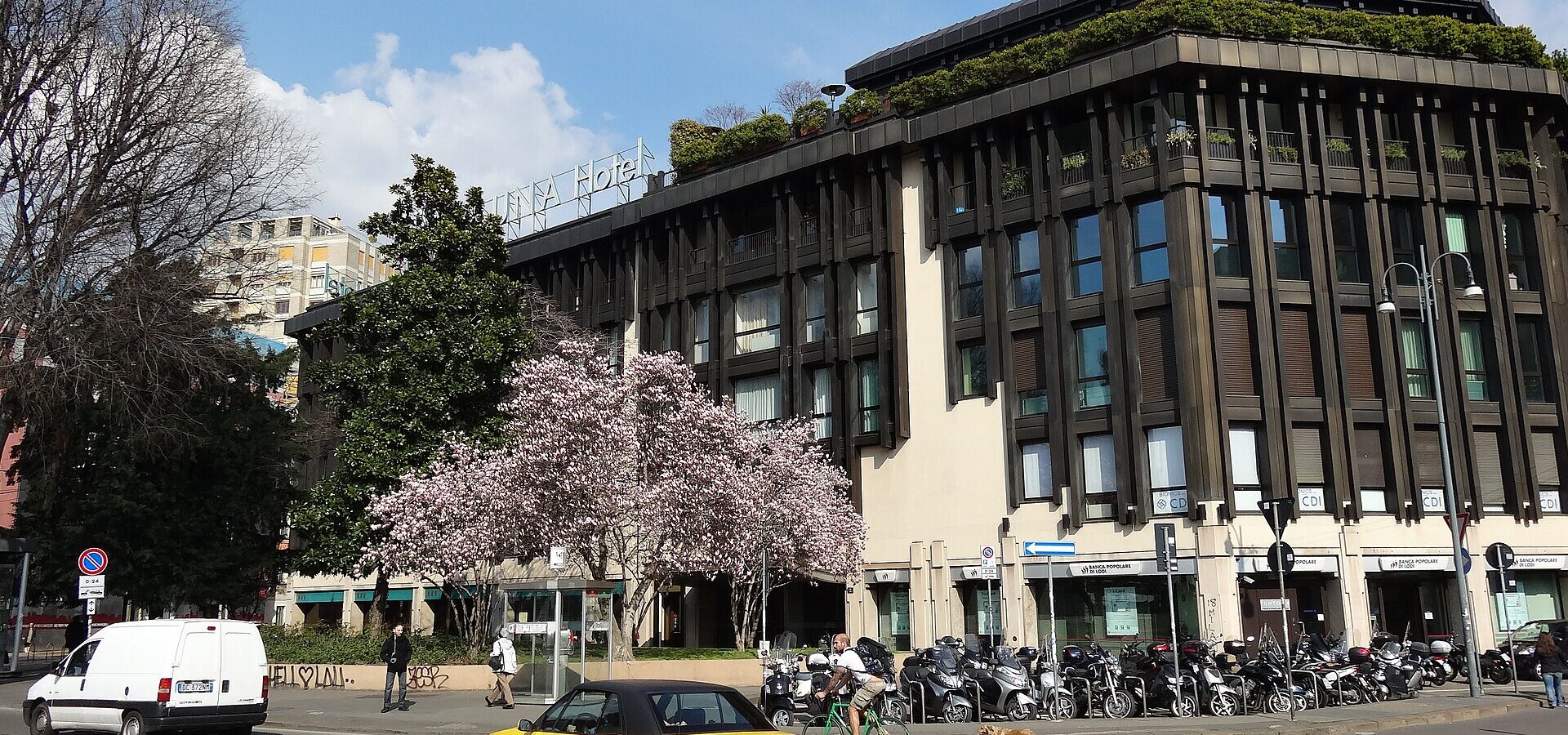
A hotel room in Milan that costs €140 on a Tuesday in March costs three or four times that in the third week of April, and there are reports of ordinary budget hotels asking €500 a night during Design Week. This is not a hotel industry conspiracy. It is a fair that reported 316,342 visitors in 2026 landing on a city with a finite number of beds, and the only defence against it is booking absurdly early.
Book hotels for Milan Design Week six to nine months ahead — the week the previous edition ends is not too early, and regulars genuinely do book then. Expect two to three times the ordinary rate and minimum-stay requirements of three to five nights. If you are booking late, your options in order of usefulness are: the outer neighbourhoods along the M1, M2 and M5 (Lambrate, Città Studi, Bicocca, Bande Nere); apartments, which hold value better than hotels for groups; and the commuter towns — Monza is nine minutes from Milano Centrale, and Como, Bergamo, Pavia, Novara and Brescia are all under an hour with hotel stock that does not price on the Milanese furniture calendar. Whatever you book, check the walking distance to a metro station, because during Design Week that number matters more than the postcode.
What follows applies to Fashion Week in February and September too, at slightly lower intensity, and to the big trade fairs at Rho throughout the year.
Why it gets this bad
Milan has a large hotel stock by European standards, and Design Week absorbs all of it. The Salone del Mobile at Rho draws hundreds of thousands of trade visitors; the Fuorisalone draws hundreds of thousands more who are not going to Rho at all; and the exhibitors themselves book blocks of rooms months in advance, often for the whole week and often for teams of ten or twenty. By the time an individual traveller starts looking, a very large share of the inventory is already committed.
Put bluntly: the hotels Milan Design Week visitors actually want — central, mid-priced, walkable to Brera — are largely gone before the previous Christmas.
The result is the sharpest demand spike in the Milanese calendar. It is worse than either Fashion Week, worse than the Christmas period, and worse than any football fixture. Hotels respond with peak pricing and with minimum-stay rules that stop you booking a single night in the middle of the week — three, four or five night minimums are normal.
The booking timeline that actually works
- Twelve to nine months out: the dates for the following year are known. Book now and you pay something close to a normal rate at a good hotel. This is what people who come every year do.
- Six months out: still workable. Prices have risen but the choice is real and the better mid-range hotels are available.
- Three months out: the central hotels are gone or expensive. You are choosing between outer neighbourhoods, apartments and paying a great deal.
- One month out: commuter towns, or a bed in a hostel dormitory, or a considerable amount of money.
- The week itself: people do find rooms, through cancellations. It is not a plan.
One more thing worth knowing: book something refundable early even if you are not certain of the trip. A free-cancellation rate booked nine months out and released later costs nothing and is worth far more than the flexibility of deciding in January.
Where to stay, by priority
Central: Brera, Duomo, Porta Nuova
The dream and the most expensive version of it. Being able to walk out of your hotel into the Brera Design District at nine in the morning is genuinely the best way to do the week, and if you book far enough ahead it need not be ruinous. Porta Nuova and the Garibaldi area are the sweet spot — central enough to walk to Brera and Isola, on the M5 for Rho connections, and slightly less punished on price than the Duomo. Our guides to hotels near the Duomo and boutique hotels in Milan cover the options.
Isola and Porta Garibaldi
My recommendation for anyone whose Design Week is mostly Fuorisalone. You are inside one of the best districts, the bars and restaurants are good, the M5 runs to Centrale and the M2 to Porta Genova for Tortona, and prices are a notch below the historic centre. See our Isola guide.
Porta Venezia and Porta Romana
Both have their own Fuorisalone programmes, both are on the metro, both are ten to fifteen minutes from the centre and both are meaningfully cheaper than Brera. Porta Venezia in particular has a good stock of mid-range hotels in Liberty-era buildings and a proper neighbourhood life. Our Porta Venezia and Porta Romana guides cover them.
Near Milano Centrale
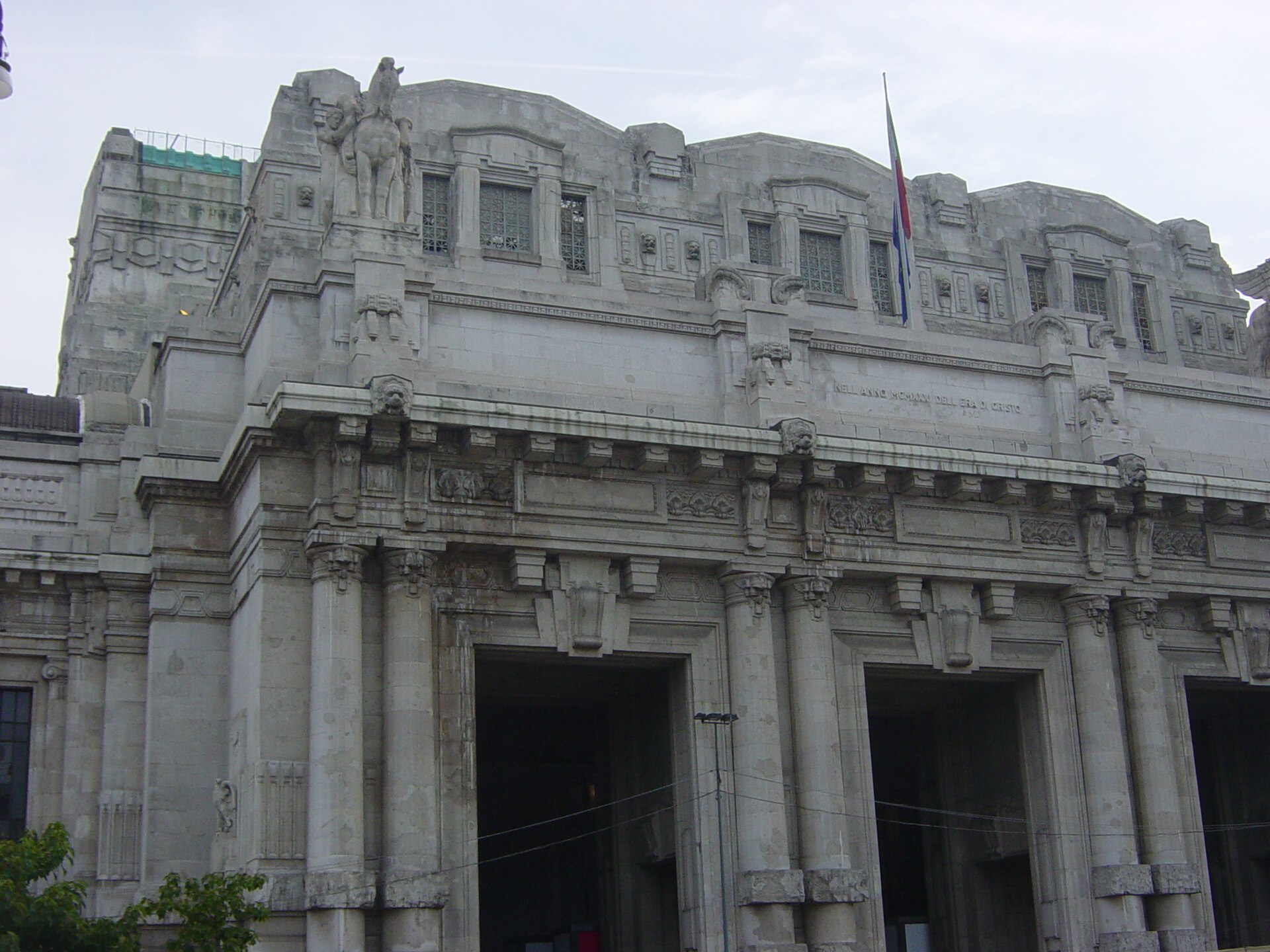
The pragmatic choice, and the one to take if you are combining Design Week with day trips or arriving by train. The area around the station has plenty of hotels, and the M2 runs from Centrale to Garibaldi, where you change for the M5, and on to Porta Genova. The immediate streets east of the station are the least charming part of central Milan and perfectly safe. Our guide to hotels near Milano Centrale has the detail.
The outer neighbourhoods
This is where the value is if you are booking late. Lambrate and Città Studi on the M2 and M1, Bicocca to the north, Bande Nere and Primaticcio to the west, Famagosta to the south — all are fifteen to twenty-five minutes from the centre on a single metro line, all are ordinary residential Milan, and all price far below the centre even in April. Our Città Studi guide covers one of the better examples.
The rule when booking out here: measure the walk to the metro, not the distance to the Duomo. Ten minutes from a station on the M1 beats five minutes from a bus stop, every time, in a week when the buses do not move.
Near Rho Fiera
There are hotels around the fairground and in Rho and Pero, and they exist for exhibitors who need to be on stand at seven. For a visitor they are a poor choice: you are half an hour from everything you came for, the area has no evening life, and the prices are not as low as the location suggests, because the exhibitor demand is enormous.
If you are exhibiting rather than visiting, the calculation is different — our Fiera Milano Rho guide covers the hotels around the site and the logistics of working the fair.
Apartments
Short-let apartments are the best-value option for groups of three or more during Design Week, and they hold their advantage better than hotels do, because the supply is spread across residential neighbourhoods that do not price as aggressively as the hotel market. A two-bedroom apartment in Lambrate or Porta Romana for four people, with a kitchen, will often cost less per head than four hostel beds.
Three cautions. Milan applies a tourist tax that is usually collected separately in cash or by transfer — budget for it. Many hosts impose long minimum stays in April. And many hosts use self check-in, so confirm the arrangements before you land at midnight. Our guide to apartments in Milan covers the rules.
Hostels and budget beds
Milan’s hostels do sell out for Design Week, but they sell out later than the hotels and they do not multiply their prices by four — a dorm bed rises, but it rises from a low base. For a solo visitor booking two months out, a hostel in Lambrate or near Centrale is very often the sanest option available. Our budget hotels and hostels guide and budget Milan guide cover what is available.
The commuter towns
The genuinely underused strategy, and the one I would take if I were booking three weeks out. Lombardy is dense with well-connected towns that have hotel stock priced for their own local market rather than for a furniture fair.
- Monza — 9 to 15 minutes from Milano Centrale by Trenord, trains from before 05:30 until after 23:00, a few euros each way. A proper town with a cathedral, a royal villa and an enormous park. The single best option on this list.
- Como — about an hour from Milano Centrale or Cadorna, on a lake, with hotels that price for summer rather than April. Our Como town guide covers it.
- Bergamo — roughly an hour, and one of the most beautiful small cities in northern Italy. Also useful if you are flying into Orio al Serio. See our Bergamo guide.
- Pavia, Novara, Lodi, Brescia — all reachable by regional or high-speed train, so check the dated timetable for each route before you book.
- Along the Malpensa line — Busto Arsizio, Gallarate and Saronno are on the airport rail corridor and within easy reach of both Malpensa and Cadorna.
The trade-off is real: you lose the evening. Design Week’s showroom parties run until late, the last useful train back varies by line, direction and day (check the dated return timetable, especially for Novara), and a night out in Brera followed by a regional train to Novara is not a good combination. Commuting works well for a Fuorisalone-by-day trip and badly for a week of industry socialising. Our train travel guide covers the regional network.
Fashion Week: the same problem, smaller
Milan Fashion Week runs twice a year, in late February and late September, and it does the same thing to hotel prices on a smaller scale. The differences are worth knowing. Fashion Week is a closed industry event — there is no public programme, no free installations and very little for a visitor to attend — so the demand comes from a smaller, wealthier group and concentrates at the top of the market. Luxury and design hotels in the Quadrilatero and Brera are the ones that fill; mid-range and outer hotels are far less affected than they are in April.
If you are visiting during Fashion Week without being part of it, you will barely notice beyond the traffic, the queues outside a handful of buildings and the price of a room in the fashion district. Our guide to Milan during Fashion Week covers what it is actually like, and our Fashion Week guide covers the event itself.
Practical booking checklist
- Confirm the dates first. Design Week moves within April from year to year — in 2027 the Fuorisalone runs 12–18 April and the Salone del Mobile at Rho runs 13–18 April. Do not book on last year’s dates.
- Book refundable, early. Then re-book if something better appears.
- Check the minimum stay before you fall in love with a rate. Many April rates are only available on four or five nights.
- Check the metro walk on a map, not the hotel’s description of it.
- Read the cancellation terms. April rates are frequently non-refundable, which is fine if you are certain and expensive if you are not.
- Budget the tourist tax separately — it is per person per night and is not always included in the quoted rate.
- Book dinner when you book the room. Restaurant tables go the same way as hotel rooms, just later.
Frequently asked questions
How far in advance should I book hotels for Milan Design Week?
Six to nine months for a good rate at a good hotel; twelve months if you want a specific place. Three months out you are choosing from what is left, and one month out you are looking at outer neighbourhoods or commuter towns.
How much more expensive are hotels during Design Week?
Typically two to three times the ordinary rate for the same room, with reports of budget hotels asking €500 a night at the peak. Rates vary enormously by how early you booked, so two people in the same hotel that week may have paid wildly different amounts.
Is it worth staying outside Milan for Design Week?
Yes if you are booking late or on a budget, and particularly Monza, which is nine minutes from Milano Centrale. No if the evening events are a significant part of why you are coming, because the last trains are the constraint.
Which neighbourhood is best for the Fuorisalone?
Isola or Porta Garibaldi, which put you inside one district and within reach of the others. Brera is better still if you can afford it. Our Fuorisalone districts guide explains where the week actually happens.
Should I stay near Rho Fiera if I am going to the Salone?
Only if you are exhibiting. Rho is thirty minutes from the centre on the M1, so staying in the city and travelling out is straightforward, and the city is where the rest of the week is. Our Salone del Mobile guide covers the journey.
Are there minimum stay requirements?
Very commonly, yes — three to five nights is normal for the Design Week dates, and some hotels will not sell a single midweek night at all. Factor that in before booking flights that only need two.
Does the same apply to other trade fairs at Rho?
To a lesser degree, and it catches people out. Rho runs major fairs throughout the year and each of them lifts hotel prices across the city. If a rate looks strangely high for an ordinary week in November, check the Fiera Milano calendar before assuming it is a mistake.
Final thoughts
Finding hotels for Milan Design Week is not a search problem, it is a calendar problem. There is no clever booking site and no secret neighbourhood that has escaped the price rise; there is only the difference between people who booked nine months ago and people who did not. Put a refundable booking in the moment the dates are announced, then spend your energy on the part that actually matters — which districts to see and which restaurant to book — instead of refreshing hotel prices in March and wondering what went wrong.