
Lake Como is not one lake. It is an upside-down Y, forty-six kilometres long, with three arms that behave like three separate destinations and a road network that makes crossing between them slower than the map suggests. Almost every disappointing Lake Como trip comes from the same mistake: someone books a hotel at one end, plans to “see the lake”, and discovers on day two that the famous bits are two hours away by a road built for donkeys.
Get the geography right and it is the most rewarding short trip in northern Italy: villas with gardens dropping into the water, ferries that cost less than a Milan taxi, mountains that go straight up from the shoreline, and towns you can genuinely walk around in an afternoon.
Here is the whole lake in one paragraph. Stay in the centre — Varenna, Bellagio or Menaggio — because that is where the three arms meet and where the fast ferries run in a triangle, fifteen to twenty minutes and around €5.50 a crossing. Varenna is the easiest to reach from Milan, on a mainline train from Centrale in about an hour. Bellagio is the prettiest and the busiest. Menaggio is the cheapest and the best base for walking. Como town is a real city at the southern tip, good for a day but the wrong base for the lake. The unmissable sights are Villa del Balbianello and Villa Carlotta on the western shore, and the ferry ride itself. Three days is right; one day is a taste; a week needs a car or a serious appetite for boats. This Lake Como travel guide takes each of those in turn.
The geography: why the Y shape decides your whole trip
Understand this and everything else falls into place. The lake has three arms meeting at a point called Punta Spartivento, at the tip of the Bellagio promontory.
- The south-western arm ends at Como, the largest town, with a cathedral, a funicular and a direct rail link to Milan. This is the arm most day-trippers see, and the least beautiful of the three.
- The south-eastern arm ends at Lecco, a working town under dramatic limestone peaks. Cheaper, far less touristed, and largely ignored by visitors — sometimes unfairly.
- The northern arm runs up to Colico and the mountains, opening out and getting windier as it goes. This is where the kitesurfers are, and where prices drop sharply.
- The centre — Bellagio, Varenna, Menaggio and the Tremezzina shore — is where the three arms meet and where roughly ninety per cent of what you came to see is concentrated.
The practical consequence: stay in the centre. From a base in Varenna, Bellagio or Menaggio, the fast ferries connect all three in fifteen to twenty minutes, all day. From Como town, reaching Bellagio takes a slow boat of well over two hours or a bus along a road that is genuinely nerve-testing. From Lecco, you are on the wrong arm entirely.
The one road that matters is the SS340 Regina, the western shore route. It is beautiful, it is famous, and it is a single carriageway squeezed between cliff and water with buses in both directions. In August it can take an hour to travel ten kilometres. Boats do not have this problem, which is why the ferry is not a tourist attraction here — it is the transport network.
The towns: an honest ranking
Varenna — the best base for most people
Varenna sits on the eastern shore, a tight stack of ochre houses on a steep slope, with a lakeside walkway called the Passerella that is bolted to the rock just above the water. It is the smallest of the three central towns and, for a first visit, the one I would choose.
The reason is the railway. Varenna-Esino station is on the Milano–Sondrio–Tirano mainline, so you can be here from Milano Centrale in about an hour with no changes and no bus. Nowhere else on the lake is that easy to reach.
It is also genuinely lovely, and quieter in the evening than Bellagio because the day-trip crowds leave on the last boats. Villa Monastero’s gardens run for a long stretch along the shore. The downside is size: Varenna is small, and if you want variety in restaurants across a week you will be taking the ferry.
Full detail on the town, the Passerella and where to eat is in our Varenna guide.
Bellagio — the famous one, and the busiest
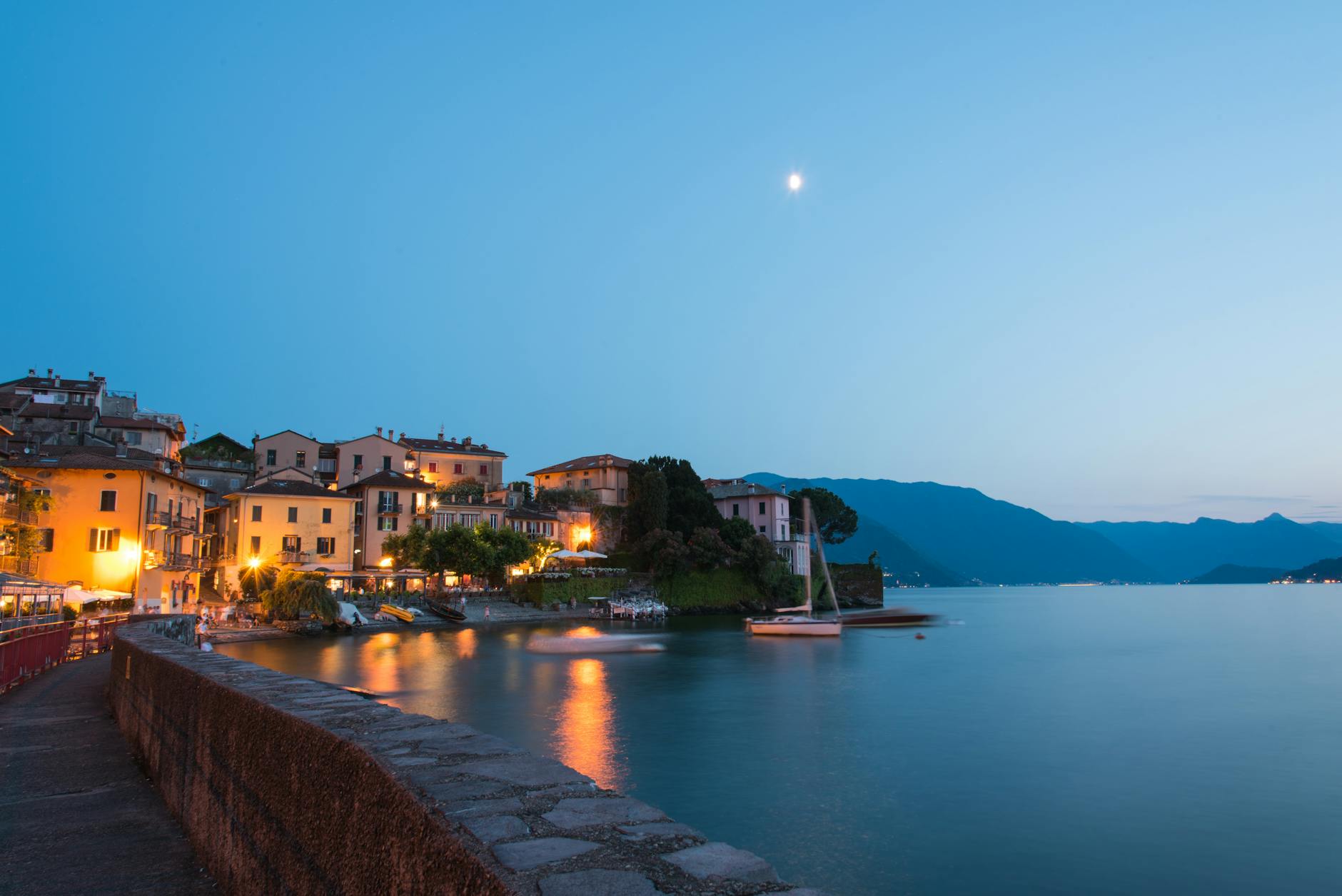
Bellagio occupies the tip of the promontory where the arms divide, which gives it the best position on the lake and views down two arms at once. The old town is a set of stepped stone alleys running up from the waterfront, and Villa Melzi’s gardens are a short walk south along the shore.
It is beautiful and it is extremely busy. Between roughly 11:00 and 16:00 in high season, the waterfront takes coach parties and cruise-style day groups and the alleys become a queue. The town that appears in photographs exists in the early morning and after about six in the evening, and it is worth staying overnight specifically to see it.
Bellagio has no railway station, so every arrival ends with a boat or a bus. It is also the most expensive of the three central towns for both hotels and dinner.
Our Bellagio guide covers what is worth your time there and what is a coach-party trap.
Menaggio — the value pick
On the western shore facing Bellagio, Menaggio is a proper working town with a decent piazza, an actual supermarket and hotel prices noticeably below the other two. It is the least photogenic of the central trio and the most livable.
It is also the best base for walking. Trails go up into the hills behind the town, the Greenway del Lago path runs south along the shore, and buses head west towards Lugano and Switzerland. If you want a week on the lake without spending a fortune, Menaggio is the answer.
The western shore holds both of the lake’s great gardens and its cheapest mid-lake beds — our Menaggio, Tremezzo and Lenno guide covers the whole stretch.
Como — a real city, and the wrong base
Como is a genuine small city of around 85,000 people, with a magnificent striped marble cathedral, a Roman street grid, silk museums and a funicular up to the village of Brunate for the standard postcard view. It has the best shopping and the widest choice of restaurants on the lake, and it is the easiest place to arrive by train from Milan.
It is also, in my view, the wrong place to stay if the lake is why you came. The mid-lake towns are two hours away by slow ferry and the fast hydrofoil costs around €17 and takes about 45 minutes, each way, every day. As a day out from Milan or a first-and-last night, Como is excellent. As a week’s base, it puts you an expensive commute from the scenery.
What to do in the city itself is covered in our Como town guide.
Tremezzina, Lenno and Cadenabbia — the villa shore
The stretch of western shore facing Bellagio holds the two greatest villas on the lake, Villa Carlotta at Tremezzo and Villa del Balbianello at Lenno. It is a string of small settlements rather than a town, with some very good hotels and not much in the way of an evening.
Stay here if the gardens are your priority and you want to walk to them. Otherwise visit by ferry from Bellagio or Menaggio, which takes minutes.
Lecco and the northern lake
Lecco, on the south-eastern arm, is a real town with real prices and mountains rising straight out of the water behind it. It is the setting of Manzoni’s The Betrothed, has excellent hiking access, and sees a fraction of the visitors. It is not pretty in the Bellagio sense and the ferry connections to the centre are poor.
The northern lake around Domaso, Gravedona and Colico is windier, cheaper and increasingly a watersports destination. If you want a lake holiday rather than a villa-and-gardens trip, and you have a car, it is worth a look.
How the ferries work
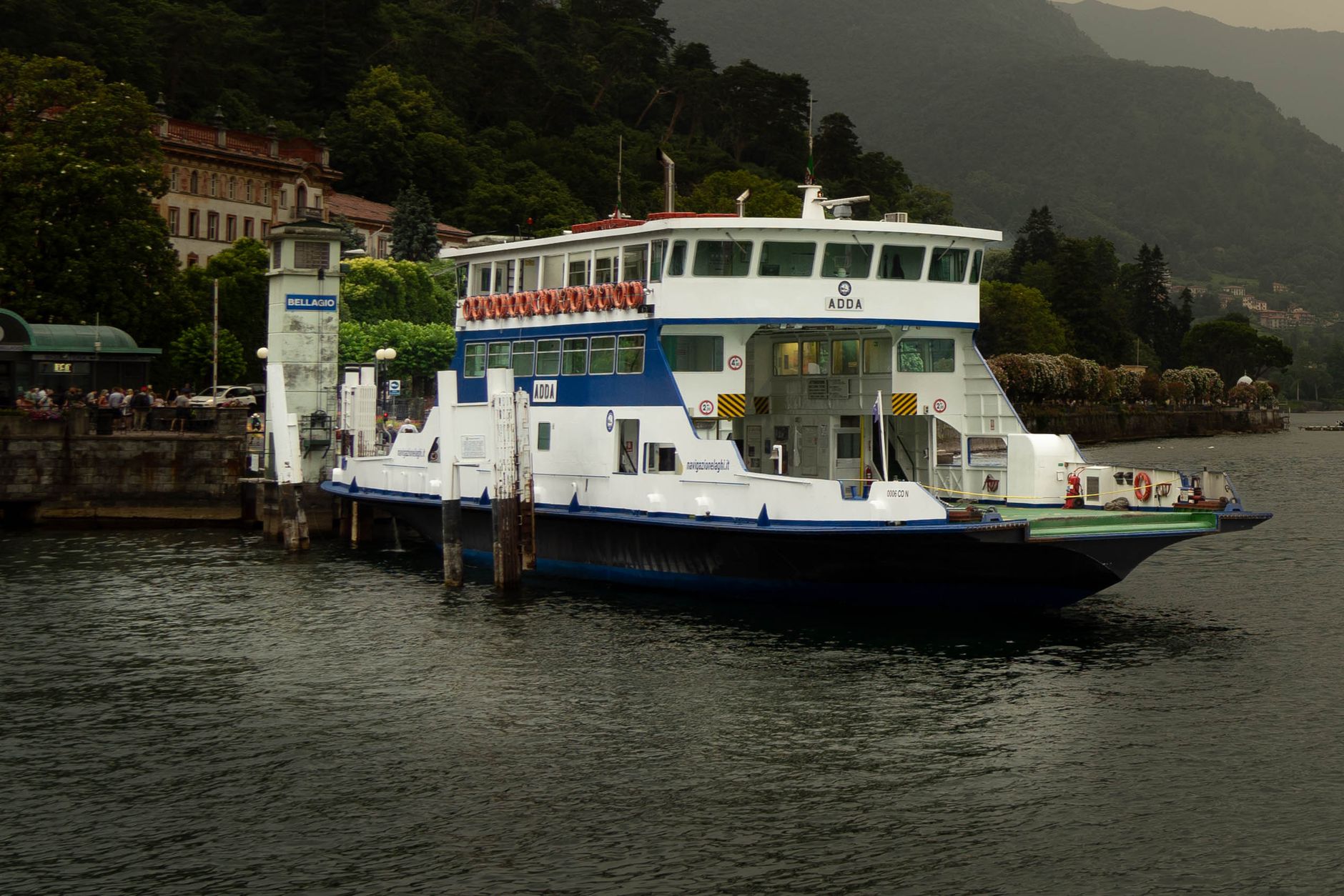
The ferry network is run by Navigazione Lago di Como and it is the single most important thing to understand about visiting here. Fares rose roughly fifteen per cent for 2026, so check current prices rather than relying on older figures — including these.
There are three kinds of boat:
- Car ferries (traghetti) — the workhorses of the central lake, shuttling between Varenna, Bellagio, Menaggio and Cadenabbia. Frequent, take foot passengers, and are the ones you will actually use.
- Slow boats (battelli) — scenic services running the length of the arms, calling everywhere. Lovely, and slow enough that Como to Bellagio is a half-day commitment.
- Hydrofoils (servizio rapido) — fast, enclosed, more expensive, and the only sensible way to cover the Como–Bellagio distance by water. Around €17 and roughly 45 minutes. Tickets cannot be bought on board.
A single crossing in the central triangle — Bellagio to Varenna, Bellagio to Menaggio, Varenna to Cadenabbia — costs about €5.50 and takes fifteen to twenty minutes. If you are making three or more hops in a day, the central-area day pass is better value, at somewhere in the region of €17.50 depending on the exact ticket; the published figures vary, so buy at the window and ask.
Four things that will save you a wasted afternoon:
- Timetables change by season, and the winter service is dramatically thinner than the summer one. A schedule you found online in January is not the schedule running in July.
- The last boats are earlier than you think. In the shoulder season the final central-lake crossings can be gone by early evening. Check the return before you commit to dinner across the water.
- Validate paper tickets before boarding, at the machine on the pier.
- Piers are not always where you expect. Some towns have two, one for car ferries and one for slow boats. Bellagio and Varenna both do. Read the sign, not the map.
Routes, ticket types and the full timetable logic are in our Lake Como ferry guide.
The villas and gardens
This is what the lake is actually famous for, and there are four that matter. Prices and opening periods below were correct when checked; all of these places close for the winter and change their hours, so verify before you travel.
Four villa gardens on this lake are worth the ticket and several famous ones cannot be visited at all — we sort out which is which in our Lake Como villas and gardens guide.
Villa del Balbianello, Lenno
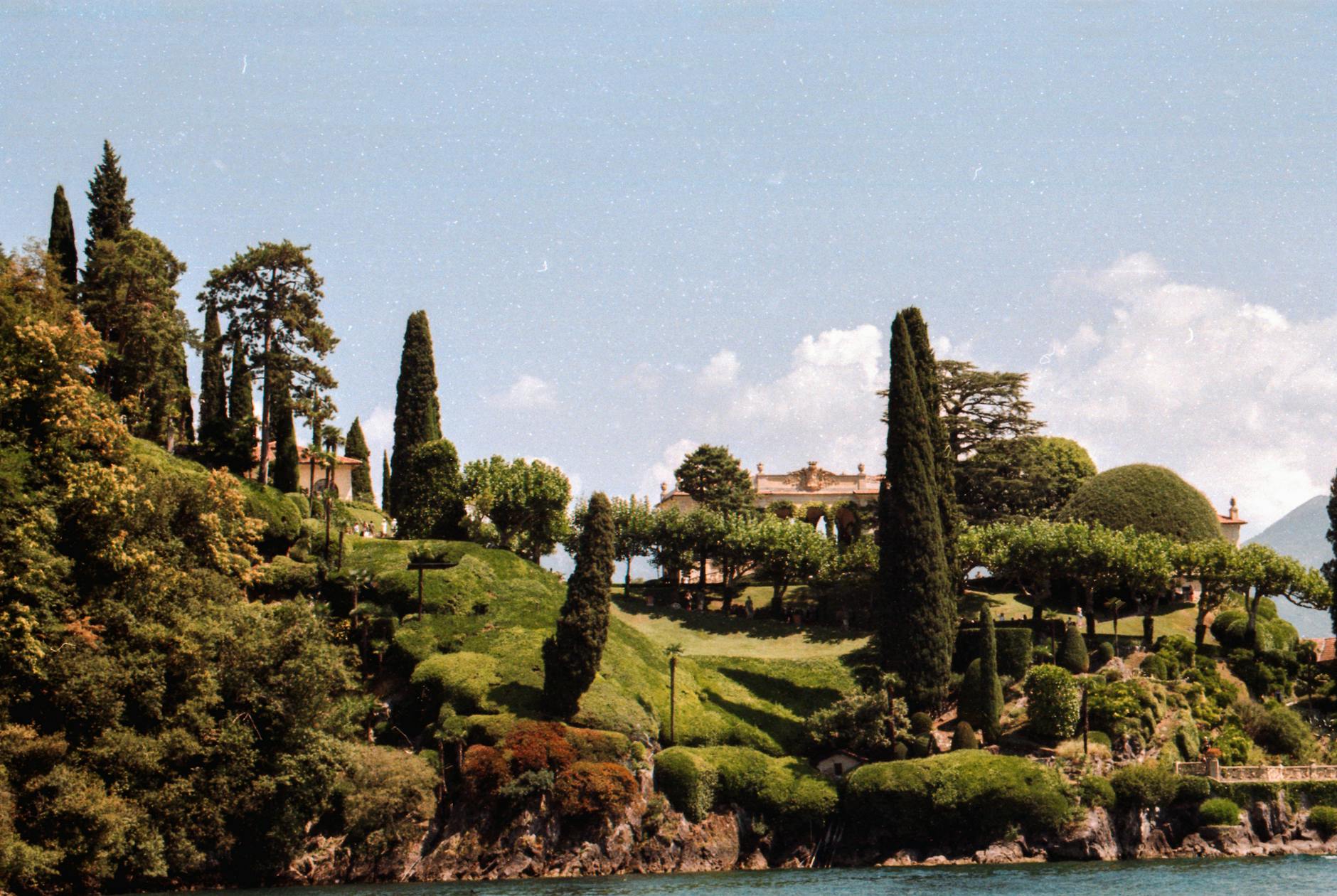
The best of them, on a wooded promontory that juts into the lake with a loggia at its tip. It has appeared in Star Wars and a Bond film, which brings crowds, but the setting genuinely earns the attention — terraced gardens, ancient plane trees trained into a canopy, and water on three sides.
Run by FAI, the Italian national trust. Full admission including the house is around €13, with reduced rates around €10 for ages 6 to 18 and students. Gardens-only and guided-tour combinations are also sold. Open roughly mid-March to the end of December, closed Mondays and Wednesdays — the closure days catch people out constantly. Hours run to about 18:00, with last entry to the park at 17:00 and to the villa interior earlier still, around 16:00.
Arrive by boat from Lenno if you can. The walk in from the road is pleasant but the approach from the water is the point of the place.
Villa Carlotta, Tremezzo
The finest botanical garden on the lake, with more than fourteen acres of terraces, an important collection of azaleas and rhododendrons that peak in April and May, and a neoclassical house containing Canova sculpture. Adult admission is around €15. Open daily from late March to October, with peak-season hours running roughly 09:00 to 19:30.
If you visit one villa and you like gardens, make it this one. If you visit one villa and you like drama, make it Balbianello.
Villa Melzi, Bellagio
A short walk south along the shore from Bellagio’s centre, and much the easiest to fit into a half day. The gardens are gentler than Carlotta’s — lawns, a Japanese garden, sculptures, and a long lakefront path with the water right there. Around €10 for adults, open daily from late March to October, roughly 10:00 to 19:00.
Villa Monastero, Varenna
A former Cistercian convent turned residence, with a botanical garden running for a considerable distance along the eastern shore. The gardens are €13, or €15 including the Casa Museo, with reduced and youth rates and free entry under 14. Open all year but with hours that shift by season — roughly 09:30 to 19:30 in spring and September, 09:30 to 20:00 in high summer, shorter in winter — and closed Tuesdays outside June to August.
Add Villa Olmo in Como if you are spending a day in the city — a large neoclassical villa with public gardens, free to walk in, and used for exhibitions.
Getting there from Milan and the airports
Three routes, and which is right depends entirely on which end of the lake you are heading for.
- To Varenna and the eastern shore: mainline train from Milano Centrale towards Sondrio or Tirano, about an hour to Varenna-Esino. The single best connection on the lake.
- To Como town: trains from Milano Centrale to Como San Giovanni, or from Milano Cadorna to Como Lago on the Ferrovie Nord line. Cadorna is slower but Como Lago puts you on the waterfront by the ferry piers.
- To Bellagio: there is no direct route. Take the train to Varenna and the ferry across — fifteen to twenty minutes and around €5.50. Going via Como means hours on a slow boat or a nervous bus ride.
From the airports, the geography changes in your favour. Malpensa is on the same side of Milan as the lake, and there is now a direct shuttle to Como taking about fifty minutes from around €8.99, plus a train route changing at Saronno — both are covered in our guide to getting from Malpensa to Lake Como. From Bergamo you are on the wrong side of Milan entirely and should expect two and a half to three hours.
Full detail on the Milan-side options is in our Milan to Lake Como transport guide.
Should you hire a car?
Usually not. The lakeside roads are narrow, slow and congested in summer, parking in Bellagio and Varenna ranges from expensive to non-existent, and the ferries go everywhere you want to go. A car earns its keep only if you are staying somewhere the boats do not serve, touring several lakes, or visiting outside the ferry season.
If you do drive, note that many lakeside hotels have limited parking that must be reserved, and that the SS340 is genuinely tiring. See our renting a car in Milan guide for the Area C and Area B zones if Milan is also on your itinerary.
Where to stay
The short version is: stay in the centre, and if you can only afford one night in a lake-view room, spend it in Varenna or Bellagio rather than Como.
- Luxury — the grand hotels of Bellagio and the Tremezzina shore, where a lake-view room in season runs into the high hundreds a night. They are genuinely spectacular and priced accordingly.
- Mid-range — Varenna and Menaggio, where a comfortable three-star with a view sits in a much more reasonable band. Book early for June to September; the good rooms in the small towns go months ahead.
- Budget — Menaggio, Lecco, the northern lake, or staying in Como and day-tripping. Hostels exist but are few.
Town-by-town recommendations are in our where to stay on Lake Como guide.
One structural point worth knowing: a great many lakeside hotels close from around November to March. Winter on Lake Como is quiet, cheap and often beautiful, but a large part of the tourist infrastructure simply shuts, including some ferry routes and most of the villas.
Torn between the two famous mid-lake towns? Our Bellagio or Varenna comparison settles it on arrival, price, crowds and evenings.
When to go
- April to mid-June — the best window. Gardens at their peak, especially the azaleas and rhododendrons at Villa Carlotta in April and May, full ferry timetables from spring, and manageable crowds.
- July and August — hot, crowded and expensive. The lake is swimmable and the atmosphere is lively, but Bellagio at midday in August is not the trip you imagined.
- September to October — the other good window. Warm water, thinner crowds, autumn colour on the mountains. Ferry timetables begin to reduce from late September.
- November to March — villas closed, many hotels closed, reduced boats. Atmospheric and very cheap, but you are visiting a lake rather than the attractions around it.
What it costs
Rough per-person daily figures, excluding accommodation:
- Ferries: €5.50 a crossing, or roughly €17.50 for a central-area day pass.
- Villas: €10–15 each. Two in a day is plenty.
- Lunch: €15–25 for something decent away from the main waterfront; considerably more on it.
- Dinner: €35–60 in the central towns, and the view is priced into the bill.
- Coffee standing at the bar: €1.20–1.50, the same as anywhere in Italy, and the single best value on the lake.
The honest warning: the lakefront terraces in Bellagio and Varenna charge a substantial premium for the position, and the food is frequently ordinary. Walk two streets back from the water and both the quality and the price improve sharply.
Eating on the lake
Lake Como has its own cooking, and it is not the Italian food most visitors arrive expecting. There is very little seafood and a lot of freshwater fish, butter rather than olive oil, polenta rather than pasta, and a general heartiness that makes more sense once you notice the mountains.
- Risotto con pesce persico — perch fillets, fried in butter and sage, laid over risotto. The signature dish of the lake and the one to order first.
- Missoltini — shad, salted and dried in the sun, then pressed. Intense, oily and genuinely traditional. Served with polenta. Not for everyone, and worth trying once.
- Lavarello — whitefish, gentler than the missoltini, usually grilled or baked. The safe order.
- Polenta — in various forms, often enriched with butter and cheese. A meal in itself in the hill villages.
- Pizzoccheri — buckwheat pasta with cabbage, potato and cheese, from the Valtellina just north of the lake. Extremely filling and perfect after a walk.
Wine is worth a note: this is not a great wine region and the lists lean on the Valtellina, whose Nebbiolo-based reds are genuinely good and rarely seen elsewhere. Ask for a Valtellina Superiore rather than defaulting to something Tuscan.
The practical advice on where to eat is simpler than any recommendation list. Walk away from the water. The terraces on the Bellagio and Varenna waterfronts charge for the view and the cooking is frequently indifferent; two streets uphill, in the same town, the same money buys considerably better food. In Menaggio and Como, where there is a working local population, this matters less.
Book dinner in high season, particularly in Varenna, where the number of tables is genuinely small and the town fills once the last day-trippers have gone.
Walking, swimming and the outdoors
A surprising number of visitors treat Lake Como as a place to look at from a boat, which wastes half of it. The mountains come down to the water on every side and the walking is excellent.
The Greenway del Lago
A waymarked path of around ten kilometres along the western shore between Colonno and Cadenabbia, threading through old villages, past villa gates and along stretches of the original lakeside road. It is mostly gentle, takes three to four hours at a comfortable pace, and can be broken at almost any point because the ferry serves the villages along it. If you do one walk here, do this one.
Above Varenna and Menaggio
The climb from Varenna up to Castello di Vezio takes about twenty minutes and delivers a view down both arms of the lake that is better than anything at ground level. Above Menaggio the trails go higher and further, into proper hill walking, with a network of paths and refuges for those who want a full day out.
Brunate, above Como
The funicular from Como climbs to the village of Brunate in a few minutes and gives the classic view over the southern arm. From the top, walking paths continue up towards the lighthouse and along the ridge. It is the best half-day if you are based in Como rather than the centre.
Swimming
The lake is swimmable from roughly June to September and is cold, clean and deep. Public lidos operate at Menaggio, Varenna, Domaso and elsewhere, usually with a small entry charge, sun loungers and a bar. Away from the lidos, the shoreline is largely private or rocky, so the organised spots are worth the few euros rather than being an imposition.
The northern lake around Domaso and Gravedona has reliable afternoon winds and is a serious windsurfing and kitesurfing destination — another reason to head up there if lying on a hotel terrace is not your idea of a holiday.
How long to stay, and what to do with the time
One day
Doable from Milan, and a taste rather than a visit. Train to Varenna, walk the Passerella, ferry to Bellagio, walk the old town and Villa Melzi, ferry back, train home. You will see the best of the central lake and none of it slowly. Our Lake Como day trip from Milan guide has the timings.
Only got a day? Our Lake Como in one day itinerary times the whole thing out, from the train you should catch to the last crossing back.
Two to three days
The sweet spot, and what I would recommend to almost anyone. Base yourself in Varenna or Menaggio. Day one: settle in, Villa Monastero, evening in town after the day-trippers leave. Day two: ferry to Lenno for Villa del Balbianello, on to Tremezzo for Villa Carlotta, lunch on the western shore. Day three: Bellagio early, Villa Melzi, Punta Spartivento, and an afternoon boat wherever takes your fancy.
A week
Enough to add the northern lake, a day in Como or Lecco, and some walking — the Greenway del Lago and the trails above Menaggio are the obvious starts. A week is also long enough to justify a car for two of the days. Combining the lake with the city works well; see our Milan and Lake Como itinerary.
What is overrated, and what is not
Three honest verdicts, because nobody else will give them to you.
Overrated: the Como–Bellagio slow boat. It sounds romantic and it is beautiful for the first forty minutes. It is also two hours or more each way, which is most of a day gone. Take the hydrofoil, or better, do not base yourself in Como.
Overrated: George Clooney. Villa Oleandra at Laglio is not open to the public, cannot be seen usefully from the water, and the boat tours that promise it are selling you a distant glimpse of a gate. Skip it.
Underrated: the eastern shore and the ferry itself. The twenty-minute crossing from Varenna to Bellagio, standing outside on a spring evening with the mountains going pink, is genuinely one of the great cheap experiences in Europe. It costs €5.50 and most visitors treat it as transport.
Frequently asked questions
Which town should I stay in on Lake Como?
Varenna if you are coming by train from Milan and want the easiest arrival, Bellagio if you want the prettiest setting and will pay for it, Menaggio if you want value and walking. All three are in the central triangle, which is what matters.
How many days do you need at Lake Como?
Two to three is right for most people. One day works as a taste from Milan. A week is enjoyable but starts to need a car or a genuine appetite for boats.
How do I get from Milan to Lake Como?
Train from Milano Centrale to Varenna-Esino in about an hour for the central lake, or to Como San Giovanni for the southern tip. Cadorna also serves Como Lago on the waterfront. There is no direct route to Bellagio — go via Varenna and the ferry.
How much are the Lake Como ferries?
Around €5.50 for a single crossing in the central triangle, roughly €17.50 for a central-area day pass, and about €17 for the fast hydrofoil between Como and the mid-lake. Fares rose around fifteen per cent for 2026, so check current prices.
Which Lake Como villa is the best?
Villa del Balbianello for the setting, Villa Carlotta for the gardens. Balbianello is closed on Mondays and Wednesdays, which is the most common wasted journey on the lake.
Is Lake Como expensive?
The accommodation is, especially in Bellagio and on the Tremezzina shore in high season. The day-to-day is not: ferries, villa tickets and food away from the waterfront are all reasonable. Menaggio, Lecco and the northern lake are markedly cheaper.
Can you swim in Lake Como?
Yes, from June to September, at lidos and public beaches around the lake. The water is cold and clear, and warmest in August. Varenna, Menaggio and the northern lake all have decent swimming spots.
Is Lake Como worth visiting in winter?
Only if you want quiet. The villas close, many hotels close, and ferry services reduce substantially from late autumn. It is beautiful and cheap, but you are visiting a landscape rather than a destination.
Final thoughts
Lake Como rewards one decision above all others: base yourself in the centre. Do that and everything else — the villas, the crossings, the towns, the evenings after the coaches leave — falls within a twenty-minute boat ride. Get it wrong and you will spend your trip travelling between the things you came to see.
Beyond that, keep the plan light. Buy a day pass, look at the villa opening days before you set out, and leave room for the thing that actually makes this lake special, which is standing on the deck of an ordinary working ferry with a mountain wall on either side, going somewhere for five euros fifty.
Coming from the city? Our day trips from Milan guide sets the lake against the alternatives, and things to do in Milan covers the other half of the trip.