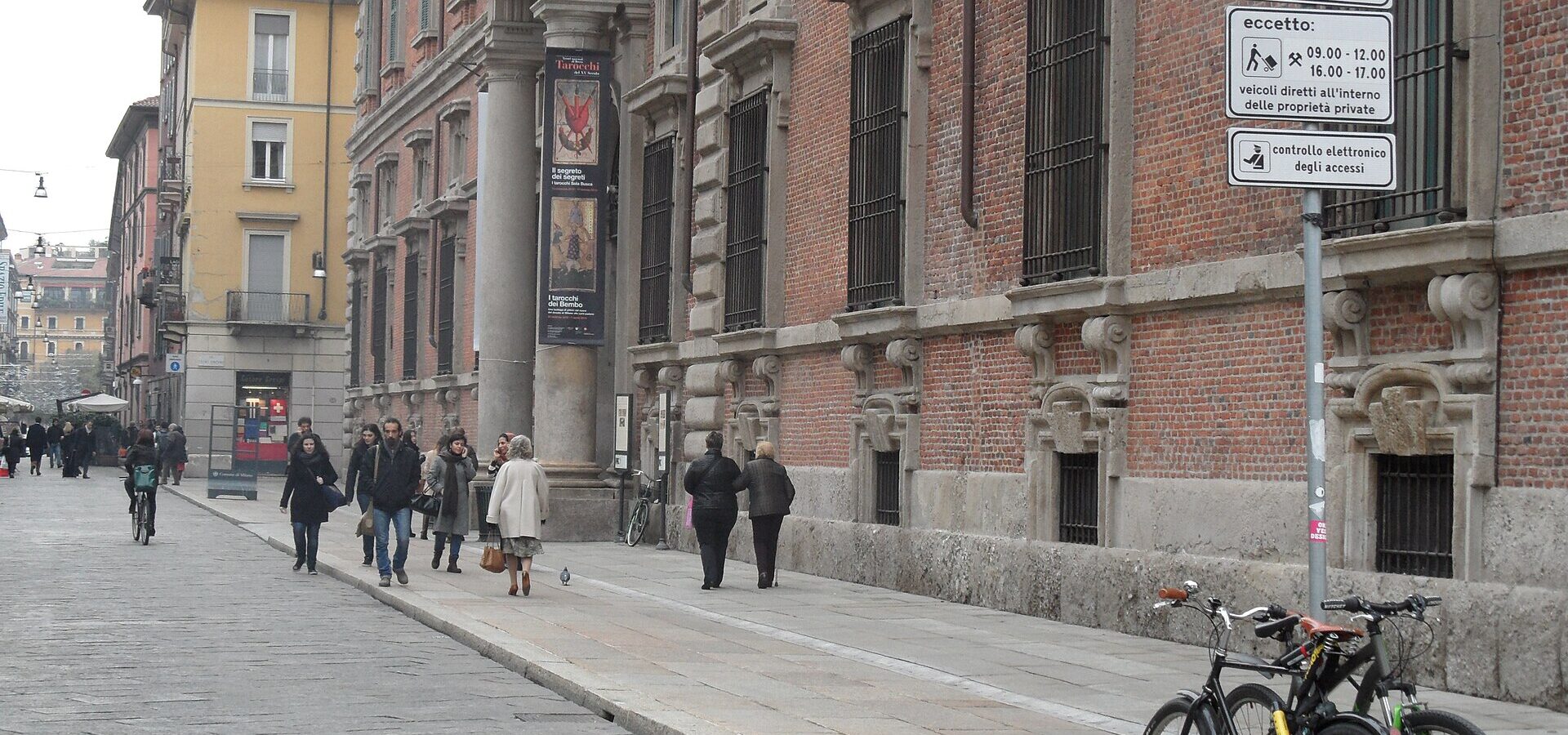
If you only have one afternoon to feel like Milan is actually charming — not a finance city wearing a Duomo — go to Brera. This Brera Milan guide covers how to get in, what to see, where to eat and when to go. Brera is the old academic quarter wedged between the Sforza Castle and La Scala, with cobbled streets that actually deserve the adjective and an art gallery that, on a Tuesday morning, you can have practically to yourself.
Land at Malpensa with three days and no plan, and Brera is the place to start. It’s central, easy to explore on foot, and dense enough to fill a weekend. Let’s get into it.
Why Brera is worth a half-day (or a whole one)
Most neighborhood guides will tell you Brera is “bohemian” and call it a day. That’s lazy. The bohemian Brera — the one of postwar painters smoking in courtyards — belongs to another era. What replaced it is more interesting than the cliché suggests: a mix of serious art (the Pinacoteca is a top-five Italian museum, full stop), serious design (this is the heart of Milan Design Week every April), and a residential pocket where actual Milanese still buy bread and walk their dogs.
Compare it to other central neighborhoods. Navigli is louder and more touristed after dark; Porta Nuova is glass towers and corporate sushi; Isola is hipper and further out. Brera is the one neighborhood where you can see a Caravaggio, eat a proper cotoletta, and buy a notebook from a paper shop that’s been there since the 1930s, all within four blocks. That’s the pitch.
A half-day (roughly 10am to 3pm) is the minimum. A full day with aperitivo and dinner is better. If you’re choosing between Brera and a second visit to the Duomo rooftop — pick Brera.
How to get to Brera (and why the metro stop matters)
Three metro stops put you on the edge of the Brera district Milan locals actually walk to. From north to south:
- M2 (green line) Lanza — best for the Pinacoteca, Via Brera, and the Orto Botanico. Walk out, cross Via Pontaccio, and the cobbles start a short walk away.
- M3 (yellow line) Montenapoleone — best if you’re combining Brera with the Quadrilatero della Moda shopping district. Walk west through Via Manzoni.
- M1 (red line) Cairoli Castello — best if you’ve just visited Sforza Castle. Walk east along Via Cusani, past San Simpliciano, and you’re in Brera in about seven minutes.
From the Duomo, it’s a twelve-minute walk: head north on Via Mercanti, then Via Dante (busy but pleasant), then cut right at Largo Cairoli onto Via dell’Orso. Easier and prettier than the metro for a single hop. Trams 1, 4, and 12 also clip the southern edge — tram 1 (the old orange wooden one) is the photogenic option and runs from Greco to Roserio via Via Manzoni.
Coming from Milano Centrale? Take M3 yellow to Montenapoleone (three stops). From Malpensa airport, the Malpensa Express drops you at Cadorna; from there it’s a fifteen-minute walk through Parco Sempione and the castle, or one stop on M2 to Lanza. Skip taxis in this part of the city — they’re slower than walking nine times out of ten. For a wider transit overview, the Milan transport guide covers the tickets, the apps, and what to do when the M2 inevitably has a delay.
A half-day Brera walk, hour by hour
The route below assumes a 10am start.
10:00 — Coffee at Pasticceria Marchesi, Via Santa Maria alla Porta 11a. Yes, it’s owned by Prada now. Yes, the pistachio cornetto is still worth ordering. Stand at the bar like a Milanese; sitting at the table doubles the price.
10:30 — Walk up Via Brera. This is the spine of the neighborhood. On your right you’ll pass Libreria Bocca lookalikes, antique print shops, and the wall of the Palazzo di Brera covered in posters for current exhibitions. Don’t rush.
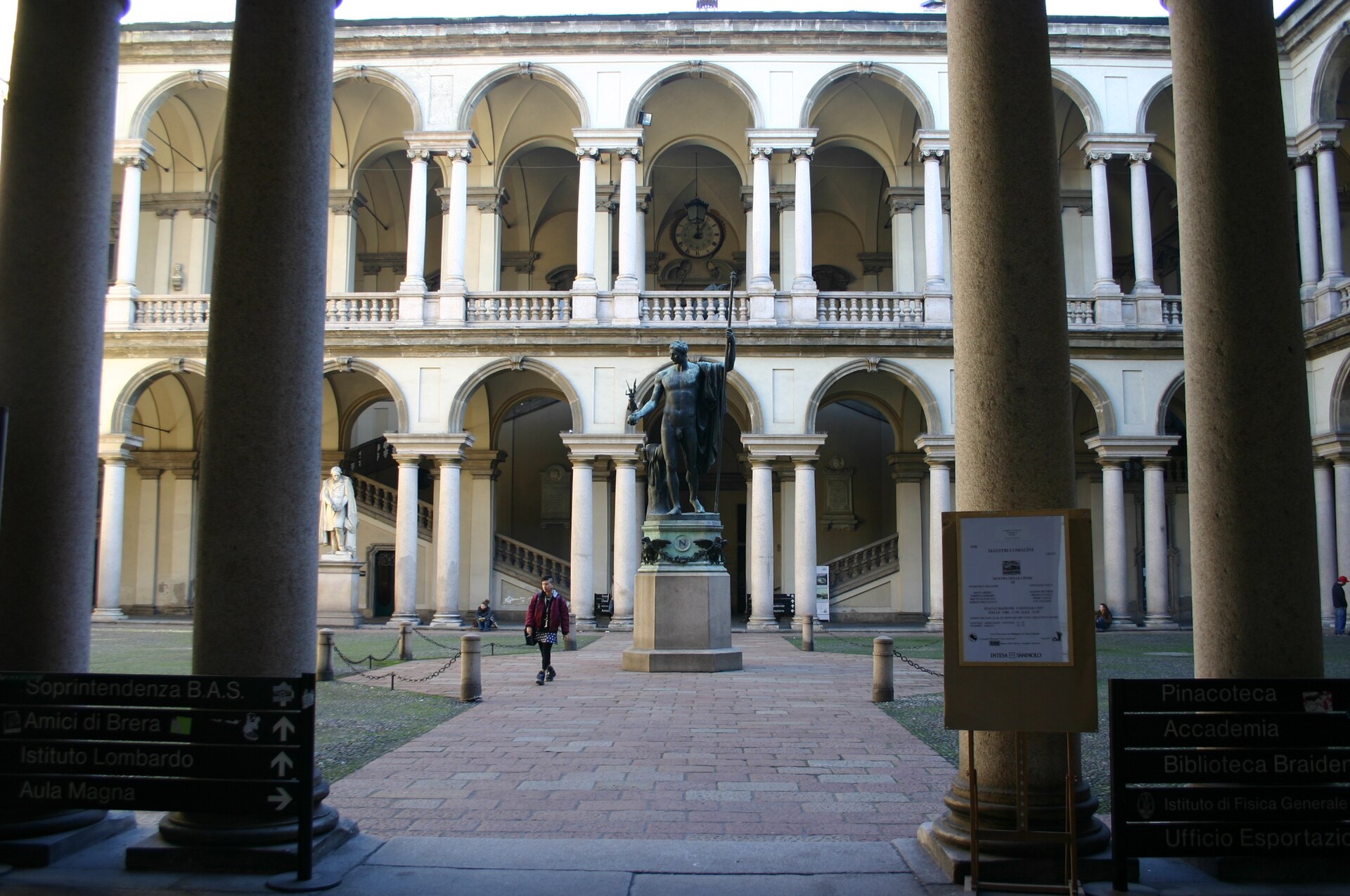
10:45 — Enter the Palazzo di Brera courtyard. Free to walk in. The bronze Napoleon statue in the middle (he’s nude, posed as Mars the Peacemaker) is by Canova. The Accademia students sit on the steps with sketchbooks. It’s the best free photo op in Milan.
11:00 — Pinacoteca di Brera. Buy your ticket online the night before: €20 for the full La Grande Brera ticket, which also covers Palazzo Citterio, for the date and time you choose. Two hours is the right amount of time for the highlights. Don’t try to do all 38 rooms — your feet will quit on you.
13:00 — Lunch at Latteria San Marco or Casa Fiorichiari (see the eating section). Book the day before for either.
14:30 — Orto Botanico di Brera. Free to enter, from Via Brera 28 or Via Fratelli Gabba 10. Forty-five minutes here is enough.
15:30 — Wander Via Fiori Chiari and Via Madonnina. Coffee, gelato, or your first spritz of the day.
Top sights and stops in Brera
-
Pinacoteca di Brera (Via Brera 28). Milan’s flagship art museum, open Tuesday to Sunday 8:30am to 7:15pm, last entry 6pm, closed Monday. Tickets are €20 for La Grande Brera, which also covers Palazzo Citterio (€4 for ages 18-25, free for under-18s, free for everyone on the first Sunday of the month if you book ahead). The collection is heavy on Italian Renaissance and Baroque — Mantegna’s Dead Christ, Raphael’s Marriage of the Virgin, Caravaggio’s Supper at Emmaus, and Hayez’s The Kiss, which is the painting on every Italian high school textbook cover. The Pinacoteca has free audio guides online, so load one on your phone before you go. Plan two hours minimum.
-
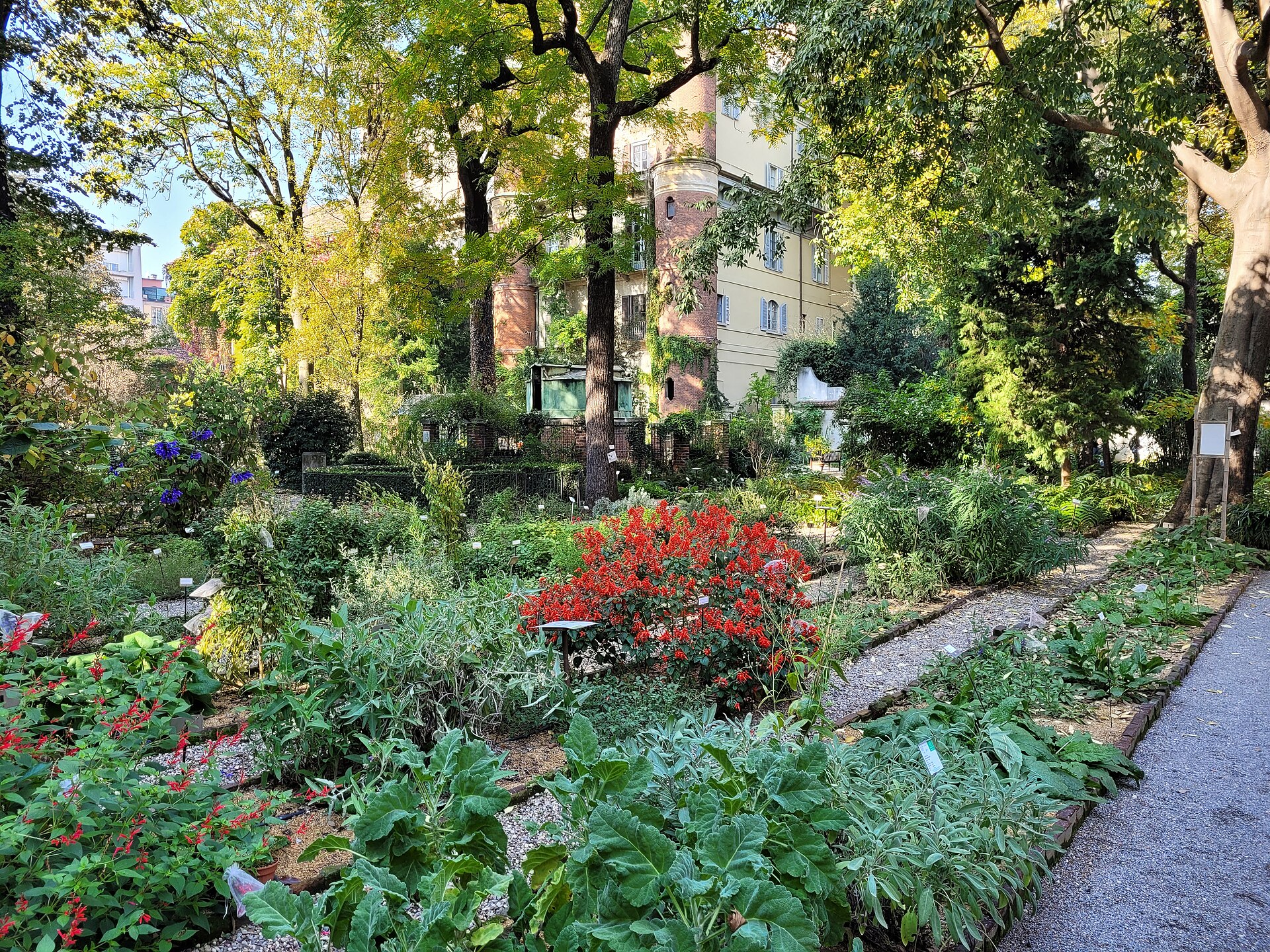
Orto Botanico di Brera (Via Fratelli Gabba 10). The botanical garden the abbot Fulgenzio Vitman established in 1774, under Empress Maria Theresa, for students of medicine and pharmacology. Five thousand square meters of walled green tucked behind the Palazzo, and you can’t quite believe it’s in the middle of Milan. Open Monday to Saturday 10am to 6pm in summer, closes earlier in winter. Free. The single best spot in central Milan to sit on a bench and read.
-
Via Fiori Chiari and Via Madonnina. The two prettiest streets in the Brera neighborhood, both pedestrianized, both lined with tarot readers in the evenings (a Brera tradition that refuses to die). Brera’s antiques market runs on the third Sunday of every month. The Brera Design District signage radiates out from here during Salone del Mobile every April.
-
Chiesa di San Marco (Piazza San Marco 2). The 13th-century church where Mozart stayed, in its monastery, in 1770, and where Verdi’s Requiem premiered on 22 May 1874. Free to enter, open daily 7:30am to noon and 4pm to 7pm. Skip if you’re tight on time, but the frescoes by Camillo Procaccini in the left transept are quietly excellent.
-
Chiesa di Santa Maria del Carmine (Piazza del Carmine 2). The red-brick Gothic facade dominates one of the prettiest little piazzas in Milan. Inside, look up at the wooden ceiling. The piazza outside has a few cafes with outdoor tables that fill at aperitivo. Free to enter; check the opening hours with the church.
-
Biblioteca Braidense and the Osservatorio Astronomico. Both inside the Palazzo di Brera. The library is one of Italy’s major public libraries. Its reading room for your own books opens Monday to Friday 8:30am to 6pm, and the consultation room also opens Saturday 8:30am to 1:30pm; you need to be 16 or over with photo ID, and consulting or borrowing the collection means registering first. The Astronomical Museum, with Schiaparelli’s 19th-century telescope, opens its Instrument Gallery on Tuesdays and Thursdays, 1:30pm to 5:30pm (€6, or included with La Grande Brera); dome visits need a separate booking (€12 accompanied, €15 guided). Niche, but if you geek out about Galileo-adjacent science, go.
To compare Brera’s museum density with the rest of the city, the Milan museums guide ranks the Pinacoteca against the Poldi Pezzoli, Museo del Novecento, and the rest.
Where to eat in Brera
Brera’s restaurant scene is more honest than its reputation suggests. Yes, the spots on Via Fiori Chiari with picture menus will overcharge you for an aperitivo plate. But step one street back and you find places that actually feed Milanese.
Latteria di San Marco (Via San Marco 24). Tiny, no reservations, run by the Maggi family since the 1930s. Check the opening hours before you go. The whole experience is small and gruff in the right way; do not try to chat about your trip.
Casa Fiorichiari (Via Fiori Chiari). Open all day, dinner is the move. The cotoletta alla milanese is bone-in, the right kind of mallet-bashed. Book a day ahead for dinner; lunch is usually walk-in friendly. Outside tables in summer are excellent for people-watching.
Pasticceria Marchesi 1824 (Via Santa Maria alla Porta 11a — the historic location, not the Galleria one). Coffee and a pastry cost less standing at the bar than the same order sitting down upstairs in the salon. The brioche with crema is what to ask for in the morning. A second Marchesi inside the Galleria Vittorio Emanuele is grander but the original location is the one with the soul.
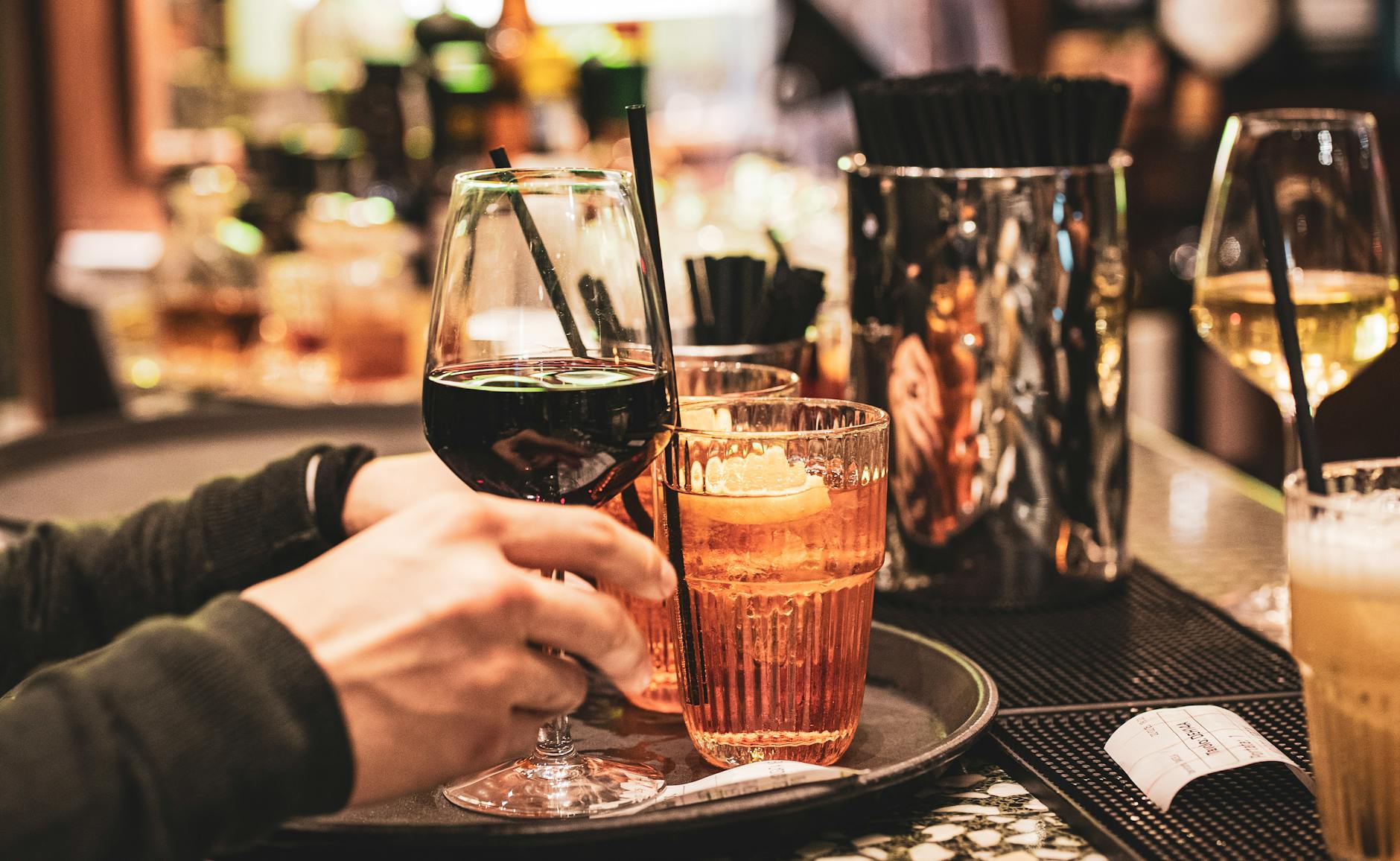
N’Ombra de Vin (Via San Marco 2). Wine bar in a former Augustinian refectory, vaulted ceilings, a long wine list. Aperitivo is the easy way in; dinner is more serious. Book for dinner; aperitivo is first-come.
Fioraio Bianchi Caffè (Via Montebello 7). Half florist, half bistro, exactly as charming as that sounds without being twee. The Tuesday-evening seasonal tasting is worth booking three or four days ahead. The flowers actually do come from the flower shop in front, which has been there since the 1970s.
For a wider pan of Milan’s food scene by neighborhood, see the Milan food guide — Brera holds up well, but Porta Romana and Città Studi have better-value lunches if you’re a long-stay traveler.
Practical tips for visiting Brera
- Book the Pinacoteca online. Walk-up tickets exist, but a booked slot is the safer bet on weekends and during Design Week. Buy on the official site, pinacotecabrera.org, rather than through third-party resellers.
- Cash is fine but not required. Every restaurant takes cards. Latteria San Marco and a few of the old paper shops still prefer cash.
- The cobbles are real. Ditch the heels.
- Bag check at the Pinacoteca is mandatory for anything bigger than a small purse. It’s free. Allow ten minutes.
- Pickpockets are minimal in Brera compared to the Duomo area, but it’s still central Milan — phone in front pocket on busy streets, especially around Lanza metro at rush hour.
- Sunday closures. Many smaller shops, including some of the design stores, close Sunday afternoon and all day Monday. Restaurants are mixed — call ahead Mondays.
- August is a ghost town. Mid-August (around Ferragosto, the 15th) many Brera spots close for two to three weeks. The Pinacoteca stays open. The good wine bar you wanted? Probably shut.
- ZTL. Milan’s Area C congestion charge (€7.50 to drive in on weekdays) covers the historic center; check whether your street is inside it on the Comune’s Area C page. Don’t even try with a rental car — there’s no parking and you’ll get fined. Leave the car at a P+R like San Donato or Cascina Gobba.
Best time to visit Brera
By season: April, May, late September, and October are the sweet spot — mild temperatures, manageable rain, terraces open. June through August gets hot and humid; the upside is long evenings and aperitivo outdoors. November and February are quiet but grey; the Pinacoteca with no crowds is a real reward. December is busier than you’d expect because of the Christmas markets at the castle, two blocks away.
By day of week: Tuesday through Thursday mornings are when locals outnumber tourists. Saturday afternoons get heavy with shoppers spilling over from the Quadrilatero. Sunday afternoons are pleasant if it’s the third Sunday (antiques market) but most of the design boutiques are shut.
By time of day: arrive in Brera by 10am to get the museum done before lunch, then linger. For aperitivo, 6:30pm is a good time to start, and Via Madonnina is the street to aim for. After 10pm Brera quiets down quickly; if you want late-night, head down to Navigli or over to Porta Venezia.
The one week to either embrace or actively avoid: Milan Design Week / Salone del Mobile, mid-April. Brera Design District is the unofficial epicenter, with installations and events across showrooms, historic courtyards, palazzi and exhibition spaces. It’s electric. It’s also impossibly crowded; book your room four months ahead and double normal prices.
For that week specifically, our Milan Design Week guide covers what Brera becomes during the Fuorisalone, when its courtyards open to anyone who walks past, and our Fuorisalone districts guide explains when in the week to visit it.
Where to stay in Brera
Brera is one of the better Milan neighborhoods to base in — central, walkable, and quieter at night than the Duomo area. Three tiers:
Splurge (€500+ a night): Bulgari Hotel Milano on Via Privata Fratelli Gabba, with its own private garden adjacent to the Orto Botanico. The bar is open to non-guests and is one of the best in the city. Senato Hotel on Via Senato is more design-led and slightly cheaper, with a beautiful inner courtyard pool.
Mid-range (€220-380): Hotel Milano Scala on Via dell’Orso is genuinely lovely, runs carbon-neutral, and sits 350 meters from La Scala. Antica Locanda Solferino on Via Castelfidardo is a small inn (eleven rooms) inside a 19th-century building, the kind of place where staff remember your name.
Budget for Brera (€140-200): Hotel Manzoni is on the eastern edge near Montenapoleone — fair value for the location, slightly dated rooms. Otherwise, look at apartments on Via San Marco or Via Solferino, which run €150-220 a night and give you a proper kitchen.
If Brera is full or out of budget, the where to stay in Milan page compares it against Porta Romana, Chinatown, and the rest. For a first visit, Brera or Porta Venezia make the easiest base.
Brera FAQ
How many hours do I need for the Brera district?
Three hours is the minimum for the Pinacoteca plus a coffee. A half-day (five hours) lets you add the Orto Botanico and a proper lunch. A full day with aperitivo is the version I recommend, especially if it’s your first time in Milan. Don’t try to squeeze Brera into a one-hour stop between the Duomo and the Last Supper — you’ll resent it.
Is the Brera neighborhood safe at night?
Yes, very. It’s a residential and bar district. The streets around Lanza metro can attract a few sketchy characters very late, but it’s still on the safer end of Milan. Standard city precautions apply.
Is Brera worth visiting if I’ve already seen the Duomo and Last Supper?
Especially then. The Duomo and Last Supper are bucket-list one-offs. Brera is where you actually understand what living in Milan looks like. If you’re filling a second or third day, Brera plus Isola across the railway tracks gives you the two most different sides of central Milan.
What’s the difference between Brera and the Quadrilatero della Moda?
They’re neighbors, separated by Via Manzoni. The Quadrilatero (Montenapoleone, Spiga, Sant’Andrea, Borgospesso) is pure luxury fashion — Hermès, Prada, Chanel flagships. Brera is broader: art, design, restaurants, residential, with some boutiques mixed in. Visit them on the same afternoon — they’re a ten-minute walk apart.
Can I visit the Pinacoteca for free?
The first Sunday of every month is free, but you must book a timed entry slot in advance through the official site, so book as early as you can. Under-18s are always free. Ages 18-25 pay €4. Otherwise it’s €20 for La Grande Brera, which includes Palazzo Citterio.
Is the Brera antiques market worth planning around?
Yes if you like wandering through old prints, costume jewelry, and the occasional Murano vase. The market runs on the third Sunday of each month. Prices are negotiable but politely so — don’t haggle aggressively. Some of the best stalls have run there for thirty-plus years.
Final thoughts
Brera is the neighborhood to put on the list for anyone with at least two days in Milan. The Pinacoteca alone justifies the trip; lunch at Latteria San Marco justifies a second. What makes the Brera quarter work, though, is not any single landmark — it’s the density. Within a few blocks you have an A-list art museum, an 18th-century botanical garden, churches worth a look, good lunch spots, and plenty of bars for a €10 spritz.
Pair it with the rest of the historic core via the things to do in Milan overview, or use the Milan neighborhoods guide to decide which other district to slot in next. If you’ve only got one afternoon in this city and you want it to feel like Italy and not like a layover, Brera is the answer. Book the museum ticket, lace up flat shoes, and start at Lanza at 10am. The rest takes care of itself.
Related Milan guides
Keep planning with our other Milan neighborhoods guide resources: